The landscape of social media management is on the cusp of a profound transformation, heralded by the advent of artificial intelligence agents. These sophisticated software entities are rapidly moving beyond the reactive capabilities of traditional chatbots and schedulers, offering a new paradigm of autonomous operation designed to tackle complex, multi-step tasks. Industry experts and practitioners alike are grappling with how best to integrate these agents, determining the optimal balance between AI efficiency and indispensable human oversight.
Defining the Autonomous Social Media AI Agent
At its core, a social media AI agent is a software program capable of executing a series of social media tasks on behalf of a user or organization. Unlike its predecessors, the agent possesses a degree of autonomy, enabling it to make decisions, plan subsequent steps, and take action towards a defined goal, often requiring human intervention only for approval or when encountering unforeseen complexities. This proactive nature is a significant departure from conventional chatbots, which primarily respond to direct prompts, and basic social media schedulers, which merely automate pre-programmed content delivery.

For marketers, this autonomy is the cornerstone of its value proposition. When provided with a clear objective, sufficient contextual information (such as brand guidelines), and access to relevant tools (like spreadsheets or content management systems), an AI agent can independently navigate the process. For instance, tasked with identifying micro-influencers within a specific niche, an agent could research content creators, evaluate their suitability against predefined criteria, and compile a shortlist, even repeating this exercise periodically. This capability to "work out what needs to happen next" distinguishes agents as a powerful tool for streamlining workflows and enhancing productivity.
The Evolution from Chatbots and Schedulers
To fully appreciate the significance of AI agents, it’s crucial to understand their evolution from earlier AI-driven tools. The distinction lies primarily in their level of autonomy and decision-making capabilities.
AI Chatbots: These are largely reactive and prompt-driven. Tools like ChatGPT or Claude excel at answering questions, generating text based on a single input, or engaging in conversational exchanges. Their knowledge is typically confined to their training data, and they perform exactly what is asked, without initiating further steps.

Social Media Schedulers: These platforms are built for predictability. Users define a publishing plan – for example, a post every Tuesday at 10 a.m. – and the scheduler executes it faithfully. While invaluable for consistent content delivery, schedulers lack the intelligence to adapt, make decisions, or learn from outcomes.
AI Agents: Representing the next frontier, AI agents are proactive, reasoning through objectives, making decisions, acting on those decisions, and continually learning from results and feedback. Given an objective like "create a weekly Instagram performance report," an agent can break this down into sub-tasks, gather data, analyze it, and generate the report, often with minimal human supervision. This ability to reason and adapt makes them suitable for more complex, multi-step workflows.
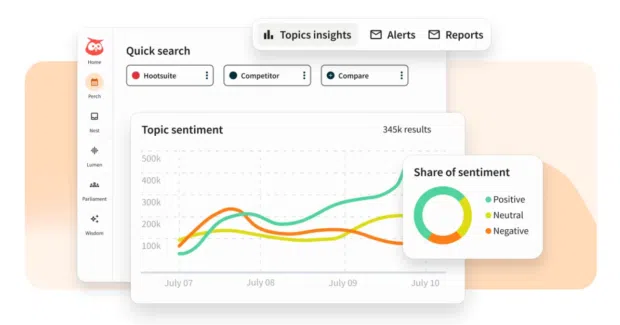
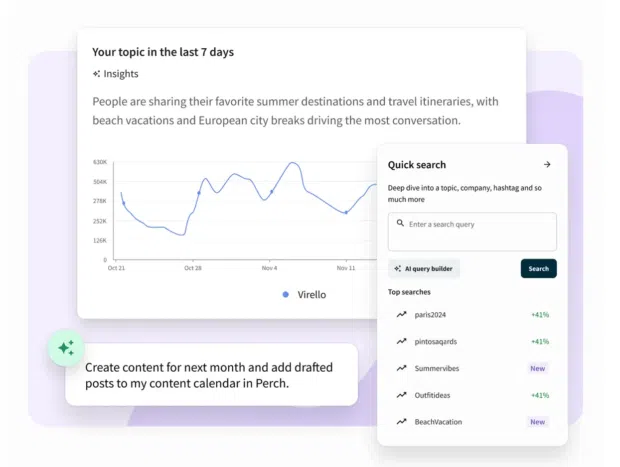
The lines between these categories are, however, becoming increasingly blurred. Modern social media management platforms are integrating agentic AI capabilities into their scheduling and analytics tools. For example, Hootsuite’s Perch, a comprehensive scheduling tool, now works in conjunction with Wisdom, its social-first AI agent. This integration allows Wisdom to not only pull relevant answers from diverse data sources—content calendars, listening dashboards, inboxes—but also to assist in acting on those insights, such as drafting posts based on real-time trends. This synergy means AI agents can now identify what deserves attention and provide a head start on how to respond, moving beyond mere execution.
Broadening Applications: Where AI Agents Excel

AI agents are poised to contribute across nearly every facet of social media management, from strategic planning and content creation to community engagement and performance analysis. Their ability to manage multi-step, time-consuming tasks offers significant efficiency gains.
1. Strategy and Planning: AI agents can handle substantial preparatory work for social media marketing strategies. They can analyze audience data to suggest content pillars, or even draft a comprehensive posting strategy for new platforms. Critically, agents can monitor shifts in audience behavior and benchmark social presence against competitors, continuously feeding these insights back into the strategy to ensure its ongoing relevance.
2. Content Ideation and Creation: Generating fresh content ideas is an ongoing challenge. AI agents can act as vigilant observers, tracking emerging trends, competitor activities, and recurring audience questions. Carson Celio, Content Strategist at O&G Public Relations, leverages agents for bi-weekly trend research. "It gives me a solid foundation to build from," Celio notes, viewing the agent as a "brainstorming buddy that helps me take those ideas, make them my own, and shape them to feel authentic to each client’s voice." This support allows human strategists to focus on refinement and authentic brand representation.
3. Social Listening and Trend Detection: Social listening often generates an overwhelming volume of data. AI agents can cut through this noise by flagging sudden sentiment shifts, identifying trending topics, and surfacing critical conversations. Anne-Marie Green, Head of Marketing at KnowRoaming, uses AI agents to transform raw data into actionable daily briefings. "They take the data and generate a daily report for us, with a detailed explanation of why these specific trends and topics are trending," she explains, highlighting the agents’ analytical capabilities in providing contextual understanding.
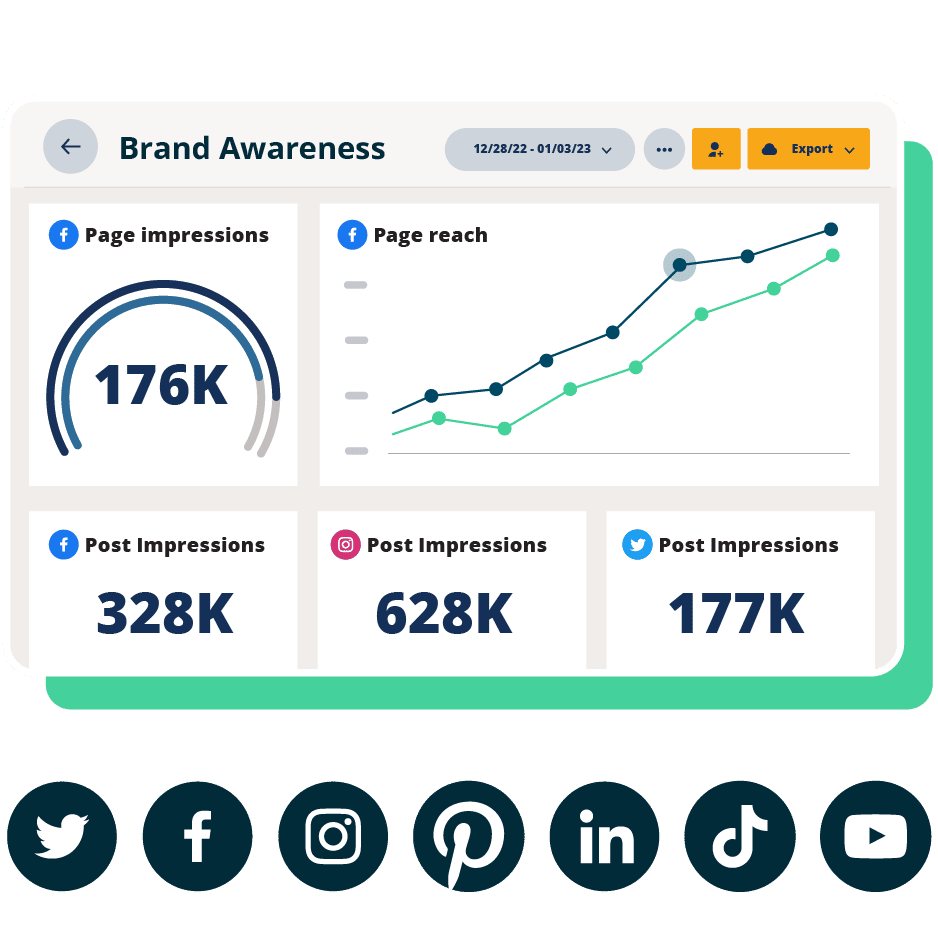
4. Influencer Marketing: The complexities of influencer marketing—tracking posts, managing links, and monitoring performance—can be significantly streamlined. Melina Giorgalletou, Content & Social Media Manager at Supernormal, employs an AI agent to power a live dashboard for her creator program. "It pulls view and engagement data across the ~950 videos from our creators, updates the dashboard, and generates tracked links in every post, helping us tie content back to sign-ups," she states, demonstrating how agents can integrate and automate multiple facets of a campaign.
5. Competitive Intelligence: Keeping a constant watch on competitors is vital but often deprioritized. AI agents can automate this function, flagging competitor campaign launches, changes in messaging, new content formats, or shifts in audience engagement. Scheduled weekly or monthly check-ins ensure that competitive insights are always current, allowing brands to react strategically.
6. Community Management: For routine customer inquiries and direct messages, AI agents can serve as a crucial first line of support. Shawn Hill, VP of Growth at moveBuddha, utilizes agents to "answer frequently asked questions or common inquiries, while redirecting the more complicated ones to the relevant department." This ensures timely responses and frees human agents to address more nuanced issues, enhancing overall customer satisfaction.
7. Analytics and Reporting: Beyond simply pulling data, AI agents can identify patterns and use these to inform future strategy. They might detect that carousel posts outperform single images, or that thought leadership content generates higher engagement than promotional posts. These insights can then be fed back into the content calendar, optimizing future efforts based on real-time performance data. Platforms like Hootsuite, through their analytics tools, provide the foundation for such agent-driven insights, delivering beautiful reports and actionable data for faster growth.
Navigating Control: Balancing Autonomy and Oversight
The degree of control afforded to an AI agent is a critical decision, varying based on the task’s risk and complexity. This can be conceptualized across three levels:
- Suggest: The AI agent identifies a situation and recommends an action, but does not execute it. For example, it might detect a sudden surge in negative sentiment surrounding the brand and flag it for the human team’s review.
- Act with Approval: The agent performs the work and prepares the output, but awaits human sign-off before final execution. This could involve drafting responses to common customer DMs, which are then reviewed and approved by a human before being sent.
- Run Autonomously: The AI agent executes the task entirely on its own, operating within predefined guardrails. A common application here would be compiling and sending a weekly social performance report to the team every Monday.
The appropriate level of control is dynamic; a task suitable for full autonomy one day might require human approval the next, especially if external factors change. A key principle remains: the higher the stakes, the greater the need for human oversight.
The Indispensable Human Element: Tasks Beyond AI’s Reach
Despite the increasing sophistication of AI agents, certain aspects of social media management remain firmly within the human domain, particularly those demanding judgment, empathy, and nuanced understanding. Social media and marketing leaders consistently identify these areas as critical for human involvement:
1. Crisis Management: In times of crisis, an organization’s response is paramount, requiring acute judgment, ethical reasoning, and a deep understanding of public sentiment. Shawn Hill emphasizes that "when there’s a PR issue or breaking news, these agents should be paused. These delicate situations require human nuance and executive decision-making, something that they aren’t fully capable of." The ability to discern when to speak, what to say, and when silence is the wiser choice is a uniquely human capacity.
2. High-Risk or Public-Facing Work: Any communication that carries significant reputational risk or directly impacts customer trust necessitates human review. Anne-Marie Green provides a useful framework: "We ask a simple question: If our AI agents make a mistake on this specific task, what would the consequences be? Is it going to be a minor typo or a major crisis?" If the potential for reputational damage or erosion of trust is present, human intervention is indispensable. This includes public statements, sensitive announcements, or personalized customer service interactions where empathy is key.
3. Brand Voice and Creative Judgment: While AI can generate content, maintaining an authentic, current, and conversational brand voice demands human creativity and cultural awareness. Carson Celio firmly believes that "social media professionals have an eye for design, storytelling and culture, and that’s something AI can’t replicate. I’m happy to devote extra time to that because it’s what keeps a client’s brand authentic and recognizable." AI-generated copy, without human refinement, often lacks the nuance, humor, or cultural resonance that makes content truly engaging and reflective of a unique brand identity.
Technological Underpinnings and Future Outlook
The capabilities of social media AI agents are largely powered by advancements in Large Language Models (LLMs), Natural Language Processing (NLP), and Machine Learning (ML). LLMs enable agents to understand complex instructions in natural language and generate human-like text, while NLP allows them to interpret sentiment and extract meaning from social data. ML algorithms continuously refine the agent’s performance based on outcomes and feedback, allowing them to learn and adapt over time.
The market for AI in marketing is experiencing rapid growth, with projections indicating significant expansion in the coming years. This surge is driven by the demonstrable efficiency gains and enhanced analytical capabilities that AI offers. However, this transformative technology also brings challenges, including concerns about job displacement, the need for new skill sets, and the ethical implications of AI-generated content and autonomous decision-making. Marketers will increasingly need to become "AI whisperers," adept at prompting, guiding, and overseeing AI agents rather than simply executing tasks themselves.
Integrating AI Agents into the Social Media Workflow: The Hootsuite Example
Platforms like Hootsuite are at the forefront of integrating AI agents directly into social media workflows, aiming to empower teams to achieve more in a unified environment.
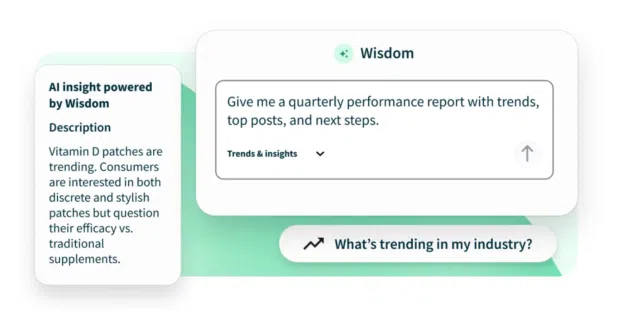
Wisdom for Connected Insights and Action: Hootsuite’s Wisdom AI agent is designed to connect disparate data points across a brand’s social operations. By querying Wisdom in plain language, users can pull context from content calendars, listening data, and performance reports. The true power lies in its ability to translate these insights into actionable steps. For example, if Wisdom identifies a trending conversation in listening data, it can help analyze the drivers and sentiment, then assist in drafting a relevant post while the topic is still timely. This seamless transition from insight to action across publishing, engagement, and reporting workflows distinguishes it from standalone AI tools.
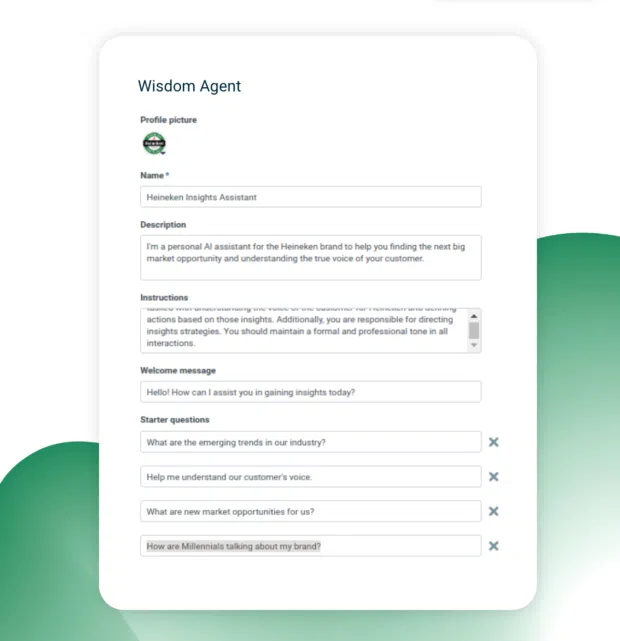
Wisdom Studio for Custom Agent Development: For recurring, ongoing tasks such as competitor monitoring, trend research, or brand tracking, Wisdom Studio allows users to build custom AI agents. These agents can be equipped with specific instructions, starter prompts, and knowledge sources (e.g., brand guidelines, playbooks), providing them with the necessary context to handle specialized jobs without needing to start from scratch each time. This enables teams to automate continuous background processes, freeing human resources for higher-level strategic work.
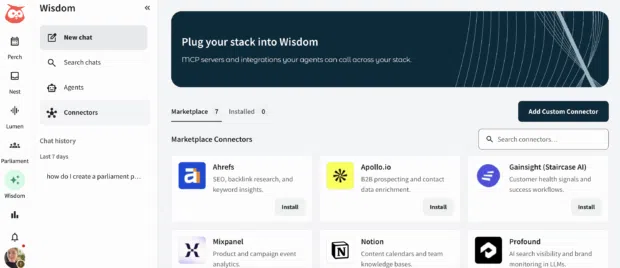
Enhanced Context with MCP Connectors: The utility of an AI agent scales with the context it possesses. Hootsuite’s MCP (Marketing Cloud Platform) connectors enable Wisdom to integrate with other critical business tools, such as CRM systems or knowledge bases. This means an agent isn’t limited to social data alone, providing a more holistic understanding. Conversely, Hootsuite can connect with other popular AI tools like ChatGPT, Claude, Gemini, and Copilot, allowing users to leverage their preferred AI assistants to draft and schedule posts via Perch, surface urgent customer messages from Nest, or delve into sentiment spikes with Lumen.
In conclusion, social media AI agents represent a significant leap forward in marketing technology, promising unparalleled efficiency and data-driven insights. However, their effective deployment hinges on a thoughtful approach that embraces their autonomous capabilities while rigorously maintaining human oversight for tasks demanding nuanced judgment, creative authenticity, and ethical responsibility. The future of social media management will undoubtedly be a collaborative ecosystem where human ingenuity guides and refines the powerful potential of AI.
Move faster on social with Hootsuite. Use Wisdom to spot trends, draft content, and help your team decide what to do next. Then use Perch to approve, schedule, publish, and track performance across your social channels. Try Hootsuite free today.