

The landscape of e-commerce marketing is witnessing a notable recalibration, as a growing number of online retailers, particularly small to medium-sized businesses (SMBs), are reportedly migrating from established industry giants like Klaviyo to more agile alternatives such as Omnisend. This shift is not merely a quest for novelty but a strategic response to evolving economic conditions, platform cost structures, feature complexity, and the imperative for responsive customer support. The movement underscores a critical re-evaluation of marketing technology stacks, driven by a renewed focus on operational efficiency and demonstrable return on investment (ROI).
Background and Context: A Shifting E-commerce Landscape
Klaviyo has long been recognized as a formidable force in the marketing automation sector, celebrated for its sophisticated data tracking, advanced predictive analytics, and granular segmentation capabilities. These attributes have positioned it as a premium choice, particularly for larger enterprises equipped with dedicated data science teams capable of harnessing its full potential. However, the prevailing economic climate, characterized by tightening consumer spending and increased budget scrutiny, has prompted many businesses to reassess the suitability of their existing technological partnerships.
A Deloitte Digital report from 2026 indicated that a significant 62% of e-commerce brands were negatively impacted by reduced consumer spending. This widespread financial pressure has created an environment where every operational expenditure, including software subscriptions, is subjected to intense scrutiny. Companies are increasingly unwilling to pay for features or capacities that are not fully utilized, leading to a strategic divestment from platforms perceived as over-engineered or excessively costly for their current operational scale and team resources. This period marks a pivotal moment for e-commerce, forcing businesses to optimize every aspect of their operations, from supply chains to customer engagement.
The rise of e-commerce during the pandemic years saw many businesses rapidly scale their digital operations, often adopting powerful, comprehensive tools. However, the subsequent normalization of consumer behavior and global economic headwinds have shifted priorities. Where once the focus was on rapid expansion and leveraging every possible advanced feature, the current emphasis is on cost efficiency, ease of use, and tangible results from lean teams. This shift highlights a growing disparity between enterprise-grade solutions designed for large organizations with substantial resources and the practical needs of smaller, faster-growing businesses with limited marketing personnel.
Chronology of Key Drivers: The 2025 Pricing Shift
A critical turning point in this migration trend was Klaviyo’s pricing model adjustment in February 2025. The company transitioned to a system where users were charged based on every "active profile" in their database. This model included all contactable individuals, irrespective of their engagement levels, recent activity, or whether they had been directly targeted with communications. Previously, pricing might have been more closely tied to email send volume or engaged contacts. This change meant that brands were effectively paying for the sheer size of their contact lists rather than the direct value derived from active engagement, posing a significant financial strain.
For businesses that had diligently built extensive customer databases, this change presented a dilemma: either incur substantially higher costs or invest valuable staff hours in meticulously pruning dormant contacts—a process that could be counterproductive to long-term list growth strategies. This shift immediately impacted budget allocations, forcing many e-commerce operators to actively seek out more cost-effective alternatives. The timing of this change, coinciding with broader economic headwinds, amplified its impact, making cost a paramount factor in platform selection.
The Financial Imperative: Unpacking Pricing Models
The "active profile" pricing model, while potentially beneficial for platforms by ensuring revenue aligns with data storage and processing, created a distinct challenge for many e-commerce brands. As Viktorija Dvariškytė, Digital Marketing Manager at CoinGate Gift Cards, noted, "The primary factor was pricing, and we weren’t using many of the features there. We needed a simpler, less cluttered tool." This sentiment reflects a widespread frustration among businesses paying for extensive features they couldn’t fully leverage, compounded by a pricing structure that penalized list growth.
Agencies, which often manage multiple client accounts, found it particularly difficult to justify the escalating costs to their clients. Alvaro Diaz-Rato, Founder of STRAT agency, articulated this challenge: "Before, they paid $600–1000 to Klaviyo for like two automations – welcome and a happy birthday flow. It became hard to justify such prices." This scenario underscores how an enterprise-centric pricing model can become unsustainable for clients with more modest needs, even if the underlying technology is robust.
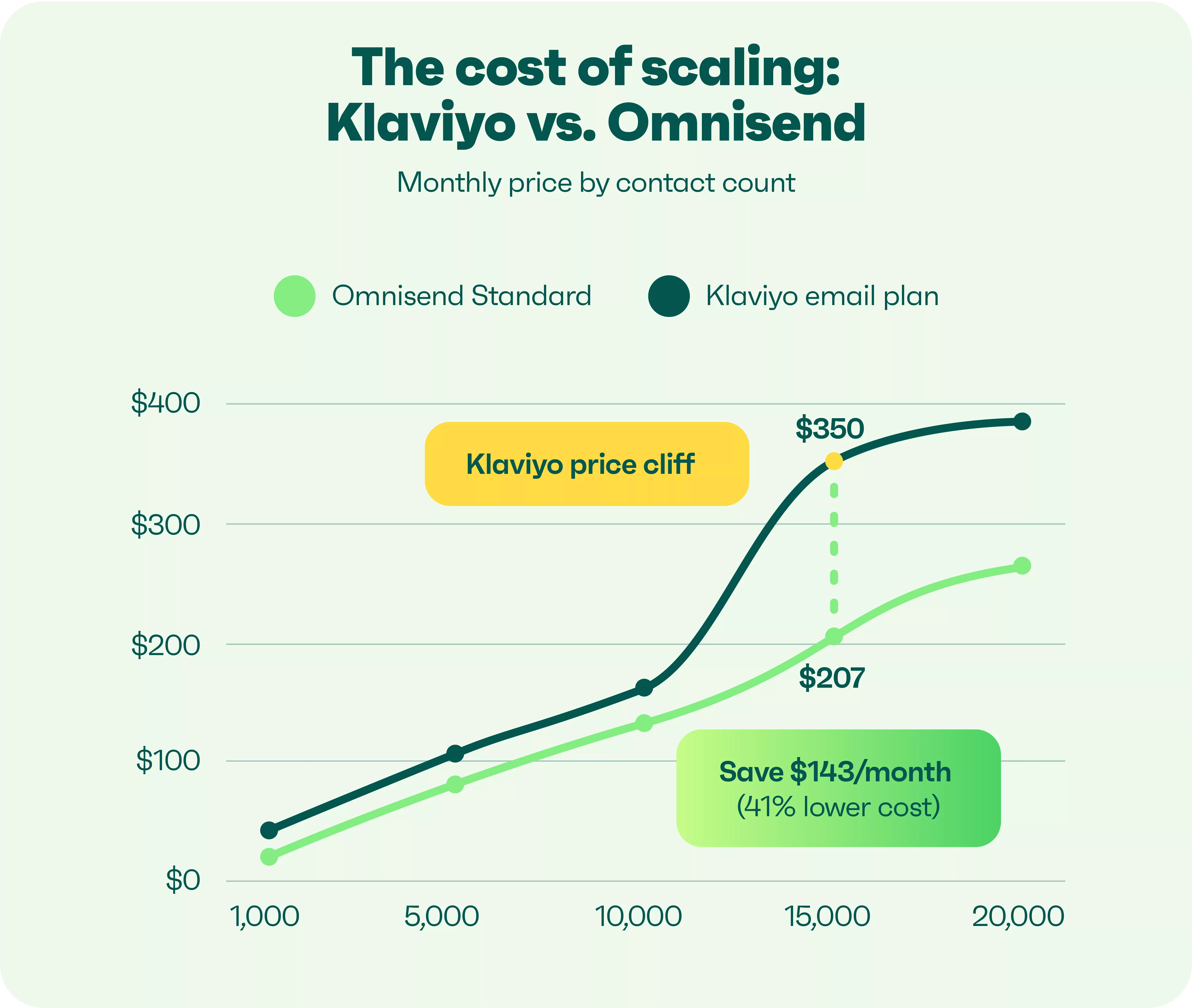
Upon migrating to platforms like Omnisend, businesses frequently reported significant cost savings, often gaining additional functionalities like SMS marketing within the same or even lower budget. Dan Judd, Head of Digital at Vape Superstore, highlighted this advantage: "What we were paying just for the email solution over at Klaviyo is nearly the same as what we’re paying for Omnisend with SMS." Similarly, Veronica Jeans, Founder of TopFlyte Agency, shared a striking example: "We moved from Klaviyo because the tier they were pushing us to was double. And even with double the emails we are sending in Omnisend, we are not paying half of that bill." These anecdotal accounts are reinforced by comparative analyses, often demonstrating that alternative platforms can offer significantly lower monthly costs, especially as contact lists grow. For instance, data indicates that at 10,000 contacts, Omnisend plans could be approximately 41% lower than Klaviyo’s, illustrating a substantial financial advantage for scaling businesses.
Feature Overload vs. Operational Efficiency
Beyond pricing, the sheer complexity of advanced marketing platforms presents another significant hurdle for smaller teams. While Klaviyo’s machine-learning-powered predictive analytics and highly granular segmentation are undeniably powerful, they are designed for organizations with the resources—both human and financial—to fully implement and manage them. For a lean five-person marketing team, the operational overhead of navigating and optimizing such intricate systems can outweigh the benefits.
Many SMBs find themselves in a situation where they are paying for an extensive suite of enterprise-grade features that they simply do not use to their full potential. This "feature bloat" not only represents a poor ROI but can also actively hinder day-to-day operations. The complexity can slow down the creation and deployment of essential marketing campaigns, diverting valuable time from strategic tasks to navigating an overly intricate interface.
Businesses that have transitioned emphasize the importance of clarity and speed in their marketing operations. Joy S., Growth Manager at FLEXTAIL, praised Omnisend’s approach: "Omnisend has a clear data pipeline and a clean UI, which makes it easy to inspect what’s happening at a glance. It’s logical to operate, and it doesn’t force you into endless micro-decisions just to build workflows that work." This highlights the value of intuitive design and streamlined workflows for teams focused on rapid execution rather than deep data analysis requiring specialized expertise.
Other users noted that a more focused platform provided all the necessary core features without the added complexity. Viktorija Dvariškytė from CoinGate Gift Cards reiterated, "It allows us to quickly set up campaigns and automations, segment our audience, and optimize performance without too much complexity." Veronica Jeans of TopFlyte Agency vividly described the challenge: "I did two weeks of campaigns in Klaviyo, and I really don’t know how anybody does it unless they are experienced email creators or an agency." These observations collectively underscore a growing preference for platforms that balance powerful capabilities with user-friendliness and operational speed, particularly for businesses that lack dedicated data science or extensive IT support.
The Critical Role of Customer Support
In the fast-paced world of e-commerce, where every minute of downtime or every missed marketing opportunity can translate directly into lost revenue, the quality and responsiveness of customer support are paramount. A broken automation, a sudden drop in email deliverability, or a technical glitch during peak sales periods like Black Friday and Cyber Monday can have catastrophic consequences. Despite this, the importance of robust customer support is often underestimated in favor of feature sets during initial platform selection.
Klaviyo’s support structure, which typically limits free plan users to 60 days of email support and offers varying response times (from 1 to 48 hours) for paid plans, has been cited as a point of contention for some businesses. For lean teams operating without extensive internal technical expertise, prompt, human-led support is not a luxury but a necessity. Inconsistent or delayed support can lead to prolonged issues, directly impacting sales and customer experience.
Users who migrated from Klaviyo frequently highlighted improved support as a significant benefit. Dan Judd from Vape Superstore stated, "The support we’re receiving far outweighed what we’d received from Klaviyo in the three years we’d been using them." This indicates a substantial difference in perceived service quality. Jocelyn A., COO at Ecom2Win, emphasized the immediate impact: "What surprised us the most was how reliable, absolutely reliable Omnisend is. We did not miss a beat once we joined. The team had support throughout – taking away that we have to wait 24 hours sometimes for a response. We’re now looking at instant, real-time responses and assistance." Such real-time assistance is crucial for resolving urgent issues that could otherwise derail marketing efforts and revenue generation.
Furthermore, the availability of dedicated account experts and personalized guidance proved invaluable for optimizing workflows. Jake Hughes, Co-founder of Vagari Bags, specifically noted: "The cost and lack of support were the biggest issues. Sometimes you just want to bounce ideas around or get help building flows. I found my dedicated Account Expert, Mangirdas, from the Omnisend team, really helpful." This level of proactive and personalized support goes beyond troubleshooting, offering strategic assistance that can significantly enhance a brand’s marketing performance.
Navigating the Transition: Addressing Migration Fears
The decision to switch marketing platforms is rarely taken lightly. Businesses often dread the potential for disruption, including deliverability drops, loss of historical data and tags, or broken automation flows during the transition period. These fears can be paralyzing, sometimes leading companies to remain with a suboptimal provider even when it incurs higher costs or operational inefficiencies. Common challenges in migration include:
- Data Integrity: Ensuring all customer data, purchase history, and segmentation tags are accurately transferred.
- Workflow Replication: Rebuilding complex automation sequences and campaigns without errors.
- Deliverability Warm-up: Gradually re-establishing sender reputation with email service providers to avoid spam filters.
- Downtime Risk: Minimizing any period where marketing communications are interrupted.
Recognizing these significant hurdles, some platforms, such as Omnisend, offer comprehensive free migration services. These services aim to alleviate the technical burden and associated risks for businesses making the switch. For example, Omnisend’s team handles the rebuilding of workflows, segments, forms, contact lists, and templates, alongside providing an automated warm-up process for ex-Klaviyo users. This support aims to ensure a seamless transition, often completed within five business days.
The experience of those who have migrated often defies initial anxieties. Alvaro Diaz-Rato from STRAT agency remarked, "The migration from Klaviyo was a breeze, since there was already an app for that." A particularly compelling testimony came from Jocelyn A. of Ecom2Win, who recounted client concerns about migrating during the critical Black Friday peak season, fearing disruptions to revenue due to deliverability and automation downtime. These fears ultimately proved unfounded: "Revenue performance was comparable to the previous year, which validated that the migration had not negatively impacted performance. It’s a huge win considering switching platforms in such a short space of time before Black Friday. But it gave us peace of mind just knowing that our approach and the migration all worked out." Such experiences demonstrate that with the right support, platform migration can be executed successfully even during high-stakes periods.
Strategic Implications and Self-Audit: Is Your Marketing Platform Still a True Fit?
The trend of e-commerce brands moving away from highly complex, enterprise-priced marketing platforms signifies a broader strategic recalibration within the industry. It highlights the critical importance of platform "fit" – ensuring that a technology solution aligns perfectly with a company’s current stage of growth, team capabilities, budget constraints, and strategic priorities. A platform built for enterprise data teams, while powerful, can indeed be the wrong fit for a lean, agile marketing operation.
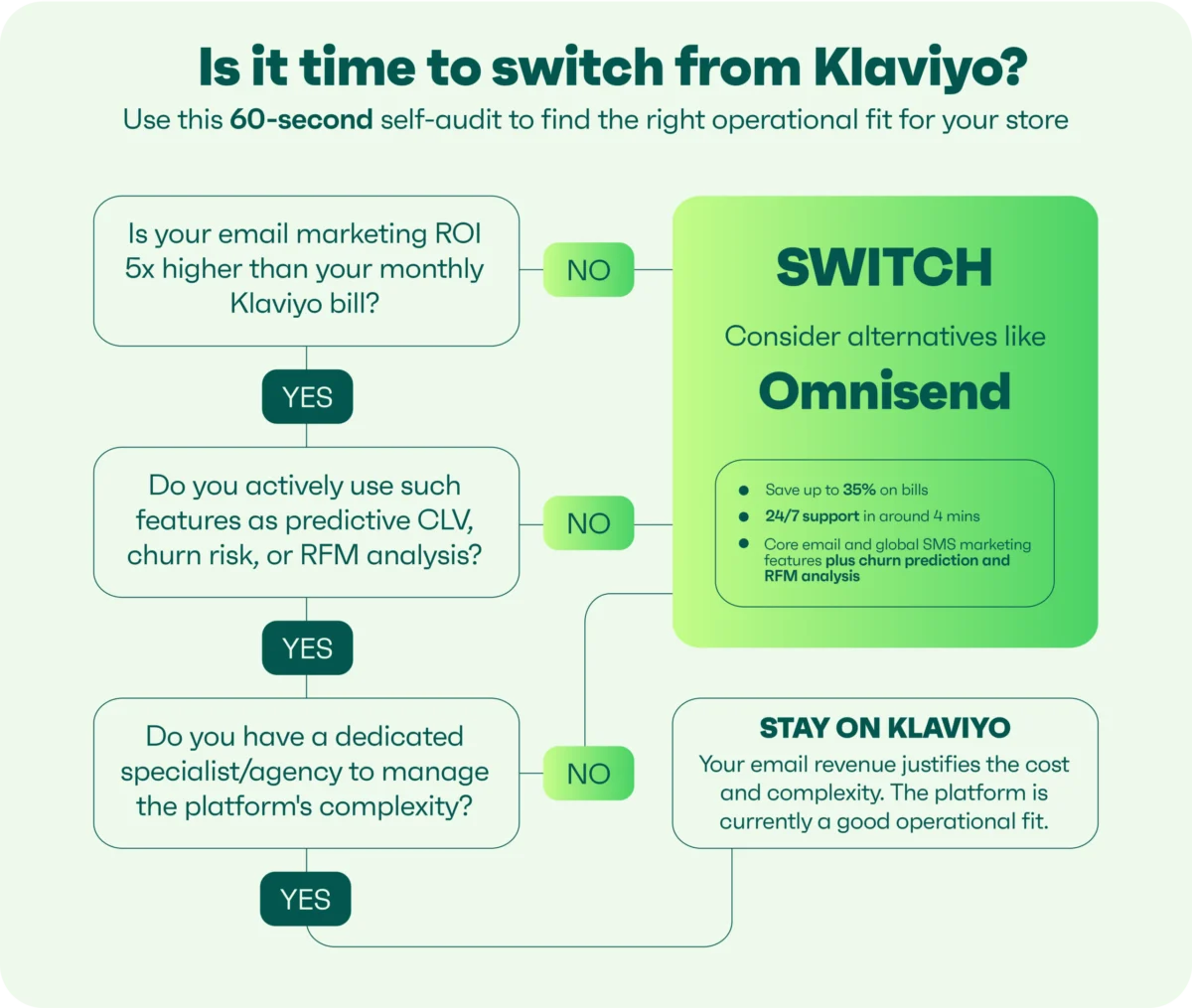
To help businesses assess whether their current marketing platform remains the optimal choice, a strategic self-audit is recommended. This involves asking critical questions about the platform’s performance and alignment with business objectives:
- Cost-to-Value Optimization: Is your current platform’s cost-to-value ratio optimized for your operational budget, especially considering how many features your team actively utilizes?
- Feature Utilization: Are you utilizing a significant portion of your platform’s advanced features, or is much of its complexity going unused and contributing to unnecessary cost?
- Support Responsiveness: How quickly and effectively does your current platform’s customer support team resolve critical issues, and does it meet your operational demands?
- Operational Efficiency: Does your platform’s complexity hinder daily marketing execution or team efficiency, slowing down campaign deployment and requiring excessive training?
These questions serve as a diagnostic tool, prompting businesses to look beyond brand recognition and evaluate the practical realities of their marketing technology stack. The answers can reveal significant misalignments that, if unaddressed, can impede growth and drain resources.
Outlook and Future Trends
As the e-commerce sector continues to mature, the decision to evolve one’s marketing platform is becoming a natural progression for many businesses. The emphasis is shifting towards solutions that offer a robust feature set without overwhelming complexity or prohibitive costs, particularly for fast-growing Shopify and WooCommerce stores with lean marketing teams. This trend suggests that marketing technology vendors will face increasing pressure to provide transparent, value-driven pricing models and user-friendly interfaces, alongside highly responsive customer support.
The market is likely to see further innovation in platforms designed specifically for the SMB segment, focusing on intuitive design, integrated multi-channel capabilities (email, SMS, push notifications), and affordable scaling options. For e-commerce brands, the takeaway is clear: regularly auditing your marketing technology stack against your evolving needs, budget, and team capabilities is no longer optional but a strategic imperative. Choosing a path that balances power and simplicity will be key to sustainable growth and competitive advantage in a challenging economic environment. For a detailed comparison of leading providers, including pricing, features, and migration ease, businesses are encouraged to explore comprehensive guides on available alternatives.








