The United States is currently grappling with one of the most devastating public health catastrophes in its modern history: an opioid epidemic that has claimed hundreds of thousands of lives and fundamentally altered the demographic landscape of the nation. While the crisis gained significant public attention through investigative journalism, such as the Pulitzer Prize-winning "Seven Days of Heroin" report by the Cincinnati Enquirer, the underlying data reveals a complex narrative of addiction, corporate influence, and shifting drug markets. By synthesizing data from the Centers for Disease Control and Prevention (CDC), the United Nations Office on Drugs and Crime (UNODC), and statistical analyses of drug use by age, a clearer picture emerges of how the United States became the global epicenter of overdose mortality.
The Evolution of an Epidemic: A Three-Wave Chronology
The current crisis did not emerge in a vacuum; rather, it is the result of three distinct "waves" of drug-related mortality that have overlapped to create a perfect storm of addiction. Understanding this chronology is essential to grasping the scale of the problem.
The first wave began in the late 1990s, characterized by a sharp increase in overdose deaths involving prescription opioids. This period was marked by the aggressive marketing of opioid painkillers, such as OxyContin, by pharmaceutical companies. Healthcare providers were encouraged to treat pain as a "fifth vital sign," leading to a massive influx of legal opioids into American households. By the time the addictive potential of these drugs was fully realized, millions of Americans were already dependent.
The second wave began around 2010, as regulations on prescription opioids tightened and the cost of pharmaceutical pills rose on the black market. Many individuals who had become addicted to prescription pills transitioned to heroin, which was cheaper and more readily available. During this period, heroin-related overdose deaths began to climb rapidly across nearly every demographic group.
The third and most lethal wave commenced in 2013, defined by the rise of synthetic opioids, particularly illicitly manufactured fentanyl. Fentanyl is approximately 50 to 100 times more potent than morphine and is often mixed into other drugs, such as cocaine or counterfeit pills, frequently without the user’s knowledge. This wave has driven overdose deaths to record highs, with the CDC reporting that over 100,000 Americans now die annually from drug overdoses, with synthetic opioids accounting for the vast majority of these fatalities.
Comparative Lethality: Heroin vs. Other Substances
Data regarding drug use by age group reveals a startling discrepancy between the prevalence of use and the rate of mortality. When comparing heroin to other "hard" drugs like cocaine or crack, heroin exhibits a unique and terrifying profile. While cocaine and crack maintain a presence across a broader range of age groups, heroin usage is concentrated heavily among individuals aged 20 to 34.
However, the most critical distinction lies in the drug’s lethality. Despite having a smaller total number of users compared to marijuana, cocaine, or even misused prescription stimulants, heroin and its synthetic counterparts account for a disproportionate number of deaths. This "lethality gap" suggests that while other drugs may have higher rates of "adoption" or casual use, the margin for error with opioids is virtually non-existent. For many users, the transition from experimentation to a fatal overdose occurs within a much shorter timeframe than with other substances. Furthermore, the concentration of heroin use in younger age brackets suggests a "lost generation" effect, where the potential economic and social contributions of young adults are being severed by addiction.
The United States in a Global Context
When analyzed on a global scale, the United States stands as a significant outlier in terms of overdose mortality. According to UNODC data, the U.S. leads the world in both absolute numbers of overdose deaths and deaths per million people. While countries like Sweden, Australia, and El Salvador report high rates of overdose relative to their populations, their figures remain significantly lower than those of the United States.
In 2021, the U.S. overdose death rate surpassed 300 per million people. In contrast, many European nations with robust social safety nets and different approaches to addiction—such as Portugal or Switzerland—report rates that are a fraction of the American total. Iceland serves as a unique statistical outlier; due to its extremely small population, a relatively low number of deaths (approximately 45) results in a high "per million" rate, yet the absolute scale of its crisis does not mirror the systemic devastation seen in the U.S.
The disparity between the U.S. and the rest of the world can be attributed to several factors, including the lack of universal healthcare, the historical over-prescription of opioids, and the rapid infiltration of the illicit drug supply by high-potency synthetics. While the opioid crisis is increasingly becoming a global concern, the American experience remains uniquely severe.
Regional Hotspots and Domestic Trends
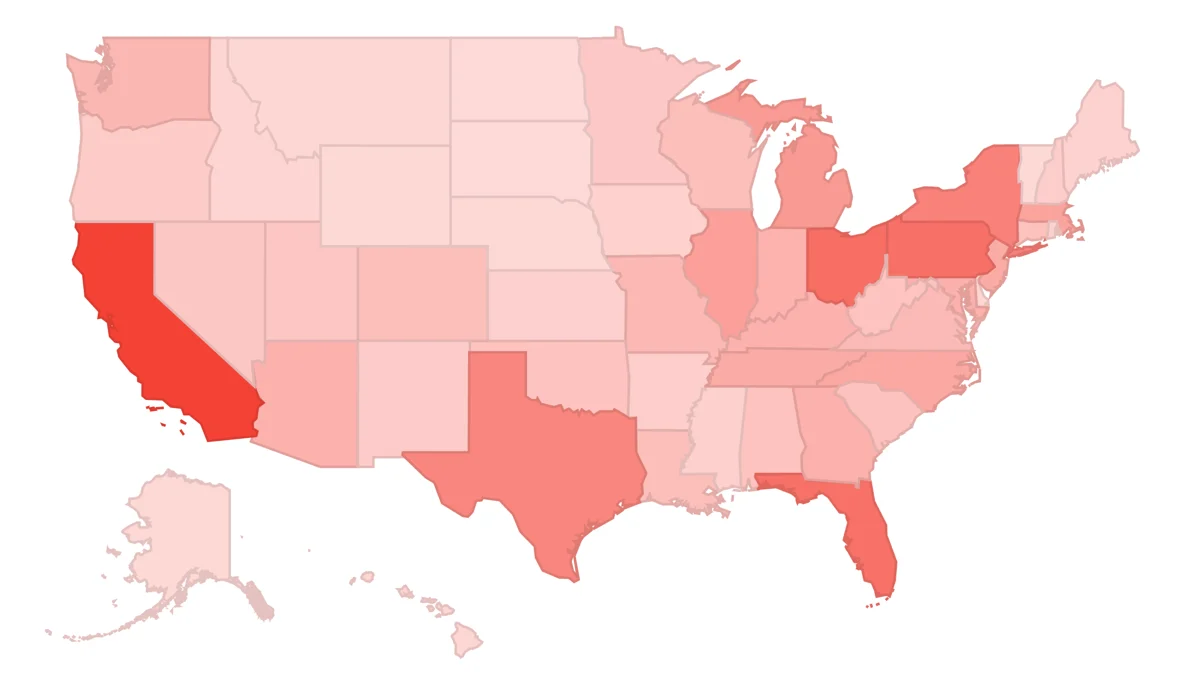
Within the United States, the epidemic is not distributed evenly. Data from the CDC highlights specific geographic "hotspots" where the crisis is most acute. The Appalachian region, particularly West Virginia, Ohio, and Kentucky, has consistently reported the highest rates of overdose deaths. These areas were historically targeted by pharmaceutical distributors and have suffered from economic stagnation, which researchers often link to "deaths of despair."
However, the trend is shifting. While the Rust Belt remains a focal point, the sharpest increases in mortality rates are now being seen in the Northeast and parts of the West Coast. States like New Hampshire and Maryland have seen dramatic surges linked almost exclusively to fentanyl. Conversely, some states that were early adopters of aggressive prescription monitoring programs and expanded access to naloxone (an overdose-reversal drug) have seen a slowing in the rate of increase, though absolute numbers remain high.
The data suggests that the epidemic is evolving from a rural, prescription-based crisis into an urban and suburban crisis dominated by illicit synthetics. This shift complicates public health responses, as the "source" of the drugs is no longer a doctor’s office but a clandestine global supply chain.
Economic and Societal Implications
The implications of the opioid epidemic extend far beyond the tragic loss of life. The economic burden is estimated to be over $1 trillion annually when accounting for healthcare costs, criminal justice expenses, and lost productivity. The U.S. labor force has been significantly impacted, with the Brookings Institution suggesting that a notable portion of the decline in labor force participation among prime-age men can be attributed to opioid use.
Furthermore, the social fabric of communities is being strained. The foster care system in many states is overwhelmed by "opioid orphans"—children whose parents have either died from overdoses or are unable to care for them due to addiction. The long-term psychological and developmental impact on this generation of children represents a secondary crisis that will require decades of intervention.
Official Responses and Policy Shifts
In response to the mounting death toll, federal and state governments have initiated several key policy changes. These include:
- Litigation Against "Big Pharma": A series of landmark lawsuits against manufacturers like Purdue Pharma and distributors like AmerisourceBergen has resulted in settlements totaling over $50 billion. These funds are earmarked for addiction treatment and prevention programs.
- Harm Reduction: There has been a controversial but growing shift toward harm reduction strategies. This includes the widespread distribution of Narcan (naloxone) and the establishment of syringe exchange programs. Some cities are even exploring supervised injection sites, a move that remains a point of intense legal and political debate.
- The "Halt All Lethal Trafficking" (HALT) Act: Legislative efforts have focused on permanently scheduling fentanyl-related substances to give law enforcement more tools to prosecute traffickers.
- Expansion of Treatment Access: The removal of the "X-waiver," which previously restricted the number of patients a doctor could treat with buprenorphine (a medication for opioid use disorder), has significantly expanded access to evidence-based treatment.
Despite these efforts, the death toll continues to rise, leading many experts to argue that the current response is still insufficient to meet the scale of the synthetic opioid wave.
Conclusion and Future Outlook
The U.S. opioid epidemic is a multi-faceted crisis that requires a data-driven, compassionate, and sustained response. The transition from prescription pills to heroin, and finally to fentanyl, has created a landscape where the risk of death is omnipresent for those struggling with substance use disorder. While the United States remains the hardest-hit nation, the lessons learned—both from failures in regulation and successes in harm reduction—will be vital for the global community as synthetic opioids begin to appear in international markets.
For analysts and policymakers, the data serves as both a warning and a roadmap. It highlights the areas of greatest need and the demographic groups most at risk. As the crisis continues to evolve, the ability to interpret these trends in real-time will be the difference between a successful intervention and a continuing tragedy. The path forward requires a shift from viewing addiction as a moral failure to treating it as a complex public health emergency that demands the full weight of scientific and economic resources.