rifanmuazin
For years, the conventional wisdom in search engine optimization (SEO) has revolved predominantly around a singular objective: driving traffic and acquiring new users. Strategies were meticulously crafted to elevate rankings for high-volume keywords, capture market share, and funnel prospective customers through the digital doorway. However, a significant paradigm shift is underway, challenging this narrow focus and advocating for a more holistic approach that recognizes conversion as a crucial milestone, not the finish line. This evolving perspective posits that SEO can and should play a pivotal role in the post-conversion phase, actively supporting customer retention, enhancing onboarding experiences, simplifying product understanding, and ultimately fostering enduring loyalty and lifetime value.
The Shifting Landscape of Digital Strategy: From Acquisition to Retention
Historically, SEO campaigns have been heavily weighted towards the top of the marketing funnel. The emphasis on visibility, clicks, and initial conversions often overshadowed the equally critical journey a user undertakes after becoming a customer. This myopic view, while effective for initial growth metrics, frequently overlooks the sustained engagement necessary for long-term business success. The reality is that once an individual signs up for a service or completes a purchase, their interaction with the brand does not cease; it merely transforms. They continue to search, learn, and evaluate whether the product or service meets their expectations, solidifying their decision to remain a customer or seek alternatives.
The digital landscape has matured, and with it, the cost of customer acquisition (CAC) has steadily risen across various industries. According to a report by Invesp, acquiring a new customer can be five times more expensive than retaining an existing one. Furthermore, increasing customer retention rates by just 5% can boost profits by 25% to 95%. These compelling statistics underscore the strategic imperative for businesses to invest as much, if not more, in customer retention as they do in acquisition. SEO, traditionally seen as an acquisition tool, is uniquely positioned to address this retention challenge by optimizing the content that guides and supports existing users.
A Chronology of SEO’s Evolving Focus
The journey of SEO has seen several distinct phases, each driven by technological advancements, algorithm updates, and evolving business priorities:
- Early 2000s: Keyword Stuffing and Link Spam. The nascent days of search engines were characterized by black-hat tactics focused on manipulating rankings through sheer volume of keywords and low-quality backlinks. The emphasis was purely on machine readability, with little regard for user experience.
- Mid-2000s to Early 2010s: Content is King, but Quantity Over Quality. As algorithms became more sophisticated, content began to gain prominence. However, the focus often remained on producing large volumes of content, sometimes sacrificing depth and quality for keyword density and frequency. Analytics tools started offering rudimentary insights into user behavior.
- Early 2010s to Mid-2010s: User Experience and Authority Emerge. Google’s Panda and Penguin updates revolutionized SEO, penalizing low-quality content and manipulative link schemes. User experience (UX) signals, site speed, and domain authority gained significant traction. The concept of "intent" started to influence keyword research, moving beyond mere keywords to understanding what users wanted to achieve.
- Mid-2010s to Present: Semantic Search, Mobile-First, and Comprehensive User Journey. The rise of mobile devices necessitated responsive design and faster loading times. Semantic search, fueled by AI and machine learning, allowed search engines to understand context and nuance, not just exact keywords. This era also saw an increasing recognition of the entire customer journey, from discovery to post-purchase support. SEO began to integrate more closely with content marketing, product development, and customer success. The current phase emphasizes E-E-A-T (Experience, Expertise, Authoritativeness, Trustworthiness) and a holistic view of content value across the entire customer lifecycle.
This historical progression highlights a natural evolution towards a more sophisticated understanding of how users interact with brands and information. The current frontier for SEO professionals is to extend their expertise beyond the initial "door-opening" to nurturing relationships and maximizing customer lifetime value.
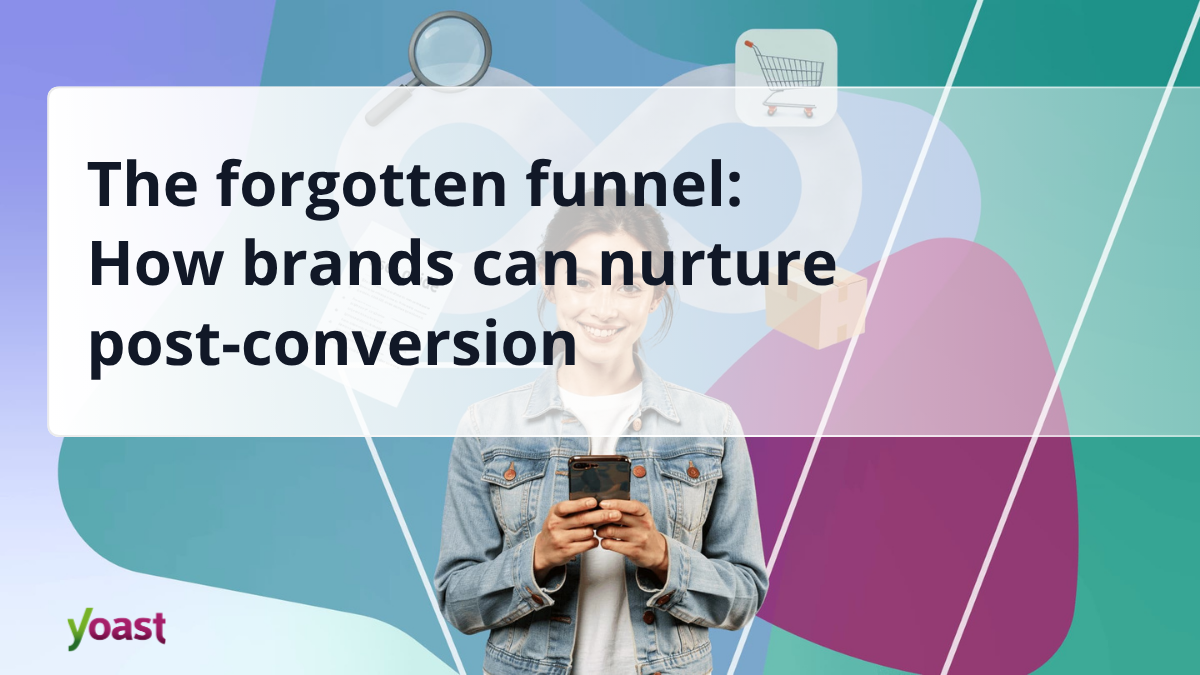
The Untapped Potential: Post-Conversion Content as an SEO Powerhouse
Once a customer has converted, their informational needs shift dramatically from pre-purchase research to practical application. They are no longer asking "What is this product?" or "Why should I buy it?" but rather "How do I set it up?", "What are its advanced features?", "How do I troubleshoot this issue?", or "What are the care instructions?" These queries, often highly specific and intent-driven, represent a goldmine for long-tail SEO.
Content assets that address these post-conversion needs include:
- Help Centers and Knowledge Bases: Comprehensive repositories of articles, FAQs, and guides covering product setup, usage, features, and common issues.
- Product Explainers and Tutorials: Detailed walkthroughs, often accompanied by videos or interactive elements, demonstrating how to maximize product value.
- How-To Guides: Step-by-step instructions for specific tasks or problem-solving.
- Community Forums and User Q&A: Platforms where users can ask questions, share experiences, and receive peer-to-peer support, often moderated by the brand.
- Troubleshooting Guides: Diagnostic tools and solutions for common problems.
- Product Care and Maintenance Tips: Essential for physical products, ensuring longevity and satisfaction.
- Onboarding Sequences: Curated content paths designed to guide new users through their initial interactions with a product or service.
When these resources are well-structured, optimized for genuine user queries, and regularly updated, they transform into powerful organic growth engines. They capture highly specific, low-volume but high-intent long-tail keywords that might otherwise be missed by traditional top-of-funnel strategies. Furthermore, user-generated content within community forums and Q&A sections can organically expand a site’s keyword footprint, constantly refreshing and maintaining itself with minimal direct intervention from the SEO team.
SEO Benefits of Fostering Retention and Reducing Churn
The positive ripple effects of effective post-conversion SEO extend far beyond mere customer satisfaction. They directly contribute to robust SEO performance and sustainable organic growth:
- Increased Branded Searches: Engaged, satisfied users are more likely to conduct branded searches (e.g., "Microsoft Excel help," "Nike shoe care") when they have a query. This signals strong brand authority and relevance to search engines.
- Enhanced Internal Content Engagement: Users who find value in support content are more likely to explore other parts of your website, increasing page views, time on site, and reducing bounce rates—all positive engagement signals.
- Natural Link Building: Highly useful and authoritative help content can earn backlinks from other websites, blogs, and forums, further boosting domain authority.
- Positive Reviews and User-Generated Content: Satisfied customers are more prone to leaving positive reviews, sharing their experiences, and contributing to community discussions, which in turn generates more indexable content and social proof.
- Reduced Support Load: By preemptively answering common questions through well-optimized content, businesses can significantly reduce the volume of support tickets and calls, freeing up resources and improving operational efficiency.
- Higher Customer Lifetime Value (CLTV): Retained customers make repeat purchases, subscribe to longer-term plans, and are more likely to upgrade or cross-buy, directly impacting revenue.
- Improved Search Engine Trust: A website that consistently provides comprehensive, helpful content across the entire customer journey demonstrates expertise and trustworthiness, which are key ranking factors in modern SEO.
Identifying High-Value Post-Conversion Content Opportunities
Pinpointing the most impactful content to create or optimize is not guesswork; the answers lie within existing customer interactions and data. Businesses already possess the raw material to identify critical friction points:
-
Support Tickets and Helpdesk Data: This is arguably the richest source. Analyze the most frequently asked questions, recurring issues, or areas where users express confusion or frustration. If the same problem consistently generates tickets, it indicates a gap in documentation or discoverability.
- Actionable Insight: Transform top support issues into searchable, step-by-step tutorials, comprehensive help articles, or even short video guides embedded directly within knowledge bases or relevant product pages. Use the exact language customers use in their tickets for keyword optimization.
-
Customer Interactions (Sales, Customer Success, Social Media): Customer-facing teams possess invaluable qualitative insights that may not appear in structured ticket data. They understand the nuances of why certain features are underutilized, which steps in the user journey cause friction, or how customers truly perceive product value.
- Actionable Insight: Conduct regular feedback sessions with these teams. Create content that proactively addresses onboarding challenges, highlights underused features, or clarifies complex aspects of the product. Mirror customer language in content titles and descriptions to align with their search queries.
-
Internal Search Queries: The search bar on a website, help center, or product dashboard is a direct pipeline into user intent. What users search for after logging in or visiting a specific product page reveals their immediate needs and struggles.
- Actionable Insight: Monitor internal search analytics. Identify queries that yield poor results, no results, or lead to user abandonment. Prioritize creating or improving content that precisely answers these questions. Optimize titles, headings, and metadata to ensure the most relevant article appears first.
-
Feature Usage and Product Engagement Data: Low adoption rates for a specific feature or product module don’t always signify low interest; they often point to issues with discoverability, clarity of instructions, or perceived value.
- Actionable Insight: Collaborate with product teams to analyze usage data. For features with high potential but low adoption, interview users who do utilize them successfully to understand their journey. Then, build content—guides, use-case examples, best practices—that steers other users towards similar positive outcomes.
Expert Perspectives on Post-Conversion SEO
"The shift to post-conversion SEO is not just a trend; it’s a fundamental maturation of the digital marketing landscape," states Dr. Evelyn Reed, a prominent digital strategy analyst. "As customer acquisition costs escalate, businesses are realizing that the true ROI lies in retention. SEO professionals who can optimize the entire customer lifecycle, ensuring users find answers and derive value at every stage, will be the most valuable assets to any organization."
Similarly, Michael Chen, Head of Organic Growth at a leading SaaS provider, notes, "We’ve seen a dramatic reduction in support tickets and a significant uplift in feature adoption since we started treating our knowledge base as a core SEO asset. It’s about empowering users with information, which not only makes them happier but also drives organic visibility for highly specific, problem-solving queries."
Strategic Internal Linking for Sustained Engagement

Even the most meticulously crafted post-conversion content will fall short if it exists in isolation. A robust internal linking strategy is paramount to ensure users seamlessly navigate through relevant information, deepening their engagement and understanding. This creates a dense, interconnected web of content that search engines can easily crawl and index, further boosting its authority.
Effective internal linking tactics include:
- Contextual Links: Embed links to related help articles, tutorials, or product pages within the body of other content where relevant.
- "Related Articles" Sections: Implement dynamic "Related Articles" or "You Might Also Like" modules at the end of help documents.
- Onboarding Flows: Integrate links to setup guides, feature walkthroughs, and FAQs directly into product onboarding sequences.
- Product Page Integration: Link from product pages directly to detailed user manuals, care instructions, or troubleshooting guides.
- Sitemap and Navigation: Ensure all post-conversion content is logically organized within the site structure and easily accessible through navigation menus or dedicated help sections.
- Calls to Action (CTAs): Use clear CTAs within content to guide users to the next logical step, whether it’s exploring another feature, contacting support, or engaging with the community.
Done correctly, this transforms static content into a dynamic ecosystem that continually guides users, improves their experience, and reinforces their confidence in the brand.
Broader Impact and Future Implications
The embrace of post-conversion SEO carries significant implications across various facets of a business:
- For Businesses: It leads to demonstrably higher customer lifetime value (CLTV), reduced customer churn, lower operational costs due to decreased support queries, and a stronger, more resilient brand reputation built on trust and reliability. It also provides a significant competitive advantage by differentiating the brand through superior user support and engagement.
- For SEO Professionals: This shift expands the scope of an SEO’s role, requiring them to collaborate more closely with product development, customer success, and content teams. It necessitates a broader understanding of the entire customer journey and the ability to track metrics beyond traditional rankings and traffic, such as support ticket deflection rates, feature adoption, and customer satisfaction scores (CSAT).
- For Users: The ultimate beneficiaries are the users themselves. They gain immediate access to accurate, helpful information, reducing frustration, accelerating product adoption, and fostering a sense of empowerment and loyalty.
- Future Trends: Looking ahead, the integration of artificial intelligence (AI) and machine learning will further personalize post-conversion content delivery, predicting user needs before they even search. Voice search will play an increasing role in support queries, demanding content optimized for natural language processing. The ability of search engines to understand complex user intent will make comprehensive, semantically rich help content even more critical.
In conclusion, an SEO strategy that exclusively focuses on acquisition is increasingly incomplete and unsustainable in today’s competitive digital landscape. By extending its reach into the post-conversion phase, SEO becomes an indispensable tool for enhancing the entire customer experience, building long-term loyalty, and driving defensible organic growth. Businesses that proactively audit their post-conversion content, identify user friction points through data, and strategically optimize and interlink these valuable assets will not only improve their search engine visibility for crucial intent-driven queries but also cultivate a base of satisfied, engaged customers who become advocates for the brand. SEO is no longer just about discovery; it’s about usability, confidence, and ensuring that users not only show up but also choose to stay.