

The digital marketing landscape has undergone a radical transformation over the last decade, shifting away from generalized homepages toward highly specialized, conversion-focused landing pages. As of 2026, the consensus among industry experts at Unbounce and other leading marketing platforms remains firm: a polished, professional landing page is the single most effective tool for improving conversion rates, while a cluttered or unfocused design serves as a significant deterrent to potential leads. This comprehensive analysis examines the architectural elements of 40 world-class landing pages, providing a data-driven roadmap for marketers seeking to optimize their digital presence.

The Strategic Importance of the Standalone Landing Page
A landing page is defined as a standalone web page created specifically for a marketing or advertising campaign. Unlike a traditional homepage, which serves as a general hub for navigation and brand exploration, a landing page is designed with a single objective in mind: to convert visitors into leads or customers. This focus is achieved by eliminating “leaks”—navigation links, sidebars, or competing calls to action (CTAs)—that might distract a user from the primary goal.
Historical data suggests that organizations using specialized landing pages see a marked increase in ROI compared to those directing traffic to their homepage. According to industry benchmarks, the inclusion of video content alone can increase conversion rates by as much as 86%. Furthermore, matching the primary headline of a landing page to the specific ad or email that brought the visitor there—a concept known as “message match”—is critical for reducing bounce rates and building immediate trust.
Analytical Breakdown of Industry Leaders
SaaS and Digital Entertainment: The Power of Simplicity
The SaaS sector, led by giants like Netflix and Spotify, has perfected the art of the minimalist landing page. Netflix, which currently boasts over 300 million subscribers globally, utilizes a strategy that emphasizes value over complexity. Their landing page focuses on a singular value proposition: unlimited content for a low monthly price. By reducing the sign-up process to a simple email entry field, they minimize friction and maximize user acquisition.

Similarly, Spotify’s landing page architecture leverages universal brand recognition. Because the service is widely understood, the page avoids lengthy descriptions of “what” the service is, focusing instead on “how” to start listening. This streamlined design reflects a broader trend in 2026 where established brands prioritize speed and ease of access over educational content.

Ecommerce and Visual Storytelling
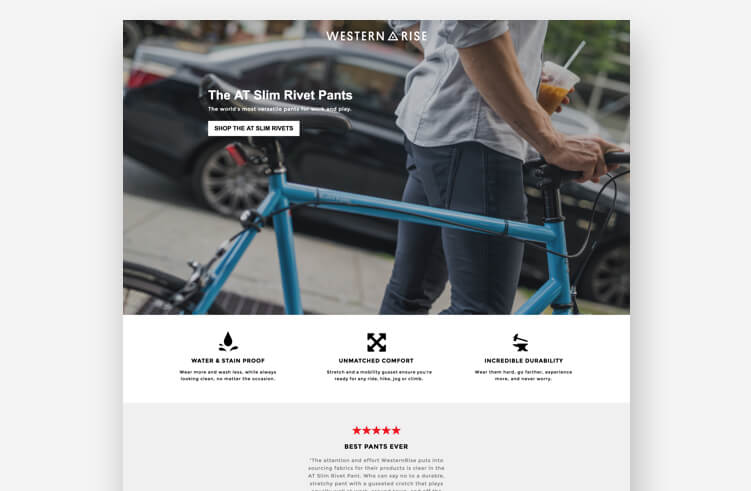
In the ecommerce space, brands like Western Rise and Woolx demonstrate the necessity of high-fidelity visual storytelling. Western Rise utilizes “elevated” copy and sharp photography to justify premium pricing for its apparel. By focusing on the functional benefits of the fabric—breathability and durability—they move the conversation beyond aesthetics to utility.

Woolx takes this further by integrating video backgrounds and high-resolution photography of their Merino wool products. This immersive approach allows the consumer to virtually “feel” the quality of the garment, which is essential for high-end digital retail. Analysis shows that for tactile products like clothing, the quality of the “hero shot” (the primary visual on the page) is the most significant factor in establishing product value.

Health, Wellness, and Niche Markets
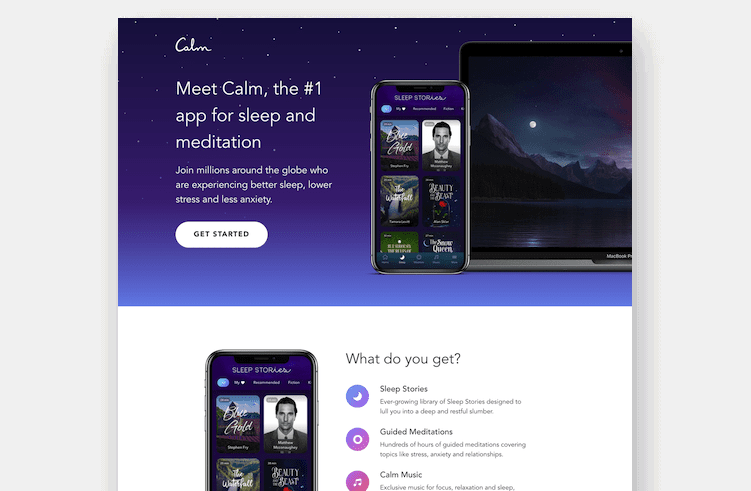
The wellness industry presents unique challenges, often requiring a balance between clinical authority and approachable design. Calm, the meditation and sleep app, uses a landing page that mirrors its product’s purpose: it is tranquil, spacious, and calming. By asking visitors a simple question about their goals (e.g., “Reduce stress” or “Improve sleep”), they engage the user in a low-stakes interaction that leads naturally toward an account creation.

In more specialized niches, such as Bariatric Eating or Blue Forest Farms (a B2B hemp provider), the design must overcome specific industry stigmas. Blue Forest Farms utilizes a clean, corporate aesthetic to distance its wholesale hemp products from “cannabis culture,” thereby appealing to professional pharmaceutical and retail buyers. Bariatric Eating, conversely, uses vibrant, friendly designs to make medical nutrition feel less clinical and more like a lifestyle choice, achieving conversion rates as high as 39%.

The Role of Agency Innovation
The evolution of these pages is frequently driven by specialized marketing agencies like ConversionLab, Webistry, and MuteSix. These firms utilize advanced A/B testing and custom scripts to push the boundaries of what standard builders can achieve.

For instance, Webistry’s work for Panda7 (car insurance) and HomeLoanGurus focuses on “frictionless finance.” They break down complex processes—like applying for a mortgage or comparing insurance rates—into simple, step-by-step forms. This “chunking” of information prevents the visitor from feeling overwhelmed, which is a common cause of drop-offs in the financial services sector.

Chronology of Landing Page Development
The process of creating a high-converting page has moved from a developer-heavy workflow to an agile, marketer-led cycle. The standard professional timeline for 2026 involves ten distinct stages:

- Goal Identification: Defining the single conversion metric (e.g., lead gen, sales, or registration).
- Audience Segmentation: Identifying the specific pain points of the target demographic.
- Competitive Research: Analyzing the “swipe files” of industry leaders to identify successful patterns.
- Copywriting: Crafting a compelling headline and benefit-driven body text.
- Visual Asset Creation: Producing high-quality hero shots, videos, or illustrations.
- Wireframing/Building: Using drag-and-drop builders like Unbounce to assemble the page.
- Message Match Audit: Ensuring the page copy aligns perfectly with the source ad.
- Mobile Optimization: Confirming the page is responsive across all devices.
- Integration: Connecting the page to CRM systems (e.g., Salesforce, HubSpot).
- A/B Testing: Launching multiple versions to see which performs better in real-time.
Official Responses and Market Trends
Industry leaders suggest that the future of landing pages lies in AI-driven personalization. “No page is perfect, but every page can be better,” notes the Unbounce content team. This sentiment reflects a shift toward “Smart Traffic” solutions, where AI analyzes a visitor’s behavior in real-time and directs them to the version of a landing page most likely to convert based on their location, device, and previous interactions.
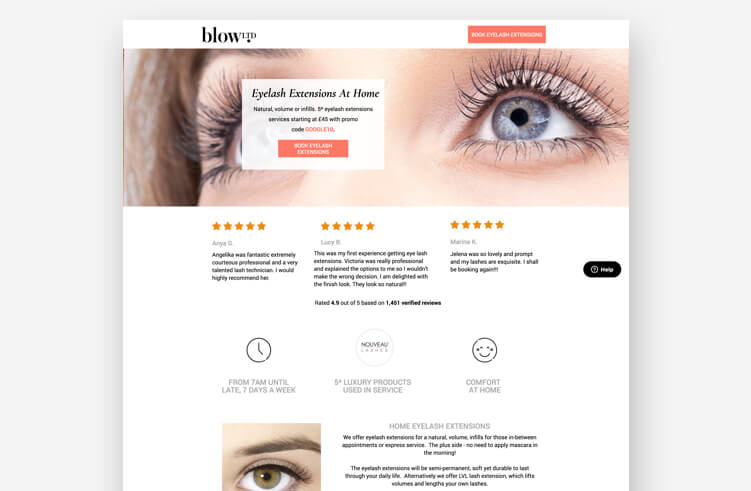
Marketing experts also emphasize the “above the fold” principle—the idea that the most critical information must be visible without scrolling. Data confirms that 80% of a visitor’s time is spent looking at information above the fold. Consequently, the most successful examples featured in this analysis, such as Gusto and DoorDash, place their primary CTA and value proposition in this prime real estate.
Broader Impact and Implications
The sophistication of landing page design has raised the barrier to entry for digital businesses. Consumers in 2026 have little patience for slow-loading or poorly designed pages. A “messy” landing page does more than just fail to convert; it actively damages brand equity.
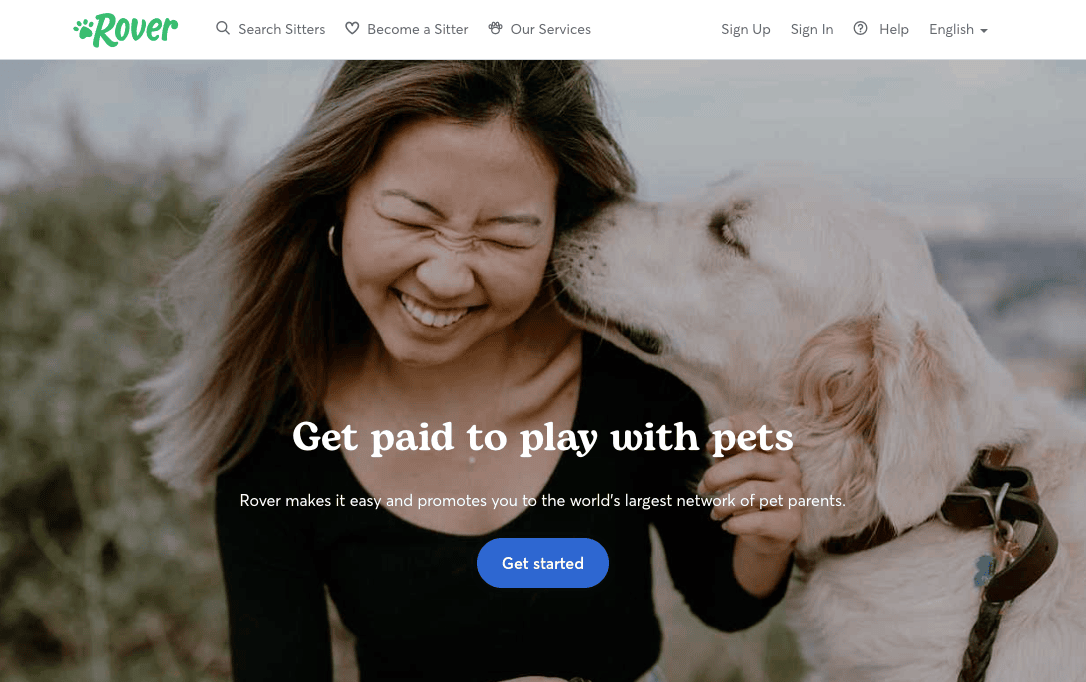
Furthermore, the rise of the “side hustle” economy, represented by platforms like DoorDash, Lyft, and Rover, has made landing pages a vital tool for recruitment as well as sales. These companies use landing pages to sell a lifestyle—flexibility, earnings, and independence—to potential contractors. The success of these multi-billion dollar enterprises is built, in large part, on their ability to convert a casual visitor into a dedicated worker via a single, persuasive web page.
In conclusion, the 40 examples analyzed—from the minimalist approach of Netflix to the detailed storytelling of Grass Roots—provide a blueprint for modern conversion. The integration of social proof, clear CTAs, and high-quality visuals is no longer optional; it is the baseline for digital survival. As the market continues to evolve, the organizations that prioritize data-driven design and continuous A/B testing will remain at the forefront of the digital economy.







