

Klaviyo has long stood as an undisputed industry giant in the realm of e-commerce marketing automation. Its reputation for premium data tracking, sophisticated predictive analytics, and granular segmentation capabilities has made it an excellent, often indispensable, choice for massive brands equipped with dedicated data science resources and substantial marketing budgets. Yet, despite its powerful suite of tools, a discernible trend has emerged: a growing number of smaller e-commerce brands are actively re-evaluating their partnership with Klaviyo, with many opting to switch platforms. The crux of the matter is not whether Klaviyo is inherently flawed, but rather whether it continues to be the right fit for businesses operating with different scales, resource allocations, and strategic priorities. A platform meticulously engineered for enterprise-level data teams can frequently prove to be a mismatch for a lean, agile five-person marketing team, leading to underutilized features, unnecessary costs, and operational friction.
Economic Headwinds Drive Strategic Re-evaluation
The broader economic climate has played a significant role in this strategic re-evaluation. A Deloitte Digital report from 2026 highlighted that a striking 62% of e-commerce brands were negatively impacted by reduced consumer spending. This widespread economic pressure has compelled companies across the spectrum to scrutinize their operational expenditures with unprecedented rigor, paying closer attention to every line item in their budgets. As a direct consequence, many businesses are aggressively identifying and cutting subscriptions that are not being leveraged to their full potential, or those that deliver a suboptimal return on investment. This environment fosters a critical assessment of every SaaS tool, including core marketing platforms. To gain a deeper understanding of this phenomenon, we engaged with businesses directly, asking them to share their candid insights into why they initiated a switch from Klaviyo and the tangible effects these migrations had on their operations and bottom lines. Their collective experiences illuminate a path that many e-commerce entrepreneurs are now considering.
Methodology: Gathering Merchant Insights
To genuinely grasp the underlying motivations behind these platform migrations, our investigation focused directly on the source: e-commerce store owners and marketing managers who had transitioned from Klaviyo to alternative platforms, specifically Omnisend, which emerged as a prominent choice in their narratives. The majority of the businesses we engaged with operate fast-growing stores primarily on Shopify or WooCommerce, platforms known for powering a vast segment of the small to medium-sized e-commerce market. Crucially, these businesses are typically characterized by their small, often multi-functional, marketing teams. This demographic, with its inherent resource constraints, is uniquely positioned to feel the acute impact of platform costs and feature complexity more profoundly than larger enterprises. Through these extensive discussions, three overarching and consistently recurring themes emerged as primary drivers for the switches: the financial strain imposed by pricing models tied directly to list size, the overwhelming nature of feature complexity that outpaced the team’s capacity for effective utilization, and the critical need for responsive customer support that Klaviyo, in their experience, struggled to consistently provide.
The Financial Strain of Active-Profile Pricing Models
A pivotal moment that significantly altered the competitive landscape and prompted many brands to reconsider their marketing automation providers occurred in February 2025. At this time, Klaviyo implemented a revised pricing structure, shifting to a model that charged users based on every contactable "active profile" within their database. This meant that brands were incurring costs for contacts regardless of whether those contacts had recently been emailed, actively engaged with campaigns, or had remained long dormant within their lists. Effectively, businesses began paying for the sheer size of their contact list rather than the direct, demonstrable value or engagement derived from those contacts.
This pricing paradigm introduced a significant operational burden. To circumvent overpaying for inactive or disengaged profiles, companies were forced to dedicate valuable hours to the tedious and often counter-intuitive task of pruning contacts and systematically deleting segments of the very lists they had invested considerable time and resources to build. This effort to maintain cost efficiency became a recurring, time-consuming chore, diverting resources from core marketing activities. Consequently, this updated pricing model frequently emerged as the decisive factor, compelling e-commerce businesses to actively seek out Klaviyo alternatives.
Viktorija Dvariškytė, Digital Marketing Manager at CoinGate Gift Cards, articulated this sentiment clearly: “The primary factor was pricing, and we weren’t using many of the features there. We needed a simpler, less cluttered tool.” Her statement encapsulates the dual pressure of escalating costs coupled with underutilized functionalities, painting a picture of an increasingly inefficient investment.
For marketing agencies managing multiple client accounts, the increased cost became particularly challenging to justify. Alvaro Diaz-Rato, Founder of STRAT agency, recounted a common scenario: “Before, they paid $600–1000 to Klaviyo for like two automations – welcome and a happy birthday flow. It became hard to justify such prices.” This highlights how basic usage, even for essential flows, could lead to disproportionately high costs under the new model, especially for clients with growing but not necessarily hyper-engaged lists.
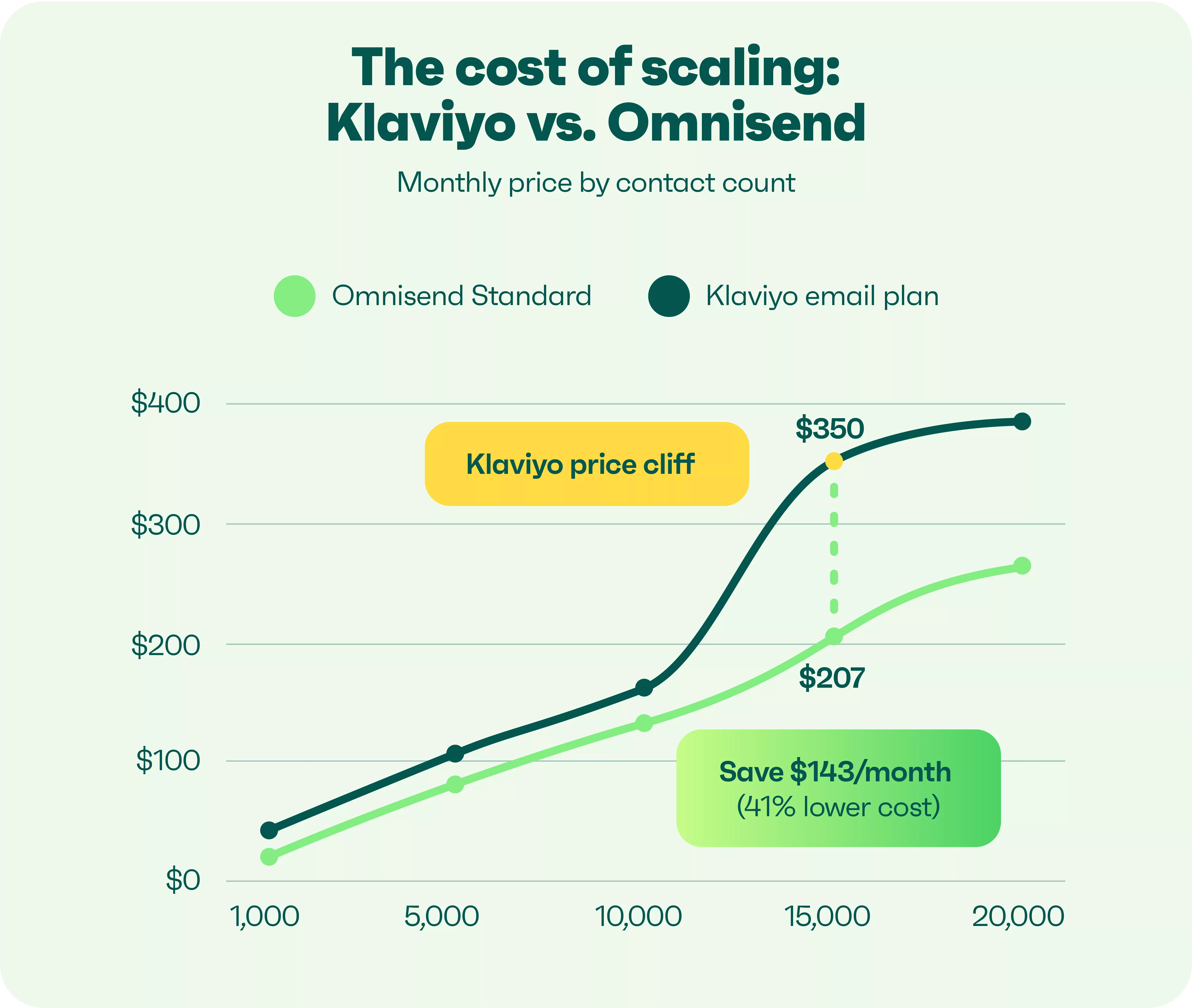
The financial relief post-migration was a recurrent theme. Brands reported a significant improvement in their budget allocation once they transitioned to platforms like Omnisend, where the pricing model did not penalize list growth in the same manner. Dan Judd, Head of Digital at Vape Superstore, noted the stark difference: “What we were paying just for the email solution over at Klaviyo is nearly the same as what we’re paying for Omnisend with SMS.” This indicates a substantial increase in value for money, with Omnisend providing multi-channel capabilities (email and SMS) for a comparable cost to Klaviyo’s email-only service. Veronica Jeans, Founder of TopFlyte Agency, echoed this, stating, “We moved from Klaviyo because the tier they were pushing us to was double. And even with double the emails we are sending in Omnisend, we are not paying half of that bill.” These testimonies underscore a clear pattern: the former Klaviyo users found more scalable and cost-effective solutions that allowed for list expansion and increased outreach without prohibitive cost increases. The accompanying data visualizations, which often illustrate Omnisend’s plans undercutting Klaviyo’s in most contact count scenarios, serve as a compelling quantitative backing for these qualitative experiences. For example, at 10,000 contacts, Klaviyo’s price point might jump significantly to around $350, whereas Omnisend could be at $207, representing a 41% lower cost, a substantial saving for a growing business.
Heavy-Duty Features Versus Daily Execution Speed
While Klaviyo’s machine-learning-powered predictive analytics and advanced segmentation tools are undeniably potent, offering deep insights into customer behavior and highly personalized campaign capabilities, their true value is unlocked primarily by teams with the specialized resources and expertise to fully operate and interpret them. For smaller marketing teams, often juggling multiple responsibilities and lacking dedicated data scientists or extensive training budgets, these sophisticated features can become a double-edged sword.
Many such teams find they do not utilize the full breadth of these enterprise-grade functionalities, yet they inevitably end up paying an enterprise price for a platform that is over-engineered for their specific needs. Worse still, the sheer complexity of the interface and the intricate configuration requirements can actively impede the day-to-day work of actually shipping campaigns and executing marketing strategies. The learning curve can be steep, and the time spent navigating complex menus or troubleshooting minor issues detracts from core marketing tasks.
Businesses interviewed consistently highlighted that quicker implementation, a clearer user interface, and overall operational clarity were significant motivations for making the switch. Joy S., Growth Manager at FLEXTAIL, praised Omnisend’s design philosophy: “Omnisend has a clear data pipeline and a clean UI, which makes it easy to inspect what’s happening at a glance. It’s logical to operate, and it doesn’t force you into endless micro-decisions just to build workflows that work.” This speaks to the value of intuitive design that prioritizes efficiency and ease of use, enabling teams to focus on strategy rather than wrestling with software.
Other merchants emphasized that Omnisend provided all the essential, core features required to launch successful campaigns without the friction of excessive complexity or unnecessary hold-ups. Viktorija Dvariškytė from CoinGate Gift Cards added, “It allows us to quickly set up campaigns and automations, segment our audience, and optimize performance without too much complexity.” This underscores the desire for a robust yet streamlined tool. Veronica Jeans from TopFlyte Agency vividly described her experience: “I did two weeks of campaigns in Klaviyo, and I really don’t know how anybody does it unless they are experienced email creators or an agency.” Her candid remark illustrates the steep learning curve and the resource intensity required to master Klaviyo for someone without prior deep experience, further solidifying the argument that feature-rich platforms, while powerful, can be counterproductive for lean teams. This highlights a fundamental mismatch between the sophisticated tools designed for data specialists and the practical needs of generalist marketers in smaller organizations.
When Slow Customer Support Impacts Real-Time Revenue
The importance of robust and responsive customer support in the e-commerce landscape cannot be overstated, yet it is frequently overlooked by businesses that prioritize feature sets above all else. A broken automation, a sudden drop in email deliverability, or an unaddressed technical glitch during a critical sales period—such as Black Friday or Cyber Monday—can inflict severe and immediate damage on revenue. This risk is amplified when support is tiered, leading to varied response times based on subscription level.
Klaviyo’s support model, which limits free plan users to only 60 days of email support and offers paid plans with response times ranging from one hour to a lengthy 48 hours, presented a significant challenge for many businesses. The merchants we interviewed frequently pointed to inconsistent or delayed human support as a critical turning point, particularly when urgent issues demanded immediate attention and resolution. For small teams, lacking in-house technical experts, timely support is not merely a convenience but a business continuity imperative.
Dan Judd of Vape Superstore highlighted a significant improvement: “The support we’re receiving far outweighed what we’d received from Klaviyo in the three years we’d been using them.” This testimonial speaks volumes about the perceived deficiency in Klaviyo’s support responsiveness over an extended period. Jocelyn A., COO at Ecom2Win, provided a particularly compelling account: “What surprised us the most was how reliable, absolutely reliable Omnisend is. We did not miss a beat once we joined. The team had support throughout – taking away that we have to wait 24 hours sometimes for a response. We’re now looking at instant, real-time responses and assistance.” This shift from potentially waiting days for a resolution to receiving immediate, real-time assistance represents a dramatic improvement in operational confidence and crisis management for e-commerce businesses.
Furthermore, several brands emphasized the invaluable guidance they received from dedicated Account Experts, which went beyond mere technical troubleshooting. Jake Hughes, Co-founder of Vagari Bags, stated, “The cost and lack of support were the biggest issues. Sometimes you just want to bounce ideas around or get help building flows. I found my dedicated Account Expert, Mangirdas, from the Omnisend team, really helpful.” This indicates a desire for proactive, strategic partnership and guidance, not just reactive problem-solving, a level of service that proved crucial for optimizing their marketing workflows and overall performance. Such personalized support can be a game-changer for businesses that may not have extensive in-house expertise or the time to constantly research best practices.
The Four-Step Self-Audit: Is Your Marketing Platform Still a True Fit?
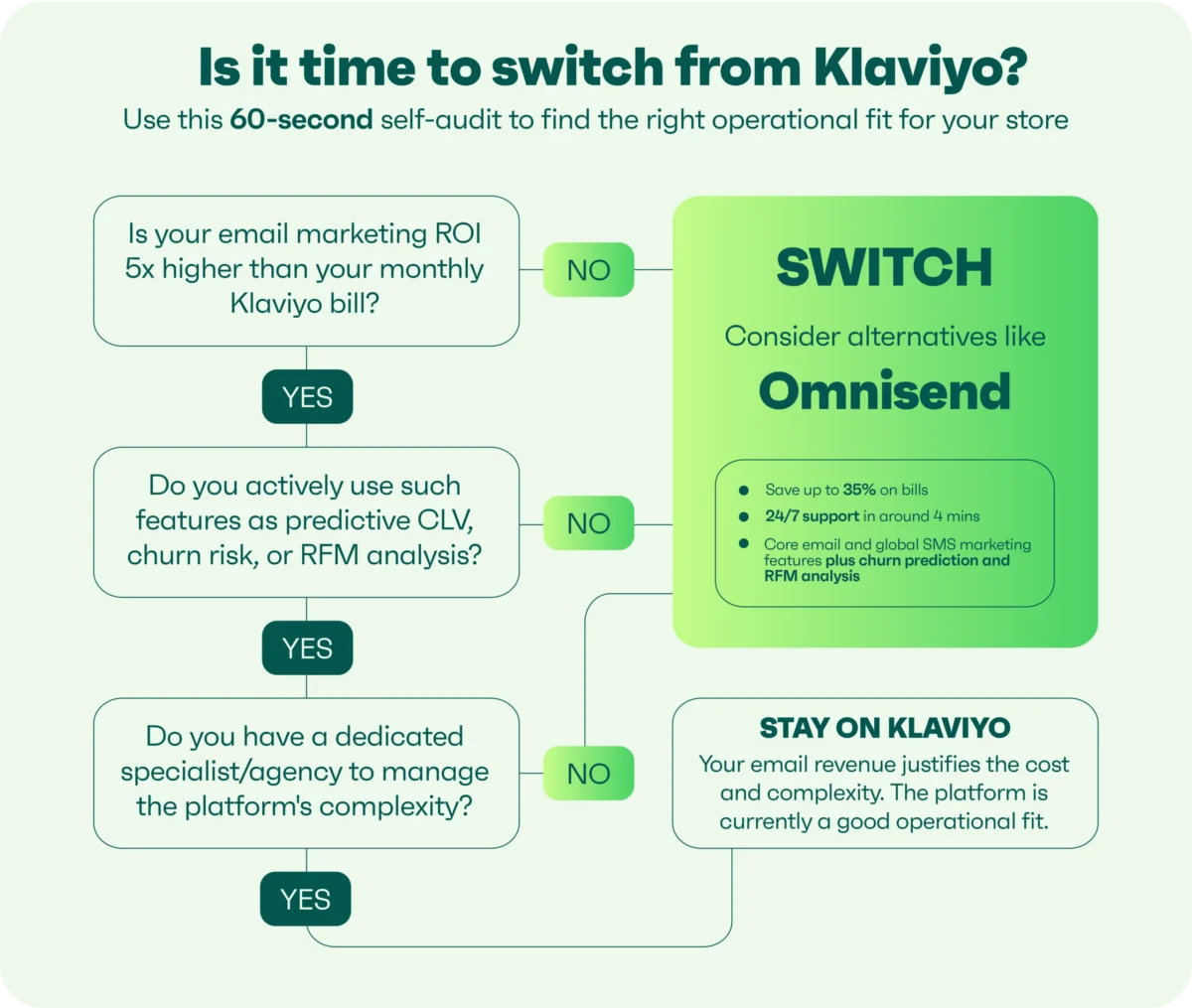
In light of these emerging trends and merchant experiences, it becomes imperative for e-commerce brands to regularly assess the efficacy and suitability of their marketing technology stack. To help businesses determine whether it is truly time to consider a platform switch, a concise yet comprehensive four-step self-audit can provide invaluable clarity. These questions are designed to prompt a critical evaluation of current needs, challenges, and whether the existing platform genuinely meets them:
- Are you achieving a satisfactory Return on Investment (ROI) from your current platform, considering both cost and utilized features? This question encourages businesses to look beyond just the monthly subscription fee and evaluate the real-world value derived. Are you paying for features you rarely use? Is the cost per active profile justifiable against your conversion rates and customer lifetime value?
- Are your marketing team’s daily operations efficient, or are they hampered by platform complexity or a steep learning curve? This delves into the productivity aspect. Is your team spending excessive time on setup, troubleshooting, or navigating an unintuitive interface? Does the platform facilitate quick campaign launches and agile adjustments, or does it create bottlenecks?
- Is customer support consistently responsive and helpful, particularly during critical business periods or for complex issues? Evaluate the quality and timeliness of support. Can you get immediate help when you need it most, such as during peak sales events? Does the support team understand your business context, or do they offer generic solutions?
- Does the platform’s pricing model align with your business growth strategy, without penalizing list expansion or underutilization of advanced features? This prompts a forward-looking assessment. Will the platform become prohibitively expensive as your contact list grows? Does it offer flexible tiers that accommodate your scaling needs without forcing you into higher, less efficient plans?
These questions, often visualized in a 60-second self-audit flowchart, provide a structured approach to assessing current needs and challenges. An honest appraisal will reveal whether the existing platform truly supports or hinders the brand’s strategic objectives and day-to-day operational efficiency.
Transitioning Without Friction: How to Migrate Safely
The prospect of migrating from one marketing platform to another is often fraught with apprehension for businesses. The dread of potential deliverability drops, the fear of losing invaluable historical tags and customer data, or the nightmare scenario of broken automation flows mid-transition, especially during critical sales periods, can make businesses hesitate significantly. This inertia persists even if staying with their current provider is demonstrably costing them money, eroding efficiency, or stifling growth. These concerns are entirely understandable; businesses must ensure they adhere to best migration practices, a process that can be inherently complex and resource-intensive. Typical challenges include:
- Data Integrity: Ensuring all customer data, purchase history, and segmentation tags are accurately transferred without loss or corruption.
- Deliverability Ramps: Warming up new sending IPs to maintain high email deliverability rates and avoid being flagged as spam.
- Workflow Recreation: Meticulously rebuilding complex automation flows, welcome series, abandoned cart reminders, and post-purchase sequences.
- Form & Template Design: Replicating existing signup forms, pop-ups, and email templates to maintain brand consistency and functionality.
- Downtime Minimization: Executing the migration with minimal disruption to ongoing campaigns and customer communication.
Recognizing the intricate and time-consuming nature of this process, some alternative platforms, like Omnisend, have introduced robust solutions, including comprehensive free migration services. These services are designed to help companies switch platforms efficiently, often within a timeframe as short as five business days. Crucially, Omnisend’s dedicated team actively rebuilds the entire setup for the migrating business. This includes meticulously recreating workflows, segments, forms, importing contacts, designing templates, and implementing an automated warm-up protocol specifically tailored for ex-Klaviyo users to ensure smooth deliverability.
The seamlessness of these migrations has frequently surprised those who underwent the process. Alvaro Diaz-Rato, Founder of STRAT agency, observed, “The migration from Klaviyo was a breeze, since there was already an app for that.” This highlights the value of integrated, user-friendly migration tools and services.
Jocelyn A., COO at Ecom2Win agency, shared a particularly insightful anecdote about her clients’ initial concerns. They worried that switching from Klaviyo to Omnisend during the peak holiday season, specifically before Black Friday, would inevitably disrupt revenue due to potential deliverability issues and automation downtime. However, these fears ultimately proved unfounded. “Revenue performance was comparable to the previous year, which validated that the migration had not negatively impacted performance. It’s a huge win considering switching platforms in such a short space of time before Black Friday. But it gave us peace of mind just knowing that our approach and the migration all worked out.” This powerful testimony underscores the critical importance of a well-executed migration strategy, especially when high-stakes sales periods are involved, demonstrating that a platform switch, when handled expertly, can be achieved without compromising crucial revenue streams.
Broader Market Implications and Future Outlook
The trend of e-commerce brands, particularly small to medium-sized businesses (SMBs), moving away from a dominant platform like Klaviyo carries significant implications for the broader marketing automation landscape. It signals a maturation of the market where "more features" no longer automatically equates to "better fit" for all segments. Vendors are being challenged to offer not just powerful tools, but also intuitive interfaces, scalable pricing models, and exceptional, proactive support tailored to the operational realities of their target customers. This shift could lead to a more diversified ecosystem of marketing platforms, with specialized solutions catering to distinct business sizes and needs, rather than a one-size-fits-all approach.
For Klaviyo, this trend suggests a need to re-evaluate its positioning and potentially segment its offerings more clearly. While its enterprise-grade capabilities remain highly valuable for large corporations, there might be a necessity to develop more streamlined, cost-effective versions or dedicated support channels for smaller businesses to prevent further attrition. The "active profile" pricing model, while potentially increasing average revenue per user for large, highly engaged lists, clearly created a friction point for those with fluctuating or less consistently engaged databases, forcing them to choose between cost efficiency and list hygiene.
Conversely, platforms like Omnisend, which have capitalized on these pain points by offering competitive pricing, simplified user experiences, and robust customer support, are poised for continued growth. Their success highlights the enduring demand for solutions that balance power with simplicity and affordability, making sophisticated marketing automation accessible and manageable for lean teams. The emphasis on free migration services also demonstrates a strategic understanding of the barriers to switching, effectively lowering the entry threshold for dissatisfied customers of competitors.
As global e-commerce continues its rapid expansion, projected to reach trillions in sales by the end of the decade, the efficiency and cost-effectiveness of marketing operations will remain paramount. Businesses will increasingly prioritize agile, adaptable tools that can deliver tangible ROI without requiring extensive internal resources or specialized expertise. This competitive pressure will likely drive further innovation in pricing models, feature modularity, and customer success strategies across the entire marketing automation industry.
Choosing a Path That Aligns with Your Growth
As an e-commerce business matures and evolves, the decision to change its email marketing platform is often a natural, strategic next step. The initial choice of platform may have been suitable for nascent operations, but as priorities shift towards optimizing cost efficiency, enhancing daily execution speed, and ensuring robust, real-time support, a comprehensive audit of the current technology stack becomes essential. This audit ensures that every tool in the arsenal continues to deliver the precise value and functionality required for sustained growth.
If a self-audit indicates that a platform switch is warranted, the subsequent step involves identifying a new platform that strikes the optimal balance between powerful marketing capabilities and operational simplicity. The market offers a variety of solutions, each with its unique strengths. For businesses seeking an in-depth comparison of pricing structures, feature sets, ease of use, and migration processes among leading providers, exploring detailed guides on Klaviyo alternatives is highly recommended. Ultimately, aligning marketing technology with current business needs and future growth aspirations is not merely a tactical adjustment but a strategic imperative for long-term success in the dynamic world of e-commerce.








