The burgeoning "AI visibility gold rush" has decisively reached Cloudflare, a company traditionally synonymous with web infrastructure, security, and bot management. On August 6, Cloudflare launched its AI-Enhanced Optimization (AEO) Visibility Dashboard in early access, marking a strategic pivot into the realm of digital marketing analytics, specifically tailored for the rapidly evolving landscape of artificial intelligence. This move positions Cloudflare not merely as a guardian of websites but as a crucial intermediary providing insights into how AI assistants interact with and feature online content.
The introduction of the AEO Visibility Dashboard signifies Cloudflare’s commitment to addressing a critical challenge faced by content creators and brands in the age of generative AI: ensuring discoverability and maintaining brand prominence when users increasingly turn to AI models for information rather than traditional search engines. The dashboard is designed to measure whether AI assistants like OpenAI’s GPT models and Anthropic’s Claude mention or cite a brand, assess the prominence of its appearance in AI-generated responses, and compare its share of voice against competitors. This capability is rapidly becoming indispensable for businesses striving to adapt their digital strategies to a future where AI-driven discovery plays an ever-larger role.
Cloudflare’s entry into this market is not without existing competition. Established digital marketing and SEO giants such as Semrush and Ahrefs have already launched their own AI visibility products, alongside specialized platforms like Profound, Peec AI, and Scrunch. However, Cloudflare’s unique position within the internet’s infrastructure could provide a significant competitive advantage. By sitting at the crucial juncture between websites and incoming traffic, Cloudflare possesses unparalleled access to data streams that can inform a deeper understanding of AI crawler behavior and content consumption.
The Strategic Imperative: Cloudflare’s Evolving Role in the AI Ecosystem
Cloudflare’s journey towards offering AI visibility tools is a logical progression stemming from its proactive engagement with the challenges and opportunities presented by artificial intelligence over the past few years. The company has consistently positioned itself as a central control point for website owners navigating the complex interactions with AI crawlers and large language models (LLMs).
The genesis of this strategic direction can be traced back to the escalating concerns among publishers and content creators regarding the uncompensated use of their intellectual property by AI companies. As LLMs rapidly advanced, their training datasets often comprised vast amounts of web content scraped without explicit permission or financial remuneration, leading to a significant imbalance. Publishers argued that while AI companies benefited from their content, they received little to no referral traffic or compensation in return, threatening the economic viability of online publishing.
In response to this growing outcry, Cloudflare took decisive action. In 2025, the company introduced a suite of tools designed to give website owners greater control over AI crawlers. These tools empowered publishers to either block AI crawlers outright or, more innovatively, charge them for accessing content. This initiative was framed by Cloudflare as a "Content Independence Day," asserting the right of creators to control how their work is used by AI. The underlying principle was clear: if AI companies were to profit from content, they should either compensate the creators or respect their wishes to withhold access.
However, the landscape continued to evolve, revealing a more nuanced challenge. By July 2026, Cloudflare acknowledged what it termed a "Faustian bargain" for website owners. While blocking AI crawlers offered protection against uncompensated scraping, it simultaneously carried the risk of rendering smaller websites invisible in emerging AI-driven discovery channels. As AI assistants became increasingly sophisticated and integrated into search and information retrieval, a complete blockade could mean exclusion from a significant and growing segment of the internet audience. Publishers found themselves in a dilemma: protect their content from exploitation or risk disappearing from new avenues of user discovery.
This realization prompted a refinement of Cloudflare’s strategy, shifting from pure blocking to offering comprehensive control. The company’s goal became to provide website owners with the granular ability to manage their relationship with AI — not just to prevent access but to strategically allow it under controlled conditions, and critically, to measure the impact of those interactions. The AEO Visibility Dashboard is the logical culmination of this evolving strategy, providing the measurement and analytical layer necessary to navigate this complex bargain.
Leveraging Core Infrastructure for Unparalleled Insight
Cloudflare’s unique architectural position within the internet ecosystem is a cornerstone of the AEO Visibility Dashboard’s potential. As a leading content delivery network (CDN), security provider, and DNS resolver, Cloudflare processes a substantial portion of global internet traffic. This intermediary role means Cloudflare sits directly between websites and virtually all incoming traffic, including that from AI crawlers.
This strategic vantage point allows the AEO Visibility Dashboard to offer a depth of insight that many competitors might struggle to replicate. Cloudflare can precisely track which AI operators are crawling a site, which specific pages they request, what errors they encounter during the crawling process, and, crucially, how much referral traffic they send back to the originating website. This data is invaluable for marketers seeking to understand the direct, measurable impact of AI interactions on their site’s performance.
The ability to correlate AI crawler activity with actual site performance and referral data enables marketers to address two distinct yet interconnected problems:
- Content Protection and Monetization: Identifying which AI entities are accessing content and enforcing existing policies (blocking, charging).
- AI Discoverability and Engagement: Understanding how allowing access translates into visibility and potential traffic from AI assistants.
By consolidating these functions, Cloudflare is effectively striving to become the central control panel for a website’s entire relationship with artificial intelligence. This includes the ability to block undesirable crawlers, implement monetization strategies for content access, monitor AI bot activity in real-time, and now, measure the effectiveness of their content in being surfaced by AI platforms. This integrated approach offers a holistic view that promises to streamline AI-related digital strategy for businesses of all sizes.
A Deep Dive into the Dashboard’s Methodology and Inherent Limitations
According to Cloudflare’s own methodology, detailed on their official blog, the AEO Visibility Dashboard operates by inferring a website’s category based on its content and structure. Subsequently, it generates a panel of questions that potential customers might ask related to that category. These simulated queries are then repeatedly submitted to leading AI models, specifically OpenAI’s GPT models and Anthropic’s Claude.
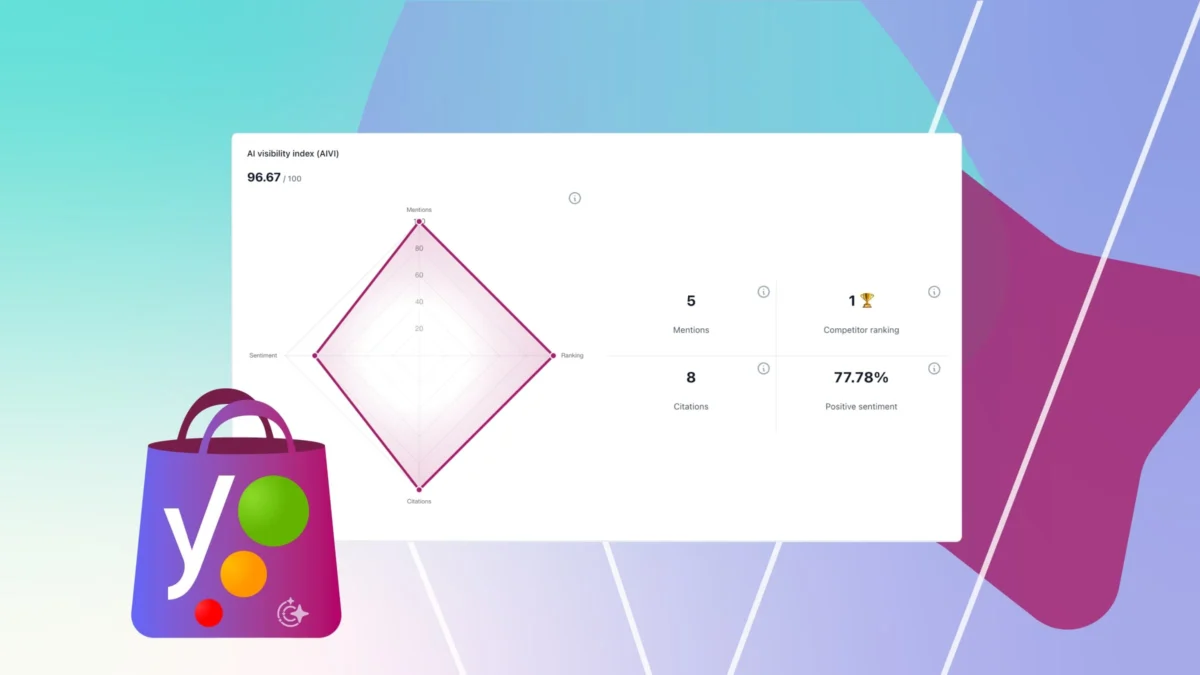
The dashboard then analyzes the responses generated by these AI assistants to measure several key metrics:
- Citations: Whether the brand’s website or content is directly cited as a source.
- Mentions: Whether the brand is mentioned in the AI’s response, even without a direct citation.
- Prominence: How early and frequently the brand appears in the AI’s answer.
- Competitive Share of Voice: How the brand’s visibility compares to its direct competitors within the AI-generated responses.
Cloudflare precomputes this test panel by category and reuses the resulting snapshot across relevant accounts, aiming to provide consistent benchmarks. While this methodology offers a valuable proxy for AI visibility, it is crucial to understand its inherent limitations.
The primary constraint lies in the nature of the data: Cloudflare can observe the "bot knocking at a website’s door" and the simulated AI responses, but it cannot see "what real customers asked behind an AI assistant’s closed door." This distinction is paramount. The dashboard does not provide actual impression counts, query volumes from real users, or a comprehensive record of missed recommendations that occur in live AI interactions. The data reflects a controlled test environment rather than organic user behavior.
Furthermore, Cloudflare has not yet disclosed critical details regarding the dashboard’s operational specifics. Information such as the total number of prompts tested per category, the specific model versions of GPT and Claude utilized, the refresh frequency of the visibility scores, or the full scoring formulas remains undisclosed. This lack of transparency, while potentially due to the "early access" nature of the product, means that marketers must treat the visibility scores as directional benchmarks rather than definitive measurements of the actual audience that encountered an AI answer.
In essence, the AEO Visibility Dashboard currently functions more like an AI rank tracker combined with advanced bot logs, rather than a comprehensive AI equivalent of Google Search Console. While Search Console provides granular data on actual user queries, impressions, and clicks from organic search, Cloudflare’s tool offers insights into potential AI visibility based on a controlled experimental setup.
Implications for Marketers, Publishers, and the Broader AI Landscape
For websites already leveraging Cloudflare’s extensive suite of services, the AEO Visibility Dashboard represents a valuable addition to their digital marketing toolkit. The integrated nature of the product, combining bot management and content control with AI visibility metrics, offers a compelling proposition. Marketers can gain early insights into how their brand might perform in the evolving AI-driven discovery ecosystem, allowing them to adapt their content strategies proactively. This includes optimizing content for AI consumption, understanding which topics are gaining traction, and identifying competitive gaps.
For publishers, the dashboard offers a mechanism to evaluate the effectiveness of their content in an AI-first world. It provides data points to inform decisions about content access policies for AI crawlers, helping them balance the need for protection with the desire for discoverability. As the digital advertising and content monetization models shift, understanding AI visibility will become a key performance indicator.
From Cloudflare’s perspective, this launch is a strategic expansion that strengthens its position as an indispensable partner for online businesses. By offering tools that address the most pressing challenges in the AI era, Cloudflare diversifies its revenue streams and deepens its integration into the operational fabric of its clients. It solidifies its role beyond infrastructure, moving into the realm of actionable business intelligence for digital strategy.
The broader implications for the AI and digital marketing industries are significant. Cloudflare’s entry into the AI visibility market is likely to accelerate innovation in this space. It underscores the industry-wide recognition that AI assistants are fundamentally changing how users discover information, necessitating new metrics and tools for measurement and optimization. This shift will inevitably lead to the development of "AI-Enhanced SEO" (AEO) as a distinct discipline, focusing on optimizing content specifically for AI models and conversational interfaces.
However, the industry also faces challenges. The methodological limitations of current AI visibility tools highlight the need for greater transparency from AI model developers regarding how their systems process and attribute information. The "black box" nature of many LLMs makes precise, real-time attribution and measurement difficult, if not impossible, for third-party tools. As the market matures, there will be increasing pressure for AI companies to provide more granular data to content creators and marketers, similar to how search engines provide data through tools like Search Console.
The Path Forward: Pricing and General Availability
The AEO Visibility Dashboard is currently available by request, indicating an early access phase where Cloudflare is likely gathering feedback and refining the product. Cloudflare has not yet announced specific pricing tiers or a definitive date for general availability. This measured rollout suggests a strategic approach to ensure the product meets market needs and integrates seamlessly with its existing offerings. As AI continues to reshape the internet, tools like Cloudflare’s AEO Visibility Dashboard will become increasingly critical for brands and publishers to maintain their relevance and reach in the digital landscape. The "AI visibility gold rush" is truly underway, and Cloudflare is staking a significant claim at its heart.