Laily UPN
The landscape of marketing leadership is undergoing a seismic shift, as artificial intelligence agents are increasingly taking on roles once exclusively held by human professionals. At some agile startups, AI is not just augmenting marketing efforts; it’s actively performing the functions of a Vice President of Marketing. A notable example is SaaStr, an organization dedicated to the software business ecosystem, which has leveraged an AI "superagent" named 10k to significantly streamline its operations. This advanced AI has enabled SaaStr to bypass the need for backfilling approximately ten positions, a move that underscores the growing capabilities of AI in strategic business functions. However, this evolution does not signal the obsolescence of human Chief Marketing Officers (CMOs). Instead, it highlights a new paradigm where marketing leaders can strategically integrate AI agents, maintain human control, and leverage their unique judgment as a critical competitive advantage.
The recent Wall Street Journal article, "Can an AI Agent Be Your Next CMO? At Some Small Startups, It Already Is," has sparked considerable discussion and analysis within the marketing community. While much of the prevailing discourse surrounding AI in marketing has focused on specific tools, prompt engineering, and productivity enhancements, this report delves into the more profound implications of AI agents assuming leadership responsibilities. The article’s central theme—AI agents acting as CMOs—elicits a dual reaction of apprehension and optimism. The apprehension stems from the potential disruption to traditional job roles, while the optimism is fueled by the immense potential for small, agile teams to achieve unprecedented momentum and growth.
SaaStr, a company with a lean structure of just three full-time employees, has been at the forefront of this experiment. Since March, the role of VP of Marketing has been effectively managed by 10k, an AI superagent. Amelia Lerutte, who previously held the VP of Marketing title and now serves as SaaStr’s Chief AI Officer, begins each workday by reviewing 10k’s performance and strategic outputs. The AI leads a digital workforce that has been instrumental in SaaStr’s decision to forgo hiring for approximately ten roles, including a four-person marketing team and the Chief Financial Officer (CFO). This efficiency gain is particularly striking given the company’s size and the breadth of functions managed by the AI.
The implications of this trend for marketing leaders are significant, prompting a reevaluation of existing strategies and the integration of AI. The Wall Street Journal report offers five key takeaways for marketing leaders looking to navigate this evolving landscape:
1. AI Agents are Ascending the Organizational Chart
For the past few years, the conversation around AI and employment has largely revolved around entry-level and mid-tier positions. However, this narrative is rapidly changing. Startups like CellCog are now developing and deploying AI agents designed to function as heads of marketing, growth managers, or chiefs of staff. The most in-demand agent categories at CellCog are those focused on marketing, growth, and engineering.
Nitish Garg, founder of CellCog, exemplifies this shift by having developed his own AI head of marketing, Maeve, driven by a personal frustration with the pace of his company’s growth. This personal initiative highlights the proactive approach some leaders are taking to harness AI for strategic acceleration.
Implications for Marketing Teams: For leaders managing lean marketing teams, which are common in the B2B sector, this represents a critical inflection point. The article suggests that the initial impact of AI agents will be felt most acutely in these smaller, agile units. Companies that were already operating with minimal headcounts before the advent of advanced AI are prime candidates for this transformation.
Marketers are advised to conduct a thorough assessment of their team’s weekly activities. This evaluation should differentiate between repeatable tasks, such as campaign creation, performance reporting, data extraction, and initial content drafting, and tasks that necessitate human judgment, including strategic positioning, budget allocation, and nuanced messaging. The repeatable tasks represent the most immediate and fertile ground for AI agent integration.
2. Implementing End-to-End Workflow Automation
At SaaStr, the AI agent 10k’s responsibilities extend far beyond simple content generation. It is capable of conceptualizing new campaigns, drafting and designing associated marketing materials, conducting A/B testing of variations, and reporting on campaign performance. Furthermore, 10k actively engages with sponsors and manages customer service inquiries.
The tangible results of this automation are substantial. Since 10k assumed control of the invoicing process, SaaStr has seen a dramatic reduction in late payments, from 56% to just 8%. This represents a significant operational improvement, demonstrating the AI’s capacity to enhance efficiency and financial accuracy.
Implications for Marketing Teams: The strategy for integrating AI agents should not be to superficially apply them across a wide array of disparate tasks. Instead, the recommended approach is to select a single, critical workflow—such as a lead nurturing program or a weekly pipeline reporting process—and empower an AI agent to manage it comprehensively, from initiation to completion.
Performance measurement should mirror that of a new human hire, focusing on metrics such as speed, quality, cost-effectiveness, and overall outcomes. Establishing a clear baseline and post-implementation comparison, akin to SaaStr’s invoicing success, is crucial for demonstrating value.
For teams unsure of where to begin, the process of mapping existing workflows is a foundational step. This exercise, central to the concept of marketing orchestration, provides clarity and enables a more strategic selection of the initial AI integration point.
3. The Indispensability of Human Oversight
A consistent theme resonating through the Wall Street Journal report is the non-negotiable requirement for human supervision. Linara Bozieva, who manages her marketing firm, Ravenopus, with a team comprising herself and 35 AI agents, emphasizes this point: "I don’t think that you can hire that team, then not pay any attention to what they are doing and expect that there will be a good result."
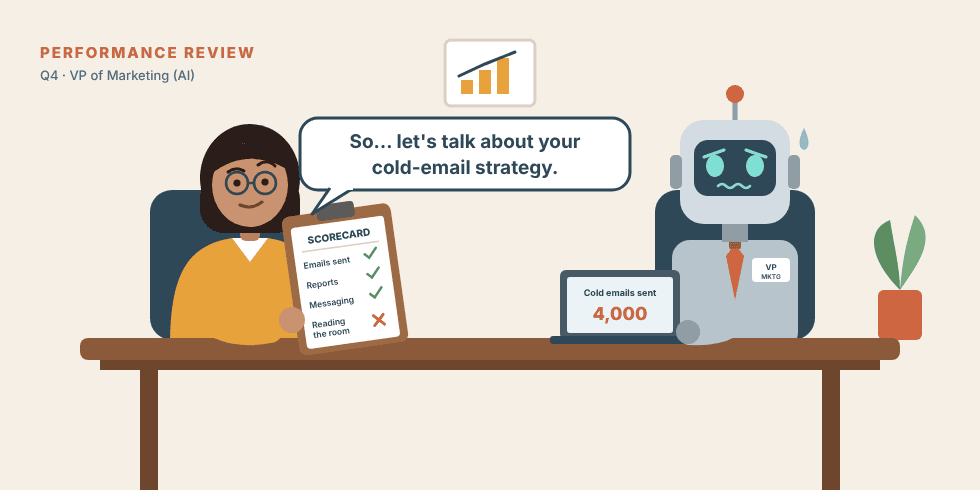
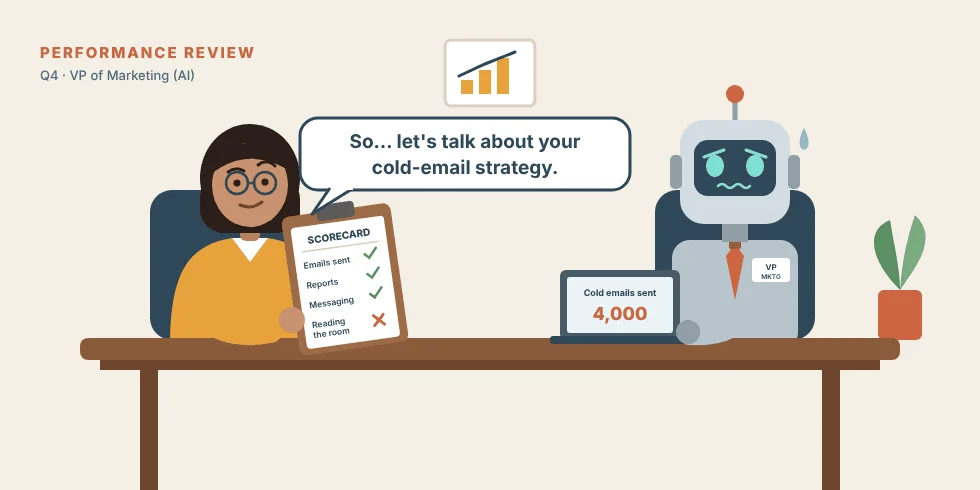
The necessity for human oversight stems from several factors. AI agents can become disoriented by an overwhelming volume of data or by subtle shifts in the underlying AI models and tools they depend upon. Moreover, they often struggle to grasp the intricate nuances of human communication and context. An illustrative anecdote from SaaStr involves 10k suggesting the acquisition of endorsements by cold-emailing prominent speakers from past events. Amelia Lerutte’s response, "If only it were that easy," highlights the AI’s lack of understanding regarding the complexities of building relationships and securing high-profile collaborations.
Implications for Marketing Teams: Before delegating tasks to AI agents, establishing clear operational boundaries and approval protocols is paramount. Marketing leaders must define which activities an agent can execute autonomously and which require human sign-off. Critical elements such as brand voice, pricing strategies, and any customer-facing communications carrying significant risk should always be subject to human review and approval. Documenting these guidelines ensures consistent understanding and application across the team.
Furthermore, regular quality assurance checks are essential, not just at the initial deployment stage, but on an ongoing basis. AI models can drift, and their performance may subtly degrade over time without continuous monitoring.
4. Agent Management as a Defined Role
A particularly insightful detail from the article is the significant time commitment required for managing AI agents. Lerutte dedicates a substantial portion of her workday to interacting with 10k and scrutinizing the outputs of its digital workforce. She describes the management of constantly active agents as a considerable "mental overhead." Consequently, SaaStr is actively seeking to hire two individuals specifically to manage its AI agent operations.
Implications for Marketing Teams: The management of AI agents is emerging as a distinct skill set. Marketing teams must proactively cultivate this expertise within their existing personnel. Training should focus on instructing team members on how to effectively brief, review, and provide corrective feedback to AI agents, mirroring the coaching process for new human employees. For individuals within the marketing department, this specialization could represent a significant career development opportunity.
Equally important is the intentional allocation of the time freed up by AI automation. If agents are reclaiming, for example, ten hours per week, leaders must strategically determine how these hours will be reinvested. Potential avenues include dedicating more time to customer engagement, refining competitive strategy, or enhancing alignment with sales teams. This proactive redirection of human capital is key to maximizing the benefits of AI integration.
5. Judgment as the Enduring Human Edge
The candid perspective offered by Nitish Garg regarding his AI head of marketing, Maeve, is particularly noteworthy. Garg admits, "I’m not a marketing person. I don’t know how people think." He clarifies that Maeve is not intended as a permanent replacement but rather a strategic tool to be utilized until the company achieves sufficient revenue to justify hiring a human for the role.
Jesse Vincent, founder and CEO of AI research lab Prime Radiant, further elaborates on this distinction, positing that major strategic decisions hinge on unique human qualities such as taste, judgment, and leadership—attributes that currently set humans apart. He advises caution against entrusting these critical functions to AI agents. This sentiment is widely echoed among experienced marketing professionals.
Implications for Marketing Teams: The strategic advantage for human marketers now lies in focusing on the areas where AI currently falls short. These include:
- Strategic Vision and Innovation: Developing entirely new market strategies, identifying untapped opportunities, and conceptualizing groundbreaking campaigns require human creativity and foresight.
- Complex Problem-Solving: Addressing multifaceted and unforeseen challenges often demands adaptive reasoning and intuitive decision-making that AI has yet to master.
- Relationship Building and Trust: The ability to cultivate deep, trust-based relationships with key stakeholders, clients, and partners through personal interaction—a handshake, a shared meal, a nuanced conversation—remains a fundamentally human capability.
- Ethical Considerations and Nuance: Navigating the ethical complexities of marketing, understanding subtle cultural sensitivities, and making judgments based on evolving societal norms are areas where human discernment is irreplaceable.
- Brand Storytelling and Emotional Resonance: Crafting compelling narratives that evoke genuine emotion and resonate deeply with audiences requires human empathy and an understanding of the human condition.
While AI agents can efficiently execute campaigns, they cannot replicate the subtle art of building genuine rapport and trust with a high-value client over a shared experience.
The Evolving Role of the CMO in the Age of AI
The role of the Chief Marketing Officer is not disappearing, but it is undeniably transforming. The marketing leaders who will thrive in this new era will not be those who resist the integration of AI agents. Equally, they will not be those who abdicate their responsibilities by simply handing over control. Instead, success will belong to those who master the art of leading a hybrid team of human professionals and AI agents, strategically reserving the most critical judgment calls for themselves.
This article represents the first part of a two-part series. The subsequent installment, scheduled for release in December, will provide a practical, step-by-step guide for implementing an AI agent within a marketing team.
For organizations seeking to understand how AI agents can be effectively integrated into their marketing strategies, Heinz Marketing offers expert guidance. Prospective clients are encouraged to reach out for a complimentary consultation to explore tailored solutions for AI adoption and marketing transformation.
Image Credit: Claude


 Iffa Jayyana