

The landscape of digital commerce is currently undergoing a fundamental transformation, moving away from erratic trial-and-error methodologies toward a structured, evidence-based discipline. At the center of this evolution is Buse Hizarci, an Optimisation Manager at Vervaunt, a leading UK-based direct-to-consumer (DTC) consultancy and paid media agency. As the experimentation industry matures, Hizarci’s approach signals a broader shift in how high-growth brands—including Adanola, Ancient & Brave, AU Vodka, and YETI UK—leverage data to drive sustainable revenue. The core of this philosophy is a rejection of the "flat backlog" of ideas in favor of a sophisticated hierarchy of evidence that prioritizes long-term customer understanding over short-term "winning" tests.
The Professional Trajectory: From Code to Consumer Psychology
Hizarci’s entry into the world of conversion rate optimization (CRO) was not linear, but rather a natural progression from technical execution to psychological inquiry. Beginning her career as a developer, she found herself increasingly preoccupied not just with the functional integrity of the pages she was building, but with the subjective experience of the end-user. This transition from "how to build" to "why users behave" led her to an in-house user experience (UX) role before she eventually joined the team at Vervaunt.

Her technical background provides a distinct advantage in an era where data integration is paramount. By understanding the underlying architecture of platforms like Shopify and Google Analytics 4 (GA4), Hizarci is able to bridge the gap between abstract marketing goals and technical feasibility. This dual perspective is essential in the modern DTC environment, where the technical stack must be agile enough to support rapid experimentation without compromising site performance or stability.
Defining Optimization: Turning Assumptions into Evidence
In the professionalized world of digital strategy, the term "optimization" is often used loosely. However, Hizarci provides a clinical definition: the process of turning assumptions into evidence. This definition reflects a rigorous commitment to the scientific method within a commercial context. In an industry where "gut feeling" and the "highest paid person’s opinion" (HiPPO) often dictate website changes, Hizarci’s framework demands that every modification be justified by empirical data.
This shift is supported by broader industry trends. According to recent market analysis, organizations that adopt a data-driven approach to consumer behavior are 23 times more likely to acquire customers and six times as likely to retain them. By treating website elements as hypotheses rather than certainties, Hizarci ensures that Vervaunt’s clients avoid the costly mistake of implementing features that do not resonate with their specific audience segments.

The Role of Artificial Intelligence in the Experimentation Workflow
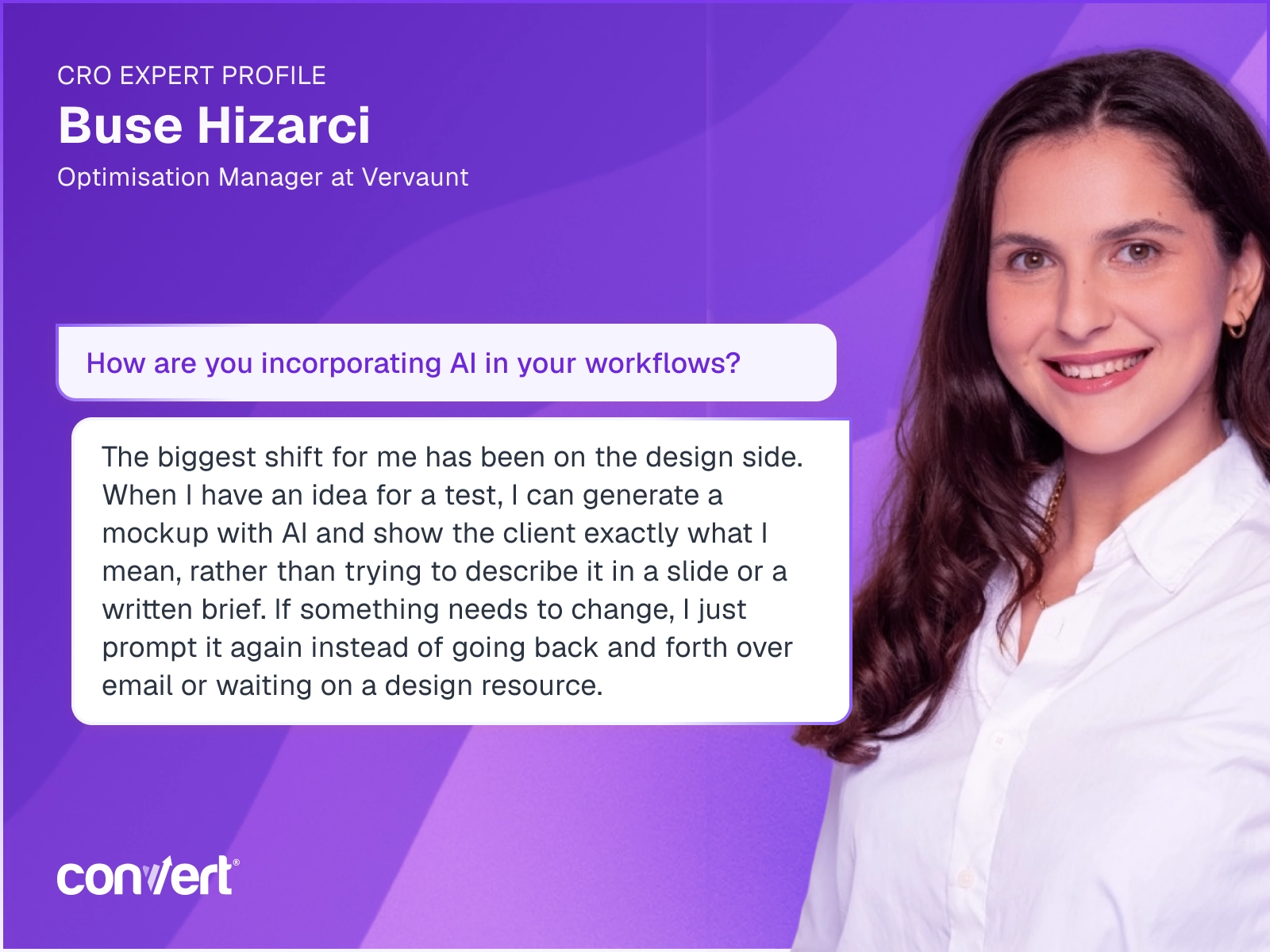
One of the most significant disruptors in the field of optimization is the rapid integration of Artificial Intelligence (AI). For Hizarci, AI is not a replacement for human judgment but a powerful tool for commoditizing execution and accelerating the "idea-to-deployment" lifecycle. She identifies two primary areas where AI has fundamentally altered her workflow: design mockups and statistical analysis.
In the traditional agency model, the gap between a strategist’s idea and a designer’s mockup can often span several days or even weeks. This latency slows the pace of experimentation. Hizarci utilizes AI to generate high-fidelity mockups instantaneously, allowing clients to visualize proposed changes in real-time. This capability facilitates immediate feedback and "on-the-spot" iterations, drastically reducing the time required for client buy-in.
Furthermore, Hizarci has developed interactive AI tools preloaded with client-specific traffic and conversion data. These tools automate the calculation of the Minimum Detectable Effect (MDE)—a critical statistical metric that determines how much of a change is needed to be sure a test result isn’t just noise. By pulling data directly from Shopify and GA4, these AI-driven systems provide precise timelines for test duration, removing the guesswork from resource allocation. This level of automation allows strategists to focus on high-level hypothesis generation rather than manual data entry.
The Strategic Pivot: From Individual Wins to Cumulative Knowledge
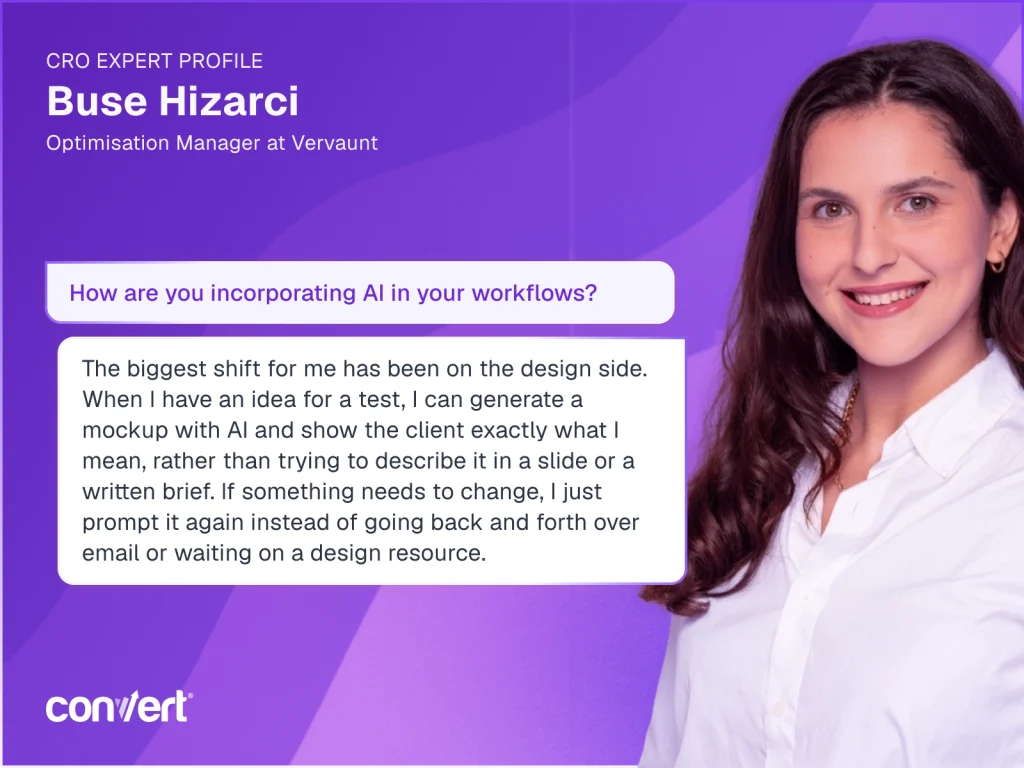
Perhaps the most provocative aspect of Hizarci’s methodology is her critique of how optimization programs are typically measured. She argues that the industry’s obsession with "winning tests" is a short-sighted metric. A single winning test might provide a temporary lift in conversion rates, but if it is treated as an isolated event, its value is limited.
Instead, Hizarci advocates for a program structure built around a "hierarchy of understanding." At Vervaunt, this begins with a high-level business metric (such as Customer Lifetime Value or Average Order Value). This metric is then tied to a broader objective, which is further broken down into specific problem areas on the site. Only at the final stage are individual tests designed.
This hierarchical approach ensures that every test—whether it wins, loses, or remains inconclusive—contributes to a larger body of knowledge about the customer. If a test fails, it is not viewed as a wasted effort; rather, it is an update to the brand’s understanding of a specific problem area. This cumulative knowledge then reshapes the priorities for the next cycle of testing. This model transforms CRO from a series of tactical tweaks into a strategic asset that informs product development, marketing messaging, and overall brand direction.
Case Study Analysis: The Post-Add-to-Bag Interstitial
To illustrate the effectiveness of this strategic approach, Hizarci points to a specific experiment conducted for a high-growth acquisition category. The challenge was not just to acquire new customers, but to increase their initial investment and encourage repeat purchases.
The team identified a critical psychological moment in the user journey: the "add to bag" action. Rather than allowing the user to proceed directly to the cart, they designed an interstitial popup that surfaced complementary items from the same collection or "look." This was framed not as a generic upsell, but as a way for the customer to reach the free shipping threshold, providing a clear value proposition for the added expenditure.
The experiment was successful not because it was a clever UI trick, but because it addressed a fundamental question: "How can we make the customer more invested in their purchase while they are already in a high-intent state?" The brand has since implemented this feature permanently, demonstrating how a well-reasoned hypothesis can lead to a fundamental change in site architecture.
The Administrative Revolution: Efficiency and Organization
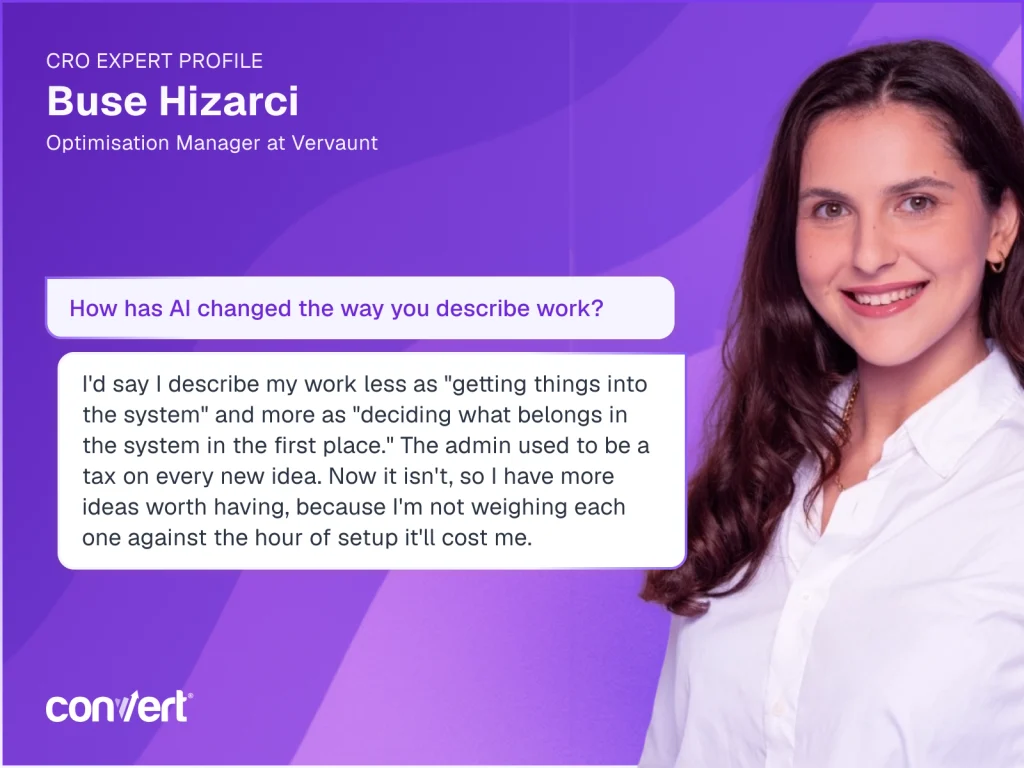
Beyond strategy and design, AI has revolutionized the administrative "back-office" of optimization management. Hizarci notes that the most significant time savings have come from automating repetitive tasks such as client onboarding and meeting documentation.
Previously, creating research documents and project structures for new clients required hours of manual labor. Now, AI-driven templates and automated workflows allow these processes to be initiated with minimal manual input. Additionally, the use of AI to transcribe client calls and automatically generate action items ensures that no detail is lost during busy periods. This "administrative revolution" frees up the strategist’s cognitive load, allowing them to focus on the complex, creative work that AI cannot yet replicate: understanding the nuances of human desire and brand identity.
Implications for the Future of the Industry
The insights provided by Buse Hizarci suggest that the future of CRO lies in the professionalization of the practitioner. As AI continues to lower the barrier to entry for execution (design, coding, and basic analysis), the value of an Optimisation Manager will increasingly be found in their ability to provide strategic oversight and psychological insight.

Practitioners must adjust by becoming "experimentation architects" rather than mere "testers." This involves:
- Developing a Holistic View: Understanding how website changes impact the entire business ecosystem, from supply chain to customer service.
- Embracing Statistical Rigor: Moving beyond simple "green vs. red" test results to understand the nuances of statistical significance and long-term data trends.
- Prioritizing Learning Over Winning: Creating a culture where "losing" tests are valued for the insights they provide.
As the DTC market becomes increasingly crowded and the cost of customer acquisition continues to rise, the ability to deeply understand and efficiently convert existing traffic will be the primary differentiator between brands that scale and those that stagnate. Hizarci’s "Testing Mind Map" provides a blueprint for this new era, where evidence reigns supreme and the pursuit of customer understanding is the ultimate goal. The shift from tactical experimentation to strategic customer intelligence is no longer optional; it is the new standard for digital excellence.







