
 rifanmuazin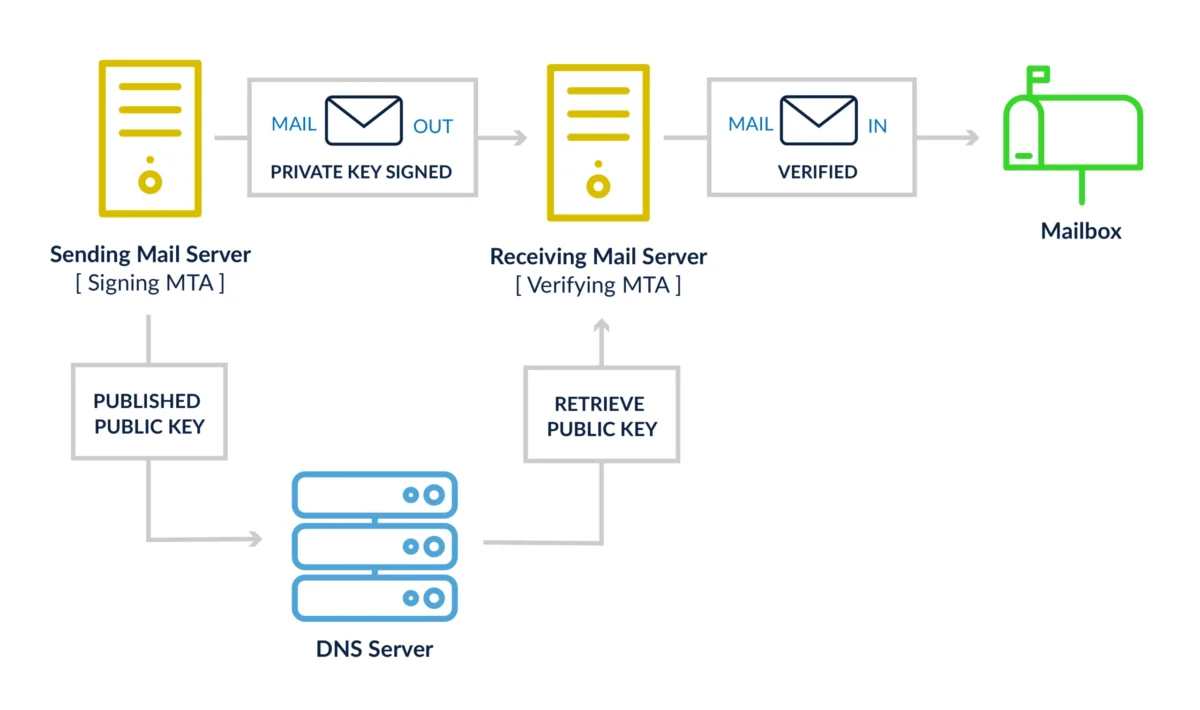
The landscape of digital communication is undergoing a profound transformation, with email authentication emerging as a non-negotiable cornerstone for secure and effective delivery. Once considered a technical nicety, proper email authentication — encompassing protocols like SPF, DKIM, DMARC, ARC, and BIMI — is now an essential requirement, driven by recent mandates from major mailbox providers such as Google, Yahoo, and Microsoft. These industry giants have significantly raised the bar, instituting stricter standards for senders to combat the escalating threats of spam, phishing, and email spoofing, fundamentally reshaping how businesses and individuals communicate.
The Rising Tide of Email Fraud and the Need for Trust
For years, email has been the primary vector for cyberattacks. The sheer volume of emails sent daily, combined with the relative ease of spoofing sender identities, made it a fertile ground for malicious actors. According to the Anti-Phishing Working Group (APWG), phishing attacks reached unprecedented levels in recent years, with millions of unique phishing sites detected. The financial toll on businesses, consumers, and governments from these scams runs into billions annually. This pervasive threat has eroded user trust, leading to lower engagement rates and an increased likelihood of legitimate emails being relegated to spam folders.
It was against this backdrop of pervasive email fraud that the concept of email authentication gained prominence. Early efforts to combat spam primarily focused on blacklists and content filtering. However, these reactive measures proved insufficient as spammers constantly evolved their tactics. A more proactive, structural approach was needed to verify the legitimacy of email senders and the integrity of messages in transit. This shift marked the beginning of modern email authentication.
A Historical Perspective: The Evolution of Email Security Protocols
The foundational work for email authentication standards began decades ago, evolving from a collaborative effort among various groups, including the Internet Engineering Task Force’s (IETF) Anti-Spam Research Group, alongside key industry players like Yahoo and Cisco. Their goal was to establish a framework that could digitally verify the origin and integrity of email messages, ensuring that what a recipient saw in their “From” field was indeed the true sender.
- Early 2000s: The Genesis of SPF and DKIM. The Sender Policy Framework (SPF) emerged in the early 2000s as one of the first widely adopted authentication methods. It provided a simple mechanism for domain owners to publish a list of authorized sending IP addresses. Shortly thereafter, DomainKeys Identified Mail (DKIM) was developed, offering a cryptographic signature to verify message integrity and sender authenticity.
- 2010s: The Emergence of DMARC. While SPF and DKIM were effective individually, they lacked a unified policy framework to instruct receiving servers on how to handle authentication failures. This critical gap led to the development of Domain-based Message Authentication, Reporting & Conformance (DMARC) in 2012. DMARC built upon SPF and DKIM, adding an alignment check between the “From” address and the authenticated domain, along with a policy mechanism for enforcement and invaluable reporting capabilities.
- Mid-2010s: Addressing Complexities with ARC. As email ecosystems grew more complex, particularly with forwarding services and mailing lists, a new challenge arose: legitimate emails could fail authentication due to modifications made by intermediary servers. The Authenticated Received Chain (ARC) was introduced to preserve authentication results across multiple hops, ensuring that the original authentication status could be verified.
- Late 2010s/Early 2020s: The Rise of Visual Trust with BIMI. Beyond technical authentication, the need for visual trust signals became apparent. Brand Indicators for Message Identification (BIMI) was developed to allow brands to display their verified logos directly in the inbox, offering an immediate visual cue of authenticity to recipients.
This chronology illustrates a continuous effort to build layers of security and trust around email, moving from basic sender verification to comprehensive policy enforcement and visual brand identity.
The New Era of Enforcement: Mailbox Provider Mandates
The theoretical benefits of email authentication have now translated into practical requirements. In a coordinated and decisive move, major mailbox providers (MBPs) – notably Google, Yahoo, and Microsoft – have cemented proper authentication as a mandatory baseline for email deliverability, especially for bulk senders. These mandates represent a significant shift, moving authentication from a recommended best practice to an absolute necessity.

- Google’s Stance (Gmail): Starting in February 2024, and progressively enforcing since April 2024, Google introduced stringent requirements for senders sending more than 5,000 emails per day to Gmail accounts. Key stipulations include:
- Strong Authentication: All bulk senders must authenticate their sending domain with SPF and DKIM.
- DMARC Policy: Senders must have a DMARC policy in place, even if initially set to
p=none(monitor-only). The long-term expectation is a move towardsp=quarantineorp=reject. - Easy Unsubscribe: A one-click unsubscribe mechanism is mandatory for marketing emails.
- Low Spam Rate: Senders must maintain a spam complaint rate below 0.10%, with a strict threshold of 0.30% leading to rejections.
- Google stated that these measures are crucial for protecting Gmail users from unsolicited and malicious emails, emphasizing that unauthenticated email is a primary gateway for phishing and spam. Non-compliant senders faced temporary rejections initially, escalating to permanent rejections by late 2025.
- Yahoo’s Commitment: Yahoo, a long-time advocate for email security, swiftly followed Google’s lead, announcing similar requirements for bulk senders to Yahoo Mail accounts, effective February 2024. Their directives mirrored Google’s, focusing on SPF, DKIM, DMARC, and a low spam rate. Yahoo reiterated its commitment to a safer inbox environment, highlighting that these standards are vital for maintaining the integrity of email communication for its vast user base.
- Microsoft’s Enhanced Rules: Microsoft also updated its bulk email rules, aligning with the industry trend to enforce stronger authentication. While often less vocal about specific thresholds than Google or Yahoo, Microsoft’s filtering systems heavily weigh authentication status. The company emphasized that senders must ensure their email infrastructure is properly configured to pass SPF, DKIM, and DMARC checks to ensure optimal deliverability to Outlook and other Microsoft-hosted mailboxes.
These synchronized mandates underscore a unified industry front against email abuse. Mailbox providers are no longer passively receiving emails; they are actively demanding proof of identity and integrity. For senders, this means that ignoring authentication is no longer an option, as non-compliance directly translates to email rejection and a catastrophic impact on communication channels.
Decoding the Core Technologies: A Closer Look
Understanding the nuances of each authentication protocol is vital for successful implementation and compliance.
Sender Policy Framework (SPF): The Authorized Sender List
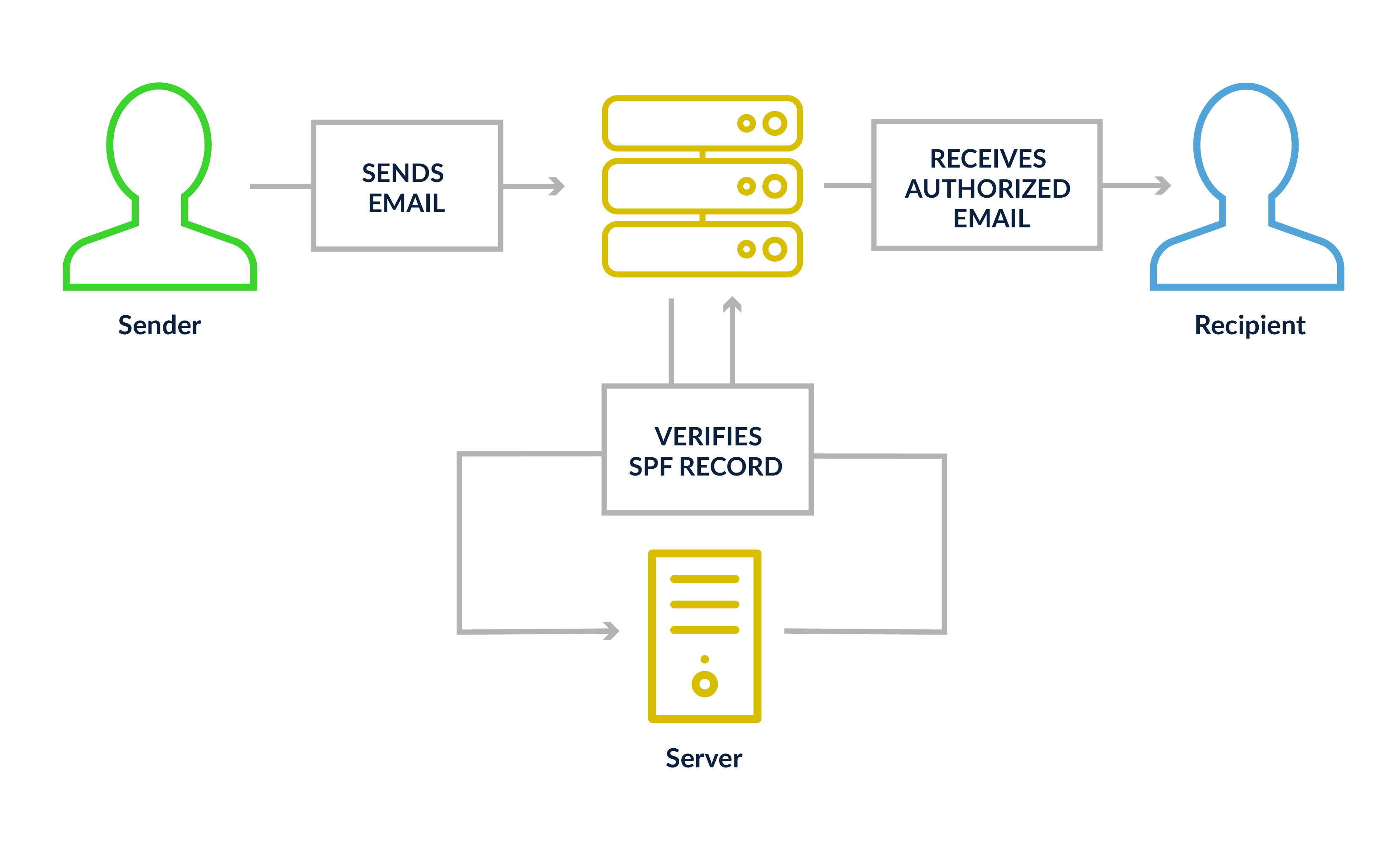
SPF acts as a digital guest list for your domain. It’s a DNS TXT record that explicitly lists all IP addresses and domains authorized to send email on behalf of your domain. When a receiving mail server gets an email from your domain, it performs an SPF check: it looks up your domain’s SPF record and compares the sending IP address against the authorized list. If the IP address isn’t on the list, the SPF check fails, indicating a potential spoofing attempt.
- Mechanism: The SPF record contains directives that specify permitted senders (e.g.,
v=spf1 ip4:192.0.2.1 include:_spf.example.com -all). The-allor~alldirective dictates the policy for unauthorized senders:-all(hard fail) tells receiving servers to reject emails from unauthorized IPs, while~all(soft fail) suggests they should be treated with suspicion but not necessarily rejected. - Importance: SPF is crucial for preventing direct domain spoofing, where spammers send emails appearing to come directly from your domain.
- Challenges: A common pitfall is the “permerror,” which occurs if an SPF record requires more than 10 DNS lookups to resolve. Each
include:statement ora,mx,ptrmechanism counts towards this limit. Exceeding it causes SPF to fail entirely, even for legitimate emails. Managing complex SPF records with multiple third-party senders (ESPs, CRMs, transactional email services) requires careful consolidation to stay within this limit.
DomainKeys Identified Mail (DKIM): The Tamper-Evident Seal
DKIM provides a cryptographic signature that verifies the sender’s identity and ensures the email message hasn’t been altered in transit. Imagine it as a digital tamper-evident seal.
- Mechanism: When your mail server sends an email, it generates a unique cryptographic signature for parts of the message (headers and body) using a private key. This signature is then added as a header to the email. The corresponding public key is published in your domain’s DNS records. The receiving server uses this public key to decrypt the signature and verify that it matches the message content. If any part of the signed message was changed after it left the sender’s server, the signature won’t match, and DKIM will fail.
- Importance: DKIM ensures message integrity and sender authenticity, protecting against both spoofing and tampering. It’s particularly effective because the signature travels with the email, making it robust against changes by intermediate servers.
- Best Practices: When configuring DKIM, it’s critical to use a minimum key length of 2048 bits. Older 1024-bit keys are considered less secure and may be rejected by some MBPs. Most Email Service Providers (ESPs) manage DKIM key generation and rotation, but senders should always confirm these security standards are met.
Domain-based Message Authentication, Reporting & Conformance (DMARC): The Policy Enforcer
DMARC builds upon SPF and DKIM, providing a comprehensive policy layer that dictates what receiving servers should do when SPF or DKIM checks fail. Crucially, DMARC introduces the concept of “alignment.”
- Mechanism: A DMARC record, also published in DNS, specifies a policy (
p=none,p=quarantine,p=reject) for handling unauthenticated emails. It also requires that the domain in the “From” header (the one users see) “aligns” with the domain authenticated by SPF or DKIM. This means the organizational domain must match. Without this alignment, DMARC fails, even if SPF or DKIM might have technically passed.p=none: Monitor only. Emails that fail DMARC are delivered as usual, but reports are sent to the domain owner. This is the recommended starting point for implementation.p=quarantine: Emails that fail DMARC are sent to the recipient’s spam or junk folder.p=reject: Emails that fail DMARC are blocked entirely and not delivered. This is the strongest enforcement policy.
- Importance: DMARC is the most powerful authentication standard as it provides actionable policies and invaluable aggregate and forensic reports. These reports offer visibility into who is sending email purporting to be from your domain, whether legitimate or malicious, and how receiving servers are processing those emails. This threat intelligence is critical for detecting and responding to spoofing and phishing attempts targeting your brand.
- Adoption & Data: DMARC adoption has been steadily increasing, especially among large enterprises and government entities, driven by the desire to protect brand reputation and mitigate cyber risks. According to recent industry reports, DMARC adoption among Fortune 500 companies is now over 80%, demonstrating its recognition as a critical security measure.
Authenticated Received Chain (ARC): Preserving Authentication Through Forwarding
ARC addresses a specific challenge: email forwarding and mailing list processing. When an email is forwarded or processed by an intermediary system (like a mailing list manager or a security gateway), the message headers or even the body might be altered. These legitimate modifications can inadvertently break a DKIM signature or cause SPF to fail, leading DMARC to reject an otherwise valid email.
- Mechanism: ARC works by creating a “chain” of authentication results. Each time an intermediate server processes and potentially alters an email, it adds an ARC seal, which includes the original authentication results it observed, along with its own signature. This chain of seals allows the final receiving server to look back through the message’s journey and verify that the email started its path properly authenticated, even if subsequent legitimate changes occurred.
- Importance: ARC is critical for maintaining deliverability for emails that go through complex routing, such as those sent to mailing lists, forwarded by internal systems, or processed by security appliances. It prevents legitimate emails from being falsely flagged as unauthenticated.
- Implementation: Unlike SPF, DKIM, and DMARC, ARC is not something a sender directly configures. It is implemented by the mail servers in the middle of the email path that process and forward messages. However, senders benefit from understanding its role, especially when diagnosing deliverability issues for forwarded content.
Brand Indicators for Message Identification (BIMI): Visual Trust and Brand Presence
BIMI is the newest standard, offering a visual layer of trust by allowing brands to display their official logo directly in the recipient’s inbox, even before the email is opened.
- Mechanism: To implement BIMI, a sender must have strong email authentication in place, specifically SPF, DKIM, and DMARC with an enforcement policy (
p=quarantineorp=reject). Once these are configured, the brand publishes a BIMI DNS record pointing to a Verified Mark Certificate (VMC) or a Common Mark Certificate (CMC) and the URL of their logo (in SVG format). Mailbox providers that support BIMI then fetch this information and display the logo. - Importance: BIMI significantly enhances brand recognition and recipient trust. Seeing a familiar, verified logo in the inbox helps recipients quickly identify legitimate emails and differentiate them from phishing attempts, thereby increasing open rates and engagement.
- Certificates (VMC vs. CMC):
- Verified Mark Certificate (VMC): This is the gold standard for BIMI. It requires the brand’s logo to be a registered trademark. VMCs are issued by authorized Certificate Authorities (like DigiCert) and unlock full BIMI support, including the coveted blue checkmark in Gmail, signifying an even higher level of verified authenticity.
- Common Mark Certificate (CMC): A more recent option, CMCs do not require a registered trademark. Instead, they require proof that the logo has been publicly displayed and used by the brand for at least 12 months. Google began accepting CMCs in 2024, making BIMI more accessible. While CMC holders get logo display in Gmail, they do not receive the blue checkmark, which remains exclusive to VMC holders.
- MBP Support: Gmail, Yahoo, and Apple Mail are leading the charge in BIMI adoption, providing visual trust signals to millions of users. Research indicates that emails with BIMI-verified logos see higher engagement and conversion rates, reinforcing its value as a marketing and security tool.
The Broader Impact: Benefits for Senders and Recipients
The widespread adoption and enforcement of email authentication protocols yield significant benefits across the entire email ecosystem.
- For Senders:
- Improved Deliverability: Properly authenticated emails are more likely to reach the inbox, avoiding spam filters.
- Enhanced Brand Reputation: Authentication signals to MBPs and recipients that the sender is legitimate, building trust and protecting the brand from spoofing.
- Reduced Fraud and Abuse: DMARC reporting provides intelligence to detect and mitigate unauthorized use of a domain for phishing or spam.
- Increased Engagement: Higher deliverability and trust signals (like BIMI logos) lead to better open rates and click-through rates for legitimate marketing and transactional emails.
- For Recipients:
- Safer Inbox: A reduction in phishing, spam, and malicious emails, making the inbox a more secure environment.
- Increased Trust: Confidence that emails appearing to be from a known brand are indeed legitimate.
- Better User Experience: Less time spent sifting through unwanted or dangerous emails.
- For the Email Ecosystem:
- Stronger Security: A more robust and resilient email infrastructure that is harder for cybercriminals to exploit.
- Greater Accountability: Senders are incentivized to maintain good sending practices, contributing to a healthier email environment.
Challenges and Best Practices for Implementation
While the benefits are clear, implementing and maintaining robust email authentication can present challenges, especially for organizations with complex sending infrastructures.
- Technical Complexity: Configuring DNS records for SPF, DKIM, and DMARC requires technical expertise. Misconfigurations can lead to deliverability issues.
- Multiple Sending Platforms: Many organizations use various ESPs, marketing automation platforms, and transactional email services, each requiring proper authentication setup. Coordinating these can be daunting.
- Ongoing Monitoring: Authentication is not a one-time setup. DMARC reports need regular monitoring to identify potential spoofing attempts, diagnose deliverability issues, and refine policies.
- Policy Evolution: Mailbox provider requirements and authentication standards continue to evolve, necessitating ongoing vigilance and adaptation.
Best Practices for Senders:
- Start with the Basics: Ensure SPF and DKIM are correctly configured for all sending domains and subdomains.
- Implement DMARC Early: Begin with
p=noneto gather data and understand your email traffic before moving top=quarantineorp=reject. - Monitor DMARC Reports: Regularly analyze aggregate reports to identify legitimate and illegitimate sending sources. Use tools to simplify report analysis.
- Consolidate SPF Records: Utilize mechanisms like SPF flattening or specialized tools to stay within the 10-lookup limit when dealing with multiple
includestatements. - Use Strong DKIM Keys: Ensure all DKIM keys are 2048 bits or longer.
- Consider BIMI: Once DMARC is at enforcement (
p=quarantineorp=reject), explore BIMI to add a visual trust signal. - Partner with Experts: Leverage the expertise of ESPs and specialized email deliverability consultants to navigate complex authentication setups.
- Internal Communication: Educate internal teams on the importance of email authentication and the impact of non-compliance.
Industry Reactions and Future Outlook
The industry’s reaction to the intensified authentication mandates has been largely positive, albeit with a recognition of the significant effort required for compliance. Email Service Providers (ESPs) have stepped up their support for clients, offering tools and guidance for implementing the necessary protocols. Security experts have hailed the move as a critical step towards a more secure internet, arguing that a strong, authenticated email ecosystem is fundamental to combating a wide array of cyber threats.
Looking ahead, email authentication is likely to continue evolving. We may see further refinements to existing protocols, potentially stricter default policies from MBPs, and even greater integration with other security measures. The focus will remain on enhancing trust, reducing fraud, and ensuring the continued viability of email as a reliable and secure communication channel.
Conclusion: Authentication as a Foundation for Trust
Email authentication is no longer an optional technical configuration but a fundamental pillar of modern digital communication. The recent, firm mandates from major mailbox providers like Gmail, Yahoo, and Microsoft underscore this reality, making robust authentication a prerequisite for effective email delivery. For senders, embracing SPF, DKIM, DMARC, ARC, and BIMI is not merely about technical compliance; it’s about safeguarding brand reputation, fostering recipient trust, and ensuring that vital messages reach their intended audience.
The journey to full authentication can be complex, requiring careful planning, technical implementation, and ongoing monitoring. However, the investment is undeniable. By establishing a secure, verified email presence, organizations not only comply with evolving industry standards but also contribute to a safer, more trustworthy online environment for everyone. In an era where digital trust is paramount, email authentication serves as the essential foundation upon which all reliable and respected email communication is built.









