
 rifanmuazin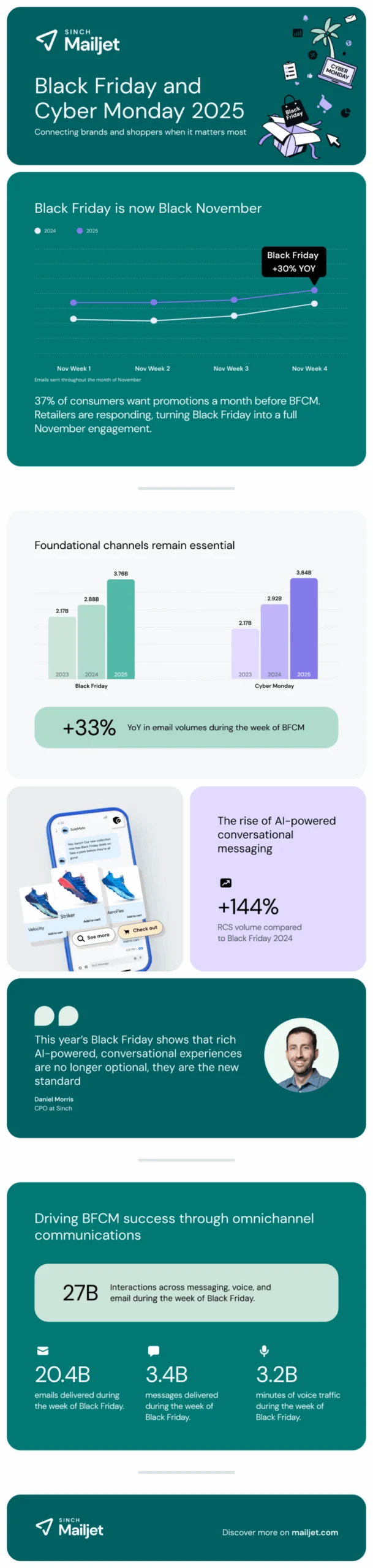
December 9, 2025 – The annual Black Friday and Cyber Monday (BFCM) sales event has once again cemented its status as the pinnacle of the e-commerce calendar, not merely as a sales bonanza but as the ultimate stress test for digital marketing infrastructure, particularly email deliverability. With Adobe reporting a colossal $137.4 billion in revenue generated throughout November 2025, marking a robust 7.2% year-over-year increase, the stakes for brands to effectively reach and engage consumers were unprecedentedly high. This period, characterized by intense promotional activity, underscored the critical need for seamless communication, especially for transactional messages like order confirmations and shipping alerts, which consumers rely on for real-time updates. A comprehensive analysis of billions of emails sent through the Sinch Mailgun and Mailjet platforms, alongside extensive consumer surveys, offers a detailed post-mortem of how brands performed and the evolving expectations of the modern shopper.
The Evolving Landscape of Peak Shopping Seasons
What began as a single-day shopping frenzy following Thanksgiving in the United States has unequivocally transformed into a month-long global phenomenon, colloquially dubbed “Black November.” This evolution is driven by a confluence of factors: increased consumer demand for early access to deals, heightened competition among retailers, and the strategic imperative for brands to distribute promotional efforts to manage logistics and customer service loads. The digital realm has been at the forefront of this transformation, with online sales increasingly overshadowing traditional brick-and-mortar transactions. For email marketers, this extended period means a prolonged battle for inbox visibility and consumer attention, making the reliability of their sending infrastructure paramount. The shift from a concentrated weekend sprint to a sustained engagement marathon necessitates a refined approach to campaign timing, segmentation, and multi-channel integration.
Record-Breaking Revenue and Shifting Consumer Preferences
Adobe’s figures for November 2025 confirm a period of extraordinary consumer spending, highlighting the resilience and growth of the digital retail sector. The 7.2% year-over-year increase in revenue signals strong consumer confidence and a continued migration towards online purchasing, even amidst evolving economic landscapes. This massive financial influx translates directly into an exponential surge in digital communications, making effective outreach more critical than ever.
To understand consumer expectations during this high-stakes period, Sinch conducted its annual pre-holiday survey of 3,180 consumers in 2025. The findings reaffirmed email’s dominant role in the shopping journey. A significant 56.5% of consumers expressed a preference for receiving Black Friday and Cyber Monday promotions via email, underscoring its enduring efficacy as a direct marketing channel. Even more compelling was the revelation that an overwhelming 73.9% of consumers depend on email for crucial transactional updates, such as order confirmations, shipping notifications, and delivery alerts. This dual reliance positions email as indispensable for both driving sales and fostering post-purchase trust and satisfaction. The alignment between consumer preference and brand strategy, as evidenced by the subsequent sending data, underscores email’s central role in the holiday shopping experience.
The Deliverability Crucible: Email Performance Under Pressure
The sheer volume of email traffic during BFCM 2025 presented a formidable challenge to deliverability. Sinch’s analysis of its Mailgun and Mailjet platforms, which collectively handle billions of messages, provided a granular view of this pressure test. During the pivotal Cyber Week, Sinch’s email platforms collectively delivered an staggering 20.4 billion emails. This immense volume reflects the intensity of promotional campaigns as brands vied for consumer attention leading up to and during the main sales events. On Black Friday alone, email volumes surged by an impressive 30% year-over-year, indicating a significant escalation in marketing efforts compared to previous years.

Despite the overflowing inboxes, the data offered a reassuring insight for marketers: consumer engagement remained robust. Average open rates held steady at 13% (excluding bot activity), mirroring engagement levels seen throughout other periods of the year. This finding strongly suggests that consumers are not experiencing “email fatigue” during the holiday rush; rather, they are actively seeking out deals and relevant information. This sustained engagement validates the strategy of well-targeted campaigns, emphasizing that quality content and precise audience segmentation can cut through even the densest digital noise.
However, achieving such engagement is predicated on flawless execution. During this hyper-competitive period, adherence to email deliverability best practices becomes non-negotiable. Factors such as sender reputation, IP warming, email authentication protocols (SPF, DKIM, DMARC), list hygiene, and content relevance are crucial in ensuring messages bypass spam filters and land in the primary inbox. The data from BFCM 2025 underscores a critical reality for e-commerce success: brands require a robust email infrastructure capable of scaling under immense pressure without compromising on world-class delivery rates. Any lapse in deliverability translates directly into lost sales, diminished customer trust, and damaged brand reputation.
Black November: The Month-Long Engagement Marathon
The notion of Black Friday as a single-day event is now definitively obsolete. Consumer expectations have shifted dramatically, with 45.9% of shoppers expressing a desire to receive promotions at least a full month before the official Black Friday date. Brands have adapted dynamically, transforming the traditional weekend sprint into a protracted month-long engagement marathon.
The data from Sinch’s platforms clearly illustrates this strategic shift. November 2025 saw a substantial 32% year-over-year surge in overall email volume. Notably, the most significant growth in sending activity occurred in the week before Cyber Week, signaling a deliberate strategy by brands to launch early-bird deals and build anticipation. This sustained campaign approach, stretching across the entire month, was instrumental in driving a staggering 27 billion customer interactions across all digital channels during Black Friday week alone. This intense activity underscores that holiday success is no longer about a concentrated two-day burst but rather about maintaining sustained, multi-channel momentum throughout the entire month of November. Brands are now orchestrating their outreach across a diverse array of channels, recognizing that early and consistent engagement is key to capturing consumer attention in a crowded marketplace.
The Omnichannel Imperative: Beyond the Inbox
In the contemporary retail landscape, relying on a single communication channel is increasingly a losing proposition. Sinch’s 2025 consumer survey revealed that a substantial 77.9% of customers expect to hear from brands across multiple channels during major shopping events. This strong consumer preference for integrated communication necessitates a sophisticated omnichannel strategy from brands.
During BFCM 2025, Sinch’s platforms powered an incredible 27 billion interactions across SMS, MMS, RCS, WhatsApp, email, and voice, providing compelling evidence that a truly integrated omnichannel approach has become the new industry standard. This holistic strategy allows brands to engage with customers where they prefer, ensuring timely and relevant communications that enhance the overall customer experience.
SMS proved to be an indispensable tool for cutting through the digital noise with time-sensitive offers and critical alerts. Sinch delivered 3.4 billion SMS messages globally during the BFCM weekend, solidifying its role as the go-to channel for urgent deals, flash sales, and last-minute updates that demand immediate attention. The brevity and immediacy of SMS make it uniquely effective for driving impulse purchases and providing crucial, time-sensitive information.
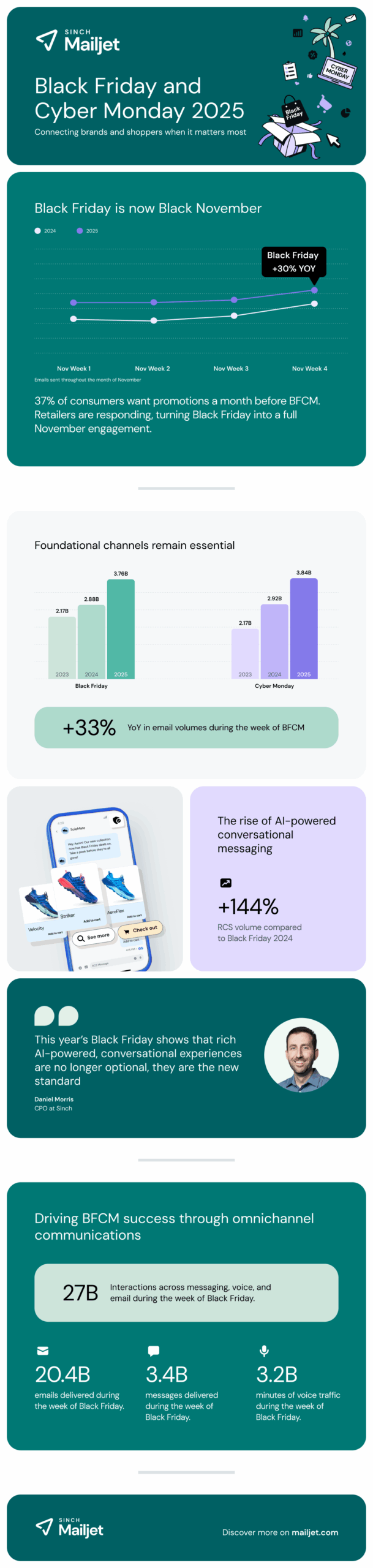
Beyond automated digital channels, human conversation remains paramount for complex or sensitive issues. For situations requiring personalized support or urgent problem resolution, customers overwhelmingly gravitate towards phone support for real-time assistance. This was vividly demonstrated on Black Friday alone, when Sinch handled an astounding 3.2 billion minutes of voice traffic. This figure underscores the vital and irreplaceable role of voice communication for urgent customer care, service escalations, and building direct customer relationships when it matters most, particularly during periods of high transaction volume and potential logistical complexities. The integration of voice into the omnichannel strategy ensures that customers have a reliable fallback when self-service or asynchronous digital channels fall short.
Industry Reactions and Strategic Implications
The findings from BFCM 2025 resonate across the e-commerce and digital marketing sectors. Industry analysts are interpreting the record revenues and communication volumes as clear indicators of the ongoing digital transformation in retail. The sustained engagement despite increased email traffic suggests a maturity in both consumer behavior and brand marketing strategies.
“BFCM 2025 has unequivocally proven that email remains the bedrock of digital retail communication, but its power is amplified exponentially when integrated into a comprehensive omnichannel strategy,” stated a representative from Sinch, reflecting on the company’s extensive data. “The sheer volume of interactions across email, SMS, and voice highlights the critical need for scalable, reliable communication platforms that can handle unprecedented peaks while ensuring deliverability and customer satisfaction. Brands that failed to prioritize robust infrastructure and a seamless multi-channel experience likely missed significant opportunities.”
The implications for e-commerce businesses are profound. The data reinforces that merely sending emails is insufficient; ensuring they reach the inbox and are part of a broader, cohesive communication ecosystem is crucial. The shift to “Black November” demands a re-evaluation of campaign timelines, resource allocation, and promotional cadence throughout the entire month. Furthermore, the strong consumer preference for multi-channel engagement underscores that investment in integrated communication platforms is no longer a luxury but a necessity for competitive advantage. Brands must leverage data analytics to understand customer preferences across channels, personalize communications, and optimize delivery times to maximize impact.
Preparing for 2026 and Beyond
While BFCM 2025 set new benchmarks, the peak sending season is far from over, with subsequent holiday periods presenting continuous opportunities and challenges. Consumers’ expectations for seamless, relevant, and timely communications are only set to increase. Success in this hyper-competitive environment requires a strategic combination of the right sending partner, unparalleled email expertise, and vigilant performance monitoring.
For brands looking ahead to 2026, several key lessons emerge. Firstly, a robust and scalable email infrastructure is non-negotiable. The ability to handle billions of messages without compromising deliverability is paramount. Secondly, proactive deliverability management, including continuous monitoring of sender reputation and adherence to evolving ISP requirements, is essential. Thirdly, an integrated omnichannel strategy that leverages the strengths of each channel – email for detailed promotions and transactional updates, SMS for immediate alerts, and voice for personalized support – will be critical for a superior customer experience. Finally, continuous analysis of engagement metrics, from open rates to conversion pathways, will inform and refine future strategies.
Providers like Sinch Mailjet are positioned to offer the necessary support to ensure emails reach their intended destination. Their easy-to-use email solutions empower senders to design, deploy, and track impactful email campaigns that drive sales and foster engagement, whether handling thousands or billions of messages. As the digital retail landscape continues to evolve, the blend of advanced technology, expert guidance, and a deep understanding of consumer behavior will define the winners of future peak shopping seasons. The performance of BFCM 2025 serves as a compelling blueprint for what it takes to succeed in the dynamic world of modern e-commerce.









