Lina Hope
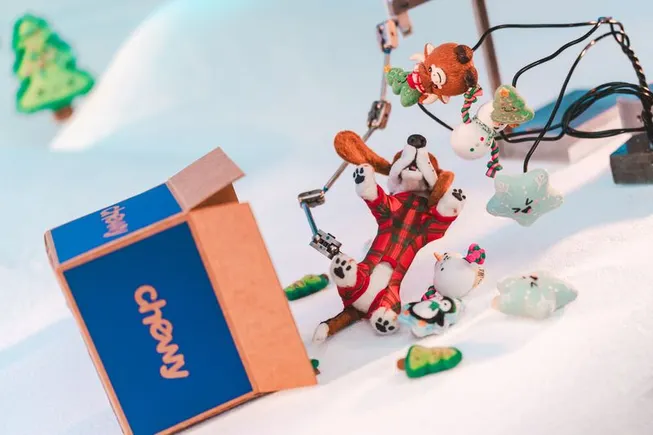
In a notable departure from the burgeoning landscape of generative artificial intelligence, several prominent brands are championing a more traditional and labor-intensive filmmaking technique this holiday season: stop-motion animation. This resurgence of tactile artistry is evident in campaigns such as Levi’s heartwarming claymation spot, which celebrates handmade craftsmanship in an era often perceived as saturated with AI-generated content. Similarly, Prada’s festive offering artfully blends live actors with classic 2D animation, echoing the beloved visual style of "Who Framed Roger Rabbit." Against this backdrop, pet supply giant Chewy has also embraced stop-motion for its latest national television campaign, marking the first time the brand has utilized this intricate medium for such a broad reach. The animated commercials aim to capture the rich inner lives of pets during the holiday season, depicting how a Chewy box serves as a magical portal to a world filled with beloved toys, delectable treats, and enchanting snowy adventures.
The genesis of Chewy’s stop-motion holiday campaign is rooted in its enduring "Chewy Claus" initiative. This long-standing program invites pet owners to write letters to the company on behalf of their animal companions. As a vital component of this initiative, Chewy pledges to support adoption efforts for shelter animals and to dispatch surprise gifts to a selection of these letter-writers throughout December. Melissa Bell, Chewy’s Chief Brand Officer, who joined the company in July, elaborated on the creative process. "It didn’t start with stop motion," Bell stated. "We consider the holidays from our perspective, but given the paramount importance of pets and animals to our company, we thought, ‘Let’s begin by imagining what our pets and animals envision.’ This perspective naturally led to the development of the campaign’s direction."
A Closer Look at Chewy Claus and Holiday Pet Spending Trends
Despite prevailing economic uncertainties that might otherwise temper consumer spending on gifts, the enthusiasm for holiday pet-related purchases remains robust. This trend is particularly pronounced among younger demographics. Data from Chewy itself indicates that nearly 80% of pet owners intend to purchase a gift for their animal this holiday season. Furthermore, a significant 21% of Generation Z and millennial consumers are planning to spend $100 or more on their pets. This highlights a growing trend where pets are increasingly viewed as integral family members, deserving of festive recognition and indulgence. Chewy’s campaign strategy intentionally extends beyond the typical offerings of pet food and medication, aiming to inspire consumers to surprise the animals in their lives and fully include them in the celebratory spirit of the season.
The current holiday campaign represents a significant milestone for the "Chewy Claus" program, as it receives its inaugural national television spotlight. "The affection and engagement surrounding Chewy Claus are truly inspiring," Bell remarked. "For us, it was about connecting to a larger purpose, specifically our commitment to helping shelter pets find loving homes. We aspired to share this vital message with a wider audience, and this campaign provides a powerful avenue to introduce this cherished tradition to more people."
Significantly, Chewy has confirmed that no artificial intelligence was employed in the creation of these animated spots. Each puppet featured in the campaign was meticulously handcrafted and modeled after actual pets, lending an authentic and personal touch to the visuals. The campaign’s centerpiece, a 30-second spot titled "A Holiday Dream," immerses viewers in a whimsical holiday world brought to life entirely through stop-motion animation, featuring a cat and dog as the central characters. A shorter, 15-second advertisement, "A Holiday of Treats," showcases a dog eagerly anticipating a treat tossed by a snowman-shaped toy. The dog then joyfully interacts with a Chewy box brimming with toys, before settling down for a nap on the living room floor. Chewy’s own in-house brands, such as Frisco, are subtly integrated throughout the advertisements, reinforcing brand recognition.
A Comprehensive, Full-Funnel Holiday Strategy
Chewy’s holiday marketing endeavors extend far beyond its national television presence, encompassing a robust social media strategy. A core element of this approach involves collaborating with influencers, whom Chewy affectionately refers to as "Chewpanions." These digital partners are instrumental in amplifying the "Chewy Claus" message and promoting the brand more broadly across various social platforms.
Physical activations also form a crucial component of the campaign, with a strong emphasis on promoting pet adoption. Chewy is hosting an event in Santa Monica, California, from December 5th to 6th. This event will offer attendees the opportunity to write letters to Chewy Claus, browse a festive holiday market, and, importantly, meet adoptable pets. A similar, successful event was previously held in Miami from November 21st to 22nd, serving as the official kick-off for the holiday season.
These strategic marketing initiatives are underpinned by Chewy’s consistent financial performance. In its fiscal second quarter, which concluded on August 2nd, the company reported net sales of $3.33 billion, representing a 7.3% year-over-year increase, according to its latest earnings release. The company’s growth trajectory has also been shaped by strategic acquisitions. In February, Chewy acquired SmartPak, a reputable brand specializing in horse supplies and supplements. Subsequently, in May, Chewy expanded its veterinary services footprint by acquiring Modern Animal, thereby increasing its total number of veterinary practice locations to approximately 60. These moves indicate a broader strategy to solidify Chewy’s position as a comprehensive pet care provider, extending its reach beyond e-commerce into essential services.
The Enduring Appeal of Stop-Motion in a Digital Age
The current embrace of stop-motion animation by major brands like Levi’s, Prada, and Chewy signals a deeper trend within the advertising and marketing industries. In an era where generative AI can produce vast quantities of content rapidly and at a lower cost, the deliberate, hands-on nature of stop-motion offers a compelling counterpoint. This technique requires meticulous attention to detail, an investment of significant time and skill, and a tangible, physical creation process. For consumers, this translates into advertisements that feel authentic, handcrafted, and imbued with a sense of personality and warmth that can be difficult to replicate with purely digital means.
The "handmade" quality of stop-motion inherently communicates a message of care, dedication, and artistry. Brands leveraging this medium are, in essence, communicating that they are willing to invest significant resources and effort into their message and their connection with consumers. This resonates particularly well during the holiday season, a time often associated with thoughtful gift-giving, personal connections, and a desire for authenticity. By choosing stop-motion, these brands are not only creating visually engaging advertisements but are also subtly aligning themselves with values of craftsmanship and genuine human effort, standing out from the often-impersonal output of AI.
The appeal of stop-motion animation dates back to the early days of cinema, with pioneers like Willis O’Brien and Ray Harryhausen demonstrating its potential to bring fantastical worlds and creatures to life. Its resurgence in contemporary advertising suggests that audiences still possess a deep appreciation for its unique aesthetic and the evident labor involved. This appreciation can foster a stronger emotional connection between the brand and its audience, as the perceived effort and artistry translate into a higher perceived value.
Strategic Implications and Future Outlook
Chewy’s decision to invest in a stop-motion campaign, particularly for its flagship "Chewy Claus" initiative, is a strategic move to differentiate itself in a crowded marketplace. By associating its brand with a technique that emphasizes creativity, skill, and a personal touch, Chewy aims to forge a deeper emotional bond with pet owners. This approach is particularly effective for a brand whose core business revolves around the deep emotional connections people have with their pets. The campaign’s focus on the pets’ perspective and the magical transformation facilitated by a Chewy box taps into the universal desire to understand and indulge our animal companions.
The integration of the campaign across multiple channels—television, social media, and in-person events—demonstrates a commitment to a comprehensive, "full-funnel" marketing strategy. This approach ensures that Chewy’s message reaches consumers at various touchpoints in their journey, from initial awareness to direct engagement. The emphasis on pet adoption through events further aligns the brand with a philanthropic mission, enhancing its corporate social responsibility profile and appealing to consumers who prioritize ethical and community-focused businesses.
The financial growth reported by Chewy, coupled with its strategic acquisitions, indicates a company that is not only performing well but is also actively investing in its future. The expansion into veterinary services and the acquisition of specialized brands like SmartPak suggest a long-term vision to become a holistic provider of pet care solutions. The stop-motion holiday campaign, therefore, serves as a prominent, emotionally resonant element within this broader strategic framework, reinforcing brand loyalty and attracting new customers by highlighting the joy and care that Chewy aims to bring to the lives of pets and their owners. As the holiday season unfolds, the success of this handcrafted campaign will likely be measured not only in engagement metrics but also in its ability to capture the hearts of consumers and their beloved pets, offering a tangible and heartwarming alternative to the digital noise.

 Siti Muinah
 Ali Ikhwan