Evan Lee Salim
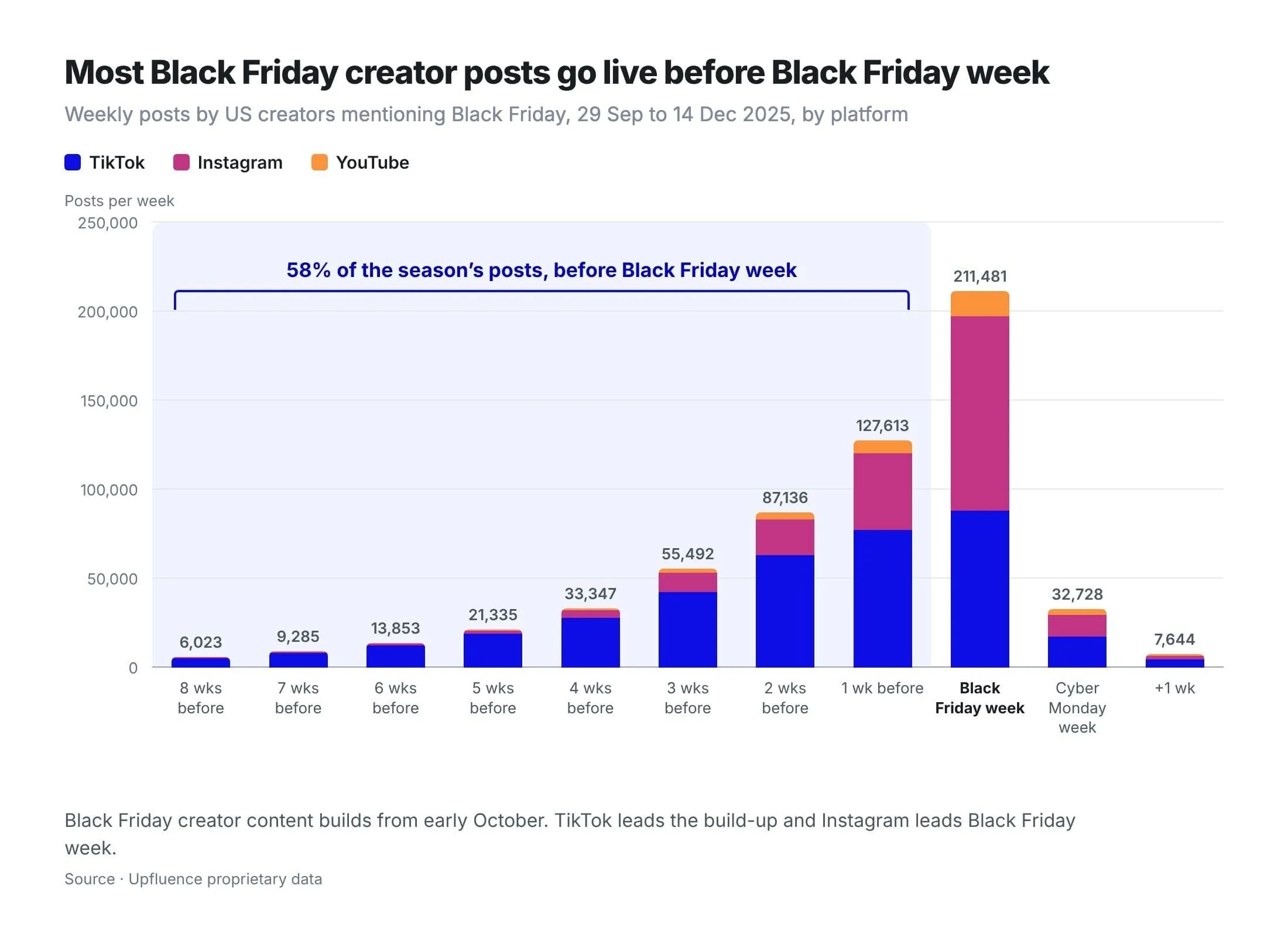
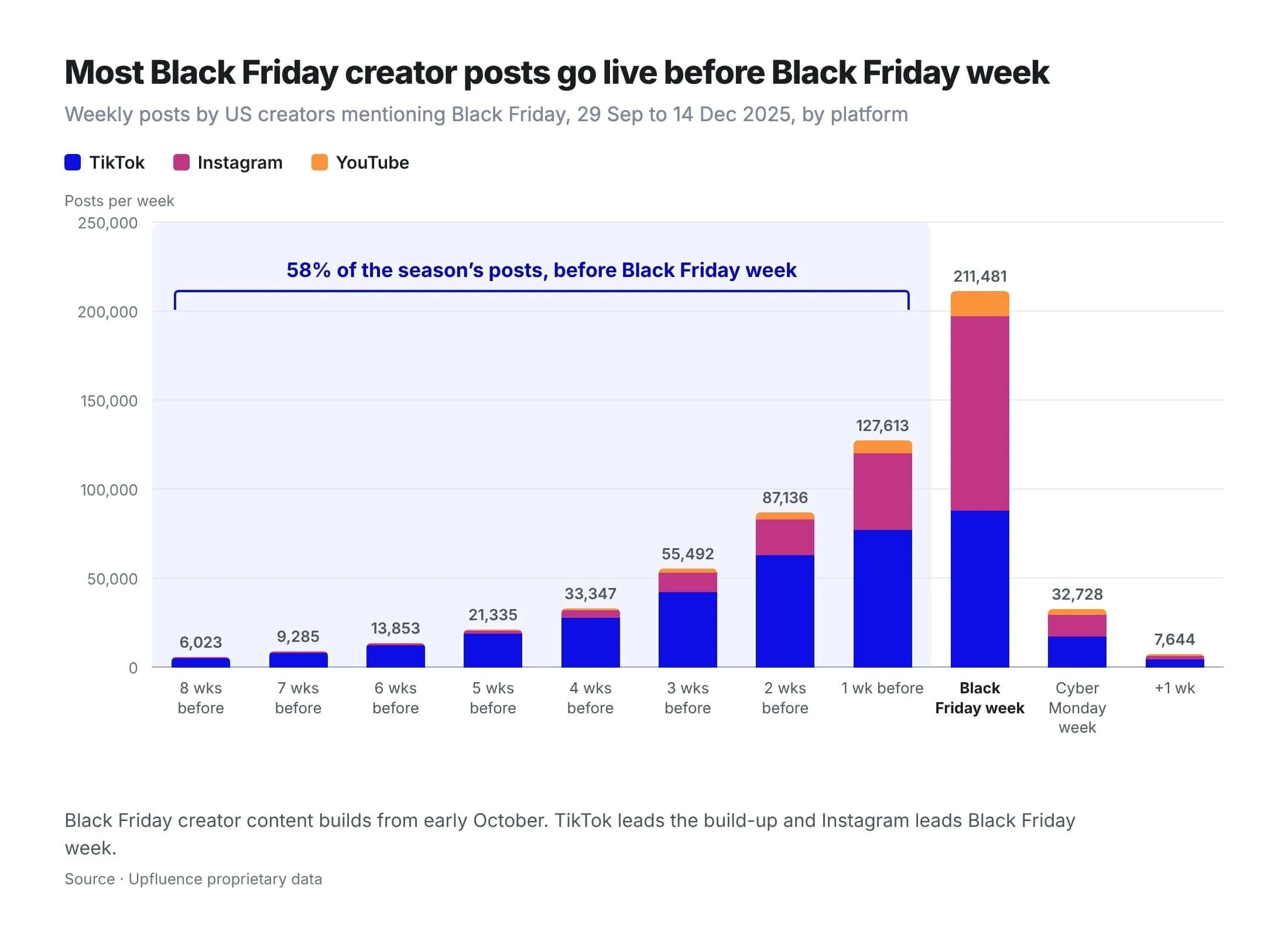
The landscape of holiday retail has undergone a fundamental shift, moving away from single-day doorbusters toward a month-long digital narrative driven by social commerce. Recent analysis of 606,000 Black Friday posts by U.S.-based creators reveals that the primary challenge for modern brands is no longer the depth of the discount, but the precision of the timing. With 58% of creator-led Black Friday content going live before the actual week of the event, the window for capturing consumer attention closes far earlier than traditional marketing calendars suggest. As the 2026 holiday season approaches, brands are being forced to rethink their reliance on last-minute "flash" promotions in favor of early-November "seeding" strategies that capitalize on pre-peak shopping intent.
The Scale of the Digital Black Friday Phenomenon
The importance of a robust digital strategy is underscored by record-breaking financial data from the previous season. According to Adobe Analytics, U.S. shoppers spent a staggering $11.8 billion online on Black Friday 2025, marking a significant increase from $10.8 billion the prior year. This growth is mirrored in the Shopify ecosystem, where merchants reported $14.6 billion in sales over the Black Friday through Cyber Monday (BFCM) weekend—a 27% increase over 2024. For more than 94,000 of these merchants, the period represented their highest-grossing sales day in company history.
Within this high-stakes environment, creators have emerged as the most trusted intermediaries. In an era of advertising fatigue and saturated email inboxes, shoppers increasingly turn to influencers to filter the noise. However, data suggests that brands that delay their creator briefings until late November are often too late to influence the consumer’s wallet. The most successful campaigns are now built "backwards" from the late-November peaks, with foundational work beginning as early as September.
A Chronology of the Creator-Led Campaign
The lifecycle of a successful Black Friday campaign is divided into distinct phases, each requiring a different content tone and platform focus. The analysis of 2025 creator behavior provides a roadmap for the 2026 season, which sees Black Friday fall on November 27 and Cyber Monday on November 30.
Phase 1: The October Onboarding (Early to Mid-October)
By mid-October, the most effective brands have already finalized their creator shortlists and secured agreements. This period is dedicated to logistics, specifically the shipping of physical products to creators for "seeding." Because authentic reviews and "unboxings" require hands-on experience with the product, this lead time is non-negotiable.
Phase 2: The Teaser and Awareness Build-up (October 19 – November 1)
The transition from October to November marks the beginning of active content production. Data shows that TikTok leads this early charge, accounting for 84% to 90% of all Black Friday-related creator posts in October. During this window, creators focus on "teaser" content—hinting at upcoming deals or showcasing products that will be featured in future sales without necessarily revealing the final price point.
Phase 3: The Early-Access Surge (November 2 – November 22)
This three-week window is the most critical for capturing early-season intent. Last season, 45% of all Black Friday creator posts went live during these three weeks. Content during this phase shifts toward utility: early-access codes for loyal followers, in-depth reviews, and curated gift guides. This period targets the "organized shopper" who seeks to complete their holiday list before the chaos of Black Friday week.
Phase 4: Peak Week (November 23 – November 29)
While the volume of posts is highest during this week, the nature of the content becomes more transactional. Instagram takes the lead here, accounting for 52% of posts during Black Friday week. Format shifts toward high-urgency media, such as Instagram Reels and Stories featuring countdown timers and "last chance" reminders.
Phase 5: The Cyber Monday Extension (November 30 – December 2)
The final phase serves as a follow-up, capturing the remaining 5% to 7% of seasonal content. This is largely reserved for "last-call" messaging and Cyber Monday-exclusive digital deals.
Platform Dynamics: Matching Medium to Message
The choice of platform is not merely a matter of demographic preference but of timing and product price point. The 2025 data study indicates that TikTok, Instagram, and YouTube serve distinct roles in the conversion funnel.
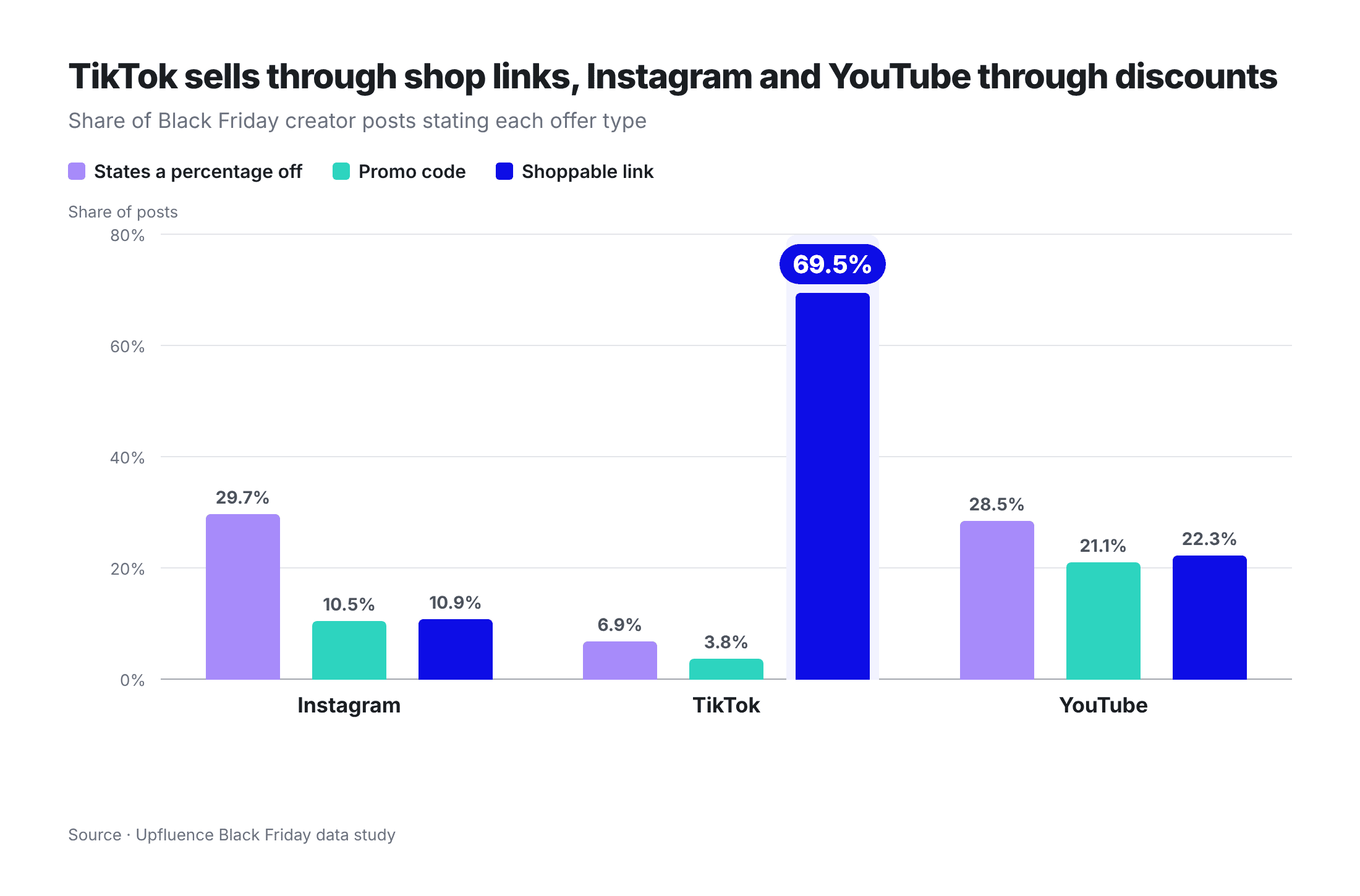
TikTok has established itself as the engine of the "early build-up." Because the TikTok algorithm favors discovery and viral potential, it is the ideal platform for generating initial interest. However, it is also highly shoppable; 69.5% of Black Friday TikToks analyzed featured direct shoppable links, often through TikTok Shop integrations.
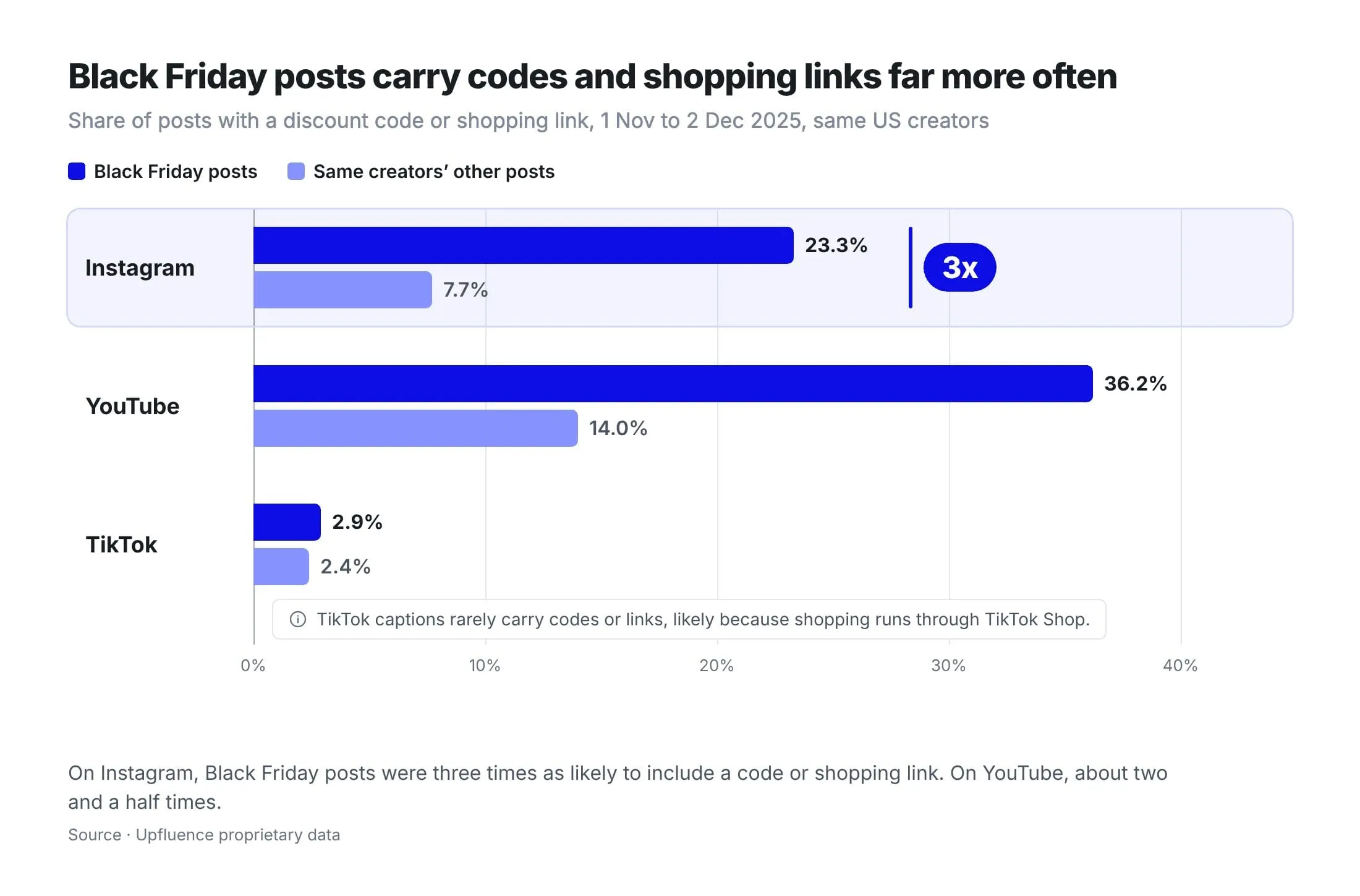
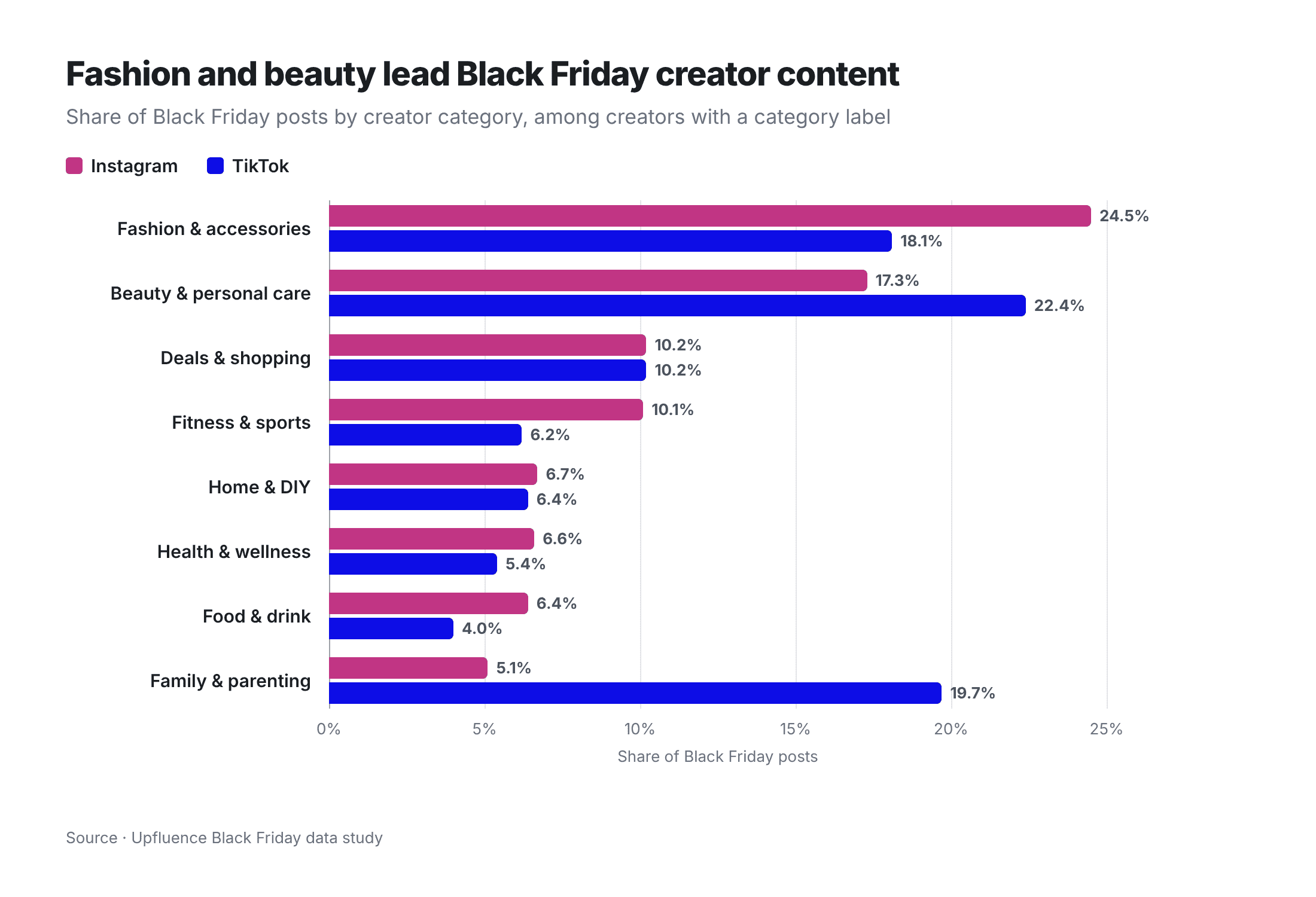
Instagram remains the dominant force for the "final push." It saw a 3x increase in the use of discount codes and shopping links on Black Friday posts compared to non-holiday content. The visual nature of Instagram Reels and the immediacy of Stories make it the preferred tool for fashion and beauty brands, which together accounted for over 40% of the platform’s Black Friday mentions.
YouTube, while lower in total post volume (6%), serves a critical role for high-consideration purchases. For electronics, home appliances, or premium skincare, shoppers require more than a 15-second clip. YouTube’s longer format allows for comprehensive testing and comparison, which is why 36% of Black Friday videos on the platform included detailed tracking links or codes in the description—far higher than the 14% seen in non-holiday videos.
Content Strategy: The Priority of "Product Over Price"
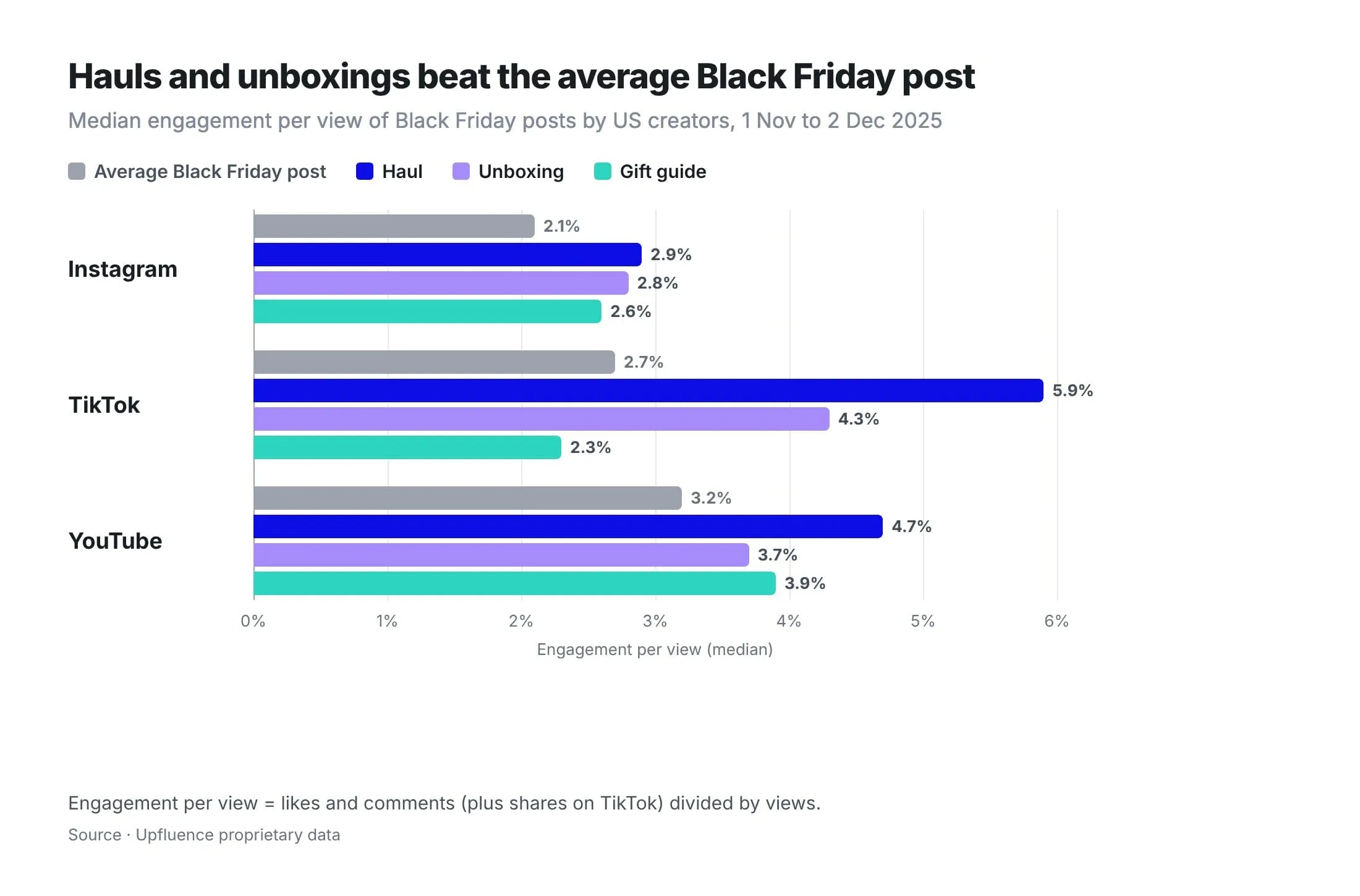
A recurring finding in creator analytics is that "deal-only" posts—those that simply announce a percentage off—consistently underperform in terms of engagement. On Instagram, the median engagement for Black Friday posts was 2.1%, compared to 2.8% for standard content. On TikTok, the drop was more pronounced: 2.7% engagement for Black Friday content versus a 6.3% baseline.
To counteract this "promotional dip," successful creators wrap the offer in formats that provide intrinsic value. Three specific formats outperformed the average last season:
- Hauls and Try-Ons: These performed exceptionally well on TikTok, earning 5.9% engagement—more than double the platform’s Black Friday average. By showing how clothes fit or how makeup applies in real-time, creators provide the visual proof consumers need to move from "browsing" to "buying."
- Unboxings and First-Look Reviews: These posts beat the average engagement on all three major platforms. The "honest" nature of an unboxing—where a creator might point out both pros and cons—builds the credibility necessary to drive a high-intent click.
- Gift Lists: Curated lists like "Top 5 Gifts Under $50" serve as a service to the overwhelmed shopper. By positioning a product as a solution to a gifting problem rather than just a discounted item, brands can maintain higher engagement rates.
The Micro-Influencer Advantage and Reach Metrics
One of the most significant insights for brand managers is the inverse relationship between follower count and reach during the holiday season. During Black Friday 2025, creators with 1,000 to 10,000 followers (nano and micro-influencers) saw their Black Friday posts reach a median of 20% of their follower count on Instagram. In contrast, "mega" influencers with over 1 million followers saw a reach of only 6%.
This suggests that smaller, niche-focused creators maintain a more "active" and attentive audience during high-noise periods. For brands, this means that a strategy involving twenty micro-influencers may yield a higher return on investment and broader total reach than a single partnership with a major celebrity.
Broader Implications and Industry Analysis
The data points toward a future where "Black Friday" is no longer a day, but a month-long social commerce ecosystem. The integration of affiliate tracking and unique creator codes has transformed influencer marketing from a "top-of-funnel" awareness play into a measurable performance channel.
Industry experts suggest that the 2026 season will see even deeper integration of AI-driven creator discovery and real-time commission tracking. As mobile commerce continues to dominate—accounting for 56.4% of all U.S. online holiday transactions in 2025—the "frictionless" journey from a creator’s post to a mobile checkout is the new standard.
For brands, the takeaway is clear: the technical setup (tracking links, codes, and affiliate structures) must be finalized by October to allow the creative narrative to take hold in early November. Those who wait for the traditional "Black Friday Week" to begin their outreach will find themselves competing in a marketplace where the majority of consumer decisions have already been made. Success in the modern holiday season is a reward for those who prioritize early engagement, creator authenticity, and data-backed platform selection.

 Asro

 Asep Darmawan