Nana

The ability to effectively advertise on Facebook remains an indispensable skill for marketers, from seasoned professionals to those just entering the digital landscape. In an increasingly competitive online environment, understanding the intricacies of Meta’s powerful advertising ecosystem is crucial for driving measurable business growth.

The Evolution and Scale of Meta’s Advertising Dominance
Facebook advertising encompasses the deployment of paid promotional content across Meta’s extensive family of applications, including Facebook, Instagram, Messenger, and the Audience Network. This sophisticated system allows businesses to reach highly specific audiences with diverse creative formats, including text, image, and video, offering unparalleled scale, precise targeting capabilities, and meticulously measurable outcomes.

Meta’s advertising audience stands as one of the largest and most engaged in digital marketing. According to Meta’s own second-quarter 2025 reporting, the company recorded an average of 3.48 billion daily active users across its platforms. This staggering figure represents an unmatched pool of potential customers for advertisers worldwide, solidifying Meta’s position as a cornerstone of modern digital strategy. The financial implications of this reach are equally impressive, with Statista reporting that 98.7% of Meta’s app revenue, totaling over $196 billion in 2025, originated from advertising. This substantial investment underscores the company’s commitment to evolving its ad platform.
A significant transformation over the past two years has been the accelerated integration of artificial intelligence (AI) into Meta’s advertising infrastructure. The advent of Advantage+ campaigns, automated audience discovery, and AI-powered creative tools has fundamentally shifted the advertiser’s role. Rather than extensive manual setup, the focus is now on feeding the system with high-quality creative assets, accurate conversion data, and clearly defined campaign objectives. This strategic pivot by Meta aims to enhance efficiency and optimize ad delivery through sophisticated machine learning algorithms that determine which ads are shown to individual users based on a complex interplay of bid amount, estimated action rates, and ad quality. The auction system is designed to ensure advertisers pay only what is necessary to secure a winning placement, while Meta’s algorithms strive to connect ads with users most likely to engage and convert.
In essence, Facebook advertising combines an immense global reach with granular control and intelligent automation, making it a critical component of any comprehensive paid social strategy.
Navigating the Investment: Understanding Facebook Advertising Costs in 2026
The financial outlay for Facebook advertising exhibits considerable variability, influenced by factors such as industry, target audience, and campaign objectives. In 2026, the typical Cost Per Click (CPC) is observed to range between $0.50 and $2.00. This benchmark, derived from industry data, is subject to fluctuations based on the competitive intensity of the audience segment, the inherent quality and relevance of the ad creative, and seasonal demand peaks.
For instance, industry benchmark data indicates an average CPC of approximately $0.70 for traffic-focused campaigns, whereas campaigns optimized for lead generation typically incur a higher average CPC of around $1.92. These figures serve as general guidelines, with actual costs being unique to each account and audience.
Beyond CPC, the Cost Per 1,000 Impressions (CPM) provides another key metric for understanding ad spend. A thousand views on Facebook typically cost between $5 and $18. Awareness campaigns generally fall at the lower end of this spectrum, while sales and lead generation campaigns command higher CPMs due to their pursuit of more high-intent audiences. CPM is also affected by ad placement (e.g., feed placements often cost more than Audience Network) and seasonal retail surges, which can temporarily inflate costs. A sudden, unexplained spike in CPM without a corresponding improvement in results often signals a need for creative refreshment.
For businesses contemplating initial ad investments, daily budgets of $5 or $10 are viable starting points. A $5 daily budget is suitable for small-scale testing, localized campaigns, or initial data collection, providing valuable insights into audience behavior. A $10 daily budget offers Meta’s algorithm more data for optimization, enabling more meaningful results for small-to-mid-sized campaigns. Enterprise-level campaigns, however, aiming for extensive reach or high conversion volumes, typically necessitate substantially larger budgets. The overarching principle is to initiate campaigns with a budget that facilitates sufficient data accumulation for optimization, then strategically scale successful campaigns.
Strategic Imperatives: Why Businesses Prioritize Facebook Advertising
Advertising on Facebook offers a compelling array of benefits that position it as a primary channel for driving measurable growth. The platform’s ability to generate over $196 billion in ad revenue in 2025 underscores its efficiency and effectiveness as recognized by marketing leaders globally.
Key advantages include:
- Unmatched Reach: Access to billions of daily active users across Meta’s app family.
- Precision Targeting: Sophisticated tools allow for hyper-segmentation based on demographics, interests, behaviors, custom lists, and lookalike audiences.
- Budget Flexibility: Campaigns can be tailored to virtually any budget, from micro-tests to large-scale enterprise deployments.
- Data-Driven Optimization: Robust analytics provide insights into performance, enabling continuous refinement and improved ROI.
- Diverse Ad Formats: A wide selection of creative options caters to various campaign objectives and audience engagement styles.
- Integrated Ecosystem: Seamless advertising across Facebook, Instagram, and Messenger facilitates a unified brand presence and user experience.
- AI-Powered Efficiency: Advantage+ features automate complex optimization tasks, freeing up marketers for strategic creative development.
A Spectrum of Creative: Exploring Facebook Ad Formats
Meta offers a versatile suite of ad formats, each engineered to fulfill distinct marketing objectives across different stages of the customer journey.
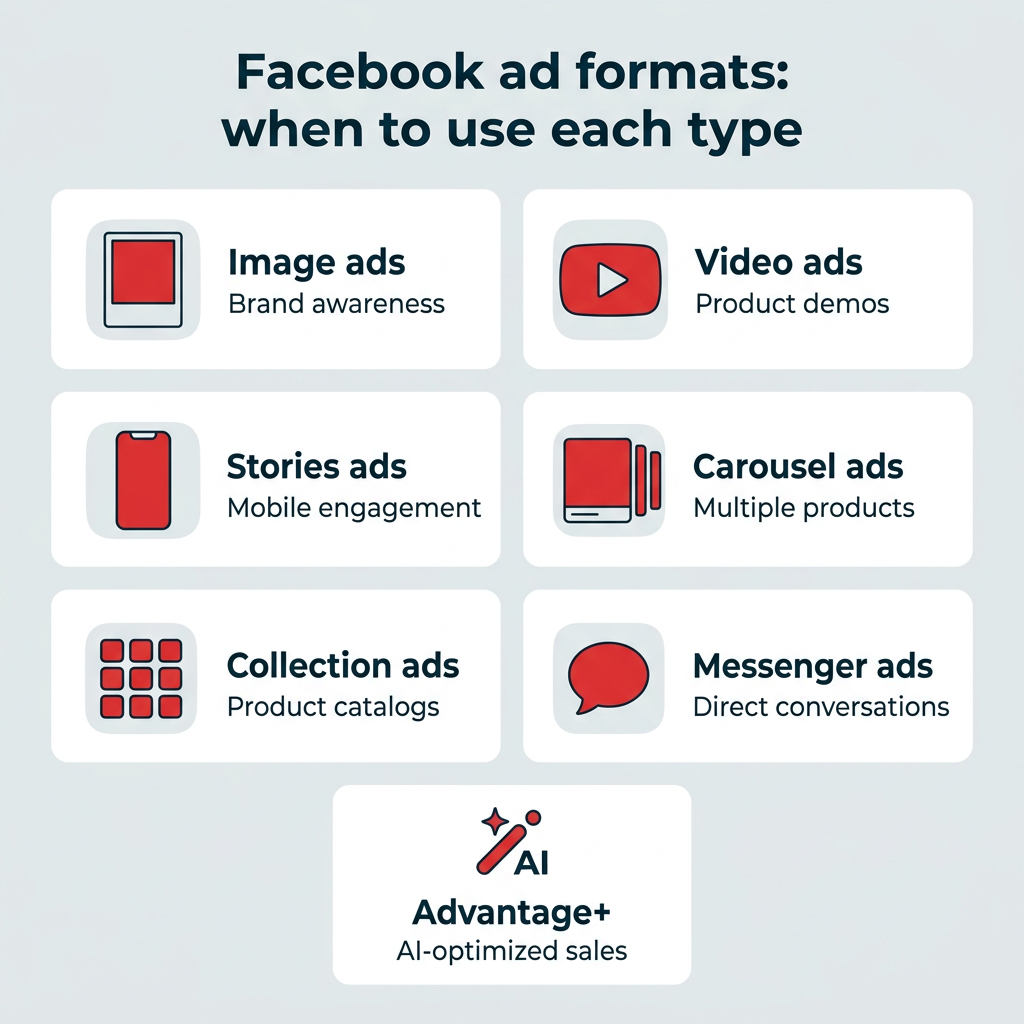
- Image Ads: The most fundamental format, utilizing a single image to promote a product, service, or brand. Their adaptability across various placements and aspect ratios makes them ideal for initial campaigns or when showcasing strong static visuals. They are simple to create, even by boosting an existing Facebook Page post, and are effective for brand awareness or product launches.
- Video Ads: Employing a single video, this format excels at demonstrating products, providing tutorials, or highlighting dynamic brand narratives. While videos can extend up to 241 minutes, Meta recommends keeping them under 15 seconds for optimal engagement. They require higher production investment but offer richer storytelling capabilities.
- Stories Ads: Designed for the mobile-first user, these vertical, full-screen ads maximize screen real estate. In the U.S., 62% of users reportedly become more interested in a brand after seeing it in a Story, highlighting their effectiveness. Stories ads offer extensive creative freedom, incorporating emojis, stickers, filters, and even augmented reality.
- Carousel Ads: This format allows advertisers to showcase up to ten images or videos, each with its own headline, description, or link. Carousels are excellent for displaying multiple products, guiding users through a multi-step process, or presenting a series of related items, each linking to a specific landing page.
- Collection Ads: An immersive, full-screen mobile experience, Collection ads enable users to browse and purchase products directly within the ad. Tapping on a Collection ad opens an Instant Experience – a mobile-only landing page where users can interact with images and videos. They are best suited for businesses with extensive product catalogs, allowing Meta’s algorithms to dynamically select products relevant to each user.
- Messenger Ads: Integrated directly into Facebook Messenger conversations, these ads offer a more personal engagement channel. Users encounter them amidst their chats and can tap to initiate a direct conversation with the brand. This format is particularly effective for small businesses seeking to foster direct customer interaction.
- Advantage+ Shopping Campaigns: Representing Meta’s pinnacle of AI integration, these campaigns automate creative selection, audience targeting, and ad placements to optimize for sales with minimal manual intervention. Advertisers provide assets and goals, and Meta’s AI models manage real-time optimization, often yielding a 20% lower cost per result. This automation is invaluable for enterprise teams managing large catalogs across multiple regions, enabling efficiency at scale and freeing up resources for high-level strategy.
Campaign Deployment: A Step-by-Step Guide in Meta Ads Manager
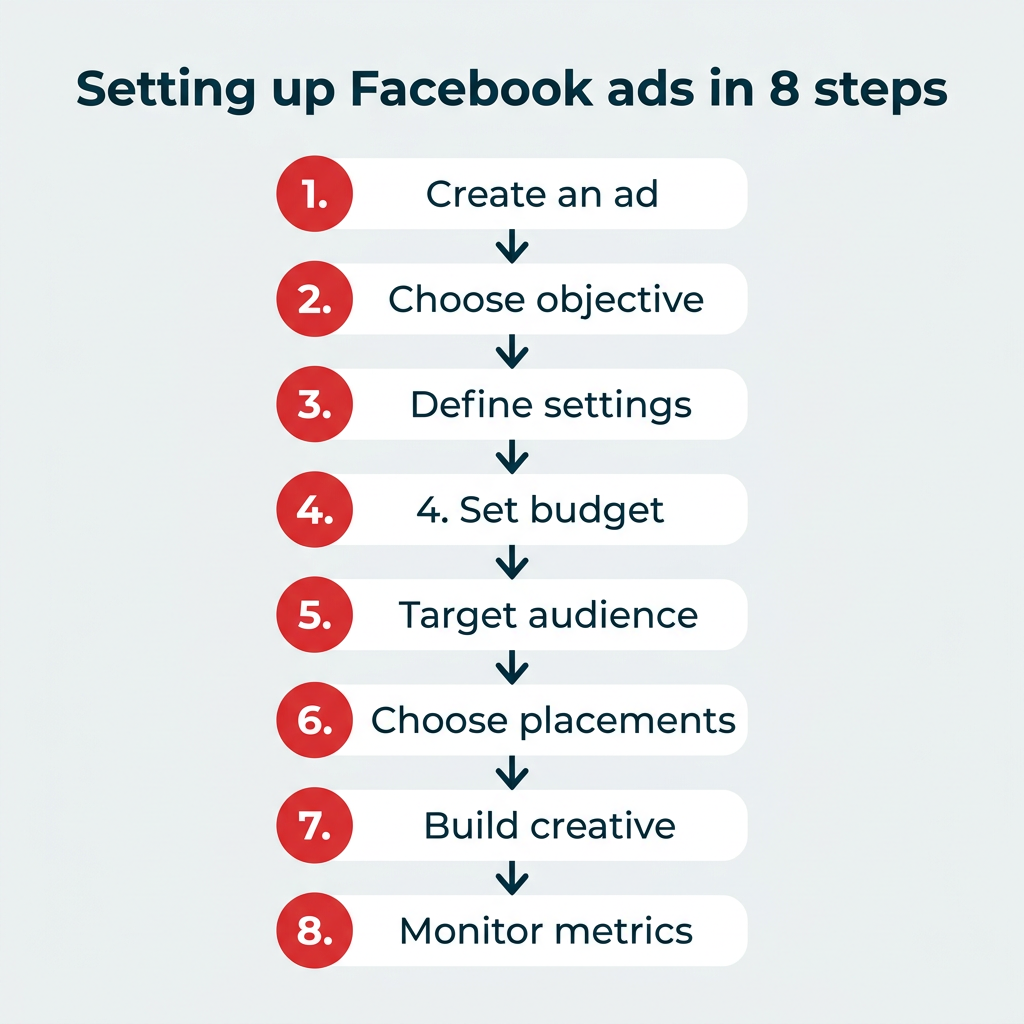
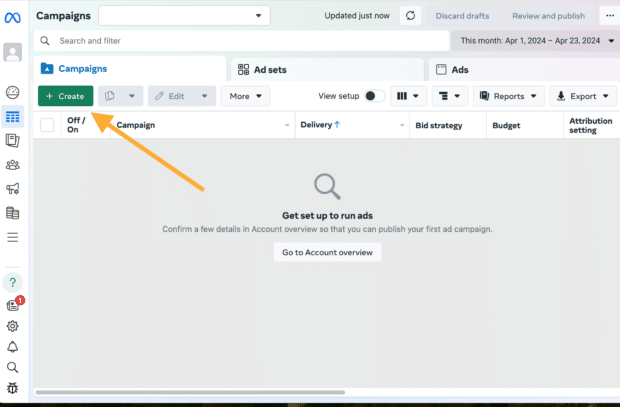
Setting up a Facebook ad campaign is an eight-step process managed within Meta Ads Manager, from initial objective selection to ongoing performance monitoring.
- Start Creating an Ad: Access Ads Manager and click the "Create" button.
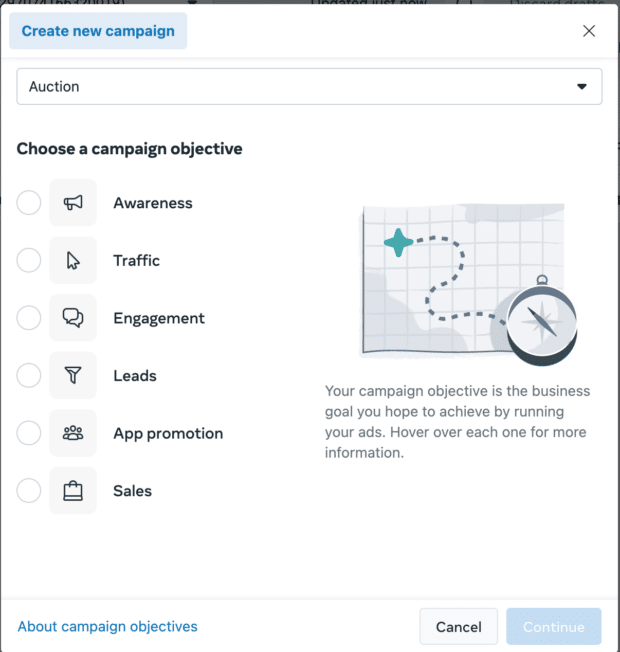
- Choose Your Campaign Objective: Select from six core objectives:
- Awareness: For maximum reach and brand visibility.
- Traffic: To drive users to a website, app, or Messenger conversation.
- Engagement: To increase post engagement, page likes, event responses, or video views.
- Leads: To generate leads through forms, calls, or Messenger.
- App Promotion: To encourage app installs or in-app actions.
- Sales: To drive purchases, subscriptions, or other conversions.
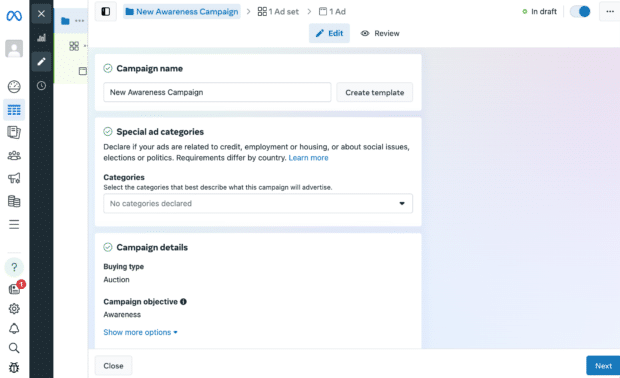
- Define Campaign Settings: Name the campaign, declare any "Special Ad Categories" (e.g., housing, employment), and set up optional A/B tests.
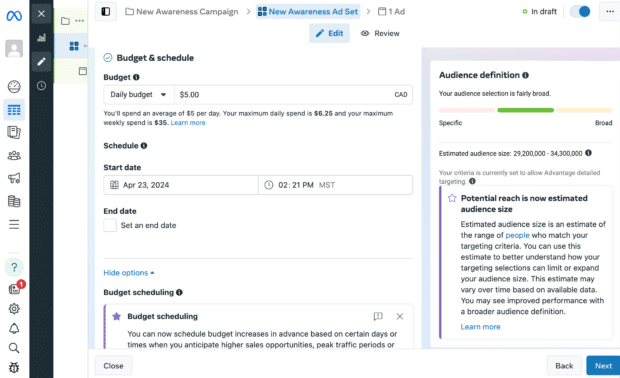
- Set Your Budget: Within the "Ad set" options, choose a performance goal and allocate a budget. Options include a "Daily Budget" (minimum $1.00/day for continuous running) or a "Lifetime Budget" for a specified period. Start and end dates can be set.
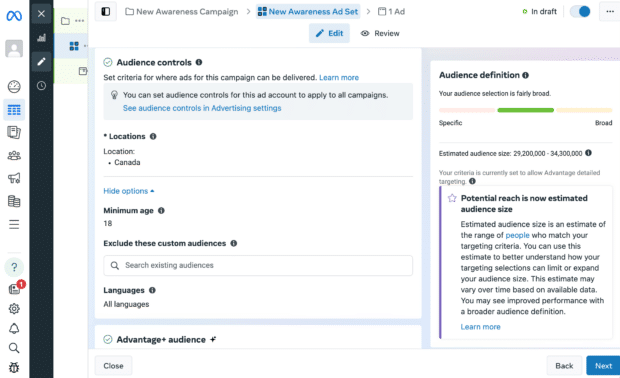
- Target Your Audience: Choose between "Advantage+ Audience" (Meta’s AI-driven targeting) or "Original Audience" (manual demographic, interest, and behavior targeting). Advantage+ is often recommended for beginners due to its reported 28% lower average cost per click/lead.
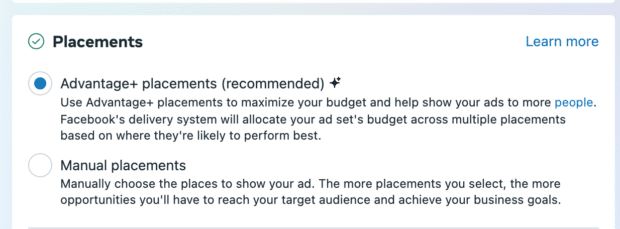
- Choose Your Facebook Ad Placements: Opt for "Advantage+ Placements" for automatic optimization or "Manual Placements" to select specific locations (e.g., Facebook Feed, Instagram Stories, Messenger Inbox).
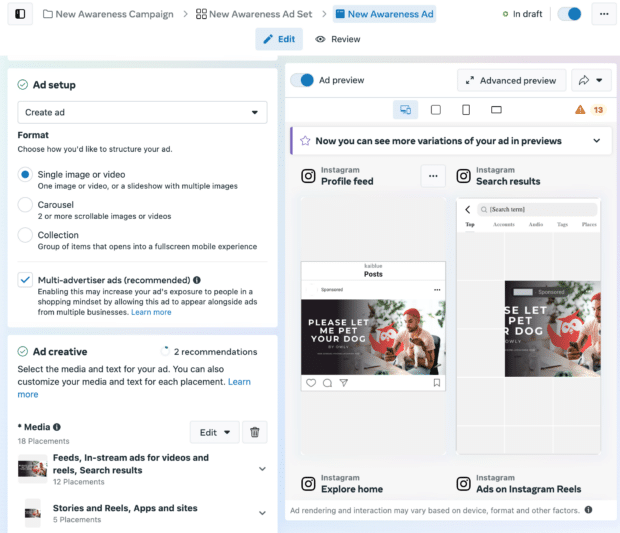
- Create Your Ad: Select the appropriate ad format based on campaign objectives (image, video, carousel, etc.). Input ad copy and media components, adhering to Facebook’s design recommendations. Utilize the preview tool to ensure optimal appearance across all placements before clicking "Publish."
- Monitor Performance Metrics: Post-launch, continuously track key metrics in Ads Manager, focusing on results, reach, engagement, video views, and website actions. For enterprise campaigns, Return on Ad Spend (ROAS), Cost Per Acquisition (CPA), and frequency are critical for assessing business impact.
Mastering Audience Engagement: Advanced Targeting Strategies
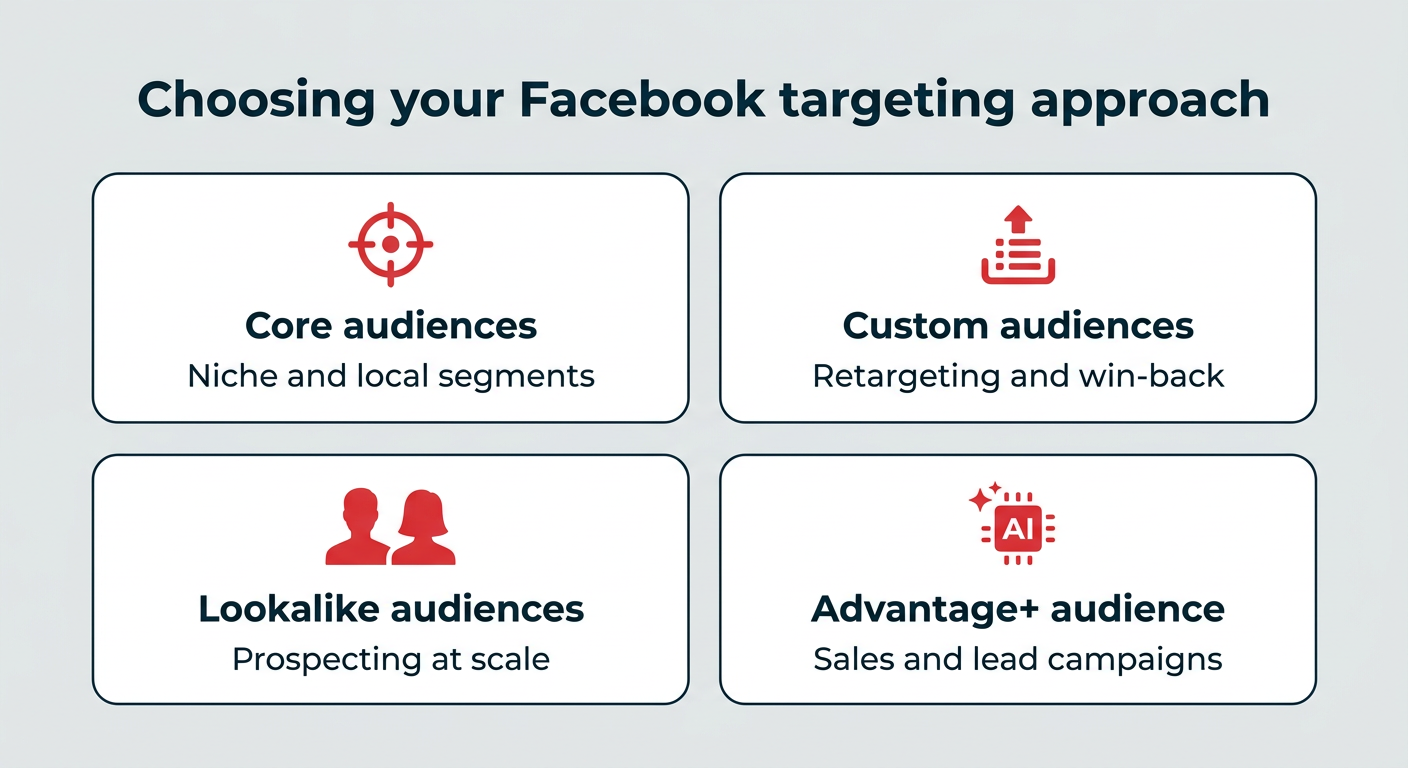
Effective targeting is the bedrock of successful Facebook advertising, allowing businesses to precisely define who sees their ads. Meta offers four primary targeting options:
- Core Audiences: Built using Meta’s proprietary data, allowing segmentation by demographics (age, gender, location), interests (hobbies, pages liked), and behaviors (purchase history, device usage). Ideal for niche segments, local campaigns, or regulated categories.
- Custom Audiences: Created from advertisers’ first-party data, such as customer lists (CRM uploads), website visitors (via Meta Pixel), or app users. Excellent for retargeting, upselling to existing customers, or win-back campaigns.
- Lookalike Audiences: Generated by Meta’s AI, these audiences comprise users who share similar characteristics with a high-value "source audience" (e.g., top 10% of customers). They are powerful for prospecting at scale, expanding reach to new, relevant users.
- Advantage+ Audience: Meta’s automated targeting, where AI dynamically identifies the best audience segments based on campaign objectives and provided creative. Best for sales and lead generation campaigns with sufficient budget for the system to learn.
A pragmatic approach often involves combining these methods: using Advantage+ for broad prospecting, dedicated retargeting ad sets built from custom audiences, and leveraging lookalike audiences for market expansion. The increasing focus on data privacy necessitates accurate conversion tracking through tools like the Meta Pixel and the Conversions API, which sends server-side events to maintain data integrity.
Crafting Compelling Narratives: Principles of Effective Ad Copy
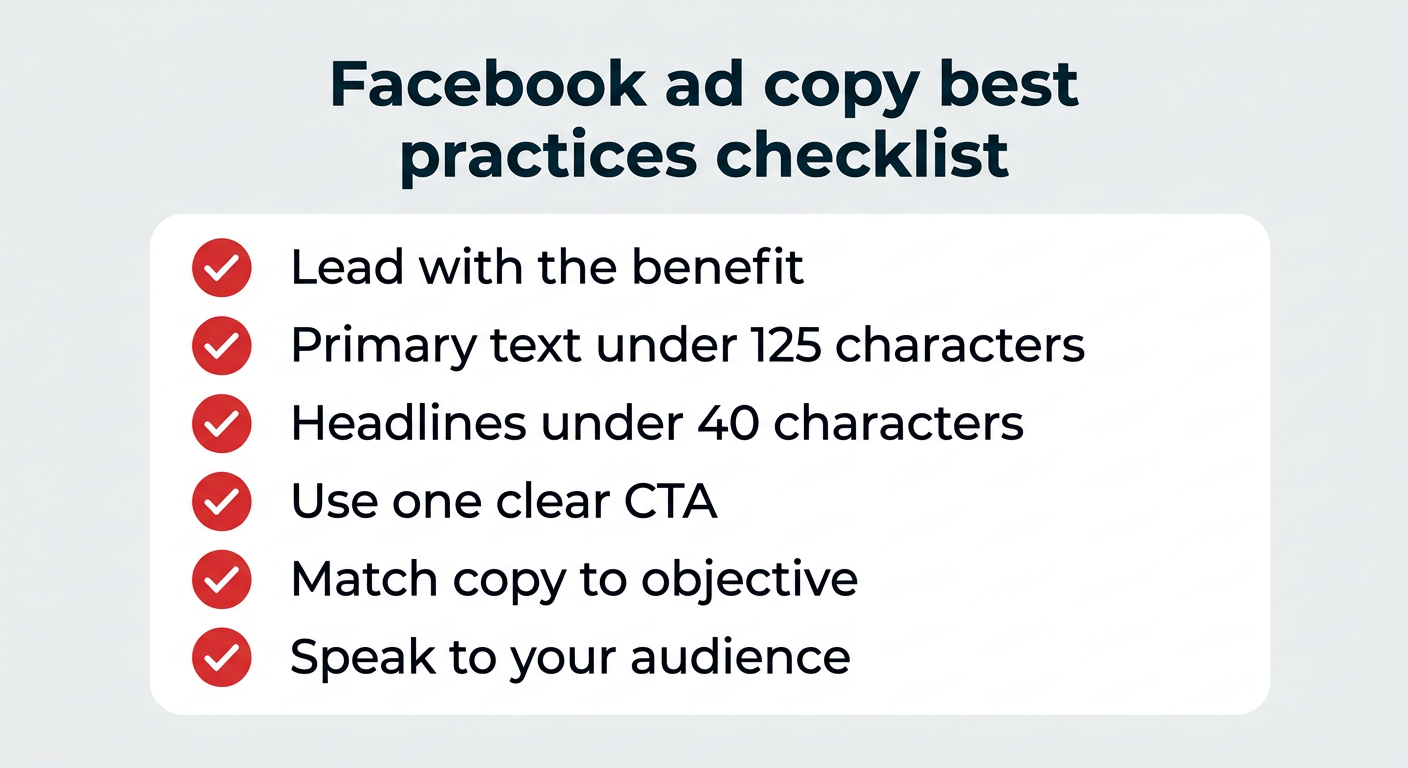
Effective Facebook ad copy is concise, benefit-driven, and includes a clear call to action (CTA). Given that most users quickly scan content, copy must be impactful and work synergistically with visual elements.
Best practices include:
- Lead with the Benefit: Immediately highlight what the audience gains.
- Be Concise and Clear: Use simple language and get straight to the point.
- Speak Directly: Use "you" and "your" to personalize the message.
- Incorporate a Strong Call to Action: Guide users on the desired next step (e.g., "Shop Now," "Learn More," "Sign Up").
- Test Multiple Variations: A/B test headlines, descriptions, and CTAs to optimize performance.
- Align with Visuals: Ensure the copy complements and enhances the ad’s image or video.
- Inject Brand Voice: Maintain consistent tone and personality.
- Utilize Emojis (where appropriate): Can increase visual appeal and readability.
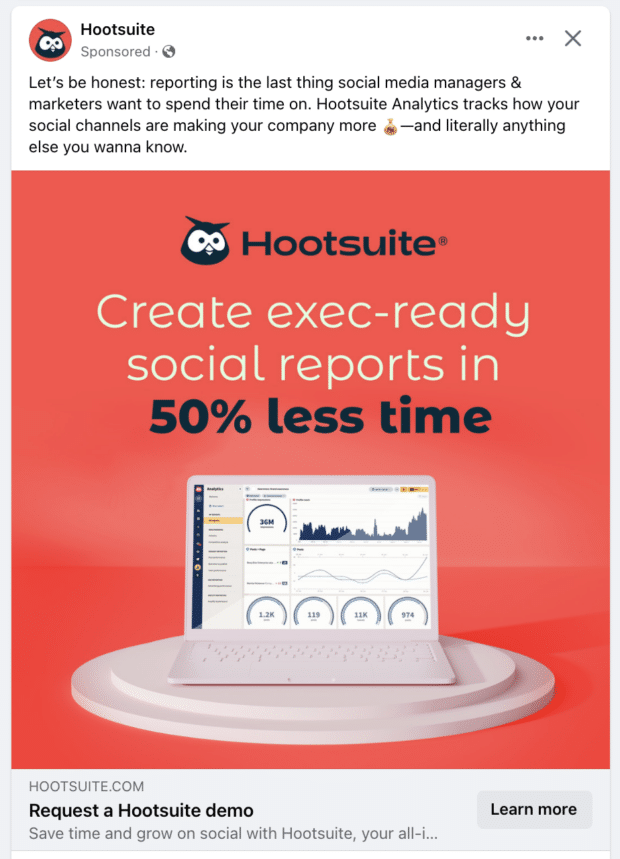
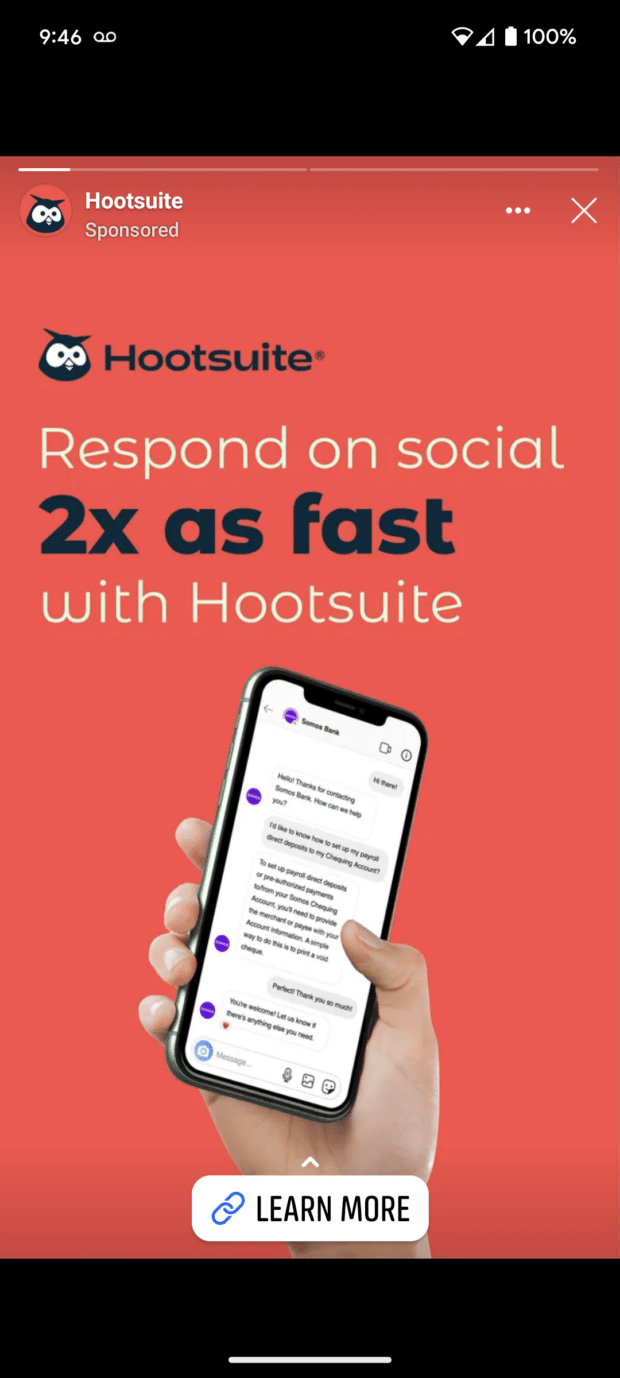
For example, "We offer great software for businesses of all sizes" is weak copy. Stronger copy would be: "Respond to customers 2x faster. Try Hootsuite free for 30 days." Tools like Hootsuite’s AI writing assistants can aid in generating diverse copy variations for testing.
Optimizing for Success: Key Advertising Best Practices
To maximize the impact of Facebook advertising, a set of best practices, primarily centered on mobile-first design and data-driven iteration, should be adhered to.
- Design for Mobile First: With the majority of social media engagement occurring on smartphones, ads must be optimized for mobile screens. This involves using vertical video, clear and readable text, and minimal text overlays.
- Capture Attention in the First 3 Seconds: Ads must hook viewers immediately. Techniques include opening with movement, instantly showcasing the product or its outcome, and adding short text overlays to convey the core benefit, even without sound. Avoid prolonged logo intros.
- Make Sound Optional: Many users watch videos without sound. Ensure ads are comprehensible by using subtitles, text overlays, and visuals that convey the message independently of audio.
- Test Creative Variations with A/B Testing: Systematically test different elements (headline, image, CTA) to identify what resonates most with the audience. Allow sufficient data collection before declaring a winner and allocating budget accordingly.
- Leverage Advantage+ AI Features: Utilize Meta’s AI for automated targeting, placements, and creative optimization. These tools rapidly test combinations and reallocate budget in real-time, enhancing efficiency and freeing up human strategists.
- Implement Retargeting for Higher Conversions: Re-engage users who have previously interacted with the brand by building custom audiences (website visitors, video viewers, past customers) and serving them tailored ads. Retargeting audiences typically exhibit higher conversion rates due to existing brand familiarity.
- Base Ad Decisions on Analytics: Move beyond vanity metrics like likes. Focus on key performance indicators such as ROAS, CPA, and conversion rate. Utilize Facebook’s built-in tools and third-party platforms like Hootsuite’s social analytics dashboard to gain holistic insights into paid and organic performance, enabling data-informed campaign adjustments.
Quantifying Impact: Measuring Ad Performance and ROI
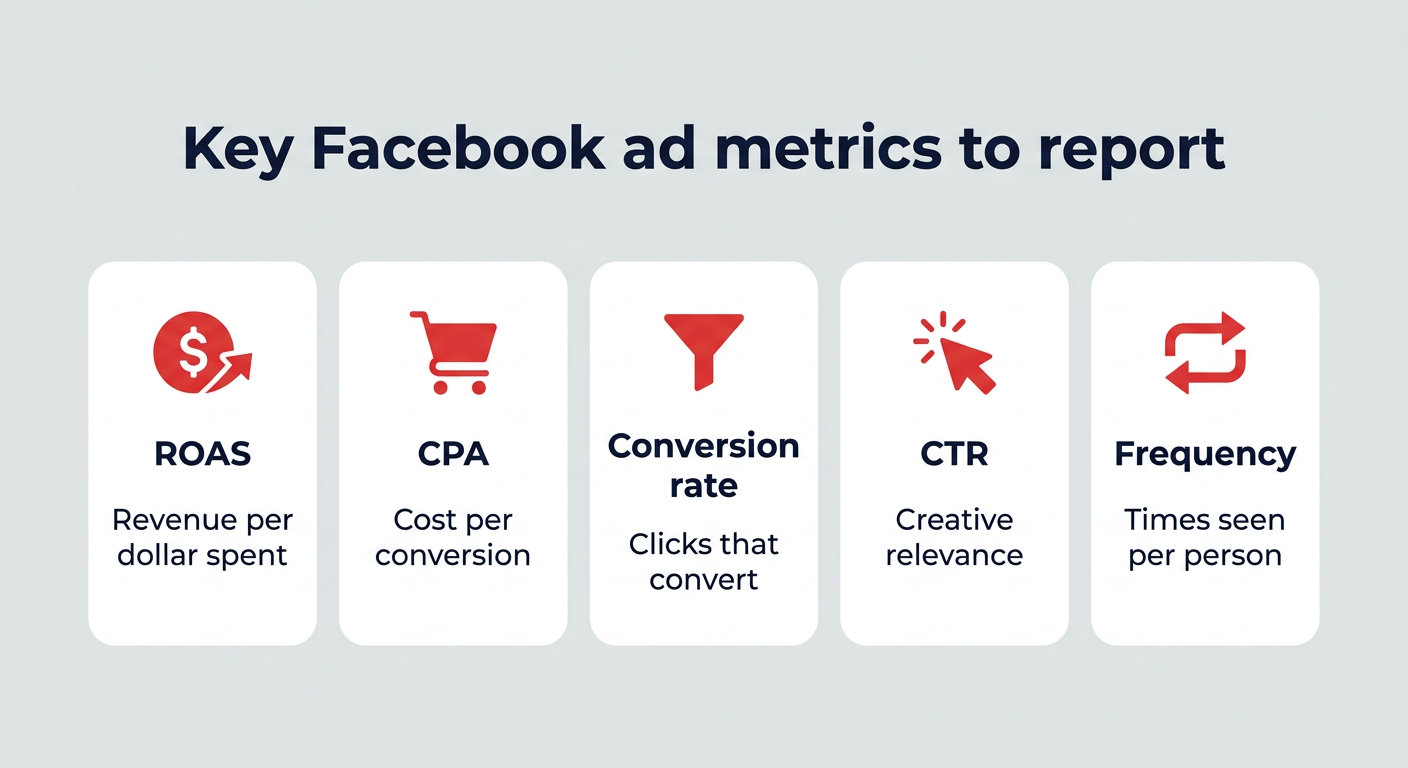
Measuring Facebook ad performance involves tracking a precise set of outcome metrics in Meta Ads Manager and correlating this data with revenue in internal systems. While reach and engagement indicate creative effectiveness, ROAS and CPA directly reflect campaign profitability.
Key metrics for leadership reporting include:
- Return on Ad Spend (ROAS): Revenue generated per dollar spent on ads.
- Cost Per Acquisition (CPA): The cost incurred to acquire a single customer or conversion.
- Conversion Rate: The percentage of ad clicks that result in a desired action.
- Link Clicks: The number of clicks on the ad’s call-to-action link.
- Frequency: The average number of times a user sees an ad, crucial for avoiding audience fatigue.
Accurate measurement hinges on robust tracking infrastructure. Implementing the Meta Pixel on websites and, where feasible, utilizing the Conversions API for server-side event transmission, ensures comprehensive data capture, especially in environments with limited browser signals. Verifying the correct functioning of both in Meta’s Events Manager is paramount before drawing performance conclusions.
While Ads Manager provides paid performance data, platforms like Hootsuite’s social advertising dashboard offer a consolidated view, juxtaposing paid and organic results. This integration facilitates direct campaign comparisons, strategic budget allocation shifts, and streamlined ROI reporting to stakeholders. Further integration with CRM systems (e.g., Mailchimp, HubSpot, Salesforce) centralizes ad performance and sales data, offering a unified operational view.
Navigating Challenges: Common Ad Problems and Solutions
When Facebook ad campaigns underperform, the root cause often falls into predictable categories. Proactive troubleshooting is essential to maintain campaign efficacy and protect advertising budgets.
- Low Performance/High Costs: Often due to audience fatigue, poor creative, or insufficient budget. Solutions include refreshing creative, expanding or refining audience targeting, and increasing budget to allow Meta’s AI to optimize.
- Ad Rejections: Occur when ads violate Meta’s advertising policies (e.g., prohibited content, misleading claims, discriminatory targeting). Review the flagged policy, edit the offending element, and resubmit.
- Inaccurate Tracking: Resulting from incorrect Meta Pixel or Conversions API setup. Verify installation and event firing in Meta’s Events Manager.
- Audience Fatigue: Overexposure of ads to the same audience, leading to declining engagement. Address by diversifying creative, expanding audience segments, or implementing frequency caps.
- Landing Page Issues: A poor landing page experience (slow load times, irrelevant content) can negate effective ad performance. Optimize landing page speed, mobile responsiveness, and content relevance.
The Hootsuite Advantage: Streamlining Social Advertising
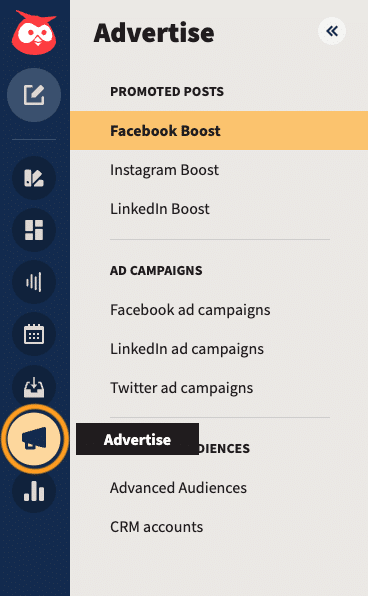
For organizations seeking to centralize their social media operations, Hootsuite offers comprehensive tools for creating, managing, and reporting on Facebook ad campaigns alongside organic content. This all-in-one platform eliminates the need to toggle between Meta Ads Manager and various organic workflow tools, streamlining both paid and organic strategies across Facebook, Instagram, X (formerly Twitter), and LinkedIn.
Hootsuite Social Advertising facilitates the entire campaign lifecycle, from intuitive campaign setup (mirroring Ads Manager’s mechanics for objective selection, budget allocation, audience definition, and creative preview) to robust cross-platform reporting. It allows users to build audiences using demographic, interest, and behavioral data, or import existing saved, custom, and lookalike audiences from Facebook. Campaigns submitted through Hootsuite typically undergo Facebook’s approval process within 24 hours. This integrated approach, available to Enterprise plan users, empowers teams to compare campaign performance, strategically shift budgets, and prove ROI more efficiently by consolidating data in a single, accessible dashboard.

Inspiration from the Field: Successful Facebook Ad Examples
Examining successful campaigns provides valuable insights for future advertising efforts.
- Reddit for Business: This image ad effectively uses concise text to highlight a clear benefit ("your best ROAS") and an enticing offer ("$500 ad credit"). The straightforward caption and CTA ("Ready to send ROAS soaring? Get Offer.") ensure immediate comprehension. The subtle inclusion of "r/LifeProTips" acts as a clever nod to the platform’s community.
- Hootsuite Stories Ad: This two-part Story ad exemplifies effective mobile-first engagement. The initial slide captures attention with a core product benefit ("Respond on social 2x as fast"), immediately followed by a second slide detailing the features that enable this benefit. This rapid-fire approach caters to users quickly tapping through Stories, delivering a compelling message in a highly digestible format.
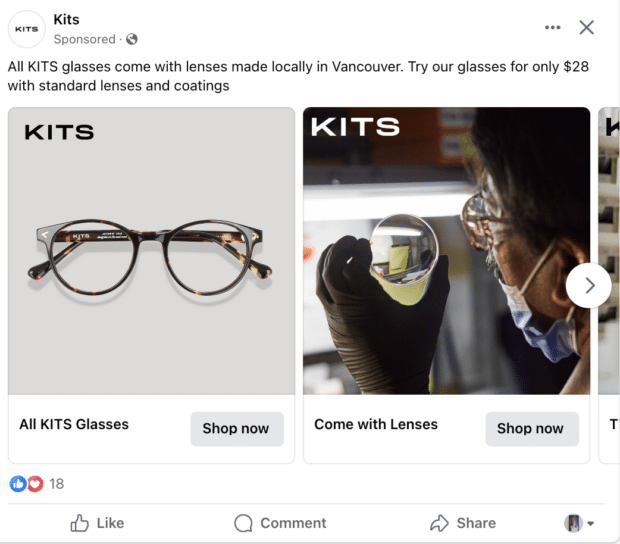
- Kits Carousel Ad: Kits, an eyewear retailer, leverages the carousel format to showcase its product range—a task impossible with a single image. Each frame features a distinct pair of glasses, allowing users to browse styles directly within their feed. This strategy not only enhances user experience but also provides Meta’s algorithm with multiple creative variations to optimize against, ensuring the most relevant product is displayed to each viewer and driving clicks to specific product pages.
These examples underscore the importance of aligning ad format with campaign objectives and creative content, always keeping the audience’s platform behavior and the mobile context in mind. By adhering to these principles and continuously refining strategies through data-driven insights, businesses can unlock the full potential of Facebook advertising to achieve their marketing goals.


 Suro Senen

 rifanmuazin