rifanmuazin
The digital landscape is undergoing a profound transformation, with artificial intelligence rapidly reshaping how users discover information, interact with businesses, and consume content online. These shifts were the central theme of Yoast’s May 2026 SEO Update, where industry experts Carolyn Shelby and Alex Moss dissected Google’s latest AI-driven changes, the far-reaching impact of AI on content creation, and the critical understanding that merely publishing more content is not only insufficient but potentially detrimental. The update highlighted a paradigm shift from traditional search engine optimization to an AI-first ecosystem, demanding immediate adaptation from publishers, e-commerce businesses, and content strategists alike.
Google I/O 2026: A Vision for an AI-Driven Ecosystem
Many of the shifts discussed at the Yoast update derive directly from the ambitious vision articulated at Google I/O 2026. CEO Sundar Pichai’s keynote underscored Google’s evolution from a search engine to an AI-driven ecosystem, where proactive AI agents, hyper-personalization, and unified commerce experiences are paramount. This future envisions AI assistants anticipating user needs, booking appointments, managing purchases, and synthesizing information across various platforms without requiring users to navigate traditional websites.
The core takeaways from Google I/O 2026 painted a picture of intelligent agents capable of complex tasks, a seamless integration of commerce into the AI experience, and a deeply personalized user journey that fundamentally alters the discovery process. This strategic pivot signals a move towards an “answer engine” where direct solutions are provided, often bypassing traditional search results and, consequently, website traffic. Industry analysts suggest this transformation is a direct response to advancements in generative AI and a competitive move to maintain Google’s dominance in an increasingly fragmented information landscape. The company’s long-term objective appears to be creating a unified digital assistant that anticipates and fulfills user needs, making information and transactions frictionless, but also potentially more centralized within Google’s own platforms.
Content Strategy in the AI Era: Beyond Volume and Keywords
The burgeoning influence of AI has necessitated a complete re-evaluation of content strategy. The Yoast update emphasized that the era of simply churning out high-volume, generic content is definitively over.
-
The Demise of “Ultimate Guides” and Commodity Content: Rand Fishkin’s recent research, prominently cited during the update, provides stark evidence of the declining effectiveness of lengthy “ultimate guides” and low-value listicles. Once an SEO staple for capturing broad keyword rankings, these content formats are losing their efficacy as AI models become increasingly adept at synthesizing information directly from diverse sources. Google and other AI systems now prioritize authoritative, highly structured, and uniquely differentiated content. The focus has shifted from mere comprehensiveness to demonstrable expertise, experience, authoritativeness, and trustworthiness (E-E-A-T). For instance, a general guide on “how to bake bread” might be easily synthesized by an AI, but a detailed, unique recipe from a renowned baker, complete with personal insights and advanced techniques, holds far greater value. Content creators must now strive to offer perspectives, data, or experiences that AI cannot readily replicate, positioning themselves as true authorities rather than mere aggregators of existing information. This requires deeper research, original thought, and often, first-hand experience.
-
Adapting to Google’s AI Optimization Guidelines: Google’s recently released guide on optimizing for generative AI features offers crucial directives. The guide explicitly advises against tactics such as creating content solely for AI, using excessive AI-generated content without human oversight, or manipulating structured data purely for AI consumption. Google’s objective is to reduce spam and inefficiency within its AI-driven search experiences. This guidance, however, presents a nuanced challenge. While these recommendations are specific to Google’s own Generative AI features, other AI models, such as Perplexity AI or Anthropic’s Claude, operate differently and may still benefit from meticulously structured data or specific content formats that Google disfavors. SEO professionals are therefore tasked with balancing optimization for Google’s specific AI features with a broader strategy for visibility across the multi-faceted AI landscape. This implies a dual approach: adhering to Google’s anti-spam guidelines for its AI features, while still ensuring content is highly structured and semantically rich for other AI models that may leverage different scraping and synthesis methodologies.
-
The Nuance of Indexing: Search vs. Grounding: Bing’s clarification on the distinction between traditional search indexing and “grounding indexing” for AI agents introduced a critical technical consideration. Traditional search indexing, designed for human users, processes web pages including JavaScript and hidden elements, aiming to present a complete user experience. Grounding indexing, conversely, occurs at “inference time” for AI models, meaning AI agents scrape and process only visible text, often without fully executing JavaScript or interacting with content hidden behind accordions, tabs, or clicks. This has significant implications for content visibility. Content strategists must now ensure that critical information is immediately visible and accessible in the core HTML, rather than relying on interactive elements to reveal it. If an AI agent cannot “see” the content without human interaction, it may not be used for grounding AI responses, even if a traditional search engine has indexed it. This calls for a re-evaluation of web design principles to prioritize AI readability alongside human usability, potentially influencing the adoption of more direct, less interactive content presentation styles.
Monetization and Publisher Survival in a Shifting Landscape
The shifts in AI and search are exerting immense pressure on traditional publisher business models, particularly those reliant on programmatic ad revenue from search traffic.
-
Preferred Sources: A Lifeline for Publishers? Google’s guide to preferred sources in Google Search for web publishers offers a glimmer of hope for some. This feature allows users to signal their preference for specific news outlets, theoretically driving more impressions from loyal readers. For publishers whose business model hinges on ad revenue generated through search traffic, this could provide a degree of stabilization or even an increase in direct traffic from dedicated audiences. Publishers will likely welcome this feature as a means to foster direct relationships and loyalty in an increasingly commoditized information environment. However, the effectiveness of this feature will depend on user adoption and whether it can genuinely counteract the broader trend of traffic diversion to AI-generated summaries. It also disproportionately benefits established brands with strong reader loyalty, potentially exacerbating challenges for smaller, emerging publishers.
-
Conde Nast’s Stark Warning: The statement from Conde Nast, a publishing giant behind titles like Vogue and The New Yorker, instructing stakeholders to “assume programmatic ad revenue from search traffic will decline,” serves as a potent warning for the entire industry. This proactive stance reflects a broader recognition that the traditional reliance on search-driven advertising is becoming unsustainable in an AI-first world. Publishers are now compelled to diversify their revenue streams aggressively. This includes a renewed focus on direct subscriptions, premium content offerings, e-commerce integrations, experiential marketing, and events. The shift away from ad-hoc search traffic necessitates building stronger, more direct relationships with audiences, cultivating loyalty that transcends individual articles found via search. This strategic pivot is not merely about adapting to Google’s changes but about redefining the value proposition of publishing in the digital age.
-
The Fading of FAQ Rich Results: Google’s decision to discontinue support for FAQ rich results in general search is another indicator of this evolving landscape. While these snippets may still appear for specific, high-authority domains such as medical or government pages, their general deprecation forces publishers to adjust their SEO strategies. Previously, FAQ rich snippets were a valuable tool for gaining increased visibility and screen real estate in search results. Their removal signals Google’s intent to streamline search results and potentially integrate answers directly into AI-generated responses, making the distinct rich result less necessary. However, the underlying FAQ schema is not entirely useless; it may still contribute to how AI models understand and synthesize content, potentially aiding in future AI-driven answer features, even if not displayed as a standalone rich result. This highlights the ongoing need for structured data, not just for Google’s traditional display, but for broader machine readability.
The Rise of AI-Driven Commerce: Seamless Transactions, New Challenges
The intersection of AI and commerce is creating entirely new pathways for consumer behavior and presenting both opportunities and challenges for e-commerce businesses.
-
Universal Checkout Protocol (UCP) Takes Center Stage: Google is aggressively pushing its Universal Checkout Protocol (UCP), an open standard designed to enable AI agents to complete purchases on behalf of users. Shopify’s early integration of UCP is a significant development, allowing for seamless transactions directly from search results or AI assistant interactions. This protocol is crucial for the future of AI-driven purchases, which are projected to grow exponentially. For e-commerce sites, ensuring compatibility with UCP is no longer optional; it is becoming a prerequisite to avoid losing conversions as users increasingly delegate purchasing tasks to AI. This represents a shift from traditional shopping cart models to an integrated, AI-facilitated buying experience. Businesses must prepare their product data, inventory systems, and checkout processes to be UCP-compliant, potentially redesigning their customer journey to accommodate AI intermediaries. Analysts project that by 2030, a significant percentage of online transactions will involve AI agents, making UCP a critical infrastructure component.
-
Gemini Intelligence: Proactive AI on Android: The expansion of Gemini Intelligence into the Android ecosystem further solidifies Google’s commitment to proactive AI. This integration allows AI features to anticipate user needs, offering to book appointments, make purchases, or provide information directly within the operating system, often without the user explicitly initiating a search query. This “zero-click” or “zero-website” interaction model fundamentally shifts user behavior away from traditional website visits. For publishers and businesses, this means adapting to AI-driven discovery rather than relying solely on organic website traffic. Content and product information must be discoverable and actionable by AI agents, necessitating robust structured data, clear product feeds, and an understanding of how Gemini interprets and acts upon information. The challenge lies in ensuring brand visibility and conversion when the user journey bypasses the traditional website interface entirely.
Navigating the Shift: Tools, Strategies, and the Path Forward
The comprehensive nature of these changes demands a proactive and adaptive approach from anyone involved in the digital space.
-
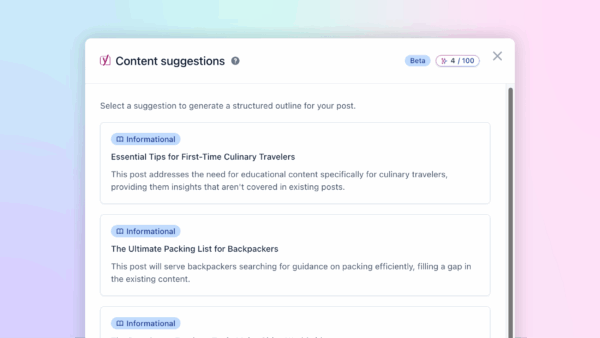
Yoast’s Answer: The AI Content Planner: Amidst these transformative shifts, Yoast has launched its AI Content Planner, a new tool designed to assist users in overcoming writer’s block and generating structured, high-quality content efficiently. This planner leverages AI to transform a blank page into a structured draft within seconds, offering topic suggestions, outline generation, and SEO optimization tips tailored to the evolving content landscape. For Yoast Premium users, this feature integrates directly into the WordPress editor, allowing for experimentation with AI-driven content creation that aligns with the new demands for structured, authoritative content. The tool aims to save time, improve content readability, and enhance SEO performance by guiding creators towards producing content that is more likely to be valued by both human readers and AI agents.
-
The Path Forward for SEO Professionals: The actionable takeaways for SEO professionals and digital marketers are clear. The focus must shift from a singular obsession with Google’s traditional ranking factors to a holistic strategy that embraces AI. This involves:
- Prioritizing Authority and Uniqueness: Investing in deeply researched, original content that showcases genuine expertise and offers unique insights.
- Mastering Structured Data: Ensuring content is semantically rich and structured for optimal machine readability across various AI models, not just Google’s.
- Diversifying Traffic and Revenue: Exploring channels beyond organic search, such as direct audience engagement, social media, email marketing, and alternative monetization models.
- Preparing for AI-Driven Commerce: Integrating UCP and optimizing product information for AI agents to facilitate seamless transactions.
- Rethinking Content Visibility: Ensuring critical information is immediately accessible and not hidden behind interactive elements, considering both human and AI “vision.”
- Continuous Learning and Adaptation: The AI landscape is evolving rapidly; staying informed and agile is paramount.
The May 2026 SEO Update by Yoast underscored that the digital ecosystem is no longer merely “mobile-first” but emphatically “AI-first.” The implications are profound, demanding a fundamental re-evaluation of how businesses and publishers create, distribute, and monetize their content. Those who embrace these changes and adapt their strategies will be best positioned to thrive in this new, AI-driven digital frontier.
The next SEO Update by Yoast is scheduled for June 30, 2026, at 4:00 PM CET (10:00 AM EST), promising further insights into this rapidly evolving domain. Industry stakeholders are encouraged to participate to stay abreast of the critical developments shaping the future of search and digital content.