rifanmuazin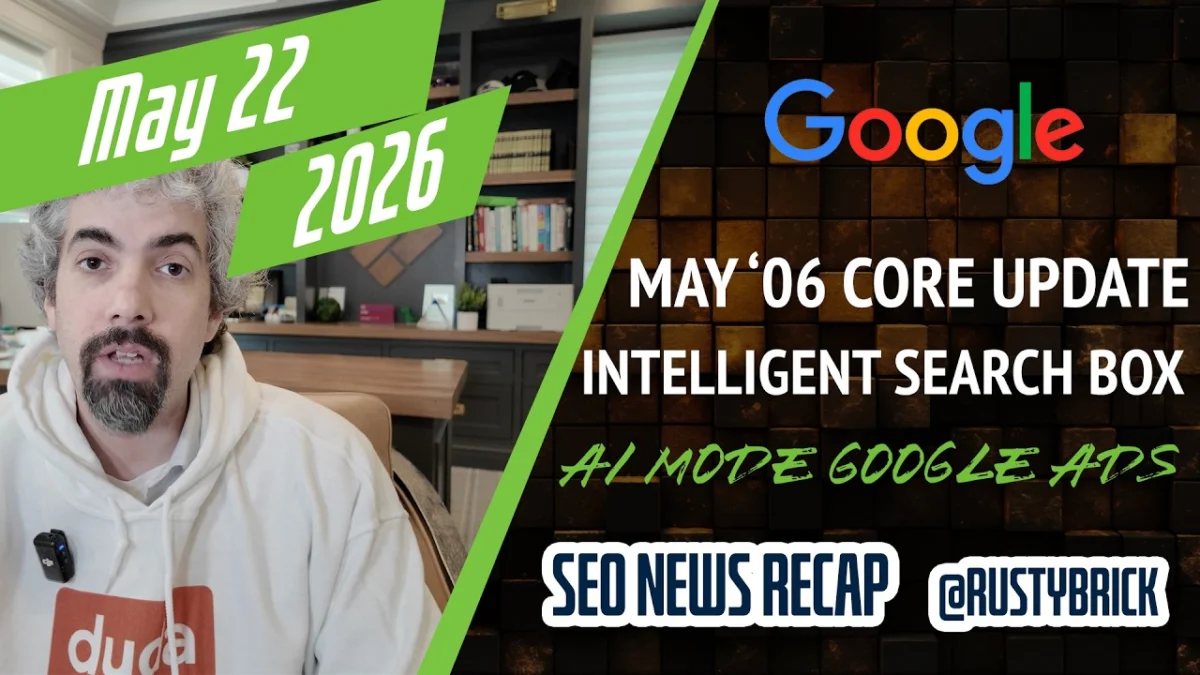
The digital landscape experienced a significant tremor this week as Google hosted its dual annual tentpole events: Google I/O, the company’s premier developer conference, and Google Marketing Live (GML), its dedicated summit for advertisers and marketers. These back-to-back gatherings served as the stage for a barrage of announcements signaling a profound evolution in search, artificial intelligence, and digital advertising. Key among these revelations were the introduction of an “intelligent search box,” the integration of Gemini 3.5 Flash into Google’s AI Mode, a suite of new advertising formats, and the perennial discussion around search ranking volatility, alongside a host of other innovations aimed at fundamentally reshaping how users interact with information and how businesses connect with consumers. The sheer volume and strategic depth of these updates underscore Google’s unwavering commitment to an AI-first future, directly impacting search engine optimization (SEO) professionals, digital marketers, developers, and billions of users worldwide.
Google’s Dual Front: I/O and Marketing Live Drive Innovation
Google I/O, typically held in May, serves as the company’s platform to unveil its latest software innovations, hardware prototypes, and forward-looking strategic initiatives, particularly in artificial intelligence. Historically, I/O sets the technological roadmap for Google’s ecosystem for the coming year, attracting developers, tech enthusiasts, and media. This year, the focus was overwhelmingly on Gemini, Google’s multimodal AI model, and its pervasive integration across the company’s product suite. The announcements from I/O laid the groundwork for a more proactive, personalized, and “agentic” search experience, moving beyond simple query-response to anticipatory assistance and task completion.
Following closely on its heels, Google Marketing Live (GML) translates these technological advancements into tangible tools and strategies for advertisers and businesses. GML is where Google details how its AI innovations will be monetized and how marketers can leverage new formats and automation to reach their target audiences more effectively. The synergy between I/O and GML this week highlighted a deliberate strategy to embed advanced AI capabilities directly into the core search and advertising products, aiming to create a seamless, intelligent journey for both users and businesses. The global digital advertising market, projected to exceed $700 billion by 2027, remains a critical revenue stream for Google, making GML announcements particularly impactful for the economic engine of the internet.
The Evolution of Search: A Deeper Dive into AI-Powered Experiences
The core of Google’s transformation lies in its reimagining of the search experience, driven by increasingly sophisticated AI. The week’s announcements painted a picture of a search engine that not only answers questions but anticipates needs, performs tasks, and personalizes interactions on an unprecedented scale.
-
The Intelligent Search Box: A cornerstone of the new search paradigm, Google unveiled what it terms the “intelligent search box.” This innovation moves beyond a traditional input field, evolving into a more dynamic interface designed to provide proactive suggestions, refine queries, and even initiate multi-turn conversations before a user explicitly submits a search. The goal is to reduce friction in the search process, offering smarter, more contextually aware assistance from the outset. For users, this could mean quicker access to relevant information and a more intuitive interaction. For SEOs, it implies an even greater emphasis on clear, concise, and highly relevant content that can be easily parsed and presented by AI-driven suggestions.
-
Gemini 3.5 Flash and the Core of AI Mode: At the heart of Google’s enhanced AI capabilities is Gemini, its most advanced and capable AI model. The significant update this week was the launch of Gemini 3.5 Flash, which is now powering Google’s “AI Mode.” Gemini 3.5 Flash is designed for speed and efficiency, making it ideal for real-time applications where rapid response is crucial. Its integration into AI Mode signifies Google’s push to deliver instant, comprehensive, and contextually rich AI Overviews (formerly Search Generative Experience, SGE). This move is critical for mainstream adoption, as the responsiveness of AI interactions directly correlates with user satisfaction. The underlying power of Gemini allows AI Mode to synthesize information from multiple sources, provide summarized answers, and generate new content directly within the search results.
-
Agentic AI: Beyond Simple Answers: Google showcased a future where AI isn’t just an information retriever but an active agent capable of performing complex tasks.
- Information Agents: These agents are designed to handle more intricate, multi-faceted queries, synthesizing information across various domains to provide holistic answers and insights. For example, planning a trip that involves flights, hotels, and activities, all within a single search interaction.
- Agentic Booking Capabilities: Expanding on existing integrations, Google demonstrated how AI can directly facilitate bookings for travel, restaurants, and other services. This streamlines the user journey from discovery to transaction, potentially reducing reliance on third-party aggregators and keeping users within the Google ecosystem for longer.
- Agentic Coding in Google Search: A significant development for the developer community, this feature allows users to generate, refine, and debug code directly within Google Search. This could dramatically accelerate development workflows and democratize access to coding assistance, leveraging Gemini’s strong coding capabilities.
- Expanded Personal Intelligence: Google’s vision extends to a highly personalized AI that learns from individual user preferences, habits, and data (with appropriate privacy safeguards). This “personal intelligence” aims to make interactions even more relevant and anticipatory, providing tailored recommendations and assistance.
-
Seamless AI Overviews and the User Journey: The experience of AI Overviews within AI Mode went fully live, indicating a robust rollout of this generative AI feature. This means that for a growing number of queries, users will see an AI-generated summary at the top of their search results, often followed by traditional links. The “seamless” aspect refers to the fluidity of interaction, allowing users to delve deeper into AI-generated content or switch to traditional results effortlessly. This paradigm shift poses both opportunities and challenges for content creators and SEOs, who must now consider how their content is summarized and cited by AI, in addition to how it ranks organically.
-
The Universal Cart: Demonstrating a move towards greater integration and convenience in e-commerce, Google introduced its “Universal Cart.” While specific details were still emerging, the concept points to a unified shopping experience across Google’s various platforms, allowing users to add items from multiple retailers to a single cart and potentially checkout within Google’s interface. This could simplify online shopping, reduce cart abandonment, and provide Google with deeper insights into consumer purchasing behavior, further bolstering its advertising capabilities.
Navigating the Shifting Sands of Search Rankings
Amidst the fanfare of new features, the digital marketing community also grappled with the familiar reality of Google search ranking volatility.
-
Persistent Volatility: The week of Google I/O and throughout, the search ecosystem witnessed significant fluctuations in rankings. This volatility is not uncommon around major Google announcements, as new algorithms and ranking signals are deployed or refined. It serves as a constant reminder for SEO professionals that the search landscape is dynamic and requires continuous adaptation. While specific causes for this week’s volatility were not detailed, it is often attributed to core algorithm updates or the fine-tuning of AI-driven ranking components.
-
Optimizing for Generative AI: Recognizing the seismic shift towards generative AI in search, Google published a new help document specifically addressing how to optimize content for this new environment. This guidance is critical for SEOs, as traditional optimization tactics might need to be re-evaluated. The document likely emphasizes principles such as creating high-quality, authoritative, and helpful content that directly answers user queries, ensuring factual accuracy, and structuring content in a way that AI models can easily parse and summarize. The focus shifts from merely ranking for keywords to providing comprehensive, trustworthy answers that AI can confidently present.
-
Markdown Files in Help Docs: Google’s addition of markdown files to its help documentation was noted, though the company clarified that this particular format change is not directly related to search indexing or ranking. Markdown is a lightweight markup language often used for creating formatted text using a plain-text editor, offering simplicity and readability. While not a direct SEO signal, it reflects Google’s continuous efforts to improve its documentation and support resources.
-
“Preferred Label” in AI Mode: Google is testing a “preferred label” within its AI Mode results. This label could serve as a signal of trust or authority for certain sources or types of content that Google’s AI deems particularly reliable or relevant. For content creators, earning such a label could become a new objective, indicating that their content is not only being surfaced by AI but is also being highlighted as a go-to source. This could further incentivize the creation of expert-level, fact-checked, and unique content.
Transforming the Advertising Landscape: New Formats and Tools
Google Marketing Live brought a wealth of new tools and formats for advertisers, primarily focusing on leveraging AI to create more engaging and effective campaigns within the evolving search environment. The integration of AI into advertising is poised to enhance targeting, personalization, and automation, aiming to deliver higher ROI for businesses.
-
Google Ads Innovations for AI Mode: The advent of AI Mode necessitates new advertising approaches that seamlessly blend with generative AI experiences.
- Conversational Discovery Ads: These new ad formats are designed to be interactive and conversational, appearing within AI Mode’s generative responses. Instead of static banners, these ads could prompt users to engage in a dialogue, learn more about a product, or even customize an offering, making the advertising experience more dynamic and user-centric.
- Highlighted Answers: Advertisers may now have the opportunity to have their answers “highlighted” within AI Mode’s generative responses. This offers a premium placement, providing direct visibility and potentially greater click-through rates, especially for queries where a direct, authoritative answer is paramount.
- Shopping Ads in AI Mode: Expanding e-commerce visibility, Google is integrating Shopping Ads directly into AI Mode. This means that when AI Overviews are generated for product-related queries, relevant shopping ads could appear alongside, providing immediate purchase options and driving traffic to product listings.
- Business Agents for Leads & Direct Offers: This innovation points to a future where businesses can deploy AI agents within Google’s ecosystem to interact with potential customers, qualify leads, and even present direct offers. This could revolutionize lead generation and customer service, providing automated, personalized interactions at scale.
-
Streamlining Ad Management: Google also announced several updates aimed at simplifying and enhancing the effectiveness of ad campaign management.
- Merging Advisors (Ads, Analytics, Ask Advisor): To provide a more unified and intelligent advisory experience, Google is merging its Ads Advisor and Analytics Advisor with a new “Ask Advisor” feature. This integration aims to offer comprehensive, AI-powered recommendations across campaign performance, analytics insights, and strategic planning, all from a single interface.
- Enhanced Conversions with Primary Actions: Google Ads’ primary conversion actions may now be utilized for enhanced conversions. This update allows for more accurate measurement of conversions, particularly in scenarios where direct tracking is challenging. By leveraging primary conversion actions, advertisers can gain a clearer picture of their campaign’s impact, leading to more optimized bidding and budget allocation.
Microsoft and OpenAI: Competing in the AI-First Era
The advancements from Google are set against a backdrop of intense competition in the AI and search space, with Microsoft and OpenAI also making significant strides. These players are not only innovating independently but are also pushing each other to accelerate the pace of development.
-
Microsoft Advertising’s Strategic Enhancements: Microsoft, with its Bing search engine and Copilot AI, continues to invest heavily in its advertising platform.
- Import Center: A new Import Center aims to simplify the migration of campaigns from other advertising platforms, making it easier for advertisers to manage their ad spend across different ecosystems.
- Cross-Account Portfolio Bidding: This feature allows advertisers to optimize bidding strategies across multiple accounts, offering greater flexibility and efficiency for large organizations or agencies managing numerous client accounts.
- Bidding Strategy Report: Providing greater transparency and insights, the new Bidding Strategy Report helps advertisers understand the performance and impact of their automated bidding strategies, enabling more informed adjustments.
- Microsoft Clarity’s AI and Citations Reports: Microsoft Clarity, a free analytics tool offering heatmaps and session recordings, added new AI and citations reports. The AI report likely provides automated insights into user behavior, while the citations report could help content creators understand how their content is being referenced across the web, potentially aiding in content validation and authority building.
-
OpenAI’s ChatGPT Evolves: OpenAI, a key player in generative AI, also released updates to its flagship product, ChatGPT, and its advertising capabilities.
- ChatGPT Web Cache: The introduction of a web cache for ChatGPT signifies efforts to improve the speed and reliability of responses, particularly for frequently asked questions or common prompts, enhancing the user experience.
- ChatGPT Ad Manager Updates: OpenAI is actively exploring monetization strategies for ChatGPT. Updates to its Ad Manager, such as daily budgets and geo-targeting, provide advertisers with more granular control over their campaigns within the ChatGPT environment. New Call-to-Action (CTA) experiments indicate a continuous effort to optimize ad performance and user engagement within the conversational AI interface. This positions ChatGPT as a potential new frontier for conversational advertising, offering direct interaction with users in an AI-powered environment.
The Road Ahead: Implications for the Digital Ecosystem
The flurry of announcements from Google, Microsoft, and OpenAI collectively points to a future where AI is not merely an auxiliary tool but the central operating system for search, content consumption, and digital commerce.
-
For SEO Professionals: The era of traditional keyword-centric SEO is rapidly evolving. Professionals must adapt to optimizing for AI Overviews, agentic interactions, and conversational queries. This requires a deeper understanding of semantic relevance, user intent, and content authority. The emphasis will be on creating highly trustworthy, comprehensive, and well-structured content that AI models can easily process, summarize, and attribute. Google’s new help document on generative AI optimization serves as a critical guide for this transition.
-
For Content Creators: The value of unique, high-quality, and expert-driven content is amplified. As AI synthesizes information, content that provides novel insights, original research, or distinct perspectives will be crucial for standing out. The “preferred label” in AI Mode suggests a future where content credibility will be paramount.
-
For Developers: The expansion of agentic coding and the pervasive integration of Gemini open new avenues for innovation. Developers can leverage Google’s AI models to build more intelligent applications, automate complex tasks, and create more intuitive user interfaces, particularly within Google’s vast ecosystem.
-
For Advertisers and Businesses: The new ad formats and enhanced management tools offer powerful opportunities for reaching audiences in novel ways. Conversational ads, highlighted answers, and business agents provide direct engagement channels, potentially leading to higher conversion rates. However, it also demands a deeper understanding of AI-driven targeting and the nuances of advertising within generative AI environments. The unified advisor experience aims to simplify this complexity.
-
Ethical Considerations: As AI becomes more integrated, ethical considerations around data privacy, algorithmic bias, and transparency in AI-generated content will become increasingly important. Google and other tech giants face the ongoing challenge of ensuring their AI systems are fair, unbiased, and operate responsibly.
In conclusion, the past week has underscored the rapid, irreversible transformation of the digital world by artificial intelligence. Google, through its I/O and GML events, has charted a clear course towards an AI-first future for search and advertising, while competitors like Microsoft and OpenAI continue to push the boundaries of what’s possible. The digital ecosystem is now in a period of profound adaptation, where continuous learning and innovation will be critical for success in an increasingly intelligent and automated landscape.