
 rifanmuazin
In the dynamic realm of digital communication, email continues to reign supreme as a cornerstone for businesses seeking direct and impactful engagement with their clientele. Far from being an antiquated channel, email remains one of the most potent and owned marketing assets available, facilitating everything from essential product announcements and seamless welcome sequences to strategic newsletters and targeted promotional campaigns. This enduring efficacy is underscored by compelling industry data: a 2024 email engagement report from Mailjet revealed that a significant 75.4% of consumers across the U.S., UK, France, Germany, and Spain express a preference for email for promotional messages, with an equally robust 74% favoring it for critical transactional communications over all other available channels.
This widespread preference solidifies email’s position not just as a communication tool, but as a strategic imperative for businesses of all sizes. However, the very popularity of email marketing has led to a proliferation of platforms, each vying for market share with diverse feature sets, pricing models, and target audiences. From lean solutions designed for nascent startups to comprehensive suites catering to sprawling enterprise teams, the sheer volume of options can transform the selection process from a strategic decision into an overwhelming challenge. Some platforms prioritize advanced automation, while others emphasize simplicity and ease of use. This guide, informed by years of rigorous testing and analysis of the evolving marketing technology landscape, aims to demystify this complex ecosystem, offering clarity to solo founders and growing teams alike in their quest to identify the email marketing tool that genuinely aligns with their operational realities and growth ambitions.
The Enduring Power of Email: A Strategic Imperative
The consistent preference for email among consumers highlights its unique position in the digital marketing toolkit. Unlike social media channels, which are subject to algorithm changes and platform ownership, an email list represents a direct, owned communication channel. This direct access bypasses intermediaries, ensuring messages reach the intended audience without external interference, a critical factor for maintaining brand autonomy and control over customer relationships. The high ROI often associated with email marketing, frequently cited by industry analysts as delivering between $38 to $42 for every dollar spent, further cements its status as a high-impact, cost-effective strategy. This effectiveness is not merely about sending messages, but about nurturing leads, driving conversions, and fostering long-term customer loyalty through personalized and timely interactions.
Defining Excellence: What Constitutes a "Best" Email Marketing Platform?
In an era where email marketing transcends simple bulk sends, the definition of a "best" platform has significantly evolved. Modern email service providers (ESPs) are expected to offer more than just message delivery; they must facilitate sophisticated segmentation, trigger-based automations, and deep personalization capabilities. To cut through the noise and identify truly effective solutions, a comprehensive evaluation process was undertaken, involving extensive hands-on testing of numerous email tools. This included setting up diverse campaigns, constructing complex automation workflows, scrutinizing template libraries, and exploring integration ecosystems. The platforms highlighted in this analysis earned their place through demonstrated merit, based on real-world testing and alignment with critical business use cases, independent of any financial endorsements.
Five core criteria emerged as indispensable for any platform aspiring to be considered among the best:
1. Intuitive User Experience and Accessibility
A truly effective platform should democratize email marketing, making it accessible even to users without extensive technical expertise. The initial setup of lists, campaign creation, and automation deployment must be straightforward, navigable through a clean and logical dashboard. Platforms that presented steep learning curves or required significant external documentation to operate were excluded, prioritizing those that enable users to hit the ground running efficiently.
2. Robust and Reliable Automation Capabilities
The ability to automate customer journeys is no longer a luxury but a necessity. From welcoming new subscribers to dispatching post-purchase follow-ups, automation sequences must be simple to configure and flawlessly executed once live. The selected tools provide user-friendly interfaces for building complex customer flows without requiring any coding knowledge, ensuring reliability and efficiency in nurturing relationships.
3. Seamless Integration with Existing Tech Stacks
In today’s interconnected digital environment, an email platform must function harmoniously with other critical business applications. Compatibility with e-commerce platforms, CRM systems, booking software, and other essential tools is paramount. The recommended platforms offer robust native integrations or, at a minimum, reliable connectivity via third-party services like Zapier, ensuring a smooth and cohesive workflow across various business functions.

4. Transparent and Scalable Pricing for Businesses of All Sizes
Budgetary constraints are a significant consideration, especially for small businesses and growing teams. The chosen platforms feature affordable entry-level plans or flexible pay-as-you-go models, devoid of prohibitive upfront commitments or stringent minimum volume requirements. This ensures that businesses, whether managing a list of a hundred or ten thousand contacts, can commence their email marketing efforts without undue financial burden and scale their operations predictably.
5. Capacity for Future Growth and Scalability
A platform should not only meet current needs but also accommodate future expansion without forcing costly migrations or imposing exorbitant enterprise plans. Each tool on this list supports the seamless scaling of campaigns, contact lists, and automation complexity, allowing businesses to evolve their marketing strategies without encountering unexpected sticker shock. This forward-looking approach ensures that the platform remains a valuable asset as a business matures and expands.
Strategic Investment: Understanding Email Marketing Platform Pricing
For small businesses and marketing teams operating with finite resources, a thorough understanding of pricing structures is as critical as evaluating feature sets. While many providers offer free plans, these often come with limitations on contact numbers, send volumes, or advanced features, which can impede growth.
Common pricing structures observed across the industry include:
- Contact-Based Tiers: The most prevalent model, where pricing scales with the number of subscribers in your list. Higher subscriber counts unlock more features but also increase costs.
- Send-Volume Based Tiers: Less common but exemplified by platforms like Mailjet, where costs are determined by the number of emails sent, regardless of list size. This offers predictability for frequent senders with fluctuating list sizes.
- Feature-Based Tiers: Plans segmented by the availability of advanced functionalities such as automation, CRM integration, A/B testing, or dedicated support.
- Hybrid Models: A combination of the above, offering a blend of contact and feature-based pricing.
When assessing pricing, businesses must balance immediate needs with long-term strategic goals. An initially attractive low-cost plan may prove restrictive as subscriber lists grow and marketing requirements become more sophisticated. Ensuring a platform’s ability to scale gracefully with evolving business needs is paramount to avoid the costly and disruptive process of migrating platforms down the line.
Spotlight on Leading Email Marketing Platforms by Core Strength
The email marketing landscape is rich with diverse solutions, each tailored to specific business needs. Here, we delve into some of the most prominent platforms, categorizing them by their principal advantages.
Best for Budget-Conscious Teams: Mailjet
Mailjet distinguishes itself as a robust yet economically viable option, proving that affordability does not necessitate a compromise on features. Its intuitive platform provides a streamlined environment for crafting and deploying both marketing and transactional emails, alongside tools for form building and landing page creation, all with a minimal learning curve. A significant differentiator is Mailjet’s pricing model: it charges based on the volume of emails sent, rather than the number of contacts. This structure offers unparalleled cost predictability, especially beneficial for businesses with rapidly expanding lists or those who send emails infrequently but to a large audience. Its straightforward user interface and transparent pricing make Mailjet an ideal choice for startups and growing teams seeking powerful email capabilities without a prohibitive cost barrier.
Key features:
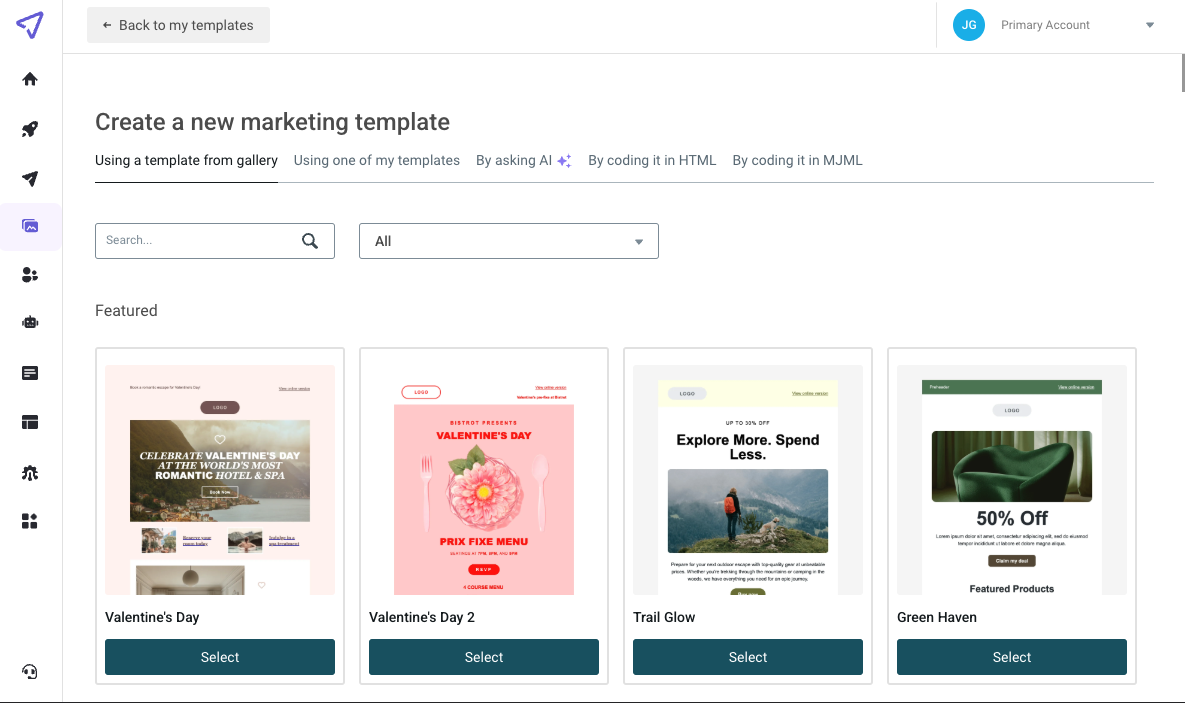
- Pay-per-send pricing model.
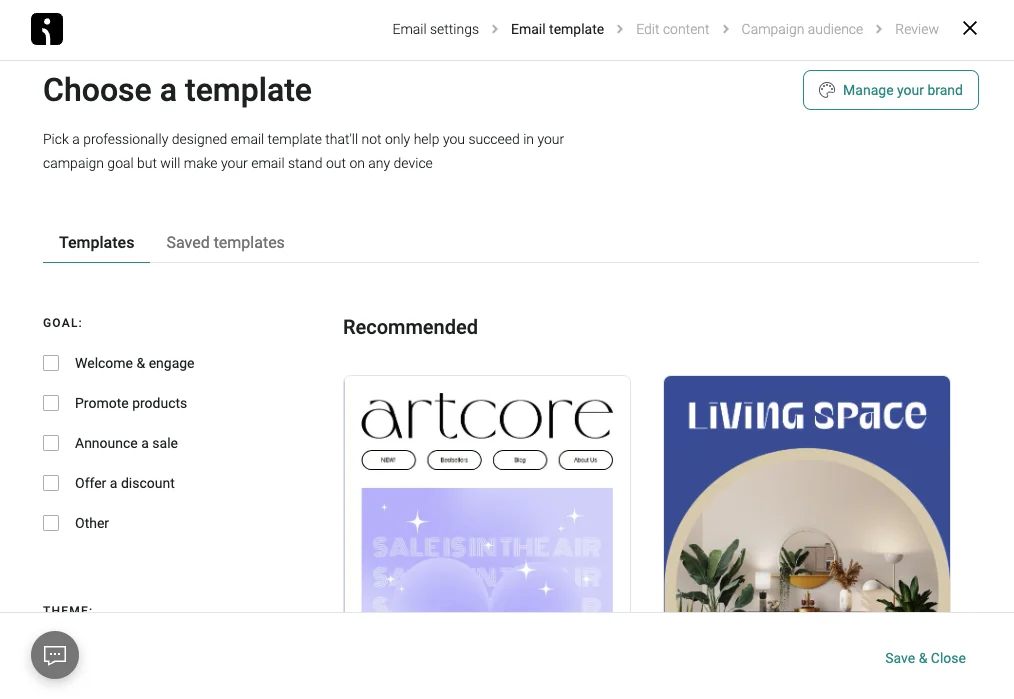
- Drag-and-drop email builder.
- Comprehensive API for developers.
- Transactional email capabilities.
- A/B testing and analytics.
- Multi-user collaboration.
Drawbacks:
- Advanced automation can be less intuitive than some competitors.
- Template variety, while functional, might be less visually diverse.
Pricing:
- Free Plan: Limited emails/day, basic features.
- Essential Plan: Starts at a low monthly fee for a set number of emails, scaling with volume.
- Premium Plan: Adds advanced features like A/B testing, segmentation, and automation.
- Custom Plan: For high-volume senders requiring dedicated support and IPs.
Best for Getting Started: Mailchimp
Mailchimp often serves as the entry point for businesses new to email marketing, and its reputation is well-earned. It offers an exceptionally beginner-friendly interface and a generous free plan, supporting up to 500 contacts, making it an excellent starting point for nascent campaigns. Its intuitive drag-and-drop editor and extensive template library enable users to quickly design and launch their first campaigns. However, as marketing strategies mature and demand more sophisticated automation or deeply customized workflows, Mailchimp’s limitations, particularly in advanced segmentation and integration depth, can become apparent, prompting businesses to consider more specialized alternatives.
Key features:
- User-friendly drag-and-drop editor.
- Robust free plan for up to 500 contacts.
- Audience management and basic segmentation.
- Pre-built email templates.
- Landing page and form builders.
- Basic automation sequences (e.g., welcome emails).
Drawbacks:
- Pricing scales quickly with contact count.
- Advanced automation and customization can be limited on lower tiers.
- Customer support is less accessible on free and lower-paid plans.
Pricing:
- Free Plan: Up to 500 contacts, basic email features.
- Essentials Plan: Starts with more contacts and features like A/B testing and 24/7 support.
- Standard Plan: Adds advanced automation, segmentation, and dynamic content.
- Premium Plan: Designed for larger businesses with advanced analytics and unlimited contacts.
Best for Digital Creators: Kit (formerly ConvertKit)
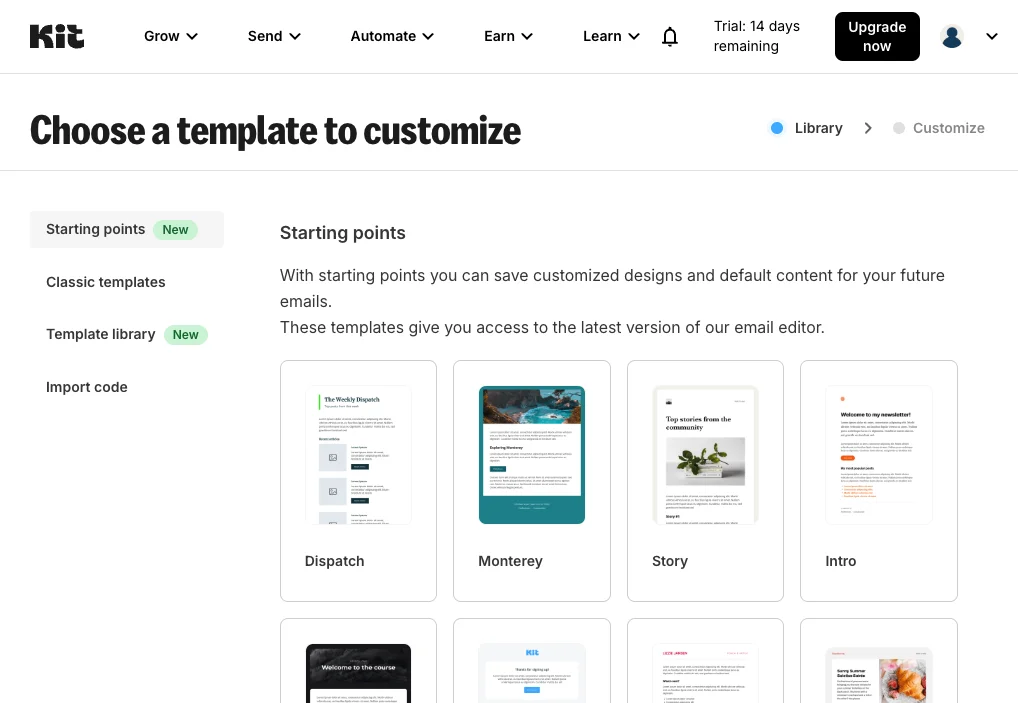
Kit, previously known as ConvertKit, is purpose-built for the unique needs of digital creators – bloggers, YouTubers, online educators, and solo entrepreneurs. It excels at audience growth and automated follow-up sequences, offering a remarkably generous free plan that supports up to 10,000 subscribers. This makes it an attractive option for creators focused on building and engaging a large audience. However, unlocking more sophisticated features, such as multi-sequence automations and advanced sales funnels, requires an upgrade to a paid plan, reflecting its focus on empowering creators to monetize their audience effectively.
Key features:

- Creator-focused landing pages and forms.
- Tag-based subscriber management for precise segmentation.
- Visual automation builder for complex workflows.
- Commerce features for selling digital products.
- Integration with popular creator tools.
Drawbacks:
- Email design options are intentionally minimal, prioritizing plain text for deliverability and personal feel.
- More expensive than some generalist platforms for similar features.
Pricing:
- Free Plan: Up to 10,000 subscribers, basic email sending, landing pages, forms.
- Creator Plan: Adds automation, visual editor, premium support, and integrations.
- Creator Pro Plan: Includes advanced reporting, referral programs, and subscriber scoring.
Best for Social-Savvy Brands: Constant Contact
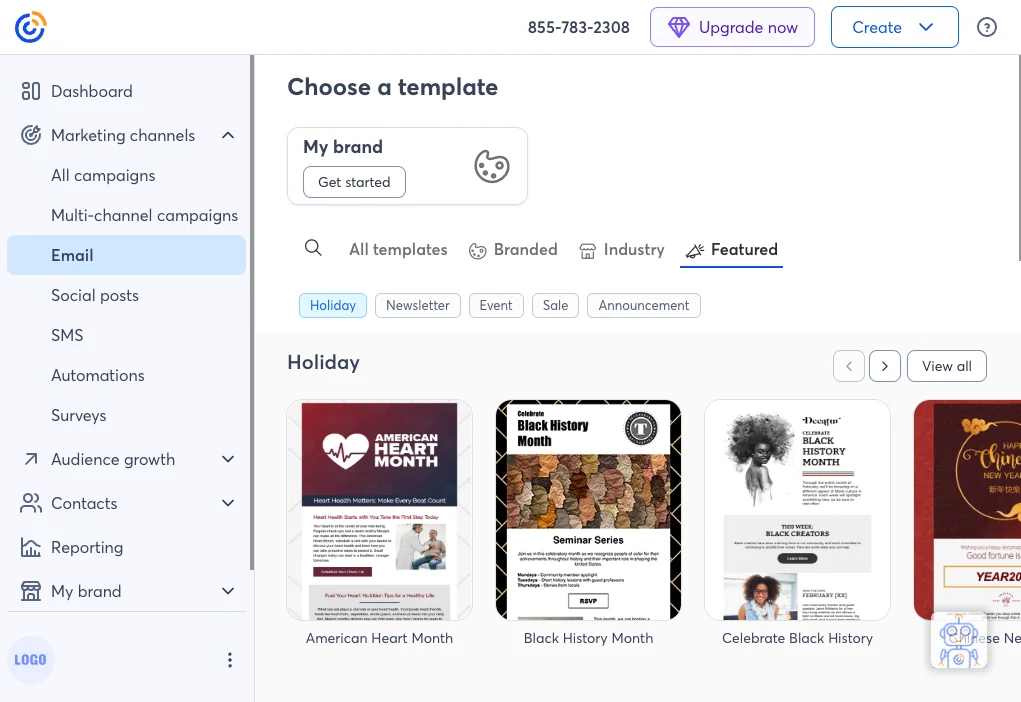
Constant Contact is a strong contender for brands looking to seamlessly integrate their email campaigns with a robust social media strategy. Its drag-and-drop editor is praised for its ease of use, enabling quick creation of visually appealing emails. The platform consistently delivers solid email delivery rates, ensuring messages reach inboxes reliably. Constant Contact’s strengths lie in its comprehensive suite of marketing tools beyond email, including social media posting and advertising, making it an excellent fit for businesses with a strong presence on platforms like Facebook and Instagram. However, its more advanced plans can become quite expensive, potentially pricing out smaller teams or those with tighter budgets.
Key features:
- User-friendly drag-and-drop email editor.
- Strong email deliverability.
- Social media integration and advertising tools.
- Event management and online surveys.
- Website and landing page builder.
Drawbacks:
- Higher price point compared to some competitors, especially for advanced features.
- Automation capabilities, while present, are less sophisticated than dedicated automation platforms.
Pricing:
- Core Plan: Basic email marketing, social posting, some automation.
- Plus Plan: Adds advanced e-commerce tools, deeper automation, and segmentation.
- Premium Plan: Enterprise-grade features, dedicated support, and advanced reporting.
Best for Long-Standing Reliability: AWeber
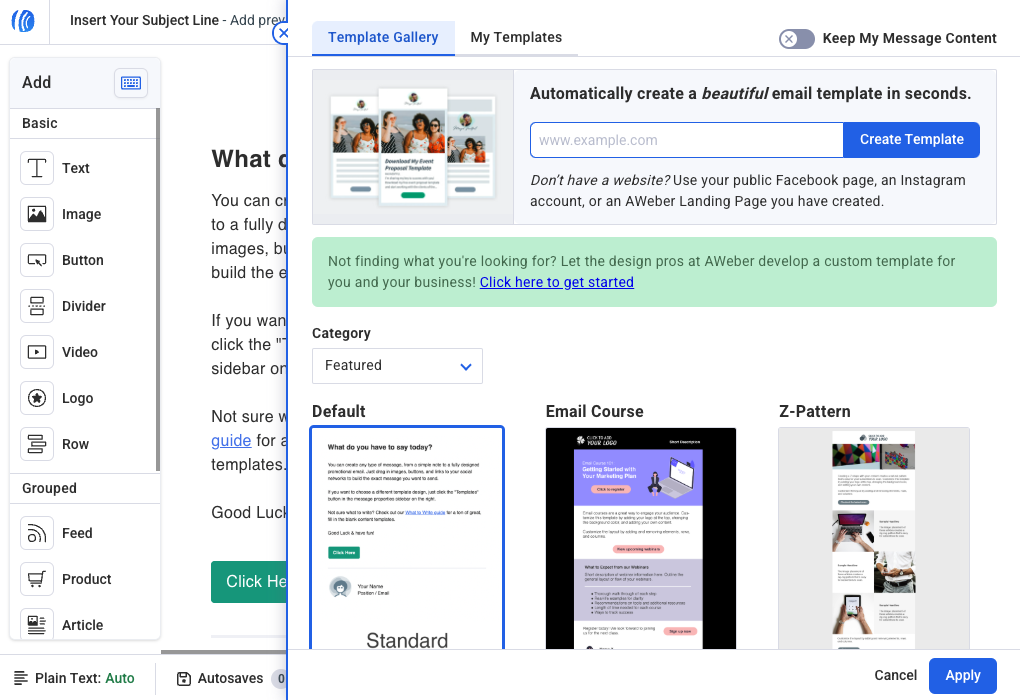
With over two decades in the industry, AWeber has established itself as a beacon of reliability, trusted by solo entrepreneurs and small business owners globally. Its platform is remarkably easy to use, featuring a vast library of pre-built templates, robust automation capabilities, and native integrations with popular platforms like Etsy and YouTube. While AWeber might not boast the bleeding-edge features of newer market entrants, it excels at the fundamentals, providing a dependable and comprehensive suite of tools for core email marketing. Its strong analytics and A/B testing capabilities further empower users to optimize their campaigns effectively.
Key features:
- Long-standing reputation and reliable service.
- Extensive template library and drag-and-drop builder.
- Automation workflows and tagging.
- Strong analytics and A/B testing tools.
- Integrations with e-commerce and content platforms.
Drawbacks:
- Interface can feel somewhat dated compared to modern alternatives.
- Advanced segmentation and personalization are less granular.
Pricing:
- Free Plan: Up to 500 subscribers, basic features.
- Lite Plan: Scales with subscribers, adds advanced segmentation and unlimited sends.
- Plus Plan: Includes behavioral automation, conversion tracking, and more.
- Unlimited Plan: For large lists requiring dedicated support and advanced features.
Best for All-in-One Marketing: HubSpot
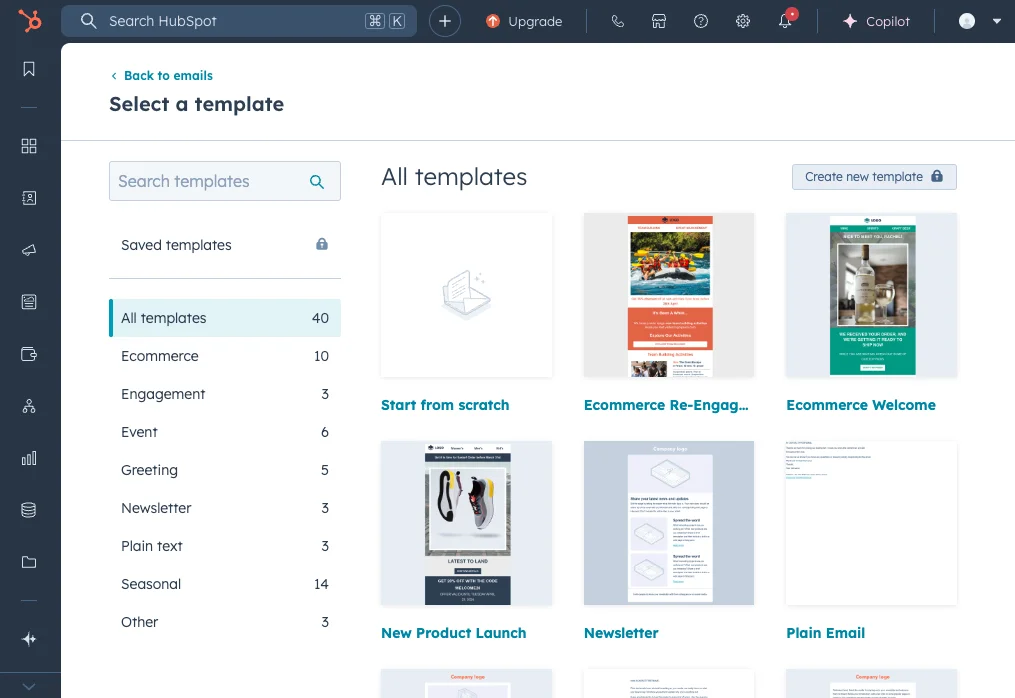
HubSpot transcends the typical email marketing platform, offering a comprehensive CRM and marketing suite. This integrated approach allows businesses to manage contacts, orchestrate automated email flows, and track performance across various channels—all from a single, unified dashboard. HubSpot’s free tier is notably generous, providing a powerful entry point into its ecosystem. However, accessing its more advanced automation, sales, and service features necessitates a significant investment, reflecting its position as an enterprise-grade solution that grows with complex business needs. The value proposition lies in its ability to consolidate multiple marketing and sales functions into one cohesive system.
Key features:
- Integrated CRM for comprehensive contact management.
- Advanced marketing automation and workflows.
- Landing page, website, and blog builders.
- Sales and service hubs for a unified platform.
- Detailed analytics and reporting.
Drawbacks:
- Can be significantly more expensive for advanced features, especially when combining hubs.
- Steeper learning curve due to the breadth of features.
- Interface can feel overwhelming for users seeking simple email functionality.
Pricing:
- Free Tools: Basic CRM, marketing, sales, and service tools, including limited email sends.
- Starter Plan: Expands on free tools with increased limits and features.
- Professional Plan: Adds marketing automation, SEO tools, and custom reporting.
- Enterprise Plan: For large organizations requiring advanced customization, AI features, and dedicated support.
Best for Online Stores: Omnisend
Omnisend is meticulously crafted for e-commerce brands, providing an omnichannel marketing solution right out of the box, even on its free plan. It integrates email, SMS, and push notifications, enabling retailers to create cohesive and highly effective marketing campaigns across multiple touchpoints. While its feature set is rich and tailored for online sales, some users note that its email deliverability could be improved, and its template library, while functional, might lack the visual diversity offered by competitors. Nevertheless, its e-commerce specific automations, like abandoned cart reminders and product recommendation emails, make it a powerful tool for driving online sales.
Key features:
- Omnichannel marketing (email, SMS, push notifications).
- Deep e-commerce platform integrations (Shopify, WooCommerce, etc.).
- Pre-built e-commerce automation workflows (abandoned cart, welcome series).
- Advanced segmentation based on shopping behavior.
- Pop-ups, forms, and landing pages for lead capture.
Drawbacks:
- Email deliverability can sometimes be inconsistent.
- Template customization and visual design options are less flexible.
- Reporting on lower tiers might lack depth.
Pricing:
- Free Plan: Limited emails, SMS, push notifications, basic automation.
- Standard Plan: Scales with contacts/sends, adds advanced automation and segmentation.
- Pro Plan: Includes unlimited emails, dedicated support, and advanced reporting.
Best for Multi-Channel Campaigns: Brevo (formerly Sendinblue)
Brevo, previously known as Sendinblue, offers a comprehensive platform designed for businesses aiming to consolidate email, SMS, and live chat within a single, unified ecosystem. This multi-channel approach is ideal for businesses seeking to manage all customer communications from one central hub. Brevo’s user interface is clean and intuitive, facilitating easy navigation and campaign setup. However, to access more in-depth analytics and advanced reporting capabilities, users typically need to upgrade to higher-tier plans, which is a common strategy among integrated marketing platforms.
Key features:
- Integrated email, SMS, and live chat.
- Marketing automation workflows.
- Transactional email services.
- CRM functionality.
- Landing page builder and signup forms.
Drawbacks:
- Advanced analytics and reporting are reserved for higher-tier plans.
- Some users find the email builder less flexible than competitors.
Pricing:
- Free Plan: Up to 300 emails/day, basic features.
- Starter Plan: Removes daily sending limit, adds basic reporting.
- Business Plan: Includes marketing automation, A/B testing, and landing pages.
- Enterprise Plan: Custom volume, dedicated support, advanced security.
Best for Serious Automation: ActiveCampaign
ActiveCampaign stands as a formidable solution for businesses that require more than basic email blasts, offering a powerhouse of advanced marketing automation combined with a built-in CRM. This platform provides granular control over the entire customer journey, from intricate workflows and dynamic content personalization to intelligent segmentation. It is an ideal tool for teams seeking depth and sophistication in their marketing efforts, though this advanced capability comes with a steeper learning curve and a higher price tag. Businesses willing to invest the time and resources will find ActiveCampaign an incredibly powerful engine for growth and customer engagement.
Key features:
- Highly advanced marketing automation capabilities.
- Integrated CRM for sales and marketing alignment.
- Deep segmentation and personalization options.
- Site and event tracking for behavioral automation.
- Predictive sending and machine learning insights.
- Comprehensive reporting and attribution.
Drawbacks:
- Significant learning curve due to the vast array of features.
- Higher pricing structure, especially for larger contact lists and advanced features.
- Interface can be overwhelming for beginners.
- Customer support can be slow to respond on lower tiers.
Pricing:
- Lite Plan: Basic marketing automation, email marketing, segmentation.
- Plus Plan: Adds CRM, sales automation, and deeper integrations.
- Professional Plan: Includes machine learning, predictive sending, and site messages.
- Enterprise Plan: Custom features, dedicated account manager, and uptime SLA.
If deep automations and baked-in sales tools are a priority, ActiveCampaign is a solid bet, provided the business is prepared for the necessary investment in both time and budget.
Tailoring the Solution: Platform Choices by Business Archetype
The "best" email marketing tool is inherently subjective, dependent on the unique identity, objectives, and resources of each business. A small, scrappy startup will have vastly different requirements than a flourishing e-commerce enterprise or a mission-driven nonprofit. Understanding these distinctions is crucial for making an informed decision.
Small Businesses and Solopreneurs
For lean teams or individual entrepreneurs, simplicity, affordability, and time-saving features are paramount. The ideal platform offers intuitive dashboards, responsive customer support, and automations that are easy to configure without requiring specialized marketing expertise. Pricing models that allow for gradual scaling without sudden cost spikes are particularly attractive. Mailjet and Mailchimp’s free or low-cost entry points, coupled with their user-friendly interfaces, often make them strong contenders here.
E-commerce Brands
For online retailers, email is a direct revenue driver, demanding advanced features geared towards conversion. Essential capabilities include abandoned cart recovery emails, personalized product recommendations, and robust integrations with leading e-commerce platforms like Shopify or WooCommerce. Behavioral triggers and highly personalized automations are key to maximizing sales and customer lifetime value. Omnisend, with its e-commerce-centric design and omnichannel capabilities, and ActiveCampaign, for its deep automation, are often preferred in this sector.
Nonprofits and Charitable Organizations
Nonprofits operate with tight budgets and rely heavily on efficient communication to engage supporters and solicit donations. Email tools offering discounted rates or specialized nonprofit plans can be transformative. Key features include customizable templates for diverse campaigns, sophisticated donor segmentation, and seamless integrations with fundraising platforms to streamline outreach and donor management. Tools like Mailchimp (for its free tier and ease of use) and Constant Contact (for event management) can be beneficial, particularly if they offer nonprofit discounts.
B2B Companies
In the B2B landscape, email strategy is centered on lead nurturing, pipeline management, and account-based marketing. Platforms that integrate tightly with CRM systems, offer advanced lead scoring capabilities, and facilitate highly targeted campaigns are essential. The ability to connect email efforts with broader sales and marketing stacks ensures a cohesive strategy for moving prospects through the sales funnel. HubSpot, with its integrated CRM, and ActiveCampaign, for its advanced automation and sales features, are particularly well-suited for B2B needs.
Strategic Considerations for Long-Term Success
Choosing the right email marketing service requires careful deliberation, aligning core features, pricing, use case, integration potential, scalability, and analytical capabilities with your unique business goals. The ultimate objective is to select a platform that strikes an optimal balance between functionality, ease of use, and affordability, while also offering the flexibility to adapt and scale as your business evolves.
As you finalize your decision, keep the following strategic takeaways in mind:
- Prioritize Your Core Needs: Don’t be swayed by an abundance of features you won’t use. Identify your non-negotiables first.
- Evaluate Scalability: Ensure the platform can grow with your business, preventing costly migrations in the future.
- Test Drive Before Committing: Utilize free trials and demos to get hands-on experience with the platform’s interface and key features.
- Consider Your Budget Holistically: Look beyond the monthly fee to understand the total cost of ownership, including potential upgrade costs for essential features.
- Assess Support Quality: Reliable and accessible customer support can be invaluable, especially when encountering technical challenges or needing strategic guidance.
- Review Integration Ecosystems: Verify that the platform integrates seamlessly with your existing CRM, e-commerce, and analytics tools.
- Understand Deliverability Performance: A platform’s reputation for high deliverability rates is crucial for ensuring your emails actually reach the inbox.
- Look for Automation Depth: For sustained growth, sophisticated automation capabilities are essential for nurturing leads and personalizing customer journeys.
- Analyze Reporting Capabilities: Robust analytics provide the insights needed to optimize campaigns and demonstrate ROI.
- Factor in Learning Curve: While advanced features are powerful, a platform that is too complex can hinder adoption and efficiency.
By adhering to these guidelines and thoroughly evaluating available options, businesses can select an email marketing service that serves as a powerful engine for engagement, relationship building, and the achievement of broader business objectives. The right platform, meticulously chosen, empowers brands to navigate the ever-evolving digital landscape with confidence and build an email marketing strategy that truly distinguishes them.
Frequently Asked Questions: Demystifying Email Service Selection
Navigating the complexities of email marketing services often brings forth a series of common questions. This FAQ section addresses these queries, providing clarity for both newcomers and experienced marketers seeking to optimize their current setup.
What is an email marketing service, and how does it function?
An email marketing service (EMS) or email service provider (ESP) is a specialized software platform designed to assist businesses in managing, sending, and tracking marketing and transactional emails to a subscriber base. These platforms offer a suite of features including intuitive drag-and-drop editors for email design, automated email sequences, customizable signup forms, advanced list segmentation, and comprehensive performance analytics. Their core function is to streamline email campaign management, making it efficient even for users without design or development expertise.
How many emails can I send per month with these services?
The permissible volume of emails typically depends on your chosen plan type. Some providers offer unlimited email sends on their higher-tier or enterprise plans, while others impose specific monthly or even daily send limits. It is crucial to carefully examine the email send limits associated with each monthly plan, particularly if your business manages a large subscriber list or intends to execute frequent, high-volume email campaigns.
What are transactional emails, and are they necessary for my business?
Transactional emails are automated, system-triggered messages sent in response to a user’s action or a specific event. Examples include order confirmations, password reset links, shipping notifications, and abandoned cart reminders. For businesses operating an e-commerce store, transactional emails are indispensable for providing essential customer service and maintaining operational transparency. Many modern email marketing platforms integrate these into their automation workflows, or allow connection via dedicated APIs for optimal delivery.
Are there affordable email marketing services suitable for small businesses?
Absolutely. The market offers numerous affordable email marketing tools, many of which provide generous "forever-free" plans or cost-effective basic plans. These typically include essential features such as email sequence builders, automation functionalities, and access to a library of pre-designed email templates. Platforms like Mailjet, Brevo, and Mailchimp are highly regarded among budget-conscious small businesses for their blend of features and accessible pricing.
What advanced features should I prioritize if I’m beyond the basics?
For businesses looking to elevate their email marketing strategy, prioritize platforms offering:
- A/B Testing and Multivariate Testing: For continuous optimization of email elements.
- Behavioral Automation: Triggering emails based on user actions (e.g., website visits, product views).
- CRM Integration: Seamless synchronization of customer data for personalized communication.
- Predictive Sending: Utilizing AI to determine optimal send times for individual subscribers.
- Dynamic Content: Personalizing email content based on subscriber data.
- Advanced Segmentation: Granular audience targeting for highly relevant campaigns.
- Dedicated IP Addresses: For high-volume senders to maintain email sender reputation.
These features are particularly beneficial for e-commerce customers, content creators, and sellers of digital products aiming for deeper engagement and higher conversion rates.
Do email marketing tools integrate with my existing tech stack?
Most reputable email marketing platforms offer a broad spectrum of third-party integrations, encompassing popular tools like Shopify, Salesforce, Google Analytics, and Zapier. Businesses requiring deep synchronization—such as CRM data syncing, advertising platform integration, or comprehensive conversion funnel tracking—should specifically seek out platforms known for their robust and seamless integration capabilities.
Which platforms are recommended for e-commerce email marketing?
For online stores, platforms specifically designed with e-commerce functionality in mind are ideal. Omnisend, Drip, and Klaviyo are strong recommendations. They excel in offering commerce revenue attribution, sophisticated abandoned cart recovery emails, product-based segmentation, and sales automation workflows that are meticulously tailored to the unique demands of online retailers.
How critical is email deliverability?
Email deliverability is of paramount importance. A low deliverability rate signifies that your carefully crafted emails are likely landing in spam folders or, worse, not being delivered at all, effectively negating your marketing efforts. It is crucial to select platforms with a proven track record for high deliverability, often supported by deliverability tools, sender reputation management, and, for high-volume senders, the option of dedicated IP addresses.
Can content creators or bloggers effectively use email marketing software?
Absolutely. Many email marketing tools are exceptionally well-suited for bloggers, content creators, and digital marketers. They offer features like visual email funnels, beautiful and customizable email campaign templates, and robust audience growth tools, making them an excellent choice for individuals focused on selling digital products, building a loyal subscriber base, or fostering a strong community around their content.
How can I monitor the performance of my email campaigns?
The leading email marketing platforms include comprehensive email tracking and real-time performance reports. These tools allow you to meticulously monitor key metrics such as open rates, click-through rates, conversion rates, and bounce rates. Some advanced platforms also provide ROI tracking, contact scoring, and a dashboard of core email Key Performance Indicators (KPIs) to facilitate thorough success measurement and continuous optimization.
Should I consider hiring an email marketing agency?
If your internal team is small, or if your email marketing campaigns are particularly complex and demanding, engaging an email marketing agency can be a strategic move. Agencies can provide expert assistance in managing your strategy, developing compelling email content, and implementing sophisticated automation. However, for many businesses, a well-chosen email platform complemented by effective onboarding services and responsive customer support is entirely sufficient to achieve their objectives.
What are the different types of email marketing?
Email marketing encompasses several distinct types, each serving specific strategic objectives:









