

The rapid evolution of Large Language Models (LLMs) has introduced a significant paradigm shift in how developers interact with third-party services, primarily through the emergence of the Model Context Protocol (MCP). While MCP offers a streamlined method for artificial intelligence to interact with external tools and data sources, it simultaneously introduces governance and security challenges. To address these vulnerabilities, technical experts are now advocating for a structured approach that integrates MCP into established automation platforms like n8n. This methodology, often referred to as MCPO (Model Context Protocol OpenAPI), seeks to bridge the gap between the raw power of AI protocols and the rigorous security requirements of enterprise environments.

The Security Landscape of Model Context Protocol
The Model Context Protocol, an open standard introduced to allow AI models to seamlessly connect to data and tools, has gained significant traction among developers using tools like Anthropic’s Claude Code. However, the inherent power of MCP—the ability to give an LLM direct access to local files, databases, and proprietary APIs—carries substantial risk. In an unmanaged environment, an LLM with MCP access acts with the authority of the user, potentially executing unintended commands or accessing sensitive data if the model’s reasoning deviates from the user’s intent.
To mitigate these risks, the transition to an n8n-based workflow allows organizations to implement a “human-in-the-loop” or “structured-gate” system. By utilizing n8n, a low-code automation platform, teams can define specific, immutable paths for data and commands. This ensures that the AI only operates within a well-defined sandbox, utilizing only the specific API endpoints necessary for a task rather than having broad, unrestricted access to a server’s capabilities.

The Role of MCPO in API Orchestration
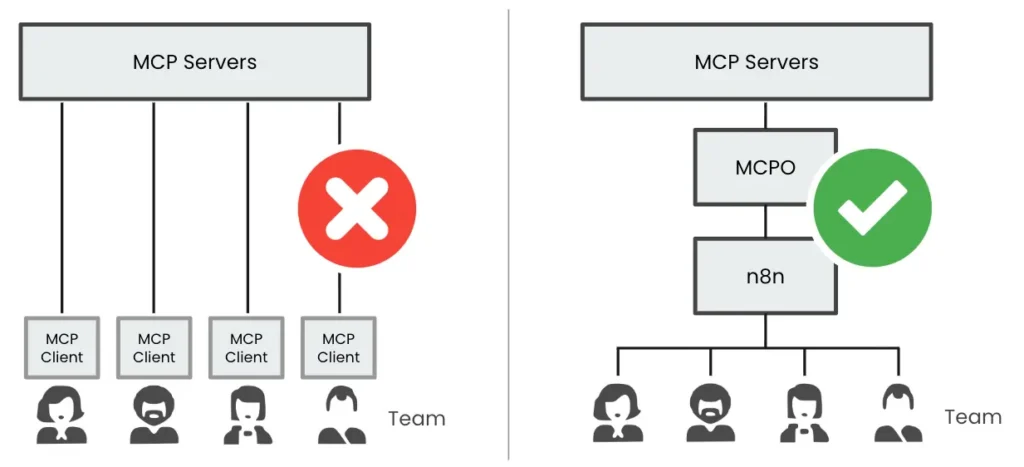
The core innovation in this architectural shift is MCPO, a service designed to convert MCP servers into well-documented OpenAPI endpoints. Traditionally, APIs can be cumbersome to manage, requiring extensive documentation and manual configuration for every new integration. MCP simplifies the connection, but at the cost of control. MCPO provides a middle ground: it consumes the MCP service and exposes it as a structured API.
This transformation is critical for team-based environments. Instead of each individual developer managing their own local MCP configurations and security keys, a centralized MCPO instance acts as a gateway. This centralized approach allows for unified API key management, rate limiting, and auditing, which are essential components of modern IT governance. Once an MCP server, such as the Convert.com MCP server, is connected via MCPO, its functions become accessible through standard HTTP requests, making them compatible with virtually any automation tool, with n8n being the primary choice for complex orchestration.
Technical Implementation and Configuration
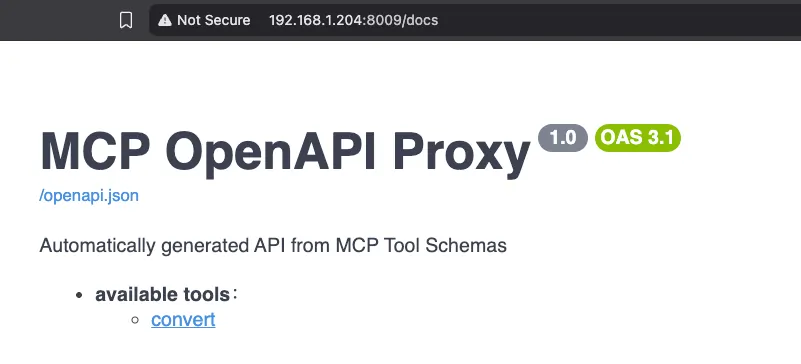
The deployment of a secure, automated workflow begins with containerization. Using Docker Compose, developers can host a centralized MCPO service that links to specific MCP configuration files. This setup ensures that the environment is reproducible and isolated from the host system’s broader file structure.
A typical configuration involves defining the mcpo service within a YAML file, mapping ports, and securing the instance with a robust API key. The configuration file (often config.json) dictates which MCP servers are active. For instance, integrating the Convert.com MCP server allows the system to interact with A/B testing experiments. The configuration includes environment variables for API keys and secrets, which are then abstracted away from the end-user, providing an additional layer of security.
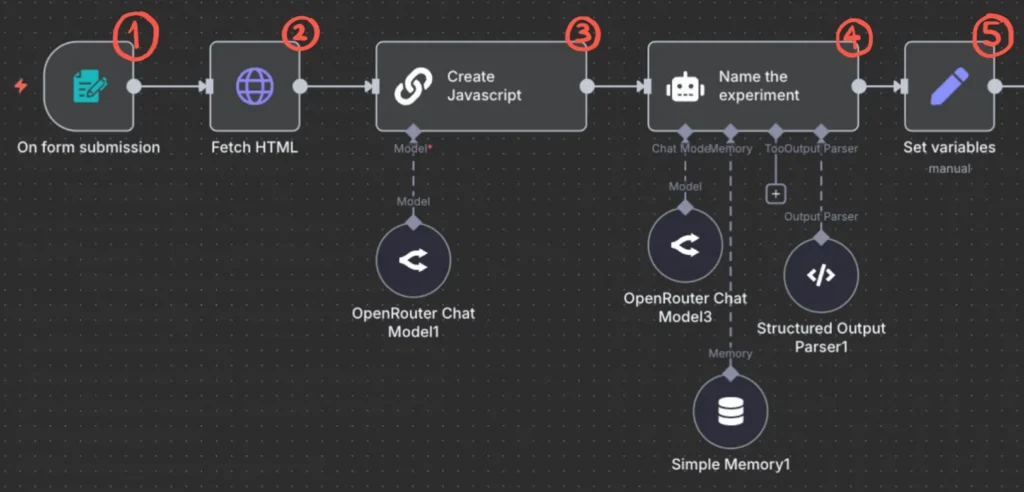
Once the infrastructure is in place, the n8n workflow serves as the orchestration layer. This workflow typically follows a five-stage chronology:
- Data Intake: Utilizing forms or webhooks to gather specific requirements, such as a target URL and a description of the desired website change.
- Resource Retrieval: Automatically fetching the HTML content of the target page to provide the LLM with the necessary context.
- Code Generation: Employing a Small Language Model (SLM) or a targeted LLM prompt to generate JavaScript based on the retrieved HTML and the user’s request.
- Standardization: Using AI agents to enforce naming conventions and metadata standards for the experiment, ensuring consistency across the organization’s testing suite.
- Deployment: Utilizing the HTTP request node to communicate with the MCPO-exposed endpoints, effectively uploading the experiment to the production or staging environment.
Chronology of an Automated A/B Test Deployment
The traditional lifecycle of an A/B test involves manual coding, quality assurance, and manual entry into a testing platform. The integration of MCP and n8n compresses this timeline significantly.
In the initial phase, a user submits a “Change Request” via a structured form. This form acts as the primary constraint, preventing the AI from wandering outside the scope of the intended task. Immediately following the submission, the n8n workflow triggers a “Fetch HTML” node. This step is crucial because LLMs frequently hallucinate CSS selectors or DOM structures if they rely solely on memory or outdated crawls. By providing real-time HTML, the accuracy of the generated code increases by an estimated 60-80% in complex web environments.
The third stage involves the generation of the variation code. By using a specialized prompt that defines the AI as a “Senior Front-End Developer,” the system produces clean, functional JavaScript. To further refine the output, developers often include “few-shot” examples within the n8n node, teaching the model the specific coding style preferred by the organization.
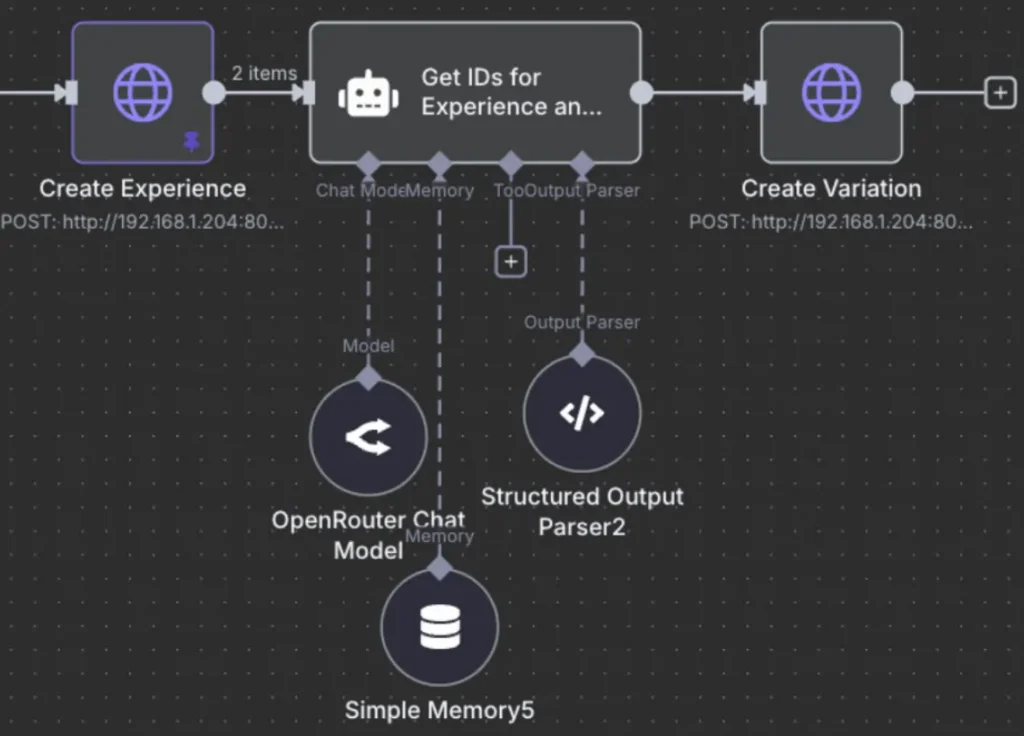
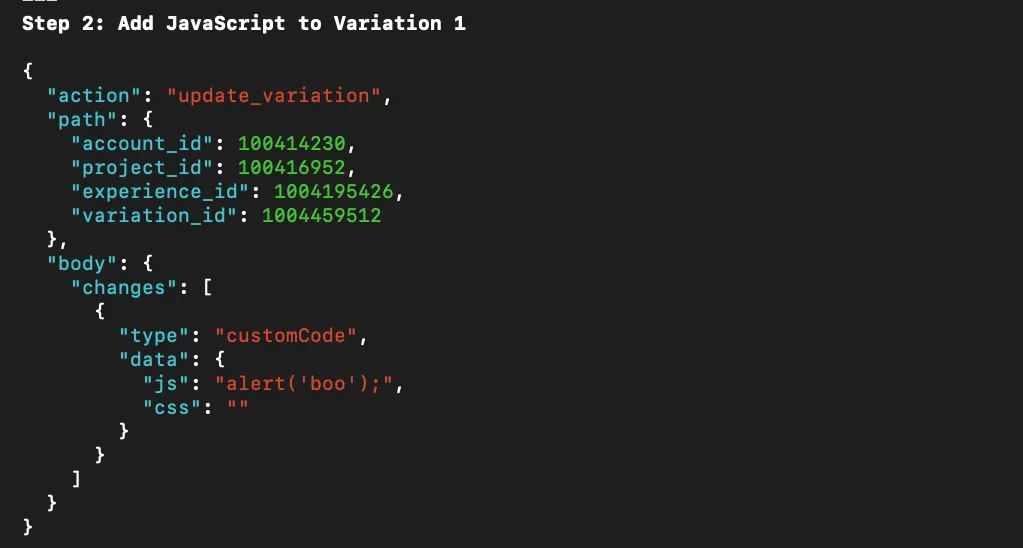
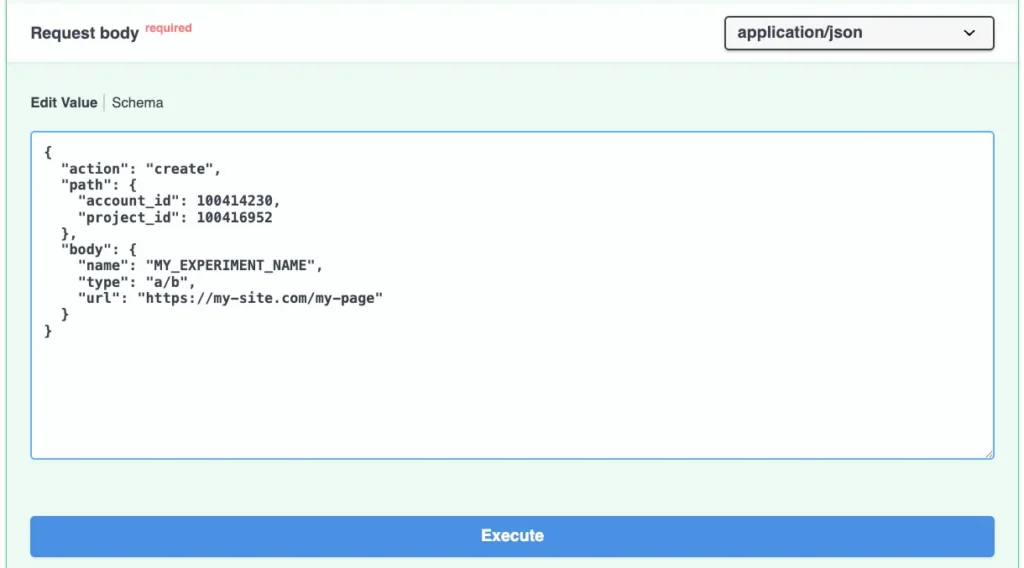
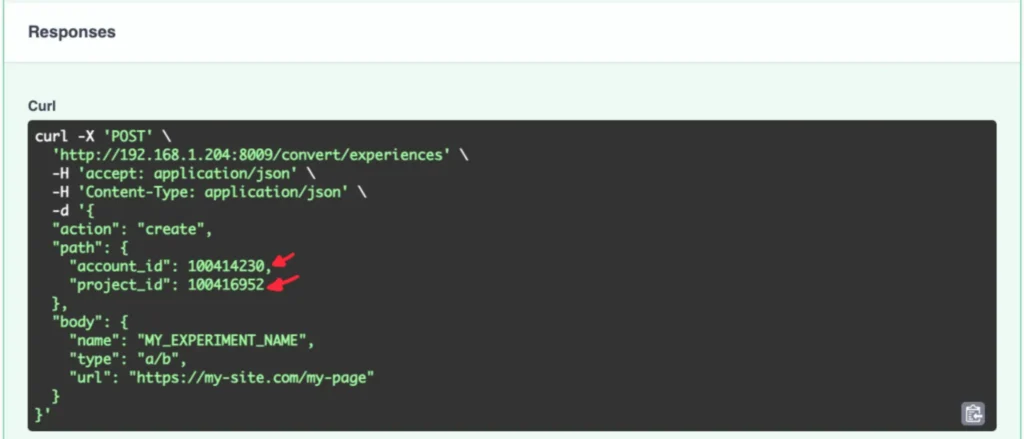
The final phase is the API handshake. Through the MCPO gateway, n8n sends a POST request to create an “experience” within the testing platform. The response from this request—containing unique IDs for the experiment and its variations—is then parsed and used in a subsequent call to inject the generated JavaScript. This multi-step process ensures that every action is logged and can be rolled back if the automated QA checks fail.
Supporting Data and Efficiency Gains
The move toward automated MCP workflows is supported by a growing body of data regarding developer productivity. According to industry benchmarks, the manual setup of an A/B test variation can take a developer anywhere from 30 minutes to two hours, depending on the complexity of the DOM manipulation. By contrast, an automated n8n workflow utilizing MCP can complete the same task in under three minutes.
Furthermore, the use of Small Language Models (SLMs) in this process significantly reduces operational costs. While frontier models like GPT-4o or Claude 3.5 Sonnet are highly capable, they are often overkill for generating simple CSS or JavaScript changes. By routing these tasks through smaller, more efficient models hosted locally or via cost-effective APIs, organizations can reduce their AI spend by up to 90% without sacrificing the quality of the generated code for routine tasks.
Official Responses and Industry Implications
While major AI providers like Anthropic and OpenAI have focused on the raw capabilities of their models, third-party platforms like Convert.com have been proactive in creating the connective tissue (MCP servers) that makes these models useful in professional contexts. Industry analysts suggest that the “API-ification” of AI protocols is the next logical step in the maturity of the “AI Agent” ecosystem.
Representatives from the experimentation industry note that the primary barrier to scaling A/B testing is often the “development bottleneck.” By democratizing the ability to create and deploy tests through secure, AI-augmented workflows, companies can increase their testing velocity. However, experts warn that without the security layers provided by tools like MCPO and n8n, the risk of “automated technical debt” or site-wide outages remains a concern. The consensus among IT security professionals is that direct MCP access should be reserved for local development, while production-facing tasks must be mediated by an orchestration layer.
Broader Impact and Future Outlook
The implications of turning MCP into a secure n8n workflow extend beyond A/B testing. This architecture provides a blueprint for how any specialized professional task can be automated. Whether it is SQL query generation, automated reporting, or cloud infrastructure management, the combination of MCP for tool access and n8n for governance represents a robust path forward for enterprise AI.
As the Model Context Protocol continues to evolve, we can expect to see more “plug-and-play” MCP servers for popular enterprise software. The challenge for organizations will not be finding the tools, but rather building the secure “pipelines” that allow their teams to use those tools effectively. By adopting the MCPO and n8n framework, businesses can move away from experimental, risky AI interactions and toward a future of structured, high-efficiency automation that maintains the highest standards of data integrity and security. This transition marks the shift from AI as a novel assistant to AI as a core, reliable component of the modern digital workforce.







