

Paid search advertising generated $102.9 billion in U.S. revenue in 2024, solidifying its position as the largest digital advertising format by a significant margin and accounting for approximately 39.8% of all digital ad revenue. This massive scale is driven by a singular value proposition: the ability to place a brand directly in front of consumers at the precise moment of high-intent search. However, as the market matures into 2025, the landscape is becoming increasingly complex. With global search spend forecasted to reach $355.10 billion this year, advertisers are facing rising costs and intensified competition, necessitating a shift from simple keyword bidding to a holistic strategy that prioritizes the post-click experience.
The Dominance of Search in the Digital Economy
The growth of paid search—often referred to as Pay-Per-Click (PPC) or Search Engine Marketing (SEM)—reflects a broader shift in how businesses allocate capital to capture immediate demand. Unlike organic search, which relies on Search Engine Optimization (SEO) to earn visibility over months or years, paid search allows for instantaneous market entry.
Google Ads remains the undisputed leader in this sector, maintaining a global search market share of roughly 90%. Beyond its core search engine, Google’s ecosystem includes YouTube, Gmail, Google Maps, and the Google Display Network, providing a comprehensive reach that few competitors can match. Nevertheless, Microsoft Advertising has carved out a vital secondary position. While Bing’s individual market share remains in the single digits, the Microsoft network syndicates ads across Yahoo, AOL, DuckDuckGo, and Ecosia, while expanding into high-value exclusive channels such as Netflix’s ad-supported tier.
Industry analysts note that the competition between these platforms has spurred rapid innovation in automation and artificial intelligence, changing how auctions are conducted and how ads are served to the end user.
The Mechanics of the Real-Time Auction
The efficacy of paid search is rooted in its automated auction system, which executes in milliseconds every time a user enters a query. Understanding this process is critical for advertisers looking to optimize their spend.
The Five-Step Auction Process
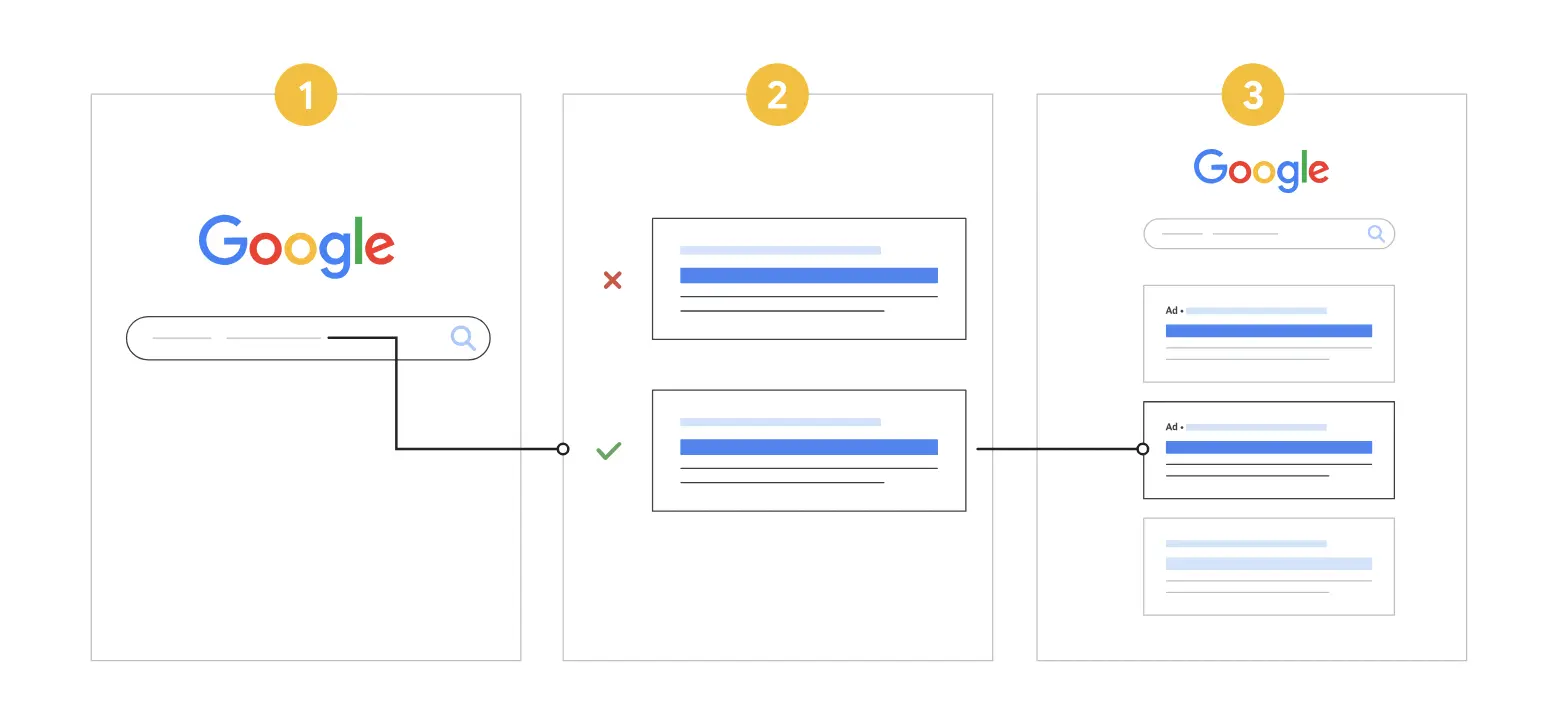
- The Query: A user enters a specific keyword or phrase into the search engine.
- The Trigger: The search engine identifies all active advertisers bidding on those terms whose targeting parameters (location, device, time of day) match the user’s profile.
- Ad Rank Calculation: Placement is not determined by the highest bidder alone. Google and Microsoft use a metric called Ad Rank, which balances the maximum bid against the “Quality Score.” This score evaluates the expected click-through rate (CTR), the relevance of the ad to the query, and the quality of the landing page experience.
- The Determination of Winners: The advertiser with the highest Ad Rank secures the top “Sponsored” position. This system allows a well-optimized ad with a lower bid to outrank a poorly constructed ad from a higher-spending competitor.
- Actual Cost Calculation: In a “second-price” auction model, the winning advertiser does not pay their maximum bid. Instead, they pay only what is necessary to outrank the competitor immediately below them, typically plus one cent.
The Evolution of Search Ad Formats
As search engines move toward greater automation, the formats available to advertisers have evolved from static text entries to dynamic, multi-channel assets.
Responsive Search Ads (RSAs)
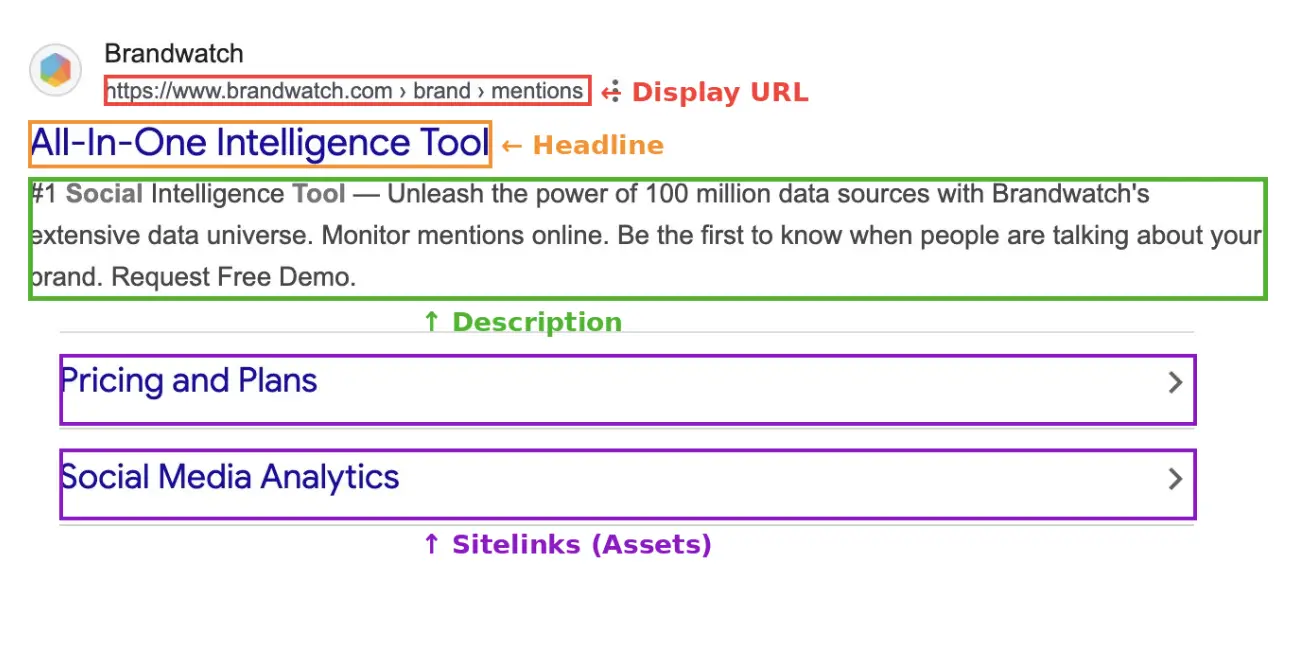
RSAs are currently the default format for Google Ads. Advertisers provide up to 15 headlines and four descriptions, and the platform’s machine-learning algorithms test various combinations to determine which pair performs best for specific user contexts. This format is often enhanced by “Assets” (formerly extensions), which provide additional information such as site links, callout buttons, and location data.

Performance Max (PMax)
Introduced as a way to streamline cross-channel advertising, Performance Max uses AI to serve ads across Search, Display, YouTube, and Maps from a single campaign. While it offers less granular control than traditional campaigns, it leverages Google’s vast data pools to optimize for conversions in real-time.
Shopping and Dynamic Search Ads
For retailers, Shopping Ads are essential, displaying product images, prices, and store names directly on the search results page. These are driven by product feed data rather than traditional keyword lists. Conversely, Dynamic Search Ads (DSAs) use a website’s own content to automatically generate headlines and target queries that the advertiser may have missed in their keyword research.
Comparative Analysis: Paid Search vs. Organic Search (SEO)
While both channels target search engine users, they serve different strategic functions within a marketing portfolio.
| Aspect | Paid Search | Organic Search (SEO) |
|---|---|---|
| Cost Model | Pay-per-click (PPC) | No direct cost per visit |
| Time to Results | Immediate | 3–12+ months |
| Placement | Top/Bottom of SERPs (Sponsored) | Main results area |
| Targeting | Precise (Keywords, Geo, Audience) | Content-relevance based |
| Scalability | Instant with budget | Gradual build of authority |
Market experts suggest that the most resilient strategies utilize both. Paid search is used to capture immediate demand and test messaging, while SEO builds long-term, compounding traffic that reduces the overall blended cost of acquisition.
The Rising Cost of Leads and the Conversion Crisis
A critical challenge facing the industry in 2025 is the rising cost of participation. Data indicates that the average cost-per-lead (CPL) across all industries rose from $66.69 in 2024 to approximately $70.11 in 2025. In highly competitive sectors such as legal, insurance, and finance, a single click can cost upwards of $50.
This inflation has highlighted a systemic weakness in many campaigns: the post-click experience. While marketers spend billions to secure the click, many fail to convert that traffic because they direct it to generic homepages. Statistics show that while generic pages typically convert at a rate of 2% to 4%, dedicated, message-matched landing pages can achieve conversion rates of 10% to 15% or higher.
The Importance of Message Match
“Message mismatch” occurs when the promise of an ad does not align with the content of the landing page. If an ad offers a “Free 14-Day Trial” but the landing page focuses on “Enterprise Consultations,” the cognitive dissonance leads to immediate bounces. Ensuring that the ad headline, the landing page headline, and the call-to-action (CTA) tell a singular, coherent story is now a baseline requirement for profitability.
Strategic Implementation and Measurement
To run a successful paid search campaign in the current climate, advertisers must follow a structured, data-driven methodology.
1. Goal-to-KPI Mapping
Campaigns must be measured against specific objectives. Awareness-focused campaigns track impressions and search impression share, while conversion-focused campaigns prioritize Return on Ad Spend (ROAS) and Cost Per Acquisition (CPA).
2. Keyword Intent Segmentation
Advertisers are moving away from broad targeting in favor of intent-based segmentation:
- Informational: “How to manage projects” (Low intent, lower cost).
- Comparison: “Best project management software” (Medium intent).
- Transactional: “Buy project management software” (High intent, higher cost).
3. The Role of Smart Bidding
Once a campaign reaches a threshold of 30 to 50 conversions per month, many advertisers transition from manual bidding to “Smart Bidding.” These strategies, such as Target CPA or Target ROAS, use auction-time signals to adjust bids automatically, theoretically maximizing the efficiency of the budget.
Impact and Future Implications
The continued growth of paid search advertising has profound implications for the digital economy. As search engines integrate generative AI—such as Google’s Search Generative Experience (SGE)—the way ads are displayed is likely to change. Advertisers will need to adapt to “conversational” search queries and more visual ad formats.

Furthermore, the emphasis on user experience is no longer optional. Google’s Quality Score algorithm explicitly rewards fast-loading, relevant landing pages. Research indicates that a one-second delay in mobile page load time can reduce conversions by up to 20%, meaning technical performance is now as important as creative copy.
Conclusion
The $102.9 billion invested in U.S. paid search in 2024 proves that the channel remains the most effective way to reach customers at the point of purchase. However, the era of “set it and forget it” advertising is over. Success in 2025 requires a sophisticated understanding of auction mechanics, a commitment to rigorous A/B testing, and, most importantly, a focus on the post-click experience. By aligning high-intent ads with dedicated, high-performing landing pages, businesses can navigate rising costs and turn search engine visibility into sustainable revenue growth. As the market moves toward further automation and AI integration, the ability to maintain a human-centric, conversion-focused strategy will remain the primary differentiator for leading brands.







