
 rifanmuazin
The landscape of email marketing in 2026 presents a significantly evolved environment, moving decisively beyond the initial upheaval caused by generative AI and the complex adaptation to stringent new privacy regulations. This period marks a profound shift towards refinement, demanding a nuanced balance between cutting-edge automation and authentic human connection. Subscribers, now more sophisticated and discerning than ever, possess an uncanny ability to identify overtly AI-generated content, making genuine engagement paramount. This article will dissect the critical tactical adjustments necessary for marketers to thrive this year, spanning from advanced lifecycle strategies to the rise of ‘intelligent gatekeepers,’ all aimed at ensuring email remains a formidable engine for brand growth.
The Rapid Ascent of Generative AI in Marketing (2023-2025)
The emergence of generative AI burst onto the scene in late 2022 and rapidly permeated the marketing world throughout 2023 and 2024. Initially, its introduction was met with a mix of awe and trepidation. Marketers scrambled to integrate tools capable of drafting email copy, generating subject lines, and even conceptualizing visual elements at unprecedented speed. The promise was immense: increased efficiency, reduced costs, and the ability to scale content creation exponentially. However, this initial phase was also characterized by experimentation and, at times, missteps. Many brands quickly discovered that raw AI output, while voluminous, often lacked the distinct brand voice, emotional intelligence, and nuanced understanding required for effective communication. The market became saturated with generic, formulaic content, leading to a swift rise in subscriber skepticism. Consumers grew weary of emails that felt sterile or overtly algorithmic, prompting a demand for more authentic interactions. This period, while transformative, underscored the necessity for human oversight and strategic integration rather than wholesale replacement.
Evolving Privacy Landscape: From GDPR to 2026
Concurrently with the AI revolution, the global privacy landscape continued its relentless evolution, adding another layer of complexity for email marketers. Following the foundational General Data Protection Regulation (GDPR) in Europe and the California Consumer Privacy Act (CCPA) in the United States, 2023-2025 saw the proliferation of similar data protection frameworks worldwide. Key developments included enhanced user control over data, stricter consent requirements, and increased scrutiny over data collection and usage practices. Apple’s Mail Privacy Protection (MPP), introduced in 2021, fundamentally altered how email open rates could be measured, impacting a long-standing key performance indicator. By 2026, these regulations have coalesced into a complex web, mandating a ‘privacy-by-design’ approach to all marketing activities, especially email. The implications extend beyond legal compliance, fostering a deeper need for trust and transparency with subscribers, as data collection practices become a critical determinant of brand reputation and deliverability. The emphasis shifted from merely collecting data to ethically leveraging consented data to enhance user experience, rather than exploit it.
The Emergence of AI-Powered Inbox Gatekeepers

A pivotal development in 2026 is the mainstream adoption of ‘intelligent gatekeepers’ within email clients. Tools such as Apple Intelligence and Gmail’s Gemini have transcended simple spam filtering to actively interpret, summarize, and even prioritize email content for users before they even open a message. This functionality directly stems from the earlier AI boom, as mailbox providers leverage sophisticated large language models (LLMs) to provide an immediate value proposition to their users. For instance, a user might see a concise summary of an email’s key offers or topics directly in their inbox preview, or even have a long newsletter distilled into a few bullet points. This profound shift has rendered traditional metrics like open rates increasingly unreliable, as users may glean sufficient information without opening the email itself. The new challenge for marketers is not just to bypass spam filters but to actively engage with these AI intermediaries, ensuring their message’s core value is accurately and compellingly presented by the gatekeeper’s summary.
Hyper-Personalization and Data Stewardship: The Forefront of Engagement
In this refined era, connecting with subscribers hinges on delivering messages that are exceptionally relevant, impeccably timely, and deeply personalized across every touchpoint of the marketing campaign. This extends far beyond merely inserting a subscriber’s first name. Effective personalization in 2026 is built upon several critical pillars:
- Behavioral Segmentation: Leveraging real-time user behavior (website visits, purchase history, past email engagement) to trigger highly specific and contextual communications.
- Predictive Analytics: Employing AI to forecast future subscriber needs and preferences, enabling proactive outreach with tailored offers or content.
- Customer Data Platforms (CDPs): Integrating CDPs to unify disparate customer data points, creating a holistic view of each subscriber that informs hyper-targeted campaigns.
- Preference Centers: Empowering subscribers with granular control over the types of content, frequency, and channels they wish to receive, fostering trust and reducing unsubscribe rates.
Industry analysts suggest that brands excelling in hyper-personalization can see up to a 20% increase in sales and a 5-8x increase in ROI on marketing spend. Cynthia Price, SVP of Marketing at Validity, underscores the continuous nature of this endeavor, stating, “Data collection and management is not a ‘set it and forget it’ proposition. You’d be surprised how much information subscribers will offer once you prove you’re asking questions to make their lives easier.” This implies a reciprocal relationship where value exchange drives data sharing, ultimately fueling more effective personalization.
Designing for the AI Intermediary: Optimizing for Gatekeeper Summaries
The rise of AI gatekeepers like Apple Intelligence and Gmail’s Gemini mandates a radical rethinking of email design and content strategy. The central question for marketers is no longer solely, “Did my email land and look great?” but, “Did the AI accurately surface the right topics and value proposition in its summary?” This necessitates an approach akin to Search Engine Optimization (SEO) for email. Marketers must front-load email content with primary keywords and ensure the most crucial value proposition is explicitly stated and easily ‘scrapable’ by machine learning algorithms for accurate inbox previews.
For emails that are visually dominant, the importance of comprehensive alt attributes for image tags cannot be overstated. These descriptions provide textual context that AI can interpret, ensuring visual content is not lost in summarization. Furthermore, generic, flowery language that AI might struggle to parse should be avoided in favor of clear, concise messaging. Tools that offer a preview of how AI gatekeepers might summarize an email are becoming indispensable, allowing marketers to refine their messages proactively. In 2026, victory in the inbox will not necessarily go to the most creative writer, but to the marketer who strategically crafts content with both human readers and machine interpreters in mind.
The Power of Structured Content and Minimalist Design
While the notion of an 8-second human attention span is largely a myth, the underlying principle that users seek the quickest path to value remains highly relevant. In 2026, this translates into a strong trend towards minimalist and highly structured email designs. Gone are the days of sprawling, text-heavy emails that overwhelm the reader. Modern aesthetics favor leaner builds that load faster, reduce cognitive load, and are inherently easier for AI tools to interpret and summarize accurately.
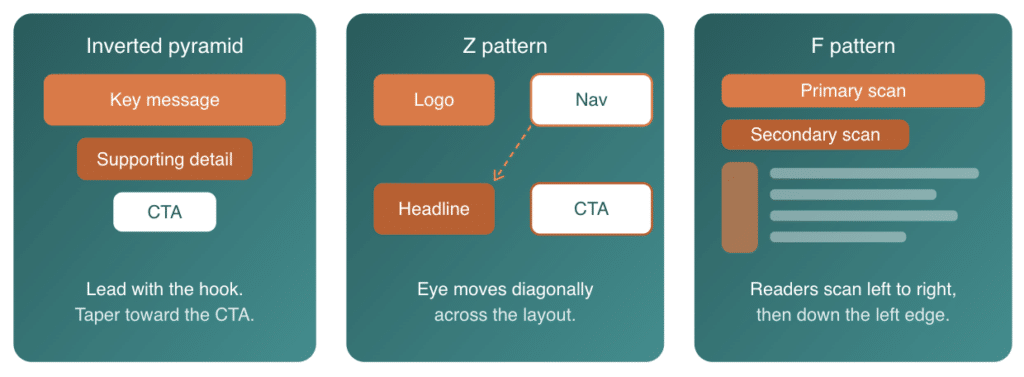
Leveraging known content hierarchy structures, such as the Inverted Pyramid (most important information first), or the Z and F-patterns (guiding the eye across the page), becomes crucial. Proper use of semantic HTML heading tags (H1 for section titles, H2 for sub-sections, etc., rather than merely styling text larger) signals content importance to both human readers and AI algorithms. This structured approach not only enhances readability but also provides explicit cues to AI gatekeepers regarding the hierarchy and significance of information within the email, ensuring that critical messages are not overlooked in automated summaries.
Annotation Schema: Unlocking Richer Inbox Experiences
Years ago, Gmail introduced support for structured data in emails via JSON-LD or Microdata snippets. These small code fragments provide mailbox providers with richer, machine-readable information about a message’s content, enabling the rendering of special UI elements directly within the inbox. Examples include interactive image carousels, dynamic product listings, or banners displaying discount codes and their expiration dates – features often reserved for messages landing in the promotions tab.
While there’s no official confirmation that structured data directly feeds into Gmail’s AI summarization processes, its presence within the message body means it is parsed by AI. Crucially, structured data offers AI engines meaningful, organized signals about the content’s intent and key elements. Given that a significant number of senders still haven’t adopted this technology, leveraging annotation schema now provides a straightforward and potent competitive advantage. It’s a proactive step towards future-proofing email content for an AI-driven inbox, enhancing visibility and engagement by presenting information in a more dynamic and accessible format.
The Marketer as Orchestrator: Human Oversight in an AI World
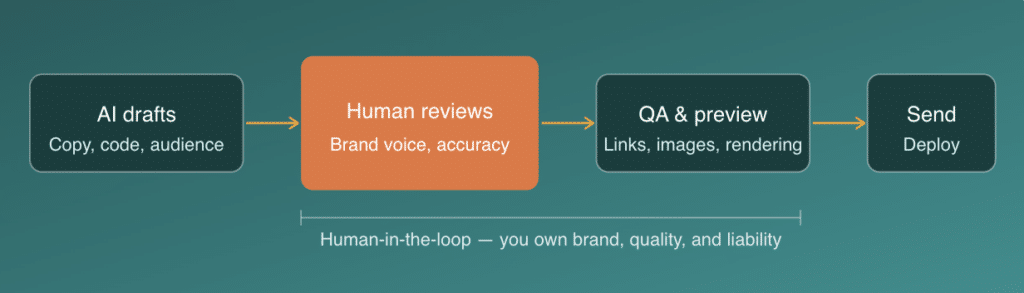
The role of the email marketer is undergoing a fundamental transformation in 2026. The shift is from being primarily a content builder or coder to becoming an orchestrator. AI is increasingly taking over the laborious, repetitive tasks: coding HTML tables, drafting initial subject lines, segmenting audiences based on complex criteria, and even interpreting campaign results. The core value of the human marketer now lies in their ability to strategically manage, refine, and quality-assure AI output.
This necessitates a “human-in-the-loop” approach, where AI generates initial drafts or performs analytical tasks, but a human expert reviews, edits, and approves the final output. Studies indicate that content generated with a human-in-the-loop approach often achieves 40% higher quality than purely automated content, largely due to the human’s ability to ensure brand consistency, detect “hallucinations” (AI generating false information), and inject genuine empathy and nuance. Drew Price, Co-Founder at JRNY PPL, encapsulates this shift: “We’ve been playing checkers for too long and not enough chess. Looking at things more holistically and diversifying our investments with automation will go a long way. There’s just a bit of a mindset shift that we need to do.” The orchestrator’s primary job becomes quality assurance: rigorously reviewing AI-generated content in email rendering previews, flagging issues for stakeholders, and meticulously checking all links and images. The mantra becomes: delegate labor, never liability.
AI Beyond Copy: Elevating the Customer Journey
While written content remains the most popular generative AI output for marketers, its potential extends far beyond text generation. In 2026, AI is being strategically deployed to enhance the entire customer experience, especially as subscribers grow more skeptical of generic AI content.

- Dynamic Content Personalization: AI-powered engines analyze user data in real-time to dynamically populate email templates with personalized product recommendations, relevant articles, or localized offers, ensuring each subscriber receives a uniquely tailored message.
- Predictive Send Times: AI algorithms analyze individual subscriber engagement patterns to determine the optimal time to send an email, maximizing open and click-through rates.
- Sentiment Analysis: AI can analyze customer feedback from various sources (social media, reviews, support tickets) to understand overall sentiment and tailor email responses or campaigns accordingly.
- Automated A/B Testing & Optimization: AI can autonomously run thousands of A/B tests on subject lines, body copy, calls-to-action, and layouts, rapidly identifying the most effective combinations for different audience segments.
- Image and Video Generation: Advanced AI tools can generate custom images, illustrations, or even short video clips that align with campaign themes and brand guidelines, reducing reliance on stock assets.
- Audience Segmentation & Targeting: AI can identify subtle patterns in customer data to create highly granular and effective audience segments that might be missed by manual analysis.
- Deliverability Monitoring & Anomaly Detection: AI algorithms can continuously monitor email deliverability metrics, identifying unusual drops in engagement or increases in bounces that could signal emerging issues with sender reputation or inbox placement.
The key is always to edit and refine AI outputs to ensure they maintain a human feel and align perfectly with the brand’s unique voice and values.
Strategic Investment in Specialized Tools and Automation
The increasing complexity of email marketing necessitates strategic investments in specialized design and automation tools. Having a dedicated email designer on the team, equipped with the right technological infrastructure, is no longer a luxury but a necessity. As email matures into a sophisticated medium with consistently high ROI, specialization becomes paramount.
Marketing teams must critically evaluate their existing automation tools, shifting from a reactive “checkers” mindset to a proactive “chess” strategy, as Drew Price suggests. This means diversifying investments in automation across the entire customer lifecycle. To accelerate design and development workflows, the adoption of modular email building tools, robust template libraries, and reusable HTML modules is crucial. AI-powered design tools can further streamline the process by generating layout and style variants, freeing designers for more strategic tasks. For addressing lifecycle gaps, leaning heavily on automated campaigns ensures continuous engagement without constant manual intervention, as a single well-crafted automated email can significantly outperform numerous one-off sends.
Furthermore, efficient data management remains a persistent challenge that will only intensify with the rising demand for deeper personalization. Integrating the email platform with CRM systems, CDPs, analytics tools, and marketing automation platforms unlocks richer insights, enables more precise personalization, and provides clearer attribution of results. Even without a fully integrated tech stack, leveraging signup forms, preference centers, and in-email polls can effectively surface valuable zero-party data. Tools like Validity’s BriteVerify are essential for validating email addresses at the point of entry, safeguarding sender reputation from soft bounces and invalid addresses. The focus then narrows to specific customer and prospect segments:
- Customers purchasing across multiple categories: Tailored gift guides or invitations to in-store events.
- Customers purchasing one product but not a second: Targeted product recommendations based on their initial purchase.
- Superfans (3+ purchases): Requests for reviews, social media shoutouts, or exclusive early access to new products.
- Prospects browsing in the last 24 hours: “Back in stock” alerts or “get it before it’s gone” urgency campaigns.
- Prospects with no engagement in 30+ days: Strategic re-engagement campaigns.
- Prospects close to purchase: Abandoned cart or abandoned browsing reminders.
Accessibility and Inclusivity: A Legal and Ethical Imperative

Optimizing emails for accessibility and inclusivity has transitioned from a best practice to a legal requirement under frameworks like the European Accessibility Act and similar legislation globally. Beyond legal compliance, it is fundamentally the right thing to do, ensuring that email content is consumable by the broadest possible audience, including individuals with disabilities. Key best practices in 2026 include:
- Semantic HTML: Using proper HTML tags (e.g.,
<p>,<h1>,<ul>) to define content structure rather than relying solely on visual styling. - High Contrast Ratios: Ensuring sufficient contrast between text and background colors for readability, especially for users with visual impairments.
- Descriptive Alt Text: Providing concise and informative
altattributes for all images, allowing screen readers to convey visual information. - Clear and Concise Language: Avoiding jargon, using simple sentence structures, and maintaining a logical flow.
- Keyboard Navigability: Ensuring all interactive elements (links, buttons) are accessible and usable via keyboard navigation alone.
- Proper Link Text: Using descriptive link text instead of generic “click here.”
- Avoid Flashing Content: Minimizing elements that could trigger seizures or discomfort.
Robust pre-send testing is critical. While many Email Service Providers (ESPs) offer basic checks, specialized tools like Litmus provide comprehensive accessibility testing features, including visual impairment filters, automated checks for alt text, text justification, table roles, and crucial NVDA screen reader previews. Reviewing content against these criteria before hitting send ensures maximum impact and legal compliance.
The Future of Email in 2026: A Blend of Efficiency and Humanity
The roadmap for email marketing in 2026 is an intricate tapestry woven with threads of efficiency and humanity. While the industry continues to explore and harness the power of automation and AI to accelerate workflows and optimize campaigns, a parallel and equally critical imperative is to re-humanize messages. This involves prioritizing genuinely personalized emails that resonate with individual subscribers, fostering trust through transparent data practices, and championing accessibility to ensure inclusivity. The modern email marketer is challenged to master both the technological prowess of AI-driven tools and the nuanced art of human connection. The future of the inbox is one where strategic automation serves to amplify authentic engagement, striking a delicate balance between machine intelligence and empathetic communication. This era demands adaptability, strategic foresight, and an unwavering commitment to the subscriber experience, reaffirming email’s enduring power as a direct, personal, and highly effective communication channel.









