
 rifanmuazin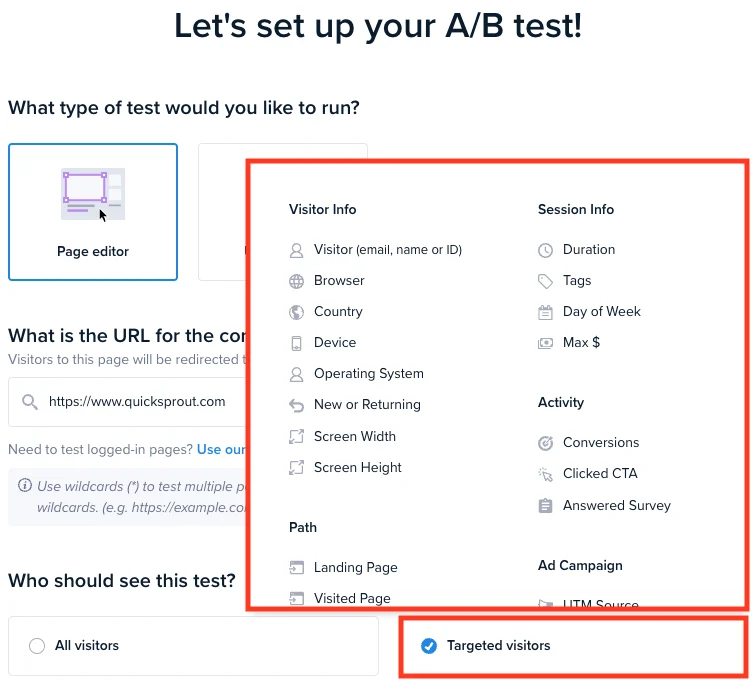
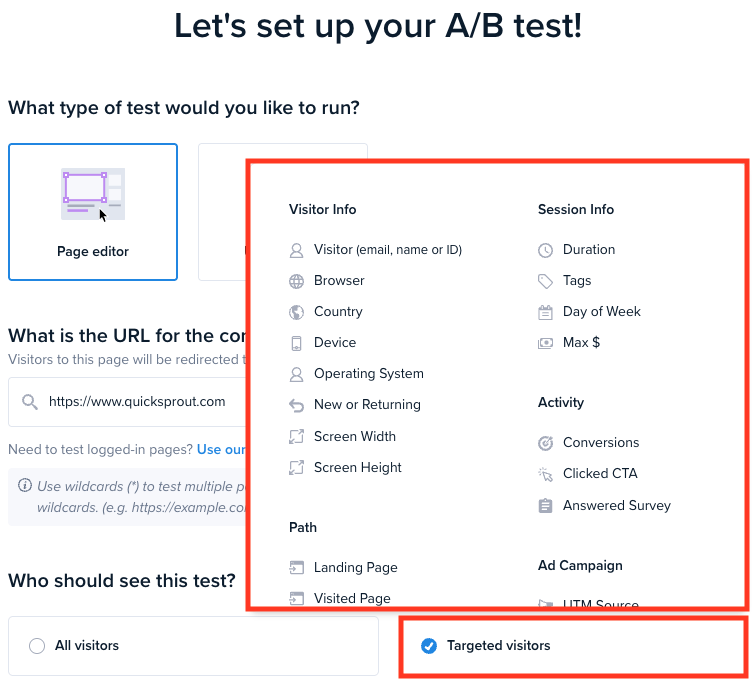
The digital optimization landscape has reached a significant milestone as Crazy Egg, a pioneer in heatmapping and conversion rate optimization (CRO) technology, officially announced the rollout of advanced audience segmentation for its A/B testing suite. This update allows digital marketers, UX designers, and growth leads to move beyond broad-spectrum testing, enabling them to deliver highly specific website variations to visitors based on their device type, geographical location, specific advertising campaigns, and position within the conversion funnel.
The introduction of these granular targeting capabilities marks a strategic shift for Crazy Egg, which has spent nearly two decades evolving from a specialized visualization tool into a comprehensive platform for behavioral analytics and experimentation. By allowing users to isolate variables such as UTM parameters and geographic data, the platform is addressing a growing demand for hyper-personalization in an increasingly fragmented digital economy.
The Evolution of Audience-Specific Experimentation
Historically, A/B testing—the practice of comparing two versions of a webpage to see which performs better—was often conducted as a “blanket” experiment. All traffic hitting a specific URL would be split 50/50 between the control and the variation. While effective for identifying broad preferences, this method often masked critical nuances in user behavior. A design that converts well for desktop users in North America might fail significantly for mobile users in Southeast Asia.
With the latest update, Crazy Egg users can now refine their experimental parameters. The platform’s Page Editor and URL Redirect tools have been augmented with a targeting layer that filters traffic before the experiment even triggers. This ensures that the data collected is not only more accurate but also more actionable for specific business units, such as regional marketing teams or mobile app developers.
Technical Breakdown: Targeting Parameters and Functionality
The new targeting suite is categorized into several key dimensions, designed to align with standard marketing technology (MarTech) stacks and data collection practices.
1. Device-Based Segmentation
The disparity between mobile and desktop user intent is well-documented. According to recent industry data, while mobile devices account for over 55% of global web traffic, conversion rates on desktop remain significantly higher in many sectors, particularly B2B SaaS and high-ticket e-commerce. By targeting A/B tests by device, Crazy Egg users can optimize specific mobile layouts—such as “sticky” call-to-action buttons or simplified navigation menus—without affecting the desktop experience.
2. Geographic and Regional Targeting
Global brands often face the challenge of cultural and economic variance. A “Free Shipping” offer might be a powerful motivator in the United States but irrelevant in a country where the brand does not have a local distribution center. The new targeting options allow for country-level segmentation, enabling brands to test localized copy, currency displays, and region-specific social proof.
3. Ad Campaign and UTM Integration
One of the most powerful features of the update is the ability to target visitors based on specific advertising campaigns. By leveraging UTM (Urgency Tracking Module) parameters, marketers can ensure that the “scent” of an ad is maintained through the landing page. For example, a visitor clicking an Instagram ad for “Summer Discounts” can be automatically funneled into an A/B test that focuses on discount-oriented messaging, while a visitor from an organic search result sees a more brand-focused variation.
4. Funnel Stage and Behavioral History
The update also facilitates targeting based on where a visitor is in their journey. New visitors might require more educational content and trust signals, whereas returning visitors might be better served by a direct path to checkout or a “Welcome Back” promotion. This level of segmentation allows for a more sophisticated “if-this-then-that” logic in web design.
Strategic Context: The Post-Google Optimize Era
The timing of Crazy Egg’s expansion into advanced targeting is notable within the broader context of the CRO industry. Following the sunsetting of Google Optimize in late 2023, a significant vacuum was created in the market. Thousands of businesses were forced to migrate their experimentation programs to new platforms.
While enterprise-level tools like Optimizely and VWO offer deep segmentation, they often come with price tags that are prohibitive for small to mid-sized enterprises (SMEs). Crazy Egg appears to be positioning itself as the high-utility, accessible alternative. By integrating these “pro-level” targeting features into its existing ecosystem, the company is bridging the gap between basic heatmapping and enterprise-grade experimentation.
Chronology of Platform Development
The rollout of targeted A/B testing is the culmination of a multi-year development roadmap led by Stephen Ngo, Director of Growth Marketing at Crazy Egg, and the platform’s engineering team.
- 2005-2015: Crazy Egg establishes market dominance in visual analytics, focusing on Heatmaps, Scrollmaps, and Confetti reports.
- 2016-2020: The platform introduces basic A/B testing and a “Page Editor” that allows non-technical users to modify CSS and HTML elements without developer intervention.
- 2021-2023: Enhancement of the multi-armed bandit (MAB) algorithms, which automatically shift traffic to winning variations to minimize “regret” or lost conversions during a test.
- 2024-Present: The launch of Audience Segment Targeting, moving the platform into the realm of website personalization.
Data-Driven Insights: Why Segmentation Matters
Industry benchmarks suggest that personalized web experiences can lead to a 15% to 20% increase in total sales. Furthermore, a study by Boston Consulting Group (BCG) indicated that brands that create personalized experiences by integrating advanced technologies and proprietary data for customers are seeing revenue increase by 6% to 10%—two to three times faster than those that do not.
In the context of A/B testing, segmentation reduces “noise.” When a test is run on a general audience, the “winning” version is merely the one that appealed to the largest average group. This often ignores significant “micro-wins” within sub-segments. For instance, a variation might lose by 5% overall but win by 25% among mobile users in the UK. Without targeting and segmentation, that 25% lift would be discarded as a “failed” test. Crazy Egg’s update allows marketers to capture and implement those specific wins.
Operational Implementation and User Experience
The workflow for launching a targeted test in Crazy Egg has been designed to remain consistent with the platform’s emphasis on ease of use. Users begin by selecting their experiment type—either the “Page Editor” for on-page visual changes or “URL Redirect” for split-testing two entirely different pages.
Once the variations are created, a new “Targeting” step appears in the setup wizard. Here, users can toggle specific audience filters. The platform’s backend then handles the logic of identifying incoming traffic through browser headers (for device data), IP lookups (for geographic data), and URL parsing (for UTM and campaign data).
For organizations on “Plus” or “Pro” plans, the full suite of targeting options is available, though some advanced integrations may require a consultation with the company’s growth team to ensure proper data mapping.
Industry Reactions and Potential Implications
Market analysts suggest that this move will likely force other mid-market CRO tools to accelerate their own feature releases. As privacy regulations like GDPR and CCPA continue to evolve, the ability to target based on non-PII (Personally Identifiable Information) data—such as device type and campaign source—becomes more valuable than traditional cookie-based tracking.
“The shift toward segment-based testing is a response to the ‘death of the average user,'” says one digital strategy consultant. “In 2026, there is no such thing as a ‘standard’ visitor. There is only a mobile visitor from London who clicked a TikTok ad, or a desktop visitor from Tokyo who came via an organic search for a specific SKU. Crazy Egg is giving marketers the tools to speak to those two people differently.”
Broader Impact on Digital Marketing Strategy
The implications of this update extend beyond simple conversion lifts. It allows for a more cohesive alignment between the “Pre-Click” experience (the advertisement) and the “Post-Click” experience (the website).
When a marketing team spends thousands of dollars on a localized ad campaign in a specific country, they want to ensure that the landing page reflects that local context. Previously, this required creating dozens of separate landing pages manually—a process known as “landing page sprawl.” With targeted A/B testing, a single URL can serve different variations to different people dynamically, significantly reducing the operational overhead for creative and web teams.
Furthermore, this update supports the “test and learn” culture that is essential for modern business agility. By lowering the technical barrier to sophisticated audience targeting, Crazy Egg is enabling smaller teams to run the kind of high-velocity experimentation programs that were previously the exclusive domain of tech giants like Amazon or Netflix.
Conclusion and Future Outlook
As Crazy Egg continues to roll out these features to its global user base, the focus will likely shift toward automation. Industry observers expect the next phase of development to involve machine learning integrations that can automatically suggest which audience segments should be targeted based on historical heatmap data.
For now, the ability to target A/B tests by device, country, and ad campaign represents a significant leap forward for the platform. It provides the granularity required for modern digital commerce while maintaining the simplicity that has been Crazy Egg’s hallmark for nearly two decades. As the digital landscape becomes increasingly competitive, the winner of the “conversion wars” will likely be the brand that understands its audience segments most intimately and responds to their unique needs with the greatest precision.








