

For content creators and digital marketers, understanding the intricate mechanisms that govern Google’s search engine results has become a paramount concern. What began as a relatively simple algorithm, primarily focused on matching search queries to keywords embedded within web documents, has undergone a profound transformation. This early paradigm, which gave birth to the foundational practice of keyword research and optimization, is now largely insufficient for achieving prominent rankings in an increasingly sophisticated search landscape. While many publishers continue to anchor their strategies in these traditional methods, Google’s capabilities have advanced significantly, moving far beyond mere lexical matching to a deep understanding of search intent, contextual relevance, and, critically, content quality.
The journey to teach a machine to discern “high-quality” content has been a complex and protracted one. The inherent subjectivity of “quality,” which can vary dramatically based on an individual searcher’s unique needs and context, presented a formidable challenge. It was this challenge that catalyzed the development and refinement of the E-E-A-T framework: Experience, Expertise, Authoritativeness, and Trustworthiness. This framework, first introduced as E-A-T and later expanded to include “Experience,” serves as a cornerstone for how human quality raters assess search results, thereby providing invaluable feedback that continually educates and refines Google’s algorithms.
The Genesis and Evolution of E-E-A-T
The concept of E-E-A-T is meticulously detailed within Google’s “Search Quality Raters’ Guidelines,” an extensive document utilized by a global network of over 10,000 human evaluators. These raters manually review and score web pages based on a comprehensive set of criteria, with their assessments directly influencing the machine learning models that determine search rankings. The initial E-A-T framework—Expertise, Authoritativeness, and Trustworthiness—has been a guiding principle for many years, first gaining widespread recognition in the SEO community almost a decade ago. A significant update occurred with the addition of the “Experience” component, formally integrated into the guidelines in late 2022. This addition underscored Google’s increased emphasis on first-hand knowledge and practical application, recognizing that lived experience can be as valuable as formal expertise, particularly for certain types of content.
E-E-A-T is not merely an abstract concept; it is a critical lens through which Google evaluates both the website hosting the content and the individual or entity responsible for its creation. This dual focus is crucial, as a reputable website can enhance the perceived E-E-A-T of its contributors, just as a highly credible author can elevate the standing of the platform they publish on. The human quality raters are trained to consider these interconnected elements, providing nuanced feedback that helps the algorithm understand the holistic value and credibility of a piece of content.
Deconstructing E-E-A-T: What Each Element Signifies
- Experience: This latest addition emphasizes the importance of direct, first-hand engagement with the topic. For example, a product review written by someone who has personally used and tested the product, or travel advice from someone who has actually visited the destination, demonstrates a level of experience that generic content cannot replicate. This dimension acknowledges that practical knowledge often provides unique insights and perspectives.
- Expertise: This refers to the skill and knowledge of the content creator in a particular field. While formal qualifications (e.g., a medical degree for health advice) are often strong indicators, expertise can also be demonstrated through extensive practical knowledge, proven abilities, or a long track record of accurate and insightful contributions within a specific niche.
- Authoritativeness: This relates to the recognition and reputation of the content creator and the website as a trusted source within their industry or topic area. It’s about being seen as a “go-to” source by others—experts, institutions, and the general public. Citations, links from reputable sources, mentions, and industry awards can all contribute to authoritativeness.
- Trustworthiness: This is arguably the most fundamental component, encompassing the honesty, accuracy, and reliability of the content and its creators. Users must feel confident that the information provided is truthful, unbiased, and safe. Clear privacy policies, secure websites, transparent authorship, and verifiable facts are all crucial for establishing trustworthiness. For transactional sites, secure payment gateways and clear customer service information are also vital.
The Criticality of E-E-A-T for YMYL Topics
The importance of high E-E-A-T is not uniformly applied across all content types. It becomes exceptionally critical for what Google classifies as “Your Money Your Life” (YMYL) topics. These are subjects where inaccurate, misleading, or low-quality information could have significant negative impacts on a person’s health, financial stability, safety, or well-being. Examples of YMYL topics include:
- Medical, Health, and Science-Related Topics: Content in this domain requires demonstrable expertise from qualified professionals such as doctors, scientists, or reliance on established scientific publications and research. Misinformation in this area can have dire consequences.
- Financial and Legal Advice: Information pertaining to investments, taxes, loans, legal rights, or regulatory compliance demands professional sources like certified accountants, qualified lawyers, or official governmental and regulatory organizations.
- News Reporting and Current Events: For news articles, high E-E-A-T mandates accurate, fact-checked information, presented by experienced journalists and reputable news organizations, often requiring multiple credible sources and clear editorial standards.
- Civic Information (Voting, Legislation, Public Policy): Content related to governmental processes, elections, public policy, or social services must originate from or be extensively supported by official government sources or highly reputable, non-partisan civic organizations.
- Topics Related to Children: Any advice or information concerning children, especially regarding their safety, health, or development, requires exceptionally reliable and trustworthy sources to ensure their protection.
- Product Reviews: While less formally regulated than YMYL, product reviews benefit greatly from first-hand experience with the product, coupled with transparent methodologies if third-party reviews are aggregated. This demonstrates the “Experience” aspect of E-E-A-T.
It is noteworthy that Google’s guidelines acknowledge that a lack of widespread reputation does not automatically equate to low E-E-A-T. Many small websites or individual creators may not have extensive public profiles but can still produce exceptionally high-quality, experienced-based content. In such cases, genuine first-hand experience and demonstrable expertise can outweigh a lack of broad public recognition, especially in niche fields.
Strategies for Elevating Content E-E-A-T
The shift in Google’s ranking philosophy necessitates a fundamental reorientation of content strategy. The era of “keyword stuffing” and superficial optimization tactics is definitively over. Success in today’s search environment hinges on perfecting content in accordance with the E-E-A-T framework, prioritizing user needs and genuine value.
1. Learn from Exemplary Content
To create high-E-E-A-T content, one must first understand what successful content looks like. Analyzing top-performing articles within a given niche offers invaluable insights:
- Shares and Engagement: Tools that analyze social shares and engagement metrics across the web can reveal which headlines, angles, and content formats resonate most deeply with audiences. For instance, if aiming to establish expertise in “Social Media Marketing,” analyzing widely shared articles can inform effective content creation.
- Links: Examining content that garners numerous inbound links provides a strong indication of authoritativeness and utility. Content that is frequently referenced by other credible sources is a powerful signal of its value.
- Evergreen Visibility: Identifying content that maintains high social engagement and search visibility over extended periods (an “evergreen score”) helps pinpoint topics and formats with lasting appeal and intrinsic value, signifying quality that stands the test of time.
- SERP Rankings: Direct analysis of top-ranking content in Google’s Search Engine Results Pages (SERPs) for target keywords and topics offers immediate competitive intelligence. Understanding the depth, scope, and presentation of these articles provides a benchmark for what Google currently favors.
By dissecting these successful examples, content creators can glean crucial lessons regarding content structure, depth of research, tone, and audience appeal, feeding these insights into their own content planning.
2. Cultivate and Project Authority
Google’s quality raters are explicitly instructed to investigate the author of a page to ascertain their topical authority. While not always a strict prerequisite, establishing clear expertise and authoritativeness is a significant advantage. Building niche authority is a long-term endeavor that yields substantial benefits, including improved rankings for associated content.
- Demonstrate Expertise: Actively participate in your niche through publishing, speaking engagements, interviews, and podcasts. Tools can help identify publications and podcasts that feature experts in your field, providing opportunities for visibility.
- Monitor and Learn from Established Authorities: Follow and analyze the content strategies of recognized leaders and influential voices in your niche. This provides a blueprint for what constitutes high-E-E-A-T content within your industry.
- Implement Schema Markup: Utilize Organization and Author schema markup to provide structured data to Google about your brand and content creators. This helps search engines understand the entities behind the content and their relationships. Platforms like WordPress offer plugins to easily add author information boxes, enhancing visibility of the person behind each article.
- Consolidate Online Presence: Create a unified online profile (e.g., using platforms like Linktree or Beacons.ai) that links to all your professional channels, publications, and social media profiles. This reinforces your identity as a multi-faceted authority.
- Craft Informative Bylines: Ensure all your bylines and social media bios clearly state your qualifications, experience, and achievements relevant to your content topics. This immediately establishes credibility for both human readers and search engines.
3. Embrace Topic-Centric Content Strategies
Given Google’s advanced understanding of topics and entities over singular keywords, a topic-centric approach to content planning is essential. This involves moving beyond individual keywords to create comprehensive “topic clusters” around “pillar content.”
- Pillar Content and Topic Clusters: Identify broad, foundational topics (pillar content) that are central to your niche. Then, create numerous supporting articles (cluster content) that delve into specific sub-topics and link back to the main pillar page. This interconnected structure demonstrates comprehensive coverage and deep understanding of a subject area. For example, “Content Marketing” could be a pillar, supported by cluster articles on “Blogging Strategies,” “SEO Writing,” and “Email Marketing.”
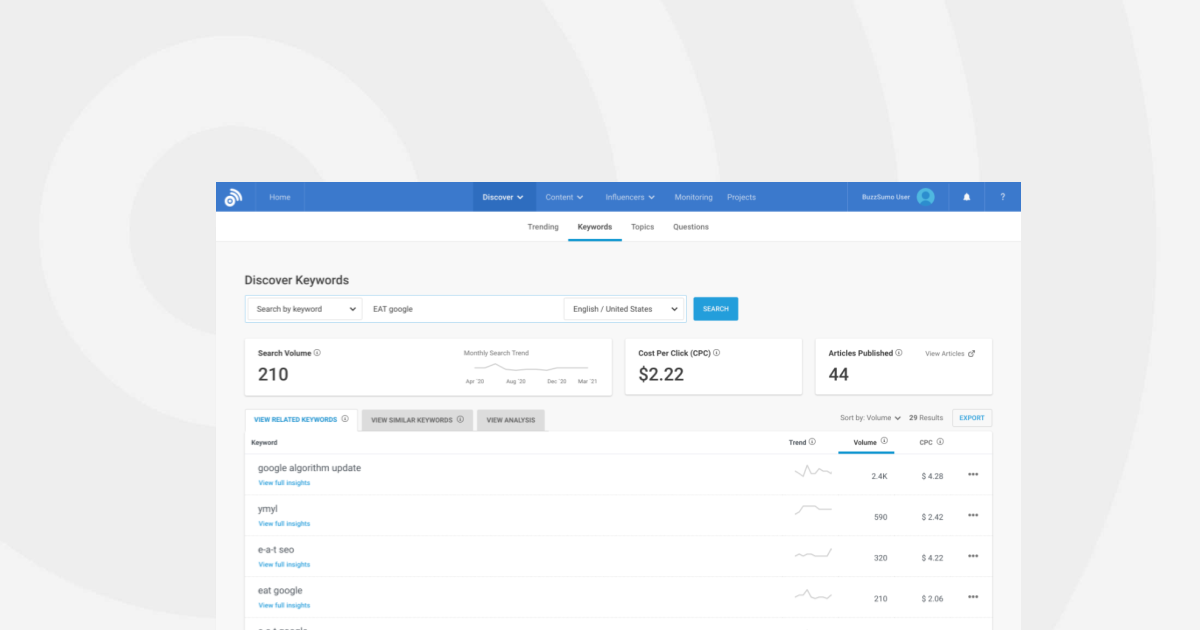
- Leverage Topic Explorer Tools: Utilize content analysis tools to identify popular associated topics and sub-topics related to your core keywords. This provides data-driven insights into what your audience genuinely seeks, allowing you to prioritize relevant content creation. This approach aligns content with user intent and enhances its favorability in Google’s eyes.
4. Create a “Satisfying” Volume of Content
Google emphasizes a “satisfying amount” of content, but this quantity is entirely dependent on the search intent, topic, and purpose of the page. There is no one-size-fits-all word count.
- Analyze Content Length vs. Engagement: Use analytics tools to examine the average engagement levels for articles of varying lengths within your specific topic. This data can reveal an optimal word count range. For instance, an analysis of “Social Media Marketing” articles might suggest that comprehensive guides between 3,000 and 10,000 words tend to generate the highest engagement, indicating that a thorough treatment is desired for this topic.
- Match Intent: For quick answers, concise content is satisfying. For complex topics, in-depth, well-researched articles are necessary to fully address user queries. The goal is to provide enough information to comprehensively satisfy the user’s intent without unnecessary verbosity.
5. Cultivate Strategic Relationships
Beyond technical SEO, genuine relationships play an increasingly significant role in E-E-A-T. Google’s algorithms, informed by quality rater feedback, consider who your brand and content are associated with.
- Identify Influential Voices: Utilize media databases and research tools to identify credible authors, journalists, and publications that are highly influential in your niche.
- Build Authentic Connections: Focus on building genuine relationships with these influential figures. Instead of merely seeking links, engage with their work, offer relevant insights, and propose collaborations or exclusive content. The maxim “Mates First, Links Later” highlights the importance of fostering rapport.
- Semantic Understanding: Even without direct hyperlinks, Google’s advanced semantic understanding can recognize if your brand, as an entity, is consistently mentioned or associated with other authoritative entities (influential people or brands) within your industry. This network of associations acts as a powerful E-E-A-T signal.
6. Provide Credible and Diverse Sources
The practice of citing sources is paramount for demonstrating trustworthiness, thorough research, and an unbiased approach. This is particularly crucial for YMYL topics.
- Prioritize Official Sources: Always reference official sources for data, statistics, recommendations, or factual claims. For instance, when discussing public health, citing government health organizations (e.g., using
SITE:GOVin Google searches) signals adherence to authoritative information. - Variety of Sources: Include a diverse range of reputable sources—academic papers, industry reports, expert interviews, and established news outlets. This demonstrates a comprehensive and balanced perspective.
- Transparency: Clearly link out to your sources. While some might worry about directing traffic away, it reinforces credibility and allows users to verify information, ultimately building trust.
The Broader Implications for Content Marketing
Google’s continuous advancements, driven by artificial intelligence and machine learning, mean its ability to understand content is rapidly approaching human-like comprehension. This evolution mandates that content marketers and SEO professionals fundamentally shift their focus from attempting to “game” algorithms to genuinely serving their audience.
The future of content optimization is intertwined with the principles of E-E-A-T. Success will be measured not by keyword density or backlink count alone, but by the demonstrable experience, expertise, authoritativeness, and trustworthiness embedded within every piece of content. Regular self-assessment of one’s content strategy against these principles is a logical and necessary first step. By prioritizing the creation of truly valuable, credible, and user-centric content, publishers can align themselves with Google’s sophisticated intelligence and secure their position in the evolving digital landscape.








