A significant push by major technology companies to establish artificial intelligence-powered glasses as the next transformative consumer innovation is confronting substantial headwinds. A growing chorus of negative consumer feedback, primarily centered on profound privacy concerns and questions regarding functional wearability, now threatens to derail the ambitious trajectory of this nascent market segment. This resistance mirrors historical struggles faced by similar pioneering wearable technologies and highlights a critical juncture for an industry banking on AI integration to redefine daily interactions.
Privacy Concerns Take Center Stage with Meta AI Glasses
At the forefront of these challenges is Meta, whose AI glasses have been embroiled in a series of controversies since their rebranding and enhanced AI capabilities. The core issue revolves around the devices’ recording capabilities and the potential for surreptitious capture of private moments.
One of the most alarming revelations surfaced recently when Meta was compelled to issue an update for its Meta AI glasses. This action followed widespread reports indicating that some users were actively seeking and paying hackers to tamper with the devices, specifically to disable or remove the recording indicator lights. The motivation behind such actions was clear: to allow wearers to record video and audio through their glasses without the knowledge or consent of those around them, effectively transforming a personal device into a covert surveillance tool. This incident underscored a profound vulnerability in the product’s design and raised serious ethical questions about user intent and the responsibility of the manufacturer.
This is not an isolated incident for Meta. The company has grappled with privacy issues surrounding the recording capacity of its AI glasses since their earlier iteration. Reports, including those from Wired, have highlighted a concerning rise in "Meta Ray-Ban creeps"—individuals who exploit the glasses to record others without explicit consent or even awareness. This practice has led to countless hours of potentially sensitive content being fed back into Meta’s extensive data systems, prompting a broader debate about data collection, user privacy, and the boundaries of acceptable public recording.
Further escalating the privacy crisis, UK regulators initiated a formal investigation in March following disturbing reports. These allegations, first brought to light by the Swedish publication Svenska Dagbladet, claimed that Meta’s content review contractors were exposed to and watching highly intimate footage captured by users through their glasses. This footage reportedly included deeply personal moments such as "bathroom visits, sex, and other intimate moments," exposing a significant breach of user trust and a potential failure in safeguarding sensitive data. The investigation signals a serious regulatory concern about the handling of private user content and the extent of human oversight in AI-driven data processing.
Escalating Features and Further Worries
Despite these mounting privacy concerns and regulatory scrutiny, Meta has signaled its intent to push ahead with even more potentially invasive features, indicating a firm commitment to its long-term vision for AI glasses.
According to The Financial Times, Meta is actively experimenting with advanced versions of its AI glasses that would possess the capability to record user actions continuously, 24/7. Critically, these experimental devices might operate without any visible recording indicators, exacerbating the already prevalent privacy fears. The stated purpose of this continuous recording is to feed users’ daily activities into a personalized AI training system, ostensibly to enhance the device’s utility as an always-on AI assistant. However, privacy advocates warn that such ubiquitous, unindicated recording would constitute an unprecedented level of surveillance, blurring the lines between personal data collection and intrusive monitoring.
Adding another layer of concern, Meta’s Chief Technology Officer has confirmed that the company is exploring the integration of facial identification technology into its AI glasses. While proponents might argue for potential benefits like personalized interactions or enhanced security, critics immediately point to the profound implications for public anonymity and the potential for misuse as a widespread surveillance tool. The prospect of an AI-powered device capable of identifying individuals in real-time, potentially without their consent, ignites fears of a "panopticon" society where privacy is fundamentally eroded.
Public and Celebrity Backlash: The "Pervert Glasses" Stigma
The accumulation of these privacy controversies and the specter of ever more intrusive features are beginning to manifest in a tangible shift in public perception and device sales. While sales of Meta AI glasses did experience a significant surge—reportedly tripling in 2025 following their rebranding and the addition of new AI features—the growing storm of negative sentiment now threatens to undermine this commercial success.
The backlash is becoming increasingly visible, even attracting the attention of cultural influencers. Pop singer Lorde, for instance, publicly voiced her concerns at Madrid’s Mad Cool festival, telling the crowd that the proliferation of AI glasses was making it increasingly difficult to discern when she was being recorded. "Don’t get the glasses," Lorde reportedly advised, adding a dismissive "Not sexy." While the comments of a single musician might seem anecdotal, they often serve as a bellwether for broader cultural shifts. In the highly image-conscious world of consumer technology, a device being labeled "not sexy" or "uncool" can be a death knell.
Indeed, reports from outlets like Engadget suggest that Meta’s glasses are quickly acquiring a derogatory moniker: "pervert glasses." This pejorative term is not merely casual slang; it reflects a deep-seated public discomfort and distrust. The stigma is so profound that some users are reportedly ashamed to wear their AI glasses in public, fearing negative judgment and social ostracism. This social backlash, if it intensifies, could severely restrict the product’s market viability, regardless of its technological prowess. The "uncool" factor proved a significant hurdle for Google Glass and appears poised to do the same for the current generation of smart glasses.
Historical Precedents: The Ghost of Google Glass
The current predicament faced by Meta and other smart glasses manufacturers bears striking resemblances to the ill-fated consumer launch of Google Glass. In 2015, Google discontinued consumer sales of its pioneering augmented reality device after a mere two years on the market. The failure of Google Glass was multifaceted, stemming partly from hardware limitations, a prohibitive price tag of $1,500, and a general lack of compelling functionality beyond early adopter novelty.
However, a pivotal factor in its demise was the profound social stigma that quickly attached itself to the device. The distinctive, somewhat conspicuous look of Google Glass, combined with its overt camera, led to wearers being dubbed "Glassholes." This term encapsulated the public’s discomfort with being potentially recorded without consent and the perceived arrogance of early adopters. Google Glass devices were swiftly banned from numerous public and private spaces, including bars, movie theaters, and casinos, precisely because of their recording capabilities. The public backlash and the resulting restrictions severely limited the device’s utility and desirability, ultimately leading to its withdrawal from the consumer market.
The parallels to the current situation with Meta AI glasses are undeniable and ominous. The "pervert glasses" label, the celebrity admonishments, and the emerging bans all echo the trajectory of Google Glass. This historical context provides a stark warning: technological innovation, no matter how advanced, cannot succeed if it fails to address fundamental societal concerns around privacy, consent, and social acceptability.
Wearability and Design Flaws: Snapchat’s Misstep
Beyond privacy and social stigma, the fundamental issue of wearability and aesthetic design continues to plague the smart glasses segment. Snapchat’s forthcoming AR Specs provide a recent, illustrative example of how design choices can undermine even advanced functionality.
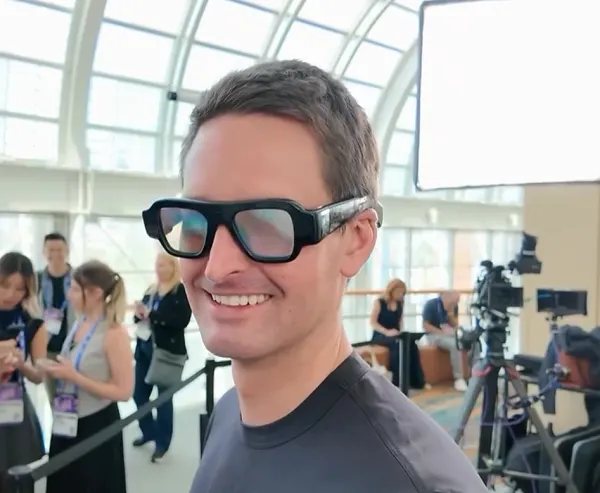
Previewed at a recent launch event, Snapchat’s AR Specs immediately drew widespread criticism for their unusually large and cumbersome design. An image featuring company CEO Evan Spiegel modeling the glasses became a focal point of discussion, with many reports highlighting Spiegel’s visibly folded ear under the weight of the enormous frames. This instantly sparked questions about comfort, practicality, and, crucially, fashion.
The market’s lukewarm reception to the design suggests that even expanded functionality—which these AR Specs promise—may not be enough to overcome a significant "lack of cool factor." Despite Snap’s efforts to collaborate with various celebrities to promote the offering, market demand is likely to be muted, especially given the hefty $2,000 price tag per pair. This reinforces the lesson Google learned: for a wearable device intended for everyday use, aesthetics and comfort are not secondary considerations; they are foundational to mass adoption. If a product is perceived as awkward or unattractive, its advanced features may never reach a broad audience.
Regulatory Scrutiny and Bans: A Widening Net
The regulatory landscape is rapidly responding to the growing privacy concerns surrounding AI glasses. The UK investigation into Meta’s content review practices is merely one piece of a potentially much larger puzzle. Jurisdictions are beginning to implement outright bans on these devices in sensitive environments, further restricting their utility and public acceptance.
A significant development occurred recently when the New York Office of Court Administration announced a comprehensive ban on all camera-equipped glasses from all courtrooms, effective this month. As reported by syracuse.com, this move is expected to be the first of many such restrictions across various jurisdictions. The rationale is clear: to protect the integrity of legal proceedings, the privacy of participants, and the security of sensitive information, recording devices—especially those that can operate subtly—cannot be permitted.
Such bans, while understandable from a security and privacy standpoint, inherently limit the "always-on" utility that tech companies envision for these devices. If users cannot wear their glasses in workplaces, schools, government buildings, or public venues like concert halls or theaters, the value proposition of a constant AI companion diminishes significantly. The more places these devices are prohibited, the less integrated they can become into daily life, which is precisely the opposite of what companies like Meta hope to achieve in their quest for glasses to supersede smartphones.
The Broader AI Ambition and Reality Check
The struggles of AI-powered glasses are not isolated; they reflect a broader challenge facing the artificial intelligence industry as a whole. Meta, in particular, has staked a substantial portion of its future on AI, viewing the technology as the catalyst for a transformative shift in human-computer interaction. The vision of AI glasses as the primary interface for an always-on AI assistant is central to this strategy, aiming to create a seamless, hands-free experience that integrates AI into every moment of daily life.
However, despite considerable investment and hype, AI tools, particularly in consumer applications, have yet to fully live up to their loftiest promises. While proving valuable in certain niche applications and backend processes, the broader consumer experience with AI has not been overwhelmingly superior.
Meta has candidly acknowledged this gap. In May, Alexandr Wang, Meta’s highest-profile AI recruit and the head of its Superintelligence unit, stated on The Core Memory podcast that while many individuals have found AI tools to be "somewhat helpful," overall user experiences "are not overwhelmingly better" as a direct result of AI implementation. Wang articulated that the onus is firmly on Meta to develop more genuinely valuable AI tools and to win over a skeptical public to improve sentiment and drive adoption. The AI glasses push is seen as a key component of this strategy, providing a persistent, ambient access point to AI.
Given the initial increase in sales following the rebranding and AI feature integration, Meta’s optimism for its glasses might seem well-placed. However, the rapidly escalating negative sentiment, fueled by privacy breaches, social stigma, and regulatory restrictions, poses a significant threat to this trajectory.
Market Outlook and Future Implications
The combined weight of negative consumer perception, critical design flaws, and expanding regulatory prohibitions could indeed sound an early death knell for the entire consumer smart glasses industry in its current iteration. This would not only dash Meta’s aspirations for glasses to eventually supersede smartphones as key connective devices but also force a significant re-evaluation of how AI-powered wearables are designed, marketed, and regulated.
The prevailing narrative surrounding AI glasses appears increasingly dominated by negative use cases—surveillance, privacy invasion, and social awkwardness—rather than their potential to overlay information, provide valuable insights, or enhance productivity. This imbalance in public perception is likely to slow take-up rates significantly. If the criticism continues to gain traction and solidify into a widespread societal rejection, many of these ambitious projects could follow Google Glass into the annals of promising but ultimately failed consumer technologies.
The implications extend beyond just hardware sales. A widespread failure of AI glasses could erode public trust in AI technologies more broadly, making it harder for companies to introduce future AI-driven products. It underscores the critical importance of ethical design, robust privacy safeguards, and transparent communication in the development of advanced technologies. The future of consumer wearables, and indeed the integration of AI into our daily lives, hinges on the industry’s ability to navigate these complex social and ethical challenges, rather than merely pushing technological boundaries. Without a fundamental shift in approach, the vision of an AI-powered future seamlessly integrated through smart glasses may remain just that: a vision, perpetually out of reach.