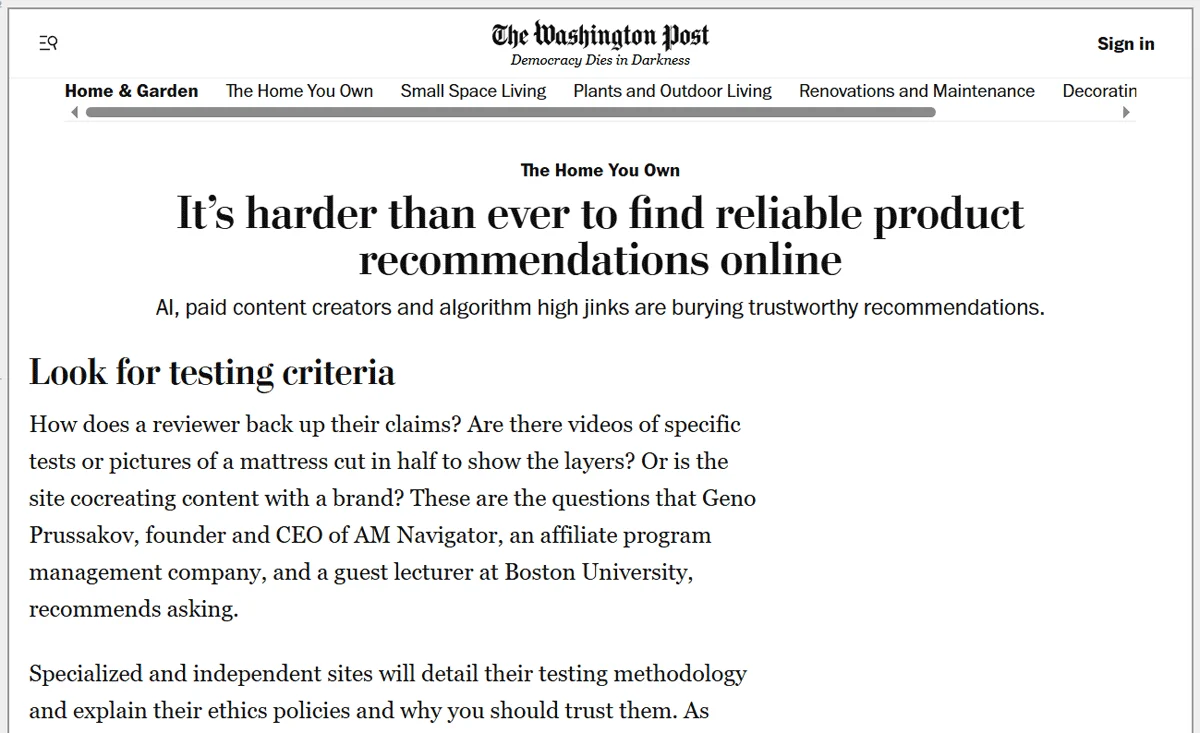
The landscape of digital publishing has undergone a fundamental transformation over the last decade, shifting from traditional advertising models to a sophisticated reliance on affiliate marketing and “commerce content.” This evolution was recently brought into sharp focus following a January 2025 inquiry by The Washington Post into the reliability of online product recommendation lists published by major media conglomerates. As digital platforms increasingly leverage their search engine authority to drive revenue through product endorsements, questions regarding the objectivity and transparency of these recommendations have become central to the discourse on consumer trust.
The intersection of editorial integrity and commercial viability represents a significant challenge for modern newsrooms. While legacy media brands possess the trust of a global audience, the financial mechanisms powering their digital survival—specifically affiliate commissions and placement fees—create a complex web of incentives that can, at times, conflict with the delivery of unbiased consumer advice.
The Chronology of Media Monetization
To understand the current state of online product recommendations, it is necessary to examine the timeline of how digital media transitioned from a service-oriented model to a commerce-driven one.
The early 2000s saw the dominance of display advertising, where publishers relied on page views and banner ads for revenue. However, with the rise of ad-blocking software and the monopolization of the digital ad market by tech giants like Google and Meta, traditional publishers faced a revenue crisis. By 2010, the “Wirecutter” model emerged, proving that rigorous, affiliate-linked product testing could be both profitable and respected.
By 2016, major media players such as The New York Times, Vox Media, and Hearst began acquiring or launching dedicated commerce divisions. The year 2020 served as a massive catalyst; the global pandemic accelerated e-commerce adoption, leading publishers to double down on “Best of” lists and product roundups to capture the surge in online shopping. By 2024 and early 2025, the industry reached a point of saturation where nearly every major news outlet, from local papers to international broadsheets, integrated affiliate links into their editorial content.
The Mechanics of Authority Monetization
Industry experts, including Geno Prussakov of AM Navigator, note that big media players have turned their “search engine authority” into a highly monetizable asset. Search engines like Google prioritize sites with high E-E-A-T scores (Experience, Expertise, Authoritativeness, and Trustworthiness). Because legacy media outlets have decades of established trust, their product recommendation lists often rank at the top of search results, regardless of whether their specific expertise lies in the product category being reviewed.
To maintain this authority while maximizing revenue, major publishers typically employ four primary strategies:
- Dedicated Commerce Teams: Unlike traditional editorial desks, these teams are specifically tasked with identifying high-intent keywords and products that carry strong affiliate potential.
- Rigorous Testing Protocols: To defend their brand reputation, many outlets invest in physical testing labs. This ensures that the “homework” is done before a product is endorsed, providing a layer of protection against accusations of low-quality “clickbait.”
- Editorial Independence Firewalls: Reputable outlets maintain a strict separation between the staff reviewing the products and the business development teams negotiating affiliate contracts.
- Transparency Disclosures: Following Federal Trade Commission (FTC) guidelines, publishers include disclosures informing readers that they may earn a commission from purchases made through their links.
Supporting Data and Market Impact
The financial stakes of these recommendations are immense. According to industry reports, the affiliate marketing industry is projected to reach an estimated value of over $15.7 billion by the end of 2024. For many high-tier publishers, commerce content now accounts for 25% to 40% of total digital revenue.

Data from consumer behavior studies indicates that approximately 76% of online shoppers seek out third-party reviews before making a purchase. Furthermore, a recommendation from a “trusted” media brand carries more weight than an Amazon user review, which is often perceived as susceptible to manipulation. This high level of trust allows media outlets to command “placement fees” or “tenancy fees,” where brands pay a flat rate just to be included in a roundup, in addition to the standard commission on sales.
The Conflict of Financial Incentives
Despite the rigorous standards many outlets claim to uphold, the financial reality often complicates the ranking process. In the affiliate ecosystem, several factors can influence which product receives the “top pick” designation:
- Commission Rates: A publisher may earn 2% on a laptop from one retailer but 8% from another. This disparity creates a natural, if unspoken, incentive to prioritize the higher-paying partner.
- Earnings Per Click (EPC) Guarantees: Some advertisers offer guarantees that ensure a publisher makes a certain amount of money for every reader who clicks a link, regardless of whether a purchase is made.
- Conversion Optimization: Products that are known to “convert” better (i.e., more people actually buy them) are often given higher placement to maximize the efficiency of the page’s traffic.
As Prussakov highlighted in his analysis, even when a media outlet does its homework, the final ranking can still be influenced by these financial arrangements. This creates a “pay-to-play” environment that can occasionally mask superior products that do not offer affiliate programs or high enough margins for the publisher.
Regulatory Responses and Consumer Safeguards
The rise of commercialized editorial content has not gone unnoticed by regulators. The FTC has progressively tightened its “Guides Concerning the Use of Endorsements and Testimonials in Advertising.” These regulations require that disclosures be “clear and conspicuous,” meaning they must be easy to see and understand, rather than buried in fine print at the bottom of a page.
In response to the potential for bias, consumer advocacy groups recommend a multi-step verification process for shoppers navigating these lists:
- Examination of Disclosures: Consumers are encouraged to look for the affiliate disclosure. Its absence on a site that clearly links to retailers is a red flag regarding the site’s transparency.
- Analysis of Testing Methodology: A trustworthy review will detail how a product was tested. If a list lacks original photography or specific data points (such as battery life or stress tests), it may be a “synthetic” review compiled from other websites rather than hands-on experience.
- Cross-Referencing Sources: Checking multiple independent outlets—such as specialized enthusiast sites alongside general news media—can reveal if a specific product is consistently praised or if its high ranking is an outlier.
- Verification via User Reviews: While individual user reviews can be faked, the aggregate sentiment on third-party forums or verified-purchase platforms often provides a reality check against polished editorial endorsements.
Broader Implications for the Information Economy
The shift toward commerce-heavy journalism has broader implications for the future of the internet. As big media outlets dominate the first page of search results for product-related queries, smaller, independent review sites often find themselves pushed out of the market. This consolidation of “review power” means that a handful of large corporations effectively act as the gatekeepers for consumer choice.
Furthermore, the reliance on affiliate revenue makes publishers vulnerable to changes in retailer policies. For instance, when Amazon significantly slashed its affiliate commission rates in 2020, many publishers saw their revenue drop overnight, highlighting the fragility of a business model built on third-party platforms.
The analysis provided by experts in the field suggests that while big media’s entry into the product recommendation space has professionalized the industry, it has also introduced a layer of commercial bias that requires a more skeptical and informed consumer base. The “homework” performed by these media giants is real, but so is the pressure to meet quarterly revenue targets through affiliate conversions.
In conclusion, the inquiry by The Washington Post and the subsequent industry discourse underscore a pivotal moment in digital media. As the line between “church and state”—editorial and advertising—continues to blur, the responsibility for discerning truth falls increasingly on the consumer. The future of digital journalism may well depend on whether publishers can maintain the delicate balance between the necessity of monetization and the sanctity of the public’s trust.