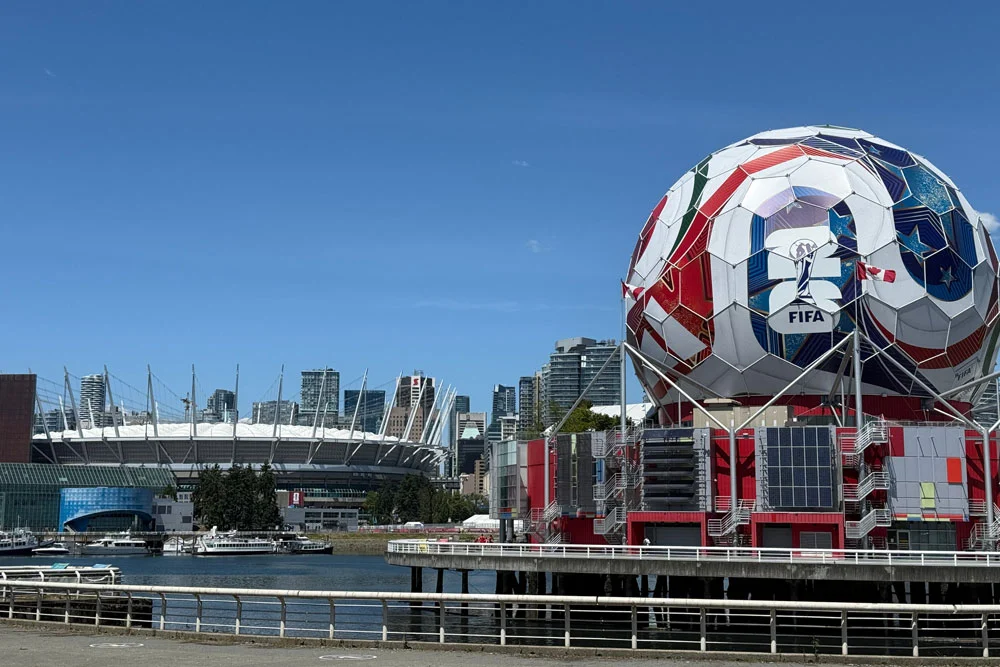
The conclusion of the FIFA World Cup 2026, a sprawling tournament hosted across Canada, Mexico, and the United States, has left an indelible mark on both the sporting world and the global business landscape. As the first iteration of the tournament to feature 48 teams, the event provided a massive dataset on performance, strategy, and the volatility of success. Beyond the pitch, the tournament has served as a profound case study for digital marketers, particularly those within the affiliate marketing sector. The parallels between world-class soccer and performance-based marketing are becoming increasingly apparent to industry analysts, who suggest that the strategic maneuvers required to navigate a 104-match international tournament are remarkably similar to those needed to manage a high-growth affiliate program.
The Architecture of the 2026 Tournament and Its Economic Context
The 2026 FIFA World Cup represented a paradigm shift in international sports logistics and commercial integration. With matches spanning from Vancouver to Mexico City and New York, the tournament required a level of multi-national cooperation and "team-of-teams" management never before seen in athletics. This expansion mirrors the current trajectory of the affiliate marketing industry, which has grown into a $17 billion global powerhouse.
Just as FIFA expanded its reach to include more nations and marketing opportunities, brands are currently expanding their affiliate footprints into emerging markets and new marketing sub-sectors. The tournament’s backdrop—characterized by massive fan migrations, such as the thousands of Scotland’s "Tartan Army" supporters traveling across the Atlantic—highlights the power of community and brand loyalty. In the digital space, this translates to the "community-driven commerce" that defines modern affiliate success, where influencers and niche content creators act as the "fan leaders" for consumer brands.
The Paradigm of Teamwork: Beyond Individual Brilliance
A primary takeaway from the 2026 matches was the systemic failure of "superstar reliance." In previous decades, a single world-class talent could often carry a team through the group stages. However, the 2026 cycle demonstrated that individual genius is no longer a substitute for cohesive tactical systems.
Luka Modrić, despite his legendary status and technical precision, found himself unable to propel Croatia past a more structurally balanced Portuguese side. Similarly, the Round of 16 saw the exit of Cristiano Ronaldo’s Portugal at the hands of a disciplined Spanish squad that prioritized collective pressing over individual flair. These results underscore a fundamental truth in high-stakes competition: talent wins games, but teamwork and intelligence win championships.
In the realm of affiliate marketing, this lesson is being applied to program management. For over two decades, the industry has seen a shift from "super-affiliates"—single entities that drive the majority of a brand’s revenue—to diversified ecosystems. Modern affiliate management agencies, such as AM Navigator, have noted that a program’s resilience is directly tied to the diversity of its "roster."
Relying on one or two high-volume coupon sites is the marketing equivalent of relying solely on a single aging striker. To protect quality and revenue, a robust affiliate program must now incorporate a variety of "marketing channels," including content creators, review sites, loyalty platforms, and social media influencers. Data from recent industry reports suggests that brands with a diversified affiliate mix (at least five different types of affiliate partners) see a 30% higher retention rate in their customer acquisition compared to those relying on a single channel.
The Rise of the Underdog: Tactical Agility in Saturated Markets
The 2026 World Cup will arguably be remembered as the era of the underdog. The Group Stage provided a series of statistical anomalies that defied betting markets. Curaçao, making a historic debut, managed a 0-0 draw against an experienced Ecuador side, while Egypt stunned the world in the Round of 16 by leading defending champions Argentina 2-0 for the majority of their encounter.
These upsets were not products of luck, but of meticulous preparation and the exploitation of the "incumbent’s complacency." This phenomenon is mirrored in the business world, specifically within the mattress-in-a-box industry. In 2017, when Nectar Sleep entered the affiliate space, the market was dominated by well-funded giants like Casper and Purple. As an underdog, Nectar Sleep utilized a highly aggressive and data-driven affiliate strategy. Within just over a year of its launch, the program rose to become the top-ranked affiliate program on the ShareASale network, surpassing over 5,000 other brands, including global household names like Wayfair and Reebok.
This transition from underdog to market leader highlights a critical strategic point: being a smaller player is not a sentence to mediocrity. In both sports and affiliate marketing, the underdog often possesses more agility and a greater willingness to experiment with "disruptive" tactics. For a new affiliate program, this might mean offering higher commission tiers for "top-of-funnel" content or utilizing sophisticated attribution models that reward the first touchpoint rather than just the last click.
The Perils of Complacency: A Chronology of Declining Giants
The 2026 tournament served as a graveyard for traditional powerhouses who failed to adapt to the modern game’s pace. Italy, a four-time champion, suffered the ultimate ignominy of failing to qualify for the tournament entirely—a stark reminder that past success does not guarantee a seat at the table. During the tournament itself, the Netherlands was eliminated in the Round of 32 by Morocco, and Brazil fell to Norway in the Round of 16.
Norway’s ascent is particularly telling. Having missed World Cup qualification for nearly three decades, the Norwegian team utilized a long-term development strategy focused on youth and technological integration in training. Their Quarterfinal run in 2026 is a testament to the "dynamic nature" of success.
In affiliate marketing, stagnation is often the precursor to obsolescence. The digital landscape is in a constant state of flux due to:
- Regulatory Changes: GDPR, CCPA, and other privacy laws have forced affiliates to rethink data collection.
- Technological Shifts: The phasing out of third-party cookies has necessitated a move toward first-party data and server-to-server tracking.
- Search Engine Algorithms: Constant updates to Google’s ranking systems mean that what worked for an SEO-focused affiliate five years ago is likely ineffective today.
Professional education and continuous improvement are no longer optional. Industry experts at major gatherings, such as the Affiliate Summit in New York, emphasize that "resting on one’s laurels" in a dynamic market is the fastest way to lose market share to more innovative, hungrier competitors.
Data Analysis: The Quantifiable Impact of Strategic Evolution
The 2026 World Cup generated record-breaking viewership numbers, with FIFA reporting over 5 billion cumulative viewers across all platforms. This massive engagement created a ripple effect in the digital economy. During the tournament, affiliate links related to sports apparel, travel, and home electronics saw a 45% increase in click-through rates (CTR) compared to the previous year.
However, the conversion data tells a deeper story. Programs that utilized "real-time" affiliate marketing—updating creatives and offers based on match results—saw a 2x increase in conversion rates compared to those using static campaigns. This aligns with the "never rest" philosophy; the most successful marketers were those who treated their campaigns as living organisms, adjusting to the "drama" of the tournament in real-time.
| Metric | Traditional Strategy (Static) | Modern Strategy (Dynamic/Diversified) |
|---|---|---|
| Average ROI | 4:1 | 11:1 |
| Partner Diversity | Low (1-2 types) | High (6+ types) |
| Adaptation Speed | Quarterly | Daily/Weekly |
| Risk Mitigation | Vulnerable to algorithm shifts | Resilient through diversification |
Broader Implications for the Future of Performance Marketing
The intersection of the 2026 World Cup and the affiliate marketing industry signals a new era of "performance-based everything." As traditional advertising continues to see diminishing returns, the accountable, results-oriented nature of affiliate marketing is becoming the preferred model for global brands.
The lessons from the pitch—teamwork over individual stardom, the dangerous potential of the underdog, and the necessity of constant evolution—are now the blueprints for corporate strategy. Industry leaders suggest that the next five years will see a further "democratization of influence," where the ability to manage complex networks of partners will be the defining skill of the successful CMO.
As the world moves toward the next cycle of international championships and technological breakthroughs, the message for marketers is clear: the environment will remain volatile, competition will remain fierce, and the only way to stay on top is to play with the coordination of a championship team and the hunger of an underdog. Whether on the grass of a stadium or the digital interface of a smartphone, the principles of victory remain unchanged. For those in the affiliate marketing space, the 2026 World Cup was not just a sporting event; it was a masterclass in the survival of the most adaptable.