Ammar Sabilarrohman
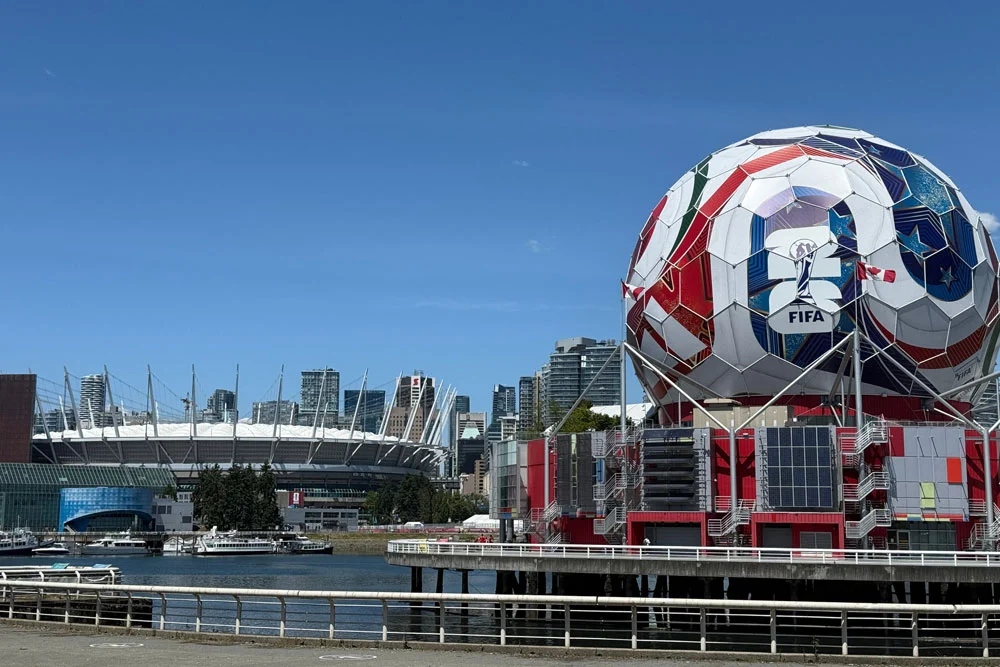
The FIFA World Cup 2026, the first iteration of the tournament to feature an expanded 48-team format across three host nations—Canada, Mexico, and the United States—has reached a fever pitch, captivating a global audience of billions. While the spectacle on the pitch is primarily a display of athletic prowess and national pride, the tournament has simultaneously become a masterclass in strategic management, resilience, and organizational psychology. For observers within the digital commerce sector, the parallels between the world’s most prestigious sporting event and the intricacies of affiliate marketing are both striking and instructive. As the drama of the knockout stages unfolds, the lessons gleaned from the pitch offer a blueprint for success in the increasingly competitive landscape of performance-based marketing.
The Evolution of the 2026 Tournament: A New Era of Competition
The 2026 World Cup represents a significant departure from previous editions, not only in its geographic breadth but in its competitive structure. By increasing the field from 32 to 48 teams, FIFA fundamentally altered the tournament’s dynamics, allowing for more "underdog" stories and requiring a different level of tactical preparation from the traditional powerhouses. This expansion mirrors the growth of the affiliate marketing industry, which has evolved from a niche advertising tactic into a multi-billion-dollar global powerhouse.
The tournament began with a series of high-stakes group matches that immediately challenged the status quo. From the moment fans—including the famously dedicated "Tartan Army" from Scotland—descended upon host cities like Boston, New York, and Mexico City, it was clear that the traditional hierarchies of international soccer were under threat. The logistical complexity of the event, requiring seamless coordination between three governments and dozens of local organizing committees, serves as a macro-scale example of the teamwork required to execute a successful global marketing campaign.
The Paradigm of Teamwork: Beyond Individual Brilliance
A recurring theme of the 2026 tournament has been the limitation of individual talent when unsupported by a cohesive collective. In soccer, as in affiliate marketing, the "superstar" model is increasingly being replaced by the "system" model.
The exit of Croatia, led by the enduring genius of Luka Modrić, serves as a poignant example. Despite Modrić’s technical brilliance and veteran leadership, Croatia struggled to contain a multi-faceted Portuguese side that relied on a high-press collective rather than just the individual heroics of Cristiano Ronaldo. Interestingly, even Ronaldo’s Portugal found their limits in the Round of 16, falling to a Spanish team defined by its rigid tactical discipline and synchronized movement. These results underscore a fundamental truth: a single high-performer cannot carry an entire organization indefinitely.
In the realm of affiliate marketing, this principle translates directly to program management. An affiliate management agency is only as robust as its internal team of managers, analysts, and creative strategists. Furthermore, the "team" of affiliates within a program must be diversified to ensure stability. Relying on a single "super-affiliate" for 80% of program revenue is a high-risk strategy akin to a national team relying on a single aging striker.
Industry data suggests that the most resilient affiliate programs are those that diversify across multiple marketing channels—including content commerce, loyalty portals, influencers, and mass media publishers. By spreading the "talent" across different affiliate types, brands protect themselves against the sudden underperformance or exit of a single partner, much like a well-balanced soccer squad survives an injury to a key player.
The Rise of the Underdog: Case Studies in Disruption
The 2026 World Cup has been defined by the narrowing gap between established titans and emerging nations. The Group Stage provided one of the most significant shocks in recent history when the tournament debutant, Curaçao, held the formidable Ecuadorian squad to a 0-0 draw. This was followed by a Round of 16 thriller where Egypt, a team many analysts had dismissed, led the defending champions, Argentina, 2-0 for the majority of the match.
These sporting upsets find a perfect parallel in the business trajectory of Nectar Sleep. In early 2017, the "mattress-in-a-box" market was already saturated with well-funded incumbents like Casper, Saatva, and Purple. Nectar Sleep entered the fray as a clear underdog, lacking the brand recognition of its established rivals. However, through a highly aggressive and meticulously managed affiliate program, the brand achieved what many thought impossible. Within exactly one year and five days of its launch, Nectar Sleep’s affiliate program ascended to the number one position on the ShareASale network, surpassing over 5,000 other programs, including global giants like Wayfair, Reebok, and the NFL.
This "underdog" victory highlights a critical lesson for both athletes and marketers: being a newcomer or a smaller player is not a sentence to mediocrity. In affiliate marketing, an underdog can win by being more agile, offering better commission structures, or leveraging data more effectively than bloated, slow-moving competitors. The key is to recognize that established brands are not invincible; they are often hampered by their own bureaucracy, making them vulnerable to disruptive newcomers.
The Perils of Stagnation: Why History Does Not Guarantee Future Success
Perhaps the most sobering lesson of the 2026 World Cup has been the fall of traditional giants. Italy, a four-time world champion, failed to even qualify for the tournament—a catastrophic blow to one of the world’s most storied footballing cultures. The Netherlands, historically known for "Total Football," was eliminated in the Round of 32 by a disciplined Moroccan side. Brazil, the perennial favorites, were stunned in the Round of 16 by Norway, a team that had not qualified for a World Cup in nearly three decades.
Norway’s advancement to the Quarterfinals is not merely a stroke of luck; it is the result of a long-term overhaul of their national developmental program, focusing on modern analytics and sports science. Conversely, the failure of teams like Italy and the Netherlands suggests a failure to adapt to the evolving pace and physicality of the modern game.
In affiliate marketing, the landscape is similarly unforgiving to those who rest on their laurels. The industry is inherently dynamic, shaped by shifting privacy regulations (such as the deprecation of third-party cookies), evolving search engine algorithms, and changing consumer behaviors. A strategy that generated significant ROI five years ago—such as heavy reliance on coupon-only affiliates—may now be detrimental to a brand’s long-term health and profit margins.
Continuous education is the only defense against obsolescence. Professional development through industry conferences, such as the Affiliate Summit in New York, provides marketers with the necessary insights to pivot their strategies. Whether it is integrating AI-driven attribution models or shifting toward "value-first" content creators, the most successful affiliate managers are those who treat their education as a journey rather than a destination.
Tactical Analysis: A Chronology of Strategic Shifts
To understand the broader implications of these parallels, one must look at the timeline of both the tournament and the marketing cycles:
- Preparation Phase: National teams spend years scouting and training; affiliate managers spend months recruiting and vetting the right partners before a major product launch.
- The Opening Salvo (Group Stage/Program Launch): This is where the "underdog" must make their mark. Just as Curaçao shocked Ecuador, a new affiliate program must offer compelling incentives to gain initial traction in a crowded marketplace.
- The Mid-Game Adjustment (Round of 16/Optimization): As the 2026 World Cup moved into the knockout rounds, coaches had to adjust their tactics based on real-time performance. Similarly, affiliate managers must use data to prune underperforming partners and double down on those driving high-quality, incremental traffic.
- The Endurance Test (Quarterfinals/Sustainability): As Norway advances further, their physical conditioning becomes the deciding factor. In marketing, this is the phase where the sustainability of a program’s unit economics is tested. Can the brand maintain its commission rates while remaining profitable?
Conclusion: The Broader Impact and Industry Implications
The FIFA World Cup 2026 serves as a global reminder that success is never permanent and competition is always evolving. The tournament’s upsets and triumphs provide a vivid illustration of the necessity for teamwork, the potential of the underdog, and the danger of complacency.
For the affiliate marketing professional, these are more than just metaphors; they are operational imperatives. The "dynamic" nature of the online landscape requires a mindset of constant vigilance and adaptation. As the world watches the final matches of the 2026 World Cup, the business community would do well to remember that the same principles driving Norway’s historic run or Egypt’s defiance against Argentina are the same ones that allow a startup mattress brand to outpace global retailers. In both sports and commerce, the winners are those who respect the competition, empower their teams, and never stop learning.