rifanmuazin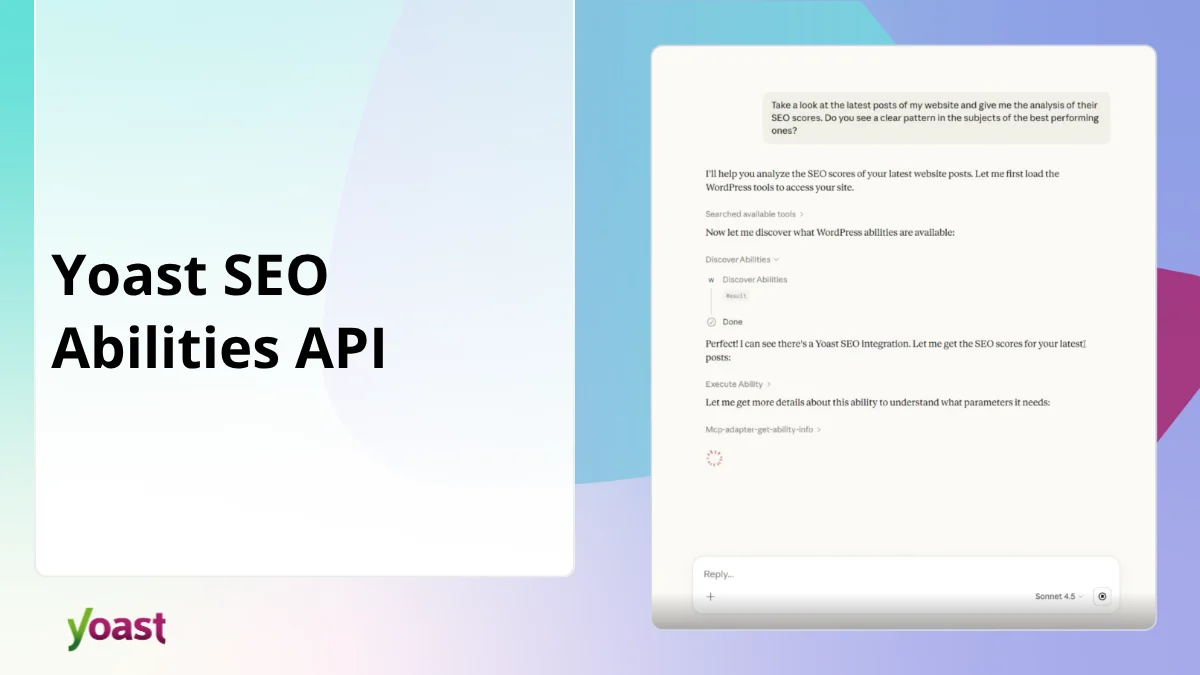
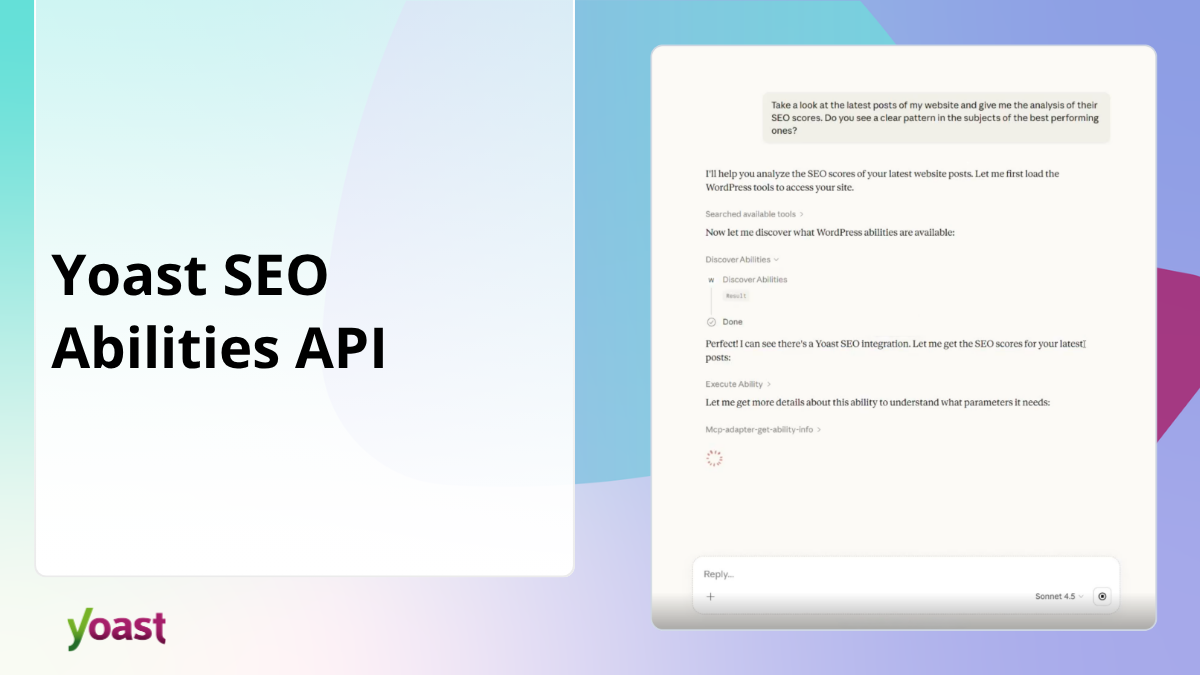
In a significant advancement for the digital content ecosystem, Yoast SEO has officially unveiled its new Abilities API, designed to facilitate direct communication between AI tools, custom dashboards, and automated workflows with the widely used SEO plugin. This strategic development positions Yoast SEO at the forefront of the evolving landscape where artificial intelligence and content management systems converge, signaling a proactive step towards future-proofing SEO practices. The API is explicitly built to integrate seamlessly with the forthcoming capabilities of WordPress, particularly in the context of discussions around future versions like WordPress 6.9 and the Machine Capabilities Protocol (MCP) Adapter, which are set to redefine how AI agents interact with the web’s dominant content platform.
The Strategic Significance: Yoast and the Evolving Web
Yoast SEO, a cornerstone of the WordPress ecosystem, has long been synonymous with empowering website owners and content creators to optimize their online presence. With over 5 million active installations, it has cemented its position as one of the most essential plugins for search engine optimization on WordPress. Its longevity and widespread adoption are testaments to its continuous adaptation to Google’s ever-changing algorithms and the dynamic demands of digital marketing. The launch of the Abilities API is not merely an incremental update but a foundational shift, acknowledging the accelerating integration of AI into every facet of content creation, analysis, and distribution.
For years, SEO professionals have relied on manual checks, periodic audits, and iterative content adjustments. While Yoast SEO has significantly streamlined these processes within the WordPress dashboard, the rise of sophisticated AI assistants and automated platforms has introduced a new paradigm. These tools, ranging from AI content generators to advanced analytics dashboards, have operated largely in silos, often requiring bespoke integrations or tedious data exports to incorporate SEO insights. The Abilities API eliminates this friction, enabling a fluid, programmatic exchange of critical SEO data, thereby unlocking unprecedented levels of automation and efficiency.
This move by Yoast SEO also aligns perfectly with WordPress’s broader vision for the future, particularly its exploration into AI integration. The concept of a "Machine Capabilities Protocol" (MCP) Adapter, as discussed in forward-looking WordPress developer circles, envisions a standardized way for AI agents to understand and interact with content management systems. By releasing the Abilities API now, Yoast SEO is proactively ensuring its platform is ready for this future, allowing its vast user base to leverage the power of AI as soon as these broader WordPress capabilities come online. This foresight underscores Yoast’s commitment to staying ahead of the curve, preparing its users for an era where AI-driven content optimization will be the norm rather than the exception.
Diving Deeper: How the Abilities API Functions
At its core, the Yoast SEO Abilities API provides a standardized, programmatic interface for external applications to query and retrieve specific SEO and readability data directly from a website’s most recent posts and pages. This eliminates the need for developers to craft custom connectors or parse HTML, significantly reducing the complexity and time required for integration. Once connected via the WordPress MCP Adapter (or similar future integration mechanisms), any compatible AI tool or dashboard can instantly access a wealth of information.
The data points accessible through the API are comprehensive and directly reflect the insights Yoast SEO provides within the WordPress editor. These include:
- Overall SEO Score: The iconic green, orange, or red indicator of a post’s SEO health, providing an immediate snapshot of its optimization level.
- Readability Score: An assessment of how easy the content is for the average reader to comprehend, crucial for user engagement and accessibility.
- Focus Keyphrase Analysis: Detailed feedback on the presence, density, and strategic placement of the target keyphrase within the content, title, and meta description.
- SEO Title Optimization: Evaluation of the post title’s length, keyphrase inclusion, and overall effectiveness for search engines.
- Meta Description Optimization: Analysis of the meta description’s length, keyphrase usage, and ability to entice clicks.
- Image Alt Attribute Checks: Verification that images have appropriate alt text, important for accessibility and image search SEO.
- Internal Linking Suggestions and Counts: Data on the number of internal links present and suggestions for improvement, crucial for site architecture and authority flow.
- Outbound Link Analysis: Identification of external links and their relevance.
- Text Length Assessment: Ensuring content meets recommended length guidelines for comprehensive coverage.
- Cornerstone Content Status: Identification of high-value, foundational content on the site.
- Schema Markup Status: Information on the structured data implemented, which helps search engines understand content context.
The API is built on modern web standards, making it robust and scalable. By exposing these core metrics programmatically, Yoast SEO is effectively democratizing access to its powerful analytical capabilities, allowing a new generation of intelligent tools to build upon its foundation. This represents a significant leap from traditional plugin functionality to a more integrated, platform-agnostic approach to SEO.
A New Era for SEO Workflows: Practical Applications
The immediate and long-term implications of the Yoast SEO Abilities API are profound, promising to reshape how content is created, optimized, and managed. Here are some of the key applications that are now possible:
- Automated Content Audits: AI assistants can now automatically scan an entire website, retrieve Yoast SEO scores for all posts, and generate comprehensive SEO audit reports in minutes, highlighting areas for improvement across thousands of pages. This vastly reduces the manual effort and time typically required for large-scale content reviews.
- Real-time SEO Feedback for AI Writers: Content generation tools powered by AI can integrate the API to receive instant Yoast SEO feedback as they draft content. This means an AI could write a paragraph, get a readability score, and then self-correct or offer alternatives, ensuring optimized content from the initial draft.
- Custom Performance Dashboards: Marketing agencies and enterprise teams can build custom dashboards that pull Yoast SEO data alongside other analytics (traffic, conversions, rankings) to provide a holistic view of content performance. This allows for real-time monitoring of SEO health across a portfolio of websites or an extensive content library.
- Automated Content Improvement Workflows: Imagine a workflow where, if a post’s SEO score drops below a certain threshold due to new competitor content or algorithm changes, an AI agent is automatically triggered to suggest specific improvements (e.g., adding more internal links, expanding a section, optimizing the meta description) or even to draft revised content.
- Predictive SEO Analysis: By integrating Yoast data with machine learning models, businesses could develop tools that predict the potential SEO impact of content changes before they are implemented, or identify content gaps based on current performance and competitive analysis.
- Cross-Platform SEO Management: For businesses operating multiple websites or using diverse content management systems, the API offers a pathway to standardize SEO monitoring by integrating Yoast data into a central management platform, irrespective of where the content is hosted, as long as Yoast SEO is active.
- Enhanced Internal Linking Strategies: AI tools could analyze the Yoast internal linking suggestions across an entire site and autonomously recommend or even implement optimal internal link structures to improve content discoverability and authority distribution.
These examples merely scratch the surface of what’s possible. The API acts as a universal translator between Yoast’s intricate SEO intelligence and the burgeoning world of AI, empowering creators and marketers to scale their efforts and achieve higher levels of optimization with less manual intervention.
The Road Ahead: WordPress’s AI Vision and Yoast’s Role
The mention of WordPress 6.9 and the Machine Capabilities Protocol (MCP) Adapter within the context of the Abilities API is particularly telling. While WordPress 6.9 is a future release and the MCP Adapter is currently a conceptual framework discussed within the WordPress developer community (as indicated by the future dating of related developer articles to 2026), Yoast SEO’s proactive integration highlights a forward-thinking strategy.
The MCP Adapter is envisioned as a crucial component that will allow AI agents to understand the context, purpose, and capabilities of WordPress sites more effectively. Instead of simply scraping content, AI could "ask" WordPress for specific data or capabilities, leading to more intelligent and ethical interactions. By building its Abilities API to be compatible with this future protocol, Yoast SEO is ensuring that its extensive SEO data will be readily consumable by advanced AI systems once these WordPress core capabilities are fully realized. This strategic alignment demonstrates Yoast’s commitment not just to current SEO needs but to shaping the future of digital content optimization within the open-source ecosystem.
This prepares WordPress, and by extension, the millions of websites it powers, for an era where AI is not just a tool but an integral partner in content creation and management. Yoast’s initiative can be seen as a blueprint for other plugin developers to create similar "abilities" for their respective functionalities, collectively enriching the WordPress platform’s AI readiness.
Industry Reactions and Expert Perspectives
While formal statements from related parties beyond Yoast are still emerging, the implications for various stakeholders can be logically inferred.
From Yoast SEO’s Perspective: Beth Parker, Product Marketing Manager at Yoast, whose role involves bridging product development with market needs, would likely emphasize the API as a natural evolution of Yoast’s mission. "Our goal has always been to make SEO accessible and effective for everyone," Parker might state. "The Abilities API is a monumental step in that direction, allowing our users to seamlessly integrate Yoast’s powerful insights into their AI-driven workflows. It’s about empowering content creators to work smarter, not harder, and future-proofing their SEO strategies in an increasingly AI-centric world." Such statements would underscore the company’s commitment to innovation and user empowerment.
For AI Tool Developers: The reception from developers of AI writing assistants, content optimizers, and marketing automation platforms is expected to be overwhelmingly positive. The API removes a significant barrier to entry, allowing them to instantly tap into a vast repository of SEO intelligence without having to reverse-engineer Yoast’s logic or build complex custom connectors. A hypothetical developer from a leading AI content platform might comment, "The Yoast SEO Abilities API is a game-changer. It provides a standardized and robust way to access critical SEO data, allowing us to enhance our AI’s capabilities dramatically. Our users will benefit from real-time, Yoast-powered SEO feedback directly within our platform, accelerating their content creation and optimization processes."
For SEO Professionals and Digital Marketers: The sentiment among SEO practitioners and digital marketers is likely to be one of anticipation and excitement. The API promises to transform their daily routines, shifting their focus from repetitive manual tasks to more strategic oversight and analysis. "This API means we can finally automate large portions of our SEO audits and content optimization," an agency head might observe. "It frees up our teams to concentrate on high-level strategy, creative problem-solving, and client relationship management, rather than getting bogged down in granular checks. It’s a huge leap towards scalable, data-driven SEO."
The Broader Implications for Content and Digital Marketing
The launch of the Yoast SEO Abilities API, in concert with WordPress’s anticipated AI capabilities, heralds several broader implications for the digital marketing landscape:
- Accelerated Automation: The trend towards automation in content creation and SEO will only intensify. Tasks that once required human intervention will increasingly be handled by AI, from initial content drafts to real-time optimization adjustments.
- Shift in SEO Skillset: SEO professionals will need to adapt. While foundational SEO knowledge remains critical, expertise in prompt engineering, AI tool integration, and strategic oversight of automated processes will become paramount. The role will evolve from manual implementer to strategic orchestrator of AI-powered workflows.
- Data-Driven Decision Making: With easy access to Yoast’s data, marketers will be better equipped to make truly data-driven decisions. Custom dashboards and AI analyses will provide deeper insights into content performance and optimization opportunities, moving beyond anecdotal evidence.
- Enhanced Content Quality and Consistency: By integrating SEO feedback directly into the creation process, the overall quality and SEO consistency of content across a website are likely to improve significantly. AI can ensure that every piece of content meets specific SEO and readability standards.
- Increased Competition: The ease of SEO optimization offered by these new tools could level the playing field, making it easier for smaller players to compete with larger enterprises that historically had more resources for manual SEO efforts. This could lead to an even more competitive search landscape.
- Ethical Considerations: As AI becomes more deeply embedded in content creation, discussions around originality, authorship, bias, and the potential for AI-generated spam will intensify. Yoast, as a responsible player, will likely need to engage in these discussions, ensuring its API is used for ethical and beneficial purposes.
Addressing Potential Challenges and Ethical Considerations
While the benefits are clear, the integration of AI at this level also brings challenges. Over-reliance on automation could potentially lead to a lack of human creativity or a homogeneous content landscape if not carefully managed. There’s also the ongoing concern about the ethical deployment of AI, including data privacy and algorithmic bias. Yoast, as a prominent figure in the WordPress community, will likely play a role in fostering best practices and responsible AI use, potentially through guidelines or community engagement, to ensure the Abilities API is used to enhance, rather than diminish, the quality and integrity of online content.
Conclusion: Empowering the Future of Digital Content
The Yoast SEO Abilities API marks a pivotal moment in the evolution of digital content and search engine optimization. By opening its powerful analytical capabilities to the world of AI tools and automated workflows, Yoast SEO is not just adapting to the future; it is actively shaping it. This development promises to empower millions of WordPress users, from individual bloggers to large enterprises, with unprecedented efficiency and intelligence in their content strategies. As WordPress continues its journey towards deeper AI integration, Yoast SEO stands ready, ensuring that its users remain at the cutting edge of digital excellence, poised to navigate the complex, AI-driven landscape of tomorrow’s web. For developers keen to explore these new possibilities, comprehensive documentation for the Yoast SEO Abilities API is readily available, offering the technical specifications needed to build the next generation of intelligent SEO tools.