A recent report by G2, the "2026 Answer Economy research," has revealed a significant shift in how B2B software buyers initiate their product investigations: 51% now begin their research with an AI chatbot, surpassing traditional search engines like Google. This paradigm shift mandates that marketing teams not only monitor conventional search engine performance but also meticulously track how AI assistants and answer engines mention, cite, and recommend their brands. The emergence of these AI-powered conversational interfaces has fundamentally altered the buyer journey, creating a new imperative for what is being termed "Answer Engine Optimization" (AEO).
The Dawn of the Answer Economy: A New Frontier for Brand Visibility
The digital marketing landscape is undergoing a profound transformation, driven by the rapid proliferation and adoption of generative AI. For years, Google reigned supreme as the undisputed gateway to information, dictating the rules of search engine optimization (SEO). Brands invested heavily in keyword research, backlink building, and technical SEO to rank prominently in search results. However, the advent of sophisticated AI chatbots like ChatGPT, Perplexity, and Gemini has introduced a new layer to this ecosystem, one where direct answers, summaries, and synthesized recommendations take precedence over lists of links.
This shift signifies the "Answer Economy," a term encapsulating the growing expectation among users for immediate, curated, and contextually relevant answers directly from AI interfaces. B2B buyers, in particular, are leveraging these tools for early-stage research, seeking concise comparisons, product overviews, and expert opinions without navigating multiple websites. The G2 report underscores this trend, highlighting that AI chatbots are no longer niche tools but integral components of the B2B research process. HubSpot’s 2026 State of Marketing report further corroborates this, noting that 71% of B2B software buyers rely on AI chatbots at some point in their research process, indicating a pervasive integration of AI into decision-making.
For brands, this presents both a challenge and an opportunity. The challenge lies in adapting existing marketing strategies to ensure visibility within these new AI-driven environments. Traditional SEO metrics, while still relevant for organic search, do not fully capture a brand’s presence in AI-generated answers. The opportunity, however, is immense: to influence AI recommendations, establish thought leadership, and become a trusted source within the conversational interfaces where buyers are increasingly making their initial assessments. This necessitates a new category of tools designed specifically for AI visibility.
The Imperative for AI Visibility: Why Marketers Seek Alternatives to Traditional Tools
While established SEO platforms like Ahrefs have rapidly evolved to include features like Brand Radar, which tracks brand mentions and citations across major AI answer engines, the nascent and dynamic nature of the Answer Economy means marketers often require specialized capabilities. Ahrefs Brand Radar now supports custom prompt monitoring, enabling teams to tailor their tracking to specific queries. However, the market for AI visibility tools is expanding rapidly, offering a diverse array of options that may better align with specific organizational needs.
Marketers are exploring alternatives to Ahrefs Brand Radar for several critical reasons, often rooted in the desire for more granular control, broader coverage, cost efficiency, or deeper integration with their existing marketing and sales infrastructure. These motivations highlight the evolving demands of brand tracking in an AI-first world.
-
Demand for Granular Data and Context: Large organizations and those operating in complex marketplaces often find broad visibility scores insufficient. Alexandra Novikava, a marketer at Truck1, articulated this need, explaining that her team initially used Ahrefs Brand Radar but transitioned to custom API tracking and alternative SEO intelligence tools. Truck1 required more detailed context regarding competitor visibility queries and greater flexibility in data collection. While Ahrefs has since enhanced its custom prompt tracking, the early market demand clearly indicated a need for deeper insights into the how and why brands appear in AI responses.

-
Prompt-Specific Tracking for Niche Markets: In specialized B2B sectors, the quality and context of a mention often outweigh sheer volume. Colleen Barry, head of marketing at Ketch, succinctly put it: "In B2B, one mention in the right context matters more than ten generic mentions." Ketch, which initially adopted Ahrefs Brand Radar in early 2025 for a baseline, sought more control over industry-specific prompt libraries. Their goal was to evaluate how conversational engines handled nuanced privacy and compliance queries and to assess the influence of their thought-leadership content on these specific responses. The ability to monitor highly targeted, high-intent prompts is crucial for brands operating in competitive or highly regulated industries.
-
Optimized Cost and Broader Model Coverage: Pricing models and the breadth of AI model coverage are significant considerations. Ashot Nanayan, founder and CEO of B2BSEO, noted that during Brand Radar’s open beta, the estimated cost for Ahrefs subscription and AI-monitoring add-ons would have been around $800 per month. He also sought localized prompt customization and broader model coverage. While Ahrefs’ packaging has since become more flexible (standalone Brand Radar starting at $199/month, custom prompts at $50/month), Nanayan ultimately opted for a dedicated AI visibility platform offering broader coverage at a lower overall cost for his team’s specific use case. This underscores the market’s appetite for flexible, scalable, and comprehensive solutions.
-
Connecting Visibility to Customer Actions and Business Growth: Matthew Kinneman, founder of Bully Max, emphasized that AI visibility, while valuable, must ultimately tie back to tangible business outcomes. His team found that visibility alone did not directly correlate with traffic, engagement, or conversions, leading them to adopt a broader measurement approach. Kinneman stated, "the biggest lesson for me was that AI visibility is only valuable if you can tie it back to actions customers take afterward. Otherwise, it’s easy to end up optimizing for a metric that looks good but doesn’t drive business growth." This highlights a critical need for tools that integrate AI visibility data with CRM, attribution, pipeline, and revenue reporting, moving beyond vanity metrics to actionable intelligence.
Dissecting Key Features of Next-Generation AI Visibility Tools
The rapidly evolving landscape of AI-driven search necessitates a specialized set of features for effective brand tracking. Unlike traditional rank trackers, AI visibility platforms must account for the dynamic nature of generated answers, preserve evidence, and illustrate how results evolve over time. When evaluating alternatives, marketing teams should prioritize several core capabilities:
-
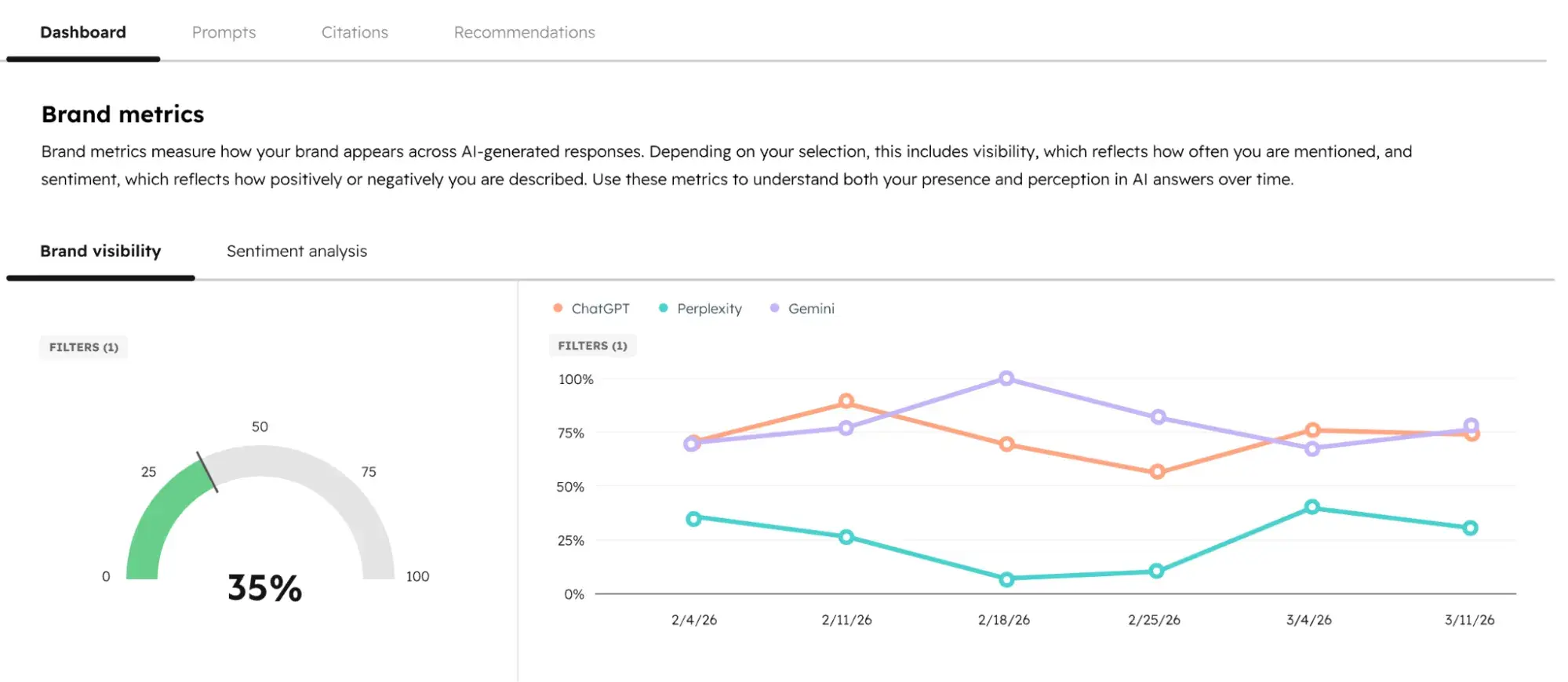
AI Model Coverage and Data Freshness: Buyers rarely rely on a single answer engine. A robust AI visibility tool should monitor a diverse array of AI platforms (e.g., ChatGPT, Perplexity, Gemini, potentially Google’s SGE) to provide a comprehensive view of a brand’s presence. Equally critical is data freshness. AI-generated answers are notoriously dynamic; therefore, tools must frequently rerun tracked prompts. Teams should assess the cadence of data collection (daily, weekly, monthly), whether it varies by plan or model, and how much historical data is preserved. Daily data is ideal for agile optimization, while weekly or monthly tracking might suffice for broader trend analysis.
-
Evidence Quality and Transparency: A visibility score alone is insufficient without the underlying evidence. High-quality tools preserve the actual AI response, cited sources, timestamps, and model information. This makes results auditable, allowing teams to validate reported scores and understand how the AI arrived at its conclusion. Furthermore, this evidence can serve as invaluable competitive intelligence, revealing which sources competitors are leveraging to appear in recommendations.
-
Segmentation by Persona or Journey Stage: Aggregate visibility scores can mask critical gaps in a brand’s presence. The ability to segment prompts by buyer persona or journey stage (e.g., awareness, consideration, purchase) is paramount. This allows marketing teams to differentiate between broad brand awareness and high-intent queries that directly influence purchasing decisions. Given that 71% of B2B software buyers engage with AI chatbots at some stage of their research, understanding visibility at various points in the buying journey is essential. Segmenting by persona, for instance, prevents a strong overall score from obscuring poor visibility among a crucial target audience, such as developers versus marketing leaders.
-
Integrations and Reporting: The utility of AI search insights is maximized when they are integrated into existing marketing and sales workflows. Essential integrations include CRM data, business intelligence platforms, web analytics, and marketing automation systems. The ability to export data for combination with broader AI marketing analytics is also vital. HubSpot’s 2026 State of Marketing report indicated that 12.4% of marketers struggle with data sharing across their organization; a disconnected AI visibility tool would exacerbate this problem. High-quality reporting includes historical trends, customizable dashboards, and stakeholder-friendly summaries that connect AI search engine changes with content performance and business outcomes.
-
Pricing and Team Fit: Evaluating pricing involves more than just the lowest entry point. Teams should consider the total cost of running their required monitoring program, factoring in prompt limits, user access, and additional features. Team fit encompasses ease of use, learning curve, and the tool’s ability to support collaborative workflows across SEO, content, and brand teams.
Leading Alternatives in the AI Visibility Landscape
The market for AI visibility tools is dynamic, with several strong contenders offering distinct feature sets and pricing models. These alternatives provide varying combinations of AI model coverage, prompt tracking granularity, citation evidence, integrations, and reporting depth.
-
HubSpot AEO: HubSpot AEO stands out by combining continuous AI visibility measurement with a clear workflow for action. It tracks brand appearance, sentiment, competitor share of voice, and citation sources across ChatGPT, Perplexity, and Gemini. A key differentiator is its ability to translate visibility gaps into prioritized recommendations. While available as a standalone product, integration with HubSpot’s Marketing Hub Professional and Enterprise tiers allows for leveraging CRM data to inform prompt suggestions and connect AI visibility directly to pipeline and revenue metrics.
- Key Features: Visibility and sentiment tracking, competitor share of voice analysis, citation source identification, buyer-relevant prompt tracking, prioritized recommendations, trend analysis.
- Best for: Marketing teams seeking actionable insights from AI visibility data, especially those within the HubSpot ecosystem.
- Pricing: Starts at $50/month for 25 prompts (or $45/month annually).
-
Profound: Profound is positioned as an AEO platform for larger companies and agencies requiring detailed visibility analysis and robust workflows for actioning that data. Its "Answer Engine Insights" product tracks brands and competitors across multiple AI platforms. Additional offerings like "Agents," "Agent Analytics," and "Prompt Volumes" extend its capabilities into content workflows, AI-sourced traffic analysis, and prompt research. Profound offers public plans ranging from ChatGPT-only monitoring to broader enterprise coverage, catering to organizations with dedicated AEO programs.
- Key Features: Multi-engine response monitoring, AI-sourced traffic analysis, prompt research, enterprise-grade controls.
- Best for: Large organizations and agencies building comprehensive, dedicated AEO programs.
- Pricing: Starts at $99/month (billed yearly) for ChatGPT tracking and 50 prompts; scales to Enterprise custom pricing for up to nine answer engines.
-
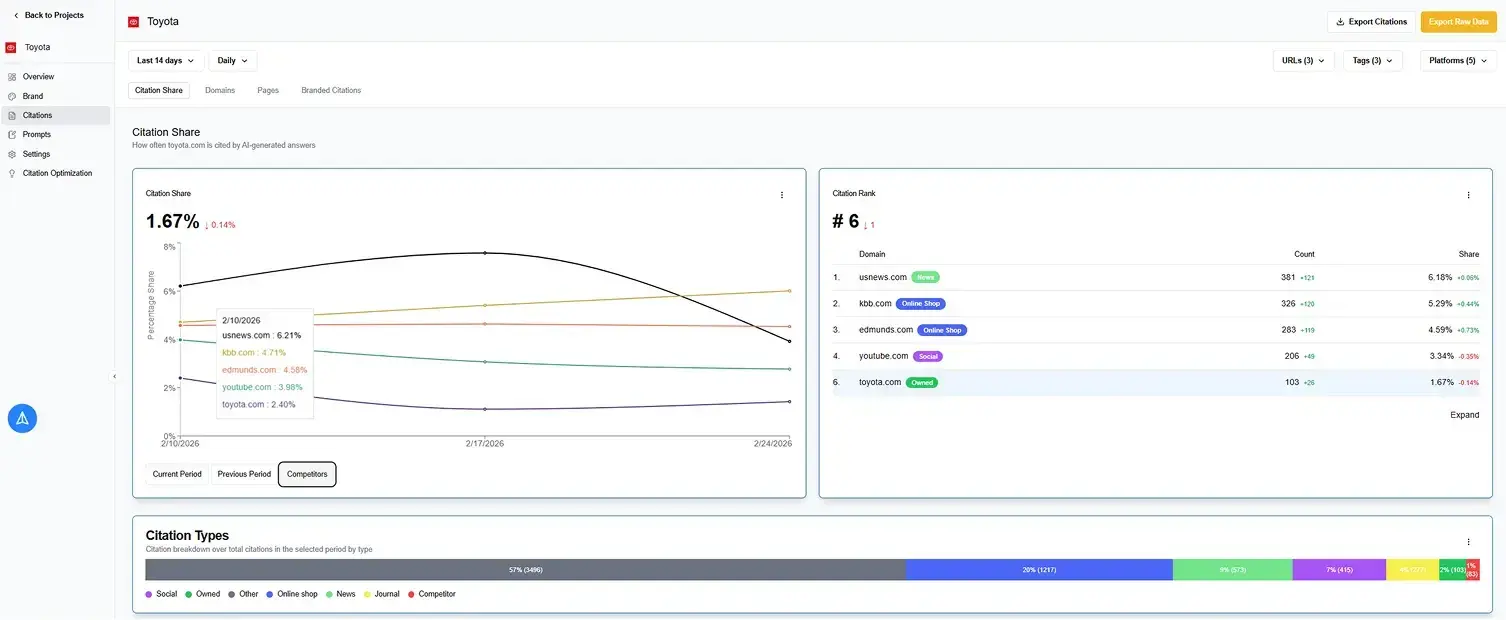
Peec AI: Peec AI is an AI search analytics platform focused on tracking brand visibility, citations, competitors, and prompts across numerous AI models. It enables teams to organize prompts by project, compare performance over time, and meticulously examine the domains and URLs cited in AI-generated responses. Peec AI complements traditional AI SEO by focusing specifically on the answer-engine layer: which brands appear, which sources are cited, and how these patterns evolve.
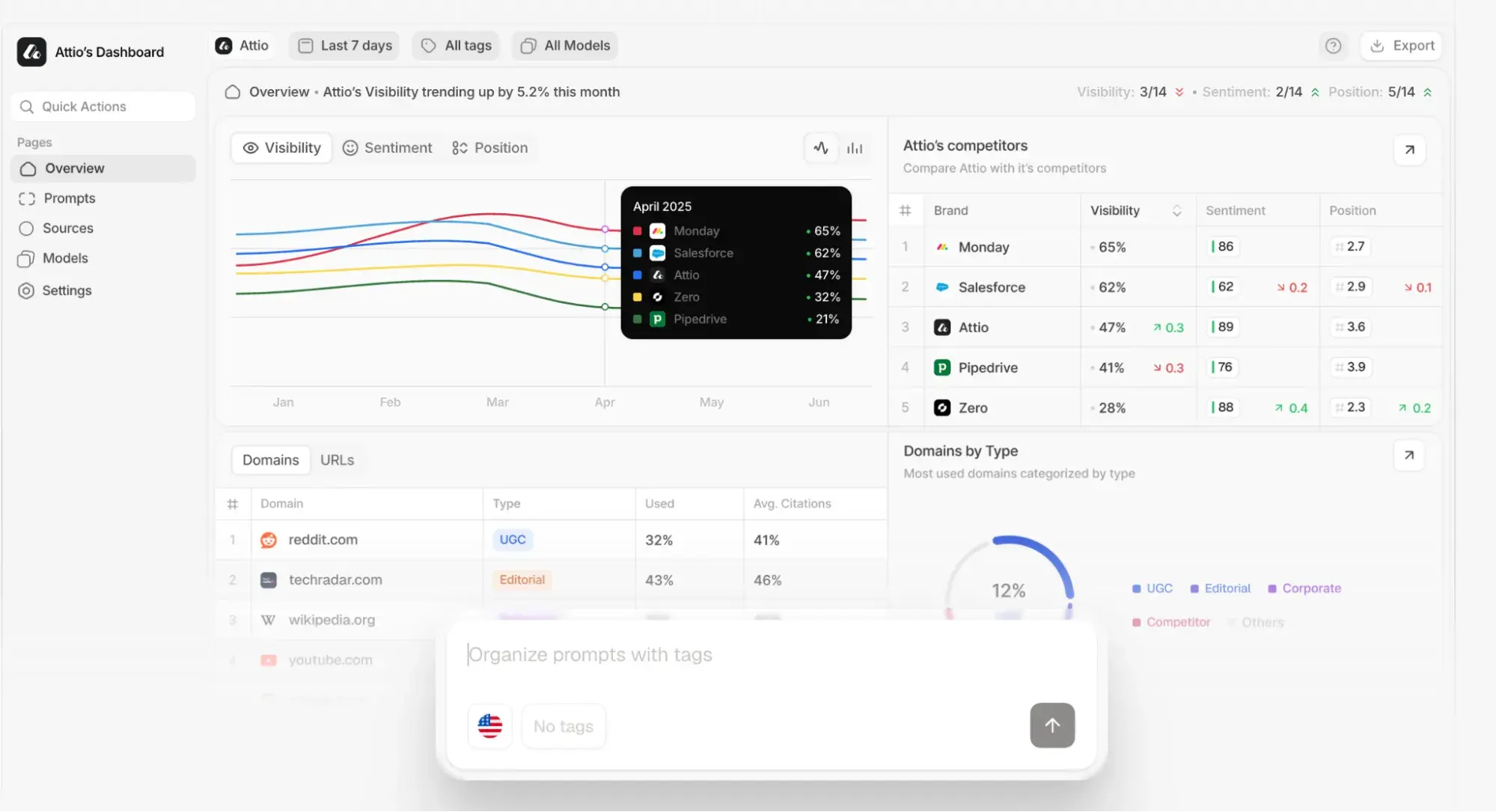
- Key Features: Broad AI model coverage, daily tracking, unlimited user access on public plans, detailed citation analysis, project-based prompt organization.
- Best for: SEO and content teams requiring broad AI model coverage, daily tracking, and collaborative access without per-user pricing constraints.
- Pricing: Starts at $95/month for 50 prompts and one project; scales to Advanced ($495/month) and Enterprise custom pricing.
-
Xofu: Xofu distinguishes itself by concentrating on bottom-of-the-funnel and purchase-intent prompts – queries buyers use to shortlist vendors, compare products, and evaluate solutions. It tracks recommendations over time, revealing competitor appearances, supporting sources, and citation gaps. This narrow focus on commercial intent makes Xofu particularly relevant for brands whose primary goal is to influence buying decisions through AI recommendations.
- Key Features: Focus on commercial/purchase intent prompts, recommendation tracking, competitor analysis, citation gap identification.
- Best for: SaaS companies, consultants, and agencies prioritizing AI visibility for high-intent, conversion-focused queries.
- Pricing: Free plan for 50 prompts/model (weekly); paid plans from $99/month (Consultant) to $999/month (Agency Daily).
-
Mangools AI Search Grader: The Mangools AI Search Grader is a free diagnostic tool designed to provide a quick baseline assessment of a brand’s performance across AI-search models. It generates an "AI Search Score" by combining visibility and ranking signals, allowing brands to compare themselves against competitors for automatically generated prompts. It supports three models without an account and expands to seven models with a free Mangools account.
- Key Features: Free diagnostic, AI Search Score (composite visibility and ranking), competitor comparison, support for multiple AI models.
- Best for: Marketers and SEO teams seeking a no-cost, one-time baseline before committing to continuous monitoring solutions.
- Pricing: Free (with a separate paid product, AI Search Watcher, for continuous monitoring).
-
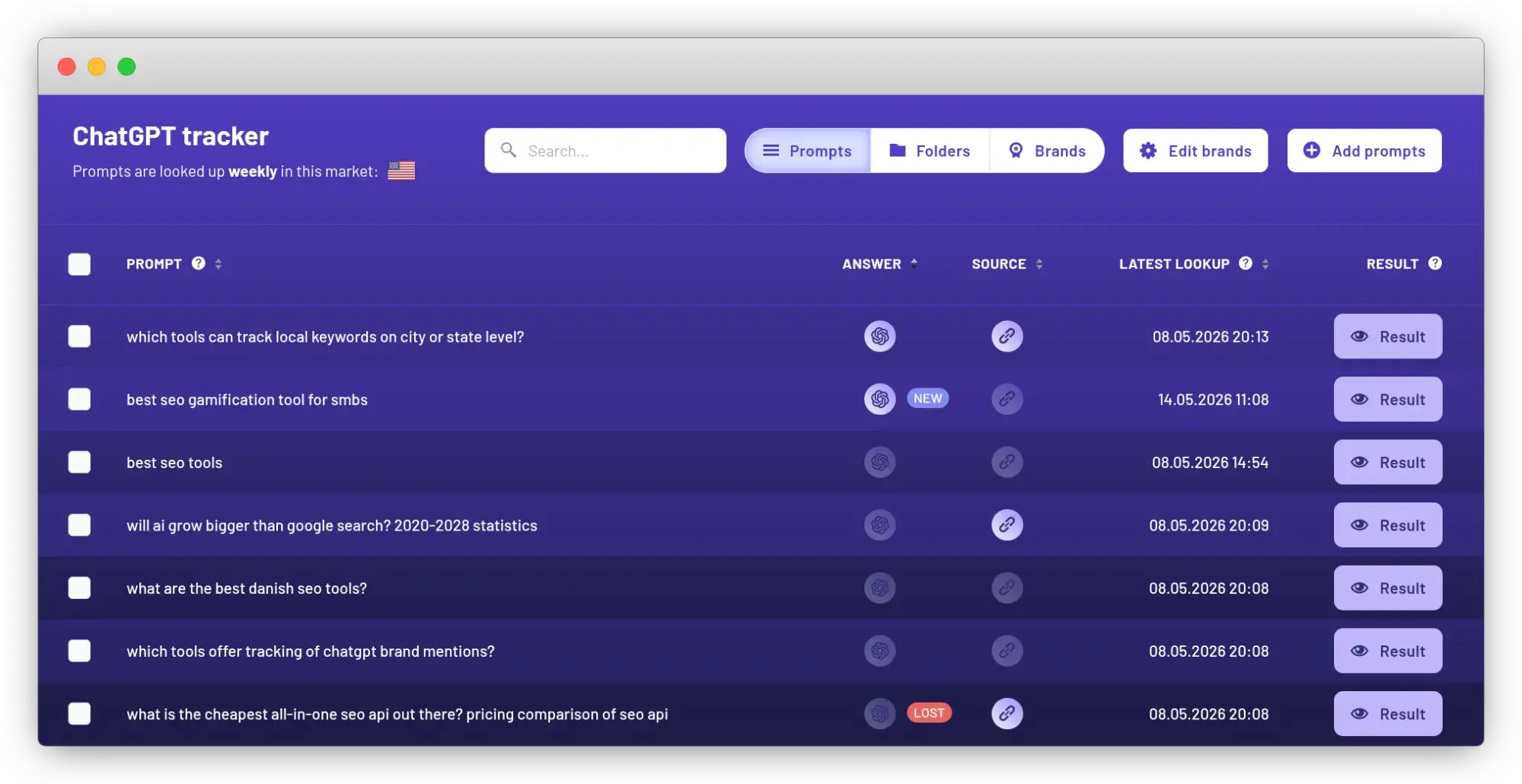
Morningscore ChatGPT Rank Tracker: Integrated within Morningscore’s broader SEO platform, the ChatGPT Rank Tracker monitors brand mentions and recommendations within ChatGPT for selected prompts. It provides the AI-generated answer and source evidence, allowing teams to manage traditional SEO metrics and ChatGPT visibility from a single dashboard. Its primary distinction is its focused approach on ChatGPT, with weekly prompt lookups.
- Key Features: ChatGPT-specific tracking, answer and source evidence, integration with Morningscore’s SEO platform, weekly prompt lookups.
- Best for: Teams primarily concerned with ChatGPT visibility and desiring this monitoring within their existing SEO platform.
- Pricing: Included with Morningscore subscriptions starting at $69/month (Lite), with a 14-day free trial.
Bonus Diagnostic: HubSpot AI Search Grader
Separate from its continuous tracking product, HubSpot offers a free, one-time diagnostic tool called the AI Search Grader. This tool assesses how ChatGPT, Perplexity, and Gemini represent a brand across five dimensions: sentiment, presence quality, brand recognition, share of voice, and market competition, providing a composite score and written interpretation. It serves as an excellent starting point for marketing leaders, brand managers, and SEO professionals to understand their initial AI visibility posture without any commitment. The Answer Engine Report has lauded its "pedagogically useful framework" for explaining AI visibility to non-specialists.
Connecting AI Visibility to the Pipeline: Driving Business Outcomes
The ultimate value of AI visibility data lies in its ability to inform business decisions and contribute to revenue growth. An effective AI visibility product should enable teams to correlate visibility trends with key business metrics: traffic, leads, opportunities, pipeline, and ultimately, revenue. While the tool itself doesn’t need to be a CRM, its reporting and integration capabilities must facilitate this connection.
For instance, HubSpot’s integrated AEO experience within Marketing Hub Professional and Enterprise leverages CRM data to suggest highly relevant prompts, ensuring that AI visibility efforts are aligned with actual buyer needs. This integration provides a direct pathway to connect AI visibility with pipeline and revenue reporting, moving beyond abstract scores to tangible ROI.
Furthermore, actionable recommendations are crucial. HubSpot AEO, for example, provides prioritized suggestions for content updates, new page creation, and citation opportunities based on identified visibility gaps. This transforms AI visibility data into competitive intelligence, allowing teams to understand which brands and sources influence AI recommendations and how to strategically improve their own positioning.
Strategic Implementation: A Five-Step Rollout Plan for AI Visibility Tools
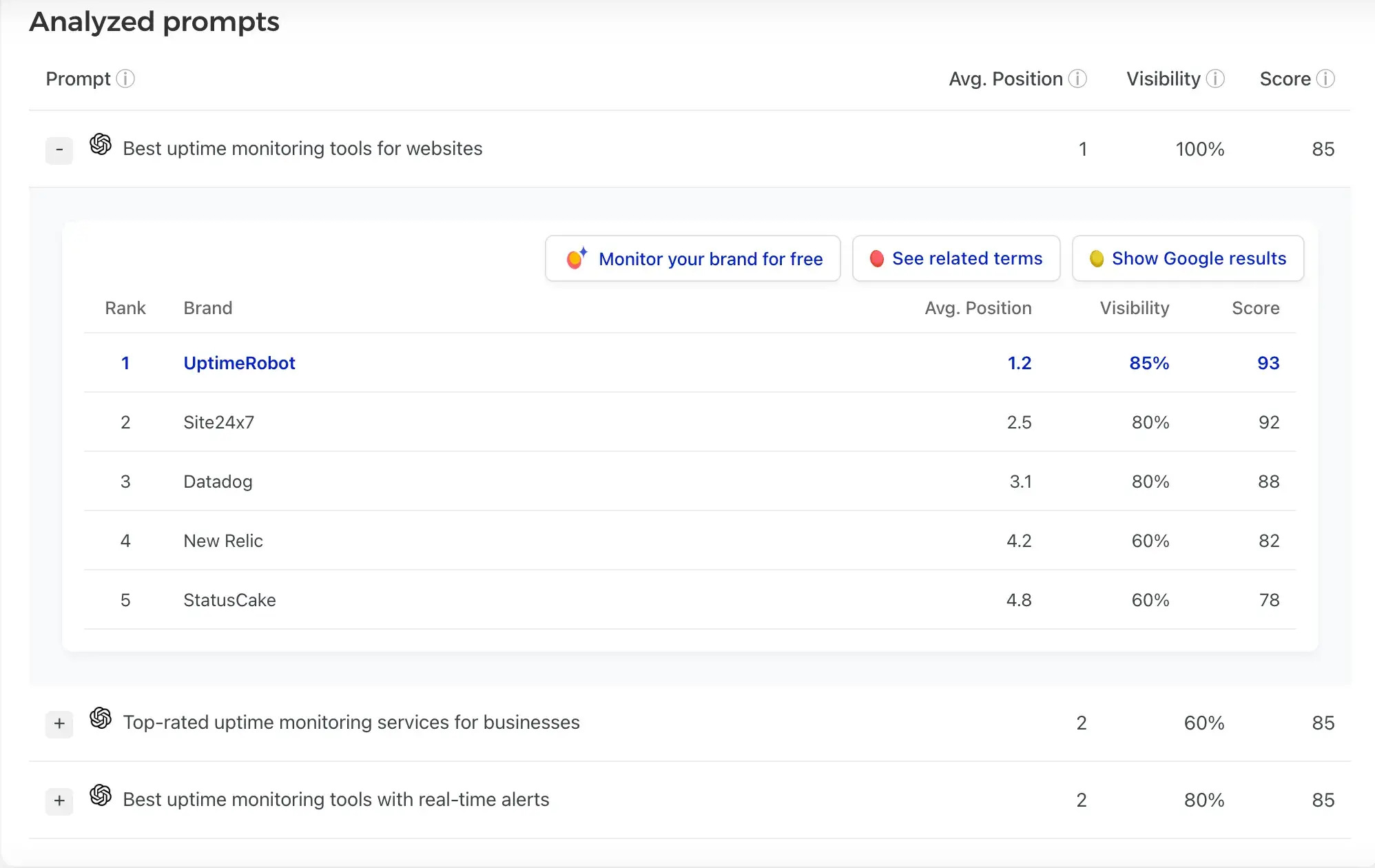
Implementing a new AI visibility tool requires a structured approach to ensure it seamlessly integrates with existing marketing efforts and delivers measurable results. A controlled rollout, focused on establishing reporting, standardizing prompts, validating results, and preserving evidence, is essential.
-
Set Up Integrations and Reporting Foundations:
- Data Destination: Determine where AI visibility data will reside (e.g., within the tool’s dashboard, exported to a BI platform, or integrated with a CRM).
- KPI Alignment: Define how AI visibility metrics will be compared with existing marketing KPIs (e.g., website traffic, lead generation, conversion rates).
- Dashboard Creation: Develop custom dashboards that combine AI visibility data with other relevant metrics for a holistic view.
-
Establish Prompt Governance:
- Standardized Prompts: Create a library of consistent, high-intent prompts tailored to different buyer personas and journey stages.
- Categorization: Tag prompts by product, service, industry, or target audience for granular analysis.
- Regular Review: Periodically review and update prompts to reflect evolving buyer language and market trends.
-
Implement Multi-Run Quality Assurance:
- Acknowledge Variability: Recognize that AI-generated answers can vary, even for the same prompt.
- Multiple Runs: Run priority prompts multiple times over a period to establish a more reliable baseline and observe patterns.
- Benchmarking: Compare outputs across different AI models, locations, and tracking frequencies to understand inconsistencies.
-
Build an Evidence Repository:
- Preserve Responses: Store the raw AI responses, cited sources, timestamps, and model information.
- Audit Trail: This evidence is crucial for validating scores, understanding the context of mentions, and demonstrating changes over time.
- Competitive Analysis: Use preserved evidence to identify competitor strategies and source influence.
-
Pilot, Compare, and Scale:
- Limited Rollout: Begin with a pilot program using a limited set of prompts, products, or regions.
- Performance Comparison: Compare the new AI visibility data with traditional SEO metrics and business outcomes.
- Iterative Expansion: Based on pilot results and lessons learned, gradually expand the program across more products, regions, and audiences.
The Future of Brand Tracking: Challenges and Opportunities
The shift towards the Answer Economy is not a fleeting trend but a fundamental reorientation of how users find information and interact with brands. While AI visibility trackers offer invaluable insights into this new landscape, they complement, rather than replace, traditional SEO tools. Traditional SEO still governs organic search rankings, backlink profiles, technical site health, and overall organic traffic, all of which remain critical components of a comprehensive digital strategy.
The continuous evolution of AI models, the emergence of new answer engines, and the dynamic nature of AI-generated content pose ongoing challenges for validation and consistent measurement. Marketers must remain agile, continuously adapting their strategies and toolsets. The ability to connect AI visibility data with tangible business outcomes – whether through leads, opportunities, or revenue – will be the ultimate determinant of success.
In conclusion, the choice of an Ahrefs Brand Radar alternative hinges on a team’s specific requirements regarding model coverage, data granularity, evidence quality, integration capabilities, and cost. Tools like HubSpot AEO, Profound, Peec AI, Xofu, Mangools AI Search Grader, and Morningscore ChatGPT Rank Tracker each offer distinct advantages. However, the most effective solution will be one that not only answers "Are we visible?" but also provides the actionable intelligence to address "Why?" and "What should we do next?" This strategic approach ensures that AI visibility becomes a powerful driver of business growth in the rapidly evolving Answer Economy.


 Nana
Nana
 Laily UPN