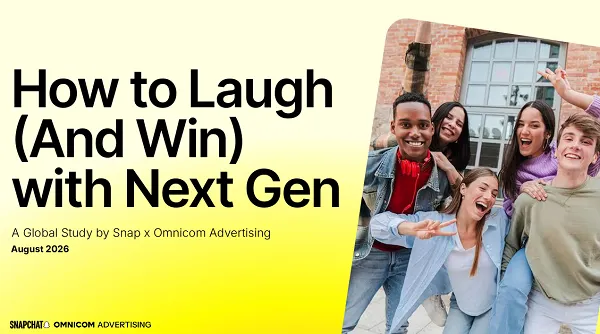
Snapchat has released comprehensive guidance for marketers aiming to connect with younger demographics by leveraging humor, a universal language that increasingly serves as a primary social currency for Gen Z. The report, a collaboration with Omnicom, delves into the nuances of humor that resonate with individuals aged 13 to 28, offering insights into how brands can effectively integrate comedic elements into their promotional strategies. This initiative marks a significant step by a social media platform to demystify the creation of humor for marketing purposes, acknowledging the growing importance of this engagement driver.
Understanding the Gen Z Comedy Landscape
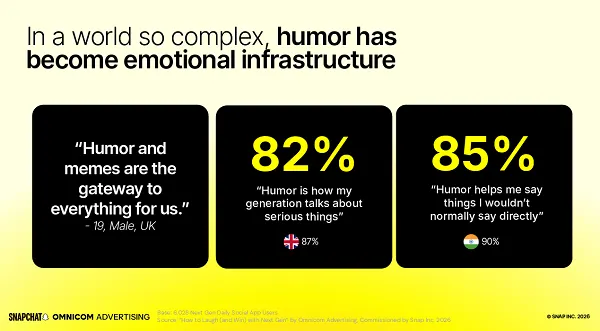
The core of Snapchat’s report lies in its attempt to decode the often elusive humor of younger generations. As the platform states, "What’s 67? What’s aura farming? What’s unc? To the older generations, young people’s humor can feel difficult to decode. Yet beneath the memes, inside jokes, and absurd internet trends is something much bigger: a generation using humor as one of its primary social languages." This sentiment underscores the generational gap in comedic understanding and highlights the need for brands to bridge this divide to foster genuine connection.
To gather robust data, Snapchat and Omnicom surveyed over 6,000 social media users across the United States, the United Kingdom, Canada, France, Germany, and India. This broad geographical and demographic scope allows for a more nuanced understanding of humor trends beyond a single cultural context. The findings aim to provide brands with actionable intelligence on what constitutes humor for younger audiences and how to translate this understanding into effective outreach campaigns.
The Power of Humor in Brand Engagement
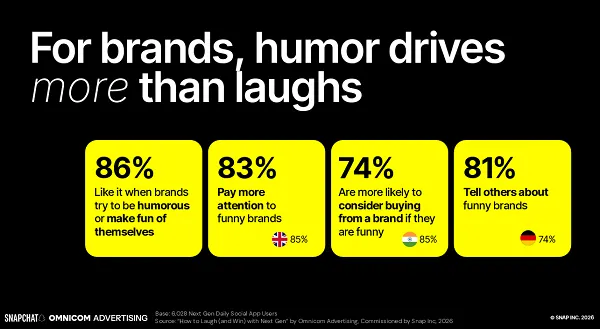
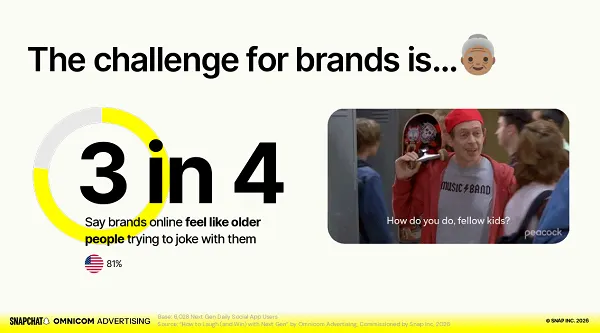
Humor has long been recognized as a potent tool for driving engagement across all age groups. Its ability to elicit positive emotions, foster relatability, and break down barriers makes it an invaluable asset in marketing. However, the report emphasizes that simply attempting humor is insufficient; it must be contextually relevant and authentically delivered to resonate with younger consumers. The data presented in the Snapchat report indicates a strong desire among young audiences for brands to incorporate humor into their promotions. Yet, it also points to a significant challenge: many such attempts by brands often fall flat, failing to achieve the desired impact. This suggests a critical need for marketers to move beyond superficial attempts at humor and develop a deeper understanding of its underlying mechanics.
Deconstructing Comedy: Snapchat’s Approach to Guidance
Recognizing the gap between intent and execution, Snapchat’s report endeavors to provide a foundational structure for comedy writing tailored for marketing. It seeks to offer marketers a framework for understanding what younger audiences find funny, thereby informing their content strategies. This approach, as noted in the original article, may be the first time a social platform has attempted to systematically break down the principles of humor creation for a specific demographic. The report likely delves into elements such as comedic timing, the use of irony, the power of unexpected juxtapositions, and the cultural references that are prevalent in youth-oriented online discourse. By providing these insights, Snapchat aims to equip marketers with the tools to craft more engaging and relatable content.

Key Takeaways and the Challenge of Commodification
The report’s overarching goal is to provide marketers with a more informed approach to creating humorous content that aligns with the preferences of younger users. The insights gathered aim to bridge the understanding gap between brands and their target audiences, fostering more effective communication. However, the analysis also raises a crucial point: creativity and the ability to craft genuinely engaging, humorous content cannot be entirely commodified. While Snapchat can offer guidance and frameworks, it cannot instill a natural aptitude for humor or the nuanced self-awareness required to execute a truly resonant comedic idea.
The effectiveness of humor in marketing hinges on a brand’s deep understanding of its audience and the innate talent of its creative teams. Simply following a set of guidelines may not be enough to achieve authentic connection. Nonetheless, the report’s contribution lies in its potential to elevate marketers’ awareness of current comedic trends and behaviors. By providing these notes, Snapchat hopes to empower brands to create campaigns that are more likely to be received positively by younger consumers, thereby enhancing brand perception and engagement.
Broader Implications for the Marketing Landscape
Snapchat’s foray into deconstructing humor for marketers has several broader implications. Firstly, it highlights the escalating importance of platform-specific insights in shaping marketing strategies. As social media platforms become more sophisticated, they are increasingly offering data-driven guidance to brands seeking to optimize their presence. Secondly, it underscores the evolving nature of consumer engagement, where authenticity and relatability are paramount, especially for younger generations who are adept at identifying insincere marketing tactics.

The report also signals a potential shift in how marketing education and best practices are disseminated. While traditional marketing education focuses on broader principles, platform-specific guides like this one offer granular, actionable advice. This could lead to a more specialized approach to marketing skill development, where understanding platform nuances becomes as critical as mastering fundamental marketing concepts.
Furthermore, the challenge of translating cultural and generational humor into effective brand messaging is a complex one. It requires not only an understanding of what is funny but also an awareness of the potential pitfalls, such as appearing out of touch, patronizing, or appropriating cultural trends without genuine understanding. Brands that successfully navigate this landscape will likely be those that invest in genuine audience research, foster diverse creative teams, and prioritize authenticity above all else.
The success of Snapchat’s initiative will ultimately be measured by the quality and effectiveness of the campaigns that emerge from it. While the platform can provide a roadmap, the journey to genuinely funny and resonant marketing remains a creative endeavor that requires skill, insight, and a deep connection with the audience. As the digital marketing landscape continues to evolve, understanding and effectively utilizing humor will undoubtedly remain a key differentiator for brands vying for the attention of younger consumers. The report serves as a valuable starting point, offering a glimpse into the intricate world of Gen Z humor and providing a foundation for brands willing to learn and adapt.
The Role of Data and Research in Modern Marketing
The methodology employed by Snapchat and Omnicom in their research is a testament to the growing reliance on data and empirical evidence in modern marketing. The survey of over 6,000 individuals across multiple countries provides a statistically significant foundation for their findings. This approach moves beyond anecdotal observations and offers a more objective understanding of consumer behavior and preferences.
The report likely includes detailed breakdowns of humorous content types that perform well, the contexts in which humor is most effective, and the potential negative reactions to poorly executed humor. This granular data can be invaluable for marketers, allowing them to tailor their comedic strategies with greater precision. For instance, understanding which specific meme formats, comedic tropes, or styles of wit are currently trending among Gen Z can inform the creative direction of ad campaigns, social media posts, and influencer collaborations.
The visual elements presented in the original article, such as charts and graphs, suggest that the report quantifies audience responses to different comedic approaches. This could include metrics on engagement rates, shareability, sentiment analysis, and brand recall associated with humorous content. Such data provides tangible evidence of humor’s impact, moving beyond the subjective experience of what is "funny."
Addressing the "Fall Flat" Phenomenon
A critical aspect of the report, as highlighted, is its acknowledgment that brand attempts at humor often "fall flat." This is a common challenge in marketing, where brands may misinterpret cultural nuances, employ outdated comedic styles, or simply lack the authentic voice required to connect with younger audiences. The report’s attempt to contextualize what is funny for younger audiences is a direct response to this issue.
By offering a deeper understanding of the underlying mechanisms of humor that appeal to Gen Z, Snapchat is aiming to equip marketers with the tools to avoid common missteps. This could involve providing examples of successful and unsuccessful humorous campaigns, analyzing the specific elements that contributed to their outcomes, and offering guidance on how to conduct audience testing and feedback loops to refine comedic content.
The challenge for brands lies in translating this guidance into practice. It requires a willingness to experiment, to be agile, and to learn from both successes and failures. The ability to adapt quickly to evolving comedic trends and to maintain an authentic voice is crucial.
The Future of Platform-Informed Marketing
Snapchat’s report signifies a broader trend of social media platforms becoming more proactive in guiding brands on content creation. As these platforms compete for user attention and advertiser spend, they have a vested interest in helping brands succeed. By providing actionable insights and frameworks, platforms can foster a more vibrant and engaging ecosystem for all users.
This approach also has implications for the relationship between platforms and their advertisers. It shifts the dynamic from a purely transactional one to a more collaborative partnership, where the platform acts as a strategic advisor. This can lead to more effective advertising campaigns, increased platform loyalty, and ultimately, a more sustainable digital advertising market.
However, the ultimate responsibility for creating effective and authentic humor still rests with the brands and their marketing teams. While Snapchat can provide a valuable resource, it cannot replace the need for genuine creativity, deep audience understanding, and a commitment to authentic communication. The report is a tool, and like any tool, its effectiveness depends on the skill and intention of the user. As marketers continue to navigate the complexities of connecting with younger generations, resources like this report will be essential in shaping more effective and engaging communication strategies.