rifanmuazin
In an era where social media platforms have evolved from mere marketing channels to integral facets of enterprise operations—spanning customer service, sales, human resources, and public relations—the imperative for robust compliance has never been greater. As organizations navigate an increasingly complex digital landscape, characterized by rapid content generation, global reach, and heightened regulatory scrutiny, social media compliance tools are no longer optional but essential. These specialized software platforms enable enterprises to move swiftly and engage authentically with their audiences, all while meticulously adhering to legal parameters, internal company guidelines, and platform-specific rules. From ensuring proper content approvals and maintaining immutable audit trails to proactively identifying potential violations, these tools are the digital guardrails that prevent costly missteps, protect brand reputation, and foster sustained trust in a hyper-connected world.
Understanding the Evolving Landscape of Social Media Compliance
Social media compliance tools are sophisticated software platforms designed to help organizations operate within the intricate web of legal obligations, internal policies, and platform terms of service that govern digital communications. For enterprises, particularly those in highly regulated sectors such as healthcare, finance, and government, these tools are critical for managing the inherent risks associated with publishing content and interacting with the public across diverse social channels. The core functionality of these platforms extends beyond basic social media management, focusing specifically on risk mitigation and governance.
The necessity for specialized compliance solutions has grown exponentially. As of 2023, there are over 4.9 billion social media users worldwide, a figure projected to continue rising, indicating a vast and active digital sphere where brand interactions are constant and under perpetual public and regulatory gaze. The sheer volume of content generated daily—millions of posts, comments, and direct messages—renders manual compliance monitoring virtually impossible for large organizations. This escalating digital footprint directly correlates with increased regulatory attention, transforming what was once a largely unregulated frontier into a meticulously governed space.

Compliance Tools vs. Generic Social Media Management Platforms
While generic social media management (SMM) platforms excel at scheduling, publishing, and basic reporting, they typically lack the specialized features crucial for enterprise-level compliance. The distinction lies in their primary focus: SMM tools prioritize efficiency and engagement, whereas compliance tools are built from the ground up for risk management and mitigation.
Consider the following comparison of capabilities:
| Capability | Generic Social Media Management Tool | Social Media Compliance Tool |
|---|---|---|
| Content Scheduling and Publishing | Yes | Yes (with pre-publish review gates) |
| Approval Workflows (legal/compliance sign-off) | Limited or manual | Built-in, multi-tier governance |
| Automated Risk and Policy Violation Detection | No | Yes (keyword flagging, lexicon screening) |
| Tamper-Proof Archiving and Audit Trails | No | Yes (regulatory-grade recordkeeping) |
| Role-Based Permissions and Access Controls | Basic | Granular, policy-enforced |
| Real-time Takedown and Remediation Controls | No | Yes |
| Data Residency and Geo-specific Storage Options | No | Yes |
As Jason Sanders, Senior Digital Marketing Lead at UBC, aptly notes, “I prefer tools that do their primary job well over do-it-all suites.” He emphasizes that while SMM tools need to post content perfectly and facilitate community engagement, compliance tools must seamlessly manage review and approval workflows and generate useful reports specifically tailored for regulatory oversight.

The true return on investment (ROI) for compliance tools extends far beyond merely avoiding fines, although the financial implications of non-compliance can be staggering. Gartner predicts that enterprise spending on battling misinformation and disinformation will surpass $30 billion by 2028. Beyond financial penalties, the real value lies in safeguarding a brand’s relationship with its audience. As Sanders points out, the ultimate metric is “ensuring your audience receives factual, accurate information so they can make informed decisions,” thereby protecting the intangible yet invaluable asset of public trust.
A Deep Dive into Regulatory Frameworks
The regulatory landscape governing social media is a patchwork of industry-specific rules, regional data protection laws, and advertising standards. Enterprises must navigate this complexity to avoid severe penalties, which can range from substantial fines to reputational damage and even criminal charges in some instances. Understanding the frameworks applicable to an organization’s operations is the foundational step in selecting appropriate compliance tools.
Financial Services (FINRA, SEC, FCA, MiFID II)
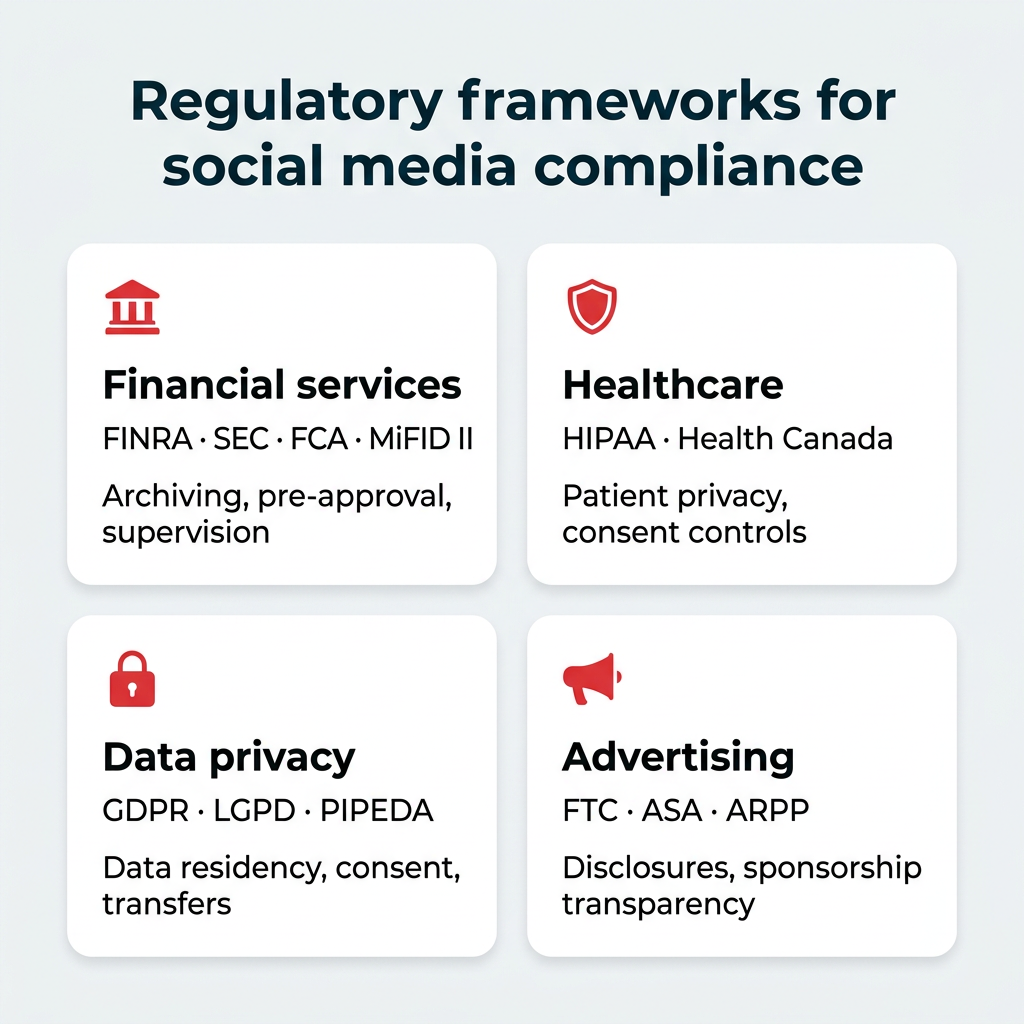
Financial institutions face some of the most stringent social media compliance requirements due to the sensitive nature of financial advice and investor protection. In the United States, the Financial Industry Regulatory Authority (FINRA) and the Securities and Exchange Commission (SEC) mandate that firms meticulously archive all social media communications, obtain pre-approval for certain types of posts, and rigorously supervise employee activity on digital platforms. A recent FINRA action saw an online brokerage fined $350,000 for lapses in monitoring social media influencers, underscoring the active enforcement environment. Similarly, in the UK and EU, the Financial Conduct Authority (FCA) and Markets in Financial Instruments Directive II (MiFID II) impose strict obligations around recordkeeping, fair communication, and preventing misleading advertising. Key requirements include:
- Content Archiving: Maintaining immutable records of all communications.
- Supervision: Overseeing employee interactions and content.
- Disclosure: Clearly identifying promotional materials and affiliations.
- Suitability: Ensuring advice is appropriate for target audiences.
- Data Security: Protecting client data from unauthorized access.
Tools like Red Oak, Smarsh, and Global Relay are specifically designed to address these highly specialized financial compliance requirements.
Healthcare (HIPAA, Health Canada)
For healthcare organizations, protecting patient privacy is paramount. In the U.S., the Health Insurance Portability and Accountability Act (HIPAA) strictly governs the sharing of Protected Health Information (PHI). Violations can lead to fines ranging from $145 to over $2.19 million per violation category per year, according to the HHS HIPAA penalty schedule. Even seemingly innocuous posts, such as celebrating a patient’s recovery, can constitute a violation if explicit consent for public sharing is not documented. The cautionary tale of a former employee at a Santa Barbara clinic who posted a video mocking patients, leading to termination and an internal investigation, highlights the swift escalation of social media incidents in healthcare. Compliance tools equipped with stringent permission controls, content screening, and audit trails are vital to prevent such breaches before they occur, ensuring patient dignity and confidentiality are upheld.
Data Privacy and Advertising (GDPR, FTC, LGPD, PIPEDA)
Regulations concerning data privacy and advertising impact virtually every enterprise that collects, processes, or uses personal data through social media. The General Data Protection Regulation (GDPR) in the EU, the Lei Geral de Proteção de Dados (LGPD) in Brazil, and the Personal Information Protection and Electronic Documents Act (PIPEDA) in Canada all impose rigorous requirements on data residency, consent mechanisms, and cross-border data transfers. The cumulative GDPR fines have already exceeded €7.1 billion, with high-profile cases like TikTok’s €345 million fine for child data privacy violations serving as stark reminders of active enforcement and significant penalties.
On the advertising front, the U.S. Federal Trade Commission (FTC) mandates clear and conspicuous disclosure of sponsored content, influencer partnerships, and any material connections between brands and content creators. Non-compliance is not theoretical; it carries tangible legal and financial consequences. Compliance tools offering features like data residency options, built-in disclosure templates, and automated flagging of potential advertising violations help enterprises navigate these complex, often overlapping, requirements across various jurisdictions.
Essential Features of Enterprise Social Media Compliance Tools
Choosing the optimal compliance software hinges on identifying features that directly address an organization’s specific risks and operational needs. While a broad spectrum of functionalities exists, certain capabilities are non-negotiable for enterprises seeking robust social media governance. Jason Sanders emphasizes the importance of “simple design and workflow” and the ability to “convey the importance of compliance as well as ensuring they understand the actual process” to maintain consistency and reduce errors across diverse teams. His three main criteria for vetting enterprise-ready compliance tools are: human engagement at scale, seamless review and approval workflows, and useful reporting.

Here are the critical features to evaluate:
- Permissions and Role Management: Granular controls are essential to prevent unauthorized publishing and limit access to sensitive accounts. This ensures distributed teams adhere strictly to governance rules, preventing individuals from posting outside their designated authority or expertise.
- Approval Workflows and Publishing Controls: Multi-tier governance ensures that legal, brand, and compliance reviews are mandatory before any content goes live. This is particularly critical for regulated industries and for executive communications, where a single misstep can have profound repercussions.
- Archiving and Record-Keeping for Audits: Creating tamper-proof logs of all posts, edits, approvals, and messages is fundamental. These regulatory-grade records meet stringent compliance requirements and provide an immutable audit trail for internal reviews or external regulatory audits.
- Monitoring and Flagging of Regulated Content: Automated detection mechanisms are crucial for identifying risky language, missing disclosures, or potential policy violations in real-time. This allows compliance teams to intervene proactively before issues escalate, leveraging keyword flagging and customizable lexicon-based screening.
- Real-time Takedown and Remediation Controls: The ability to swiftly remove or revert non-compliant posts and comments is vital during audits, crisis situations, or regulatory incidents. This immediate response capability can mitigate damage and demonstrate proactive governance.
- Integration with CRM, Legal, or Compliance Systems, and Analytics: Seamless integration connects social media activity to broader customer data, legal workflows, and compliance review processes. This holistic view enables faster, more informed decisions and centralized oversight.
- Scalability for Multi-Region and Multi-Language Teams: For global enterprises, the tool must support operations across different regions, accommodate varied local regulations, and manage localized content governance without adding manual overhead.
- Vendor Support and Regulatory Updates: The digital regulatory environment is dynamic. A reliable vendor must provide ongoing support and ensure the tool adapts proactively as policies, platforms, and privacy laws evolve, minimizing the risk of falling out of compliance.
- Reporting, Dashboards, and KPIs: Comprehensive reporting gives leaders clear visibility into compliance performance, approval timelines, emerging risk trends, and any gaps in governance, facilitating continuous improvement.
- Pre-Approved Content Libraries: Providing teams with a repository of compliant, legally reviewed content reduces bottlenecks, minimizes rewriting time, and shortens review cycles, boosting efficiency while maintaining adherence.
- Customizable Lexicons and Compliance Rulesets: Compliance teams need the flexibility to tailor risk detection to industry-specific regulations, such as FINRA, HIPAA, FCA, SEC, or FTC, ensuring relevance and precision.
- Data Residency and Geo-Specific Storage Options: To comply with GDPR, LGPD, PIPEDA, and other regional data-sovereignty laws, enterprises require options to control where their social media data is stored.
- Incident Reporting: A structured mechanism for tracking and reporting compliance violations allows for thorough investigation, remediation, and the implementation of preventative measures.
The Transformative Role of Artificial Intelligence in Compliance
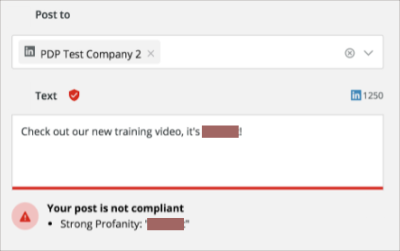
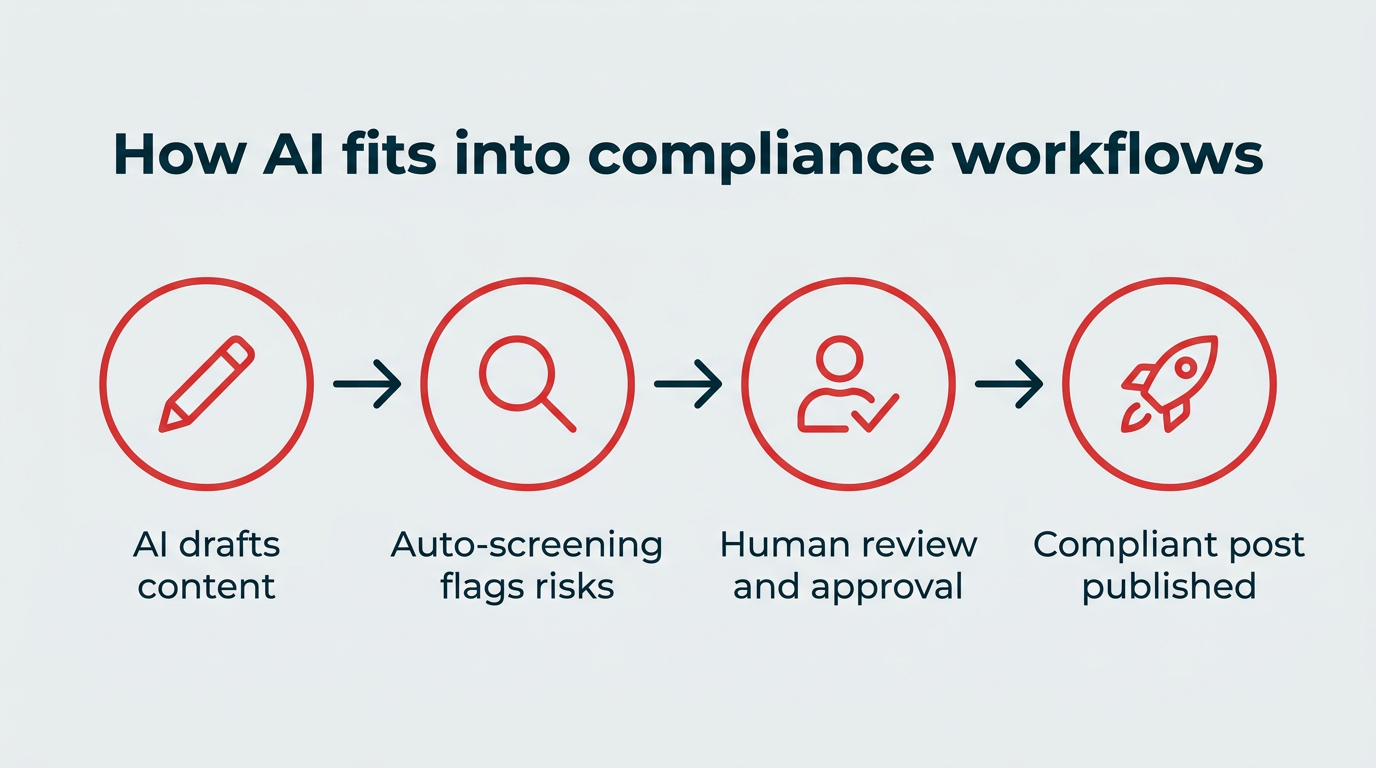
Artificial intelligence (AI) is rapidly reshaping the landscape of social media compliance, offering powerful capabilities that augment human oversight and streamline processes. Instead of manually reviewing every single post, enterprises can now leverage AI-powered tools to automate content screening, flag potential policy violations in real time, and detect subtle risky language patterns before content goes live. This includes identifying strong profanity, inappropriate imagery, or even nuanced sentiment shifts that could signal a compliance risk.
However, AI also introduces new governance challenges. As teams increasingly utilize generative AI to draft social media content, compliance tools must evolve to verify that AI-generated posts meet all regulatory standards, include required disclosures, and align perfectly with brand guidelines. The potential for AI to inadvertently create non-compliant content, or even “hallucinate” information, necessitates a robust verification layer.
Platforms like Hootsuite, with its OwlyWriter AI, help teams draft social content faster. Crucially, these AI-generated posts are still subject to stringent approval workflows and integrations with compliance solutions like Proofpoint, ensuring they undergo proper review before publishing. Furthermore, AI-driven social listening tools, often powered by technologies like Talkwalker, can surface brand risks and sentiment shifts in real-time, enabling compliance teams to act quickly on emerging threats. When evaluating tools, the focus should be on AI capabilities that enhance and accelerate the compliance process, rather than bypassing the critical human and regulatory checks.
Selecting the Right Social Media Compliance Tool: A Buyer’s Guide for 2026
There is no singular “best” compliance tool for every organization; the ideal choice is highly dependent on industry, team structure, specific regulatory requirements, and existing technological infrastructure. Enterprises often find that a combination of tools—a primary social media management platform integrated with specialized compliance and archiving solutions—offers the most comprehensive coverage.
Here’s a scenario-based guide to help match your organization’s situation to the most appropriate tool or suite of tools:
| Scenario | Best Primary Tool | Typical Tech Stack with Hootsuite |
|---|---|---|
| Global brand with many markets + complex approvals | Hootsuite | Hootsuite + Proofpoint |
| Fortune 500 company in heavily regulated industry with 30+ networks | Sprinklr | N/A (Sprinklr is often a standalone, comprehensive solution) |
| Mid-to-enterprise level organization in heavily regulated financial institution | Hootsuite | Hootsuite (publishing) + Proofpoint (pre-review) + Smarsh or Global Relay (archive, optional) |
| Small advisor or broker firm in financial industry | Red Oak | Hootsuite (day-to-day social) + Red Oak (monitoring) |
| Public sector / FOIA & open-records requirements | MirrorWeb or Pagefreezer | Hootsuite (day-to-day social) + MirrorWeb or Pagefreezer (archiving) |
| Advisor or agent networks in banking or insurance | Hearsay | Hootsuite (brand + corp channels) + Hearsay (field channels) + Global Relay (archive) |
| Employee advocacy with compliance baked in | Hootsuite Amplify | Hootsuite + Amplify + Proofpoint |
Featured Compliance Tools in Detail:
-
Hootsuite:
- Best for: Enterprise and mid-market teams requiring robust compliance controls alongside full social media management. Hootsuite scales from single-team setups to multi-brand, multi-region operations with intricate approval chains, offering an all-in-one platform for management, compliance, and social listening.
- Key Compliance Features: Customizable approval workflows, granular permissions, integration with compliance partners like Proofpoint for pre-publish review, secure content archiving, and AI-powered content creation (OwlyWriter AI) with compliance oversight. Its integration with Brolly, for example, allows entities like the City of Greater Bendigo to comply with Australia’s strict data protection laws.
- Pros: Comprehensive social media management suite, strong integration ecosystem, user-friendly interface, scalable for large teams, AI assistance for content creation.
- Cons: Advanced archiving may require third-party integration, pricing can increase with extensive features.
- Price: Starts at $99/user/month (billed annually).
- Skill Level: Beginner to intermediate.
-
Sprinklr:

- Best for: Large enterprises, particularly Fortune 500 companies, needing extensive global scale across 30+ social networks. Sprinklr is designed for organizations with dedicated teams for social operations, governance, analytics, and compliance.
- Key Compliance Features: Advanced AI for trend prediction and enterprise compliance (e.g., System and Organization Controls 2 – SOC 2 certification), comprehensive monitoring capabilities, and robust governance tools for large-scale operations.
- Pros: Unparalleled scale and breadth of coverage, powerful AI capabilities, extensive reporting and analytics, unified platform for customer experience management.
- Cons: High cost, complex setup and onboarding, steep learning curve for new users.
- Price: Custom, typically starting around $35,000 annually and potentially exceeding $100,000+.
- Skill Level: Advanced.
-
Proofpoint:
- Best for: Organizations in highly regulated industries like financial services or healthcare that require specialized archiving, record-keeping, and risk mitigation. Proofpoint integrates seamlessly with platforms like Hootsuite Enterprise.
- Key Compliance Features: Automated classification of content for policy violations, real-time removal or rollback of problematic content, and robust pre- and post-publish review processes to ensure adherence to industry-specific regulations.
- Pros: Deep expertise in compliance and security, highly effective content screening, strong integration capabilities with leading SMM platforms, regulatory-grade archiving.
- Cons: Primarily a compliance tool, not a full social media management suite; custom pricing can be prohibitive for smaller entities.
- Price: Custom, quote-based pricing.
- Skill Level: Beginner to intermediate, depending on integration and configuration needs.
-
MirrorWeb:
- Best for: Enterprises requiring comprehensive archiving and audit trails of social conversations across a multitude of channels, particularly within government, financial, tech, healthcare, insurance, and legal sectors.
- Key Compliance Features: Unified capture of content from major social media platforms (LinkedIn, X, Facebook, Instagram, TikTok, YouTube), providing a full-context archive and advanced compliance search functionalities.
- Pros: Extensive platform coverage for archiving, strong focus on audit readiness, robust search and e-discovery capabilities, secure and tamper-proof storage.
- Cons: Primarily an archiving tool, not a publishing platform; initial setup and workflow configuration can be complex.
- Price: Customizable enterprise pricing.
- Skill Level: Mid-level to intermediate.
-
Red Oak:
- Best for: Financial firms in regulated sectors, such as broker-dealers or advisors, needing to comply specifically with FINRA and SEC regulations.
- Key Compliance Features: A dual-console setup allowing marketers and administrators separate interfaces, highly configurable lexicons for precise risk detection, and flexible workflow customization to match specific regulatory requirements.
- Pros: Tailor-made for financial services compliance, robust content review and approval features, strong audit trail capabilities, reduces manual review time.
- Cons: Niche focus means less applicability outside financial services, requires significant configuration for optimal use.
- Price: Quote-based pricing.
- Skill Level: Mid-level, due to the need for workflow and policy configuration.
The Indispensable Value of Compliance Tools in the Modern Enterprise
In 2026, the stakes for enterprise social media presence are higher than ever before. Organizations operate across more platforms, regions, and teams, and regulatory scrutiny has intensified dramatically. Social media is no longer merely a marketing function; it is an extension of critical business areas including:
- Legal & Risk Management: Every post, comment, and direct message carries legal implications.
- Human Resources: Employee advocacy programs and internal communications require careful oversight.
- Customer Service: Public interactions can quickly escalate into reputational crises.
- Sales & Business Development: Lead generation and client engagement must adhere to ethical guidelines.
- Public Relations & Crisis Communications: Swift, compliant responses are essential during critical events.
Every digital interaction has legal, financial, and brand reputation risks. Compliance tools provide enterprises with the necessary guardrails to innovate and engage at speed without compromising legal obligations, contractual agreements, or public trust. Their indispensable value stems from several key benefits:
- Preventing Fines and Legal Action: Automating compliance checks significantly reduces the likelihood of costly regulatory penalties and lawsuits.
- Protecting Brand Reputation: Proactive risk mitigation prevents damaging PR incidents and maintains consumer confidence.
- Ensuring Data Privacy: Tools help enforce GDPR, HIPAA, and other privacy laws, safeguarding sensitive customer and patient information.
- Facilitating Operational Efficiency: Streamlined approval workflows and automated screening reduce manual effort and accelerate content publishing.
- Building Trust and Credibility: Consistent adherence to ethical and legal standards fosters a perception of reliability and responsibility.
- Supporting Global Expansion: Scalable solutions enable consistent compliance across diverse international markets with varying regulations.
- Empowering Employees Safely: Providing compliant frameworks for employee advocacy programs allows staff to become brand ambassadors without introducing undue risk.
By investing in advanced social media compliance tools, enterprises are not just purchasing software; they are investing in long-term stability, brand integrity, and the sustained trust of their stakeholders in an increasingly transparent and regulated digital world.
Frequently Asked Questions
What is a social media compliance tool?
A social media compliance tool is software that helps organizations manage regulatory risk, approval workflows, archiving, and policy enforcement across social media channels. These tools ensure teams can publish content while staying compliant with industry regulations like FINRA, HIPAA, GDPR, and FTC requirements.
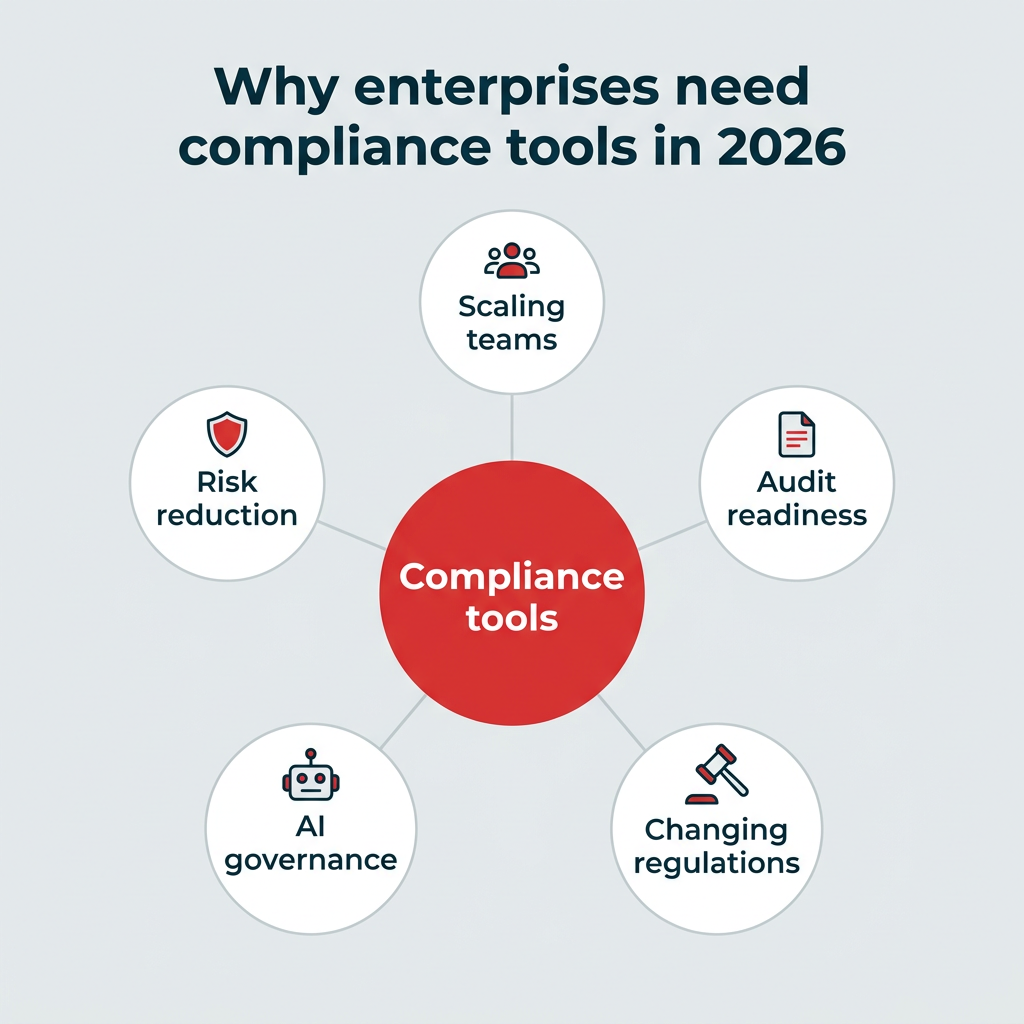
Why do enterprises need social media compliance tools?
Enterprises need social media compliance tools because they operate across multiple platforms, regions, and teams with heightened regulatory scrutiny. Compliance tools provide automated screening, approval workflows, tamper-proof archiving, and real-time monitoring to prevent fines, lawsuits, and reputational damage while enabling teams to publish quickly and safely.
How much do social media compliance tools cost?
Social media compliance tool pricing varies widely by vendor and organization size. Entry-level tools like Hootsuite start around $99/user/month, while enterprise-grade platforms like Sprinklr can cost $35,000 to over $100,000 annually. Specialized compliance solutions like Proofpoint, Smarsh, and Red Oak typically require custom quotes based on your team size, regulatory requirements, and feature needs.
What features should I look for in a social media compliance tool?
When evaluating a social media compliance tool, look for approval workflows with multi-tier governance, automated content screening and policy violation detection, tamper-proof archiving and audit trails, role-based permissions and access controls, real-time takedown capabilities, and integration with your existing tech stack. Data residency options, customizable lexicons, and vendor support for regulatory updates are also critical for regulated industries.
Can social media compliance tools prevent GDPR or HIPAA violations?
Social media compliance tools can help prevent GDPR and HIPAA violations by providing automated content screening, approval workflows, role-based permissions, and archiving capabilities that align with regulatory requirements. However, no tool eliminates all risk. Organizations must combine compliance software with clear policies, employee training, and ongoing governance to maintain full regulatory compliance.
Do I need a separate tool for archiving and compliance?
Whether you need a separate archiving tool depends on your industry and regulatory requirements. Heavily regulated sectors like financial services often require dedicated archiving solutions (e.g., Smarsh, Global Relay, MirrorWeb) that provide tamper-proof records and audit-ready archives. Many organizations pair a social media management platform like Hootsuite with a specialized archiving tool to cover both day-to-day publishing and long-term compliance needs.
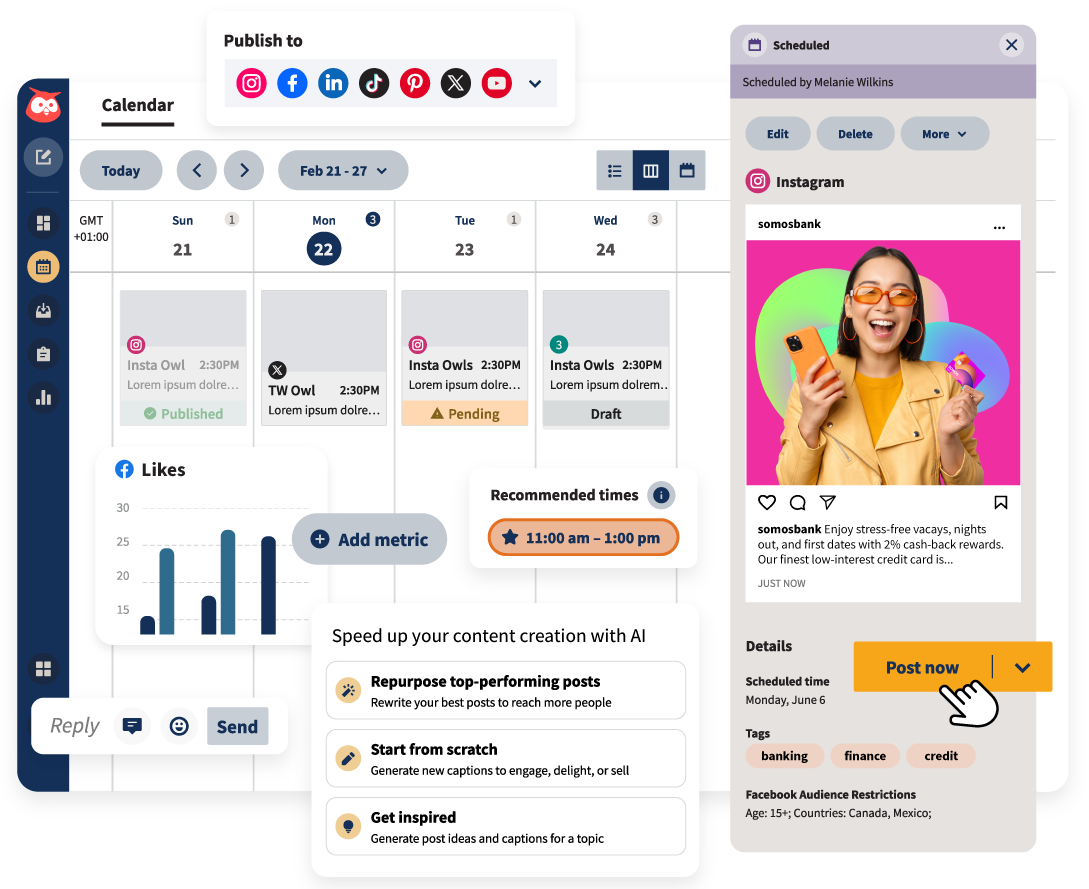
Save time managing your social media marketing strategy with Hootsuite. Publish and schedule posts, find relevant conversions, measure results, and more — all from one dashboard. Try it free today.