
 rifanmuazin
In today’s competitive e-commerce landscape, delivering exceptional customer support is no longer a differentiator but a fundamental requirement for survival and growth. Businesses are increasingly seeking integrated solutions that can manage customer interactions seamlessly across multiple channels, track order histories, and streamline resolution processes. Two prominent players in this arena, HubSpot Service Hub and Zendesk, offer distinct approaches to customer service management. This analysis delves into their core functionalities, AI capabilities, omnichannel support, CRM integration, pricing, and scalability, providing a data-driven perspective for e-commerce teams to make informed decisions.
The Evolving Demand for Integrated Support Solutions
The digital age has amplified customer expectations. A recent report by Salesforce found that 79% of consumers say the experience a company provides is as important as its products or services. This sentiment underscores the critical role of customer support in shaping brand perception and fostering loyalty. For e-commerce businesses, where interactions are often digital and immediate, the ability to offer swift, personalized, and context-aware support is paramount. The challenge lies in finding a platform that not only manages the volume of inquiries but also provides a holistic view of the customer journey, bridging the gap between marketing, sales, and service.
HubSpot Service Hub: The Unified Customer Journey Approach
HubSpot, historically renowned for its inbound marketing philosophy, has evolved into a comprehensive business platform. Its Service Hub is meticulously designed to integrate customer service operations within its robust CRM framework. This integration aims to provide a unified view of the customer, encompassing their entire lifecycle from initial marketing engagement to post-purchase support.
The foundation of HubSpot’s offering is its CRM, which acts as a central repository for all customer data. Service Hub leverages this data backbone to empower support teams. AI plays a significant role, with features like Breeze AI assisting in drafting responses, automating ticket routing, and analyzing CRM context to trigger workflows. This integrated AI approach aims to ensure that automated interactions and generated content align with a company’s brand voice, a crucial element for maintaining consistency.
A compelling case study involves Liquidity Services, which reportedly achieved a 50% reduction in support costs by consolidating its operations onto HubSpot’s interconnected platform. This highlights the potential for significant operational efficiencies and cost savings through a unified approach. HubSpot’s AI tools, such as its customer agent, are designed to automate end-to-end service tasks, with HubSpot claiming that its customer agent can resolve up to 65% of conversations autonomously for many businesses. Breeze Intelligence, another feature, focuses on data unification, form simplification, and extracting actionable insights, potentially saving weeks of manual analysis.
Zendesk: The High-Volume Support Specialist
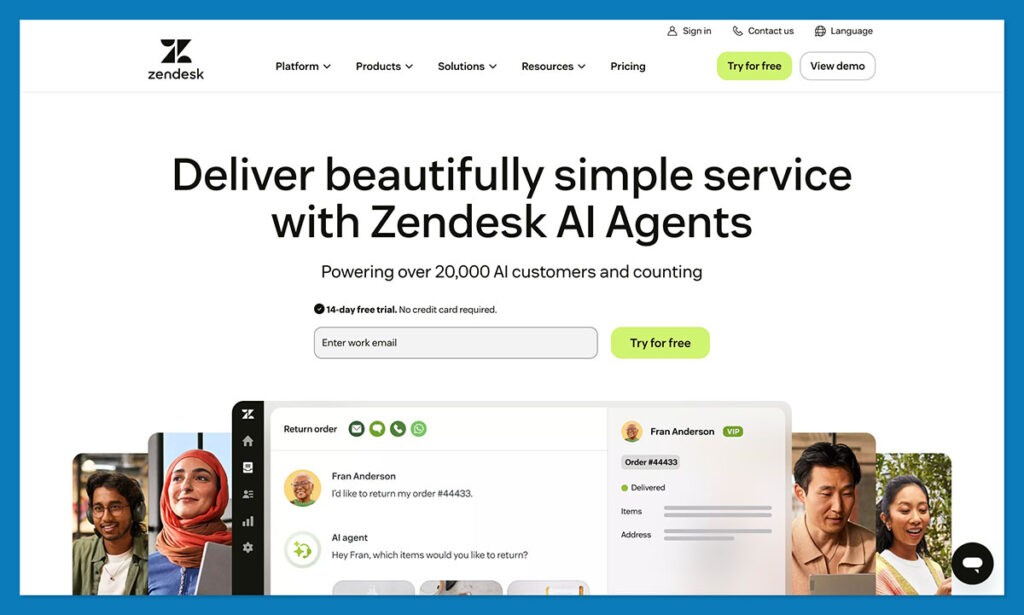
Zendesk, on the other hand, has built its reputation as a powerhouse for high-volume contact centers. Its platform is engineered for efficiency and predictability, catering to teams that manage a constant influx of customer inquiries. The Zendesk Suite consolidates various communication channels, including email, chat, SMS, social messages, and crucially, voice support.
The strength of Zendesk lies in its dedicated focus on ticket management and its robust voice capabilities. For organizations where phone support constitutes a significant portion of customer interactions, Zendesk offers a refined and feature-rich experience. Its AI features are geared towards optimizing classic support workflows, including suggested replies, automated ticket triaging, call summarization, quality assurance scoring, and workforce management tools designed to keep large teams organized and efficient.
While Zendesk offers Zendesk Sell as its CRM solution, the integration is often perceived as less seamless compared to HubSpot. Historically acquired from Base CRM, Zendesk Sell can sometimes feel like an add-on rather than an intrinsic part of the support ecosystem. This can lead to agents needing to switch between different interfaces to access full customer history, potentially impacting efficiency during peak operational periods.
Comparative Analysis: Key Differentiators
To understand the practical implications for e-commerce teams, a deeper dive into specific features is necessary.
Ease of Use, Onboarding, and Support
Both platforms are generally considered user-friendly. Zendesk presents a well-organized workshop environment where tools are intuitively placed, enabling rapid onboarding for new agents. Its mobile application is robust, allowing agents to manage tickets, reassign inquiries, access customer information, and even handle voice interactions on the go without compromising functionality. Zendesk offers all core support channels on every paid plan, ensuring immediate access to human support if required.
HubSpot’s interface, while potentially appearing more feature-rich, also prioritizes ease of onboarding. The consistent logic across its CRM, unified timeline, and singular customer record simplifies the learning curve. However, direct support access can be tiered. While free users may not receive one-to-one support, phone support typically becomes available at the Professional tier. HubSpot Academy serves as a comprehensive resource, often enabling teams to resolve issues through self-service before requiring direct assistance.
AI and Automation: Breeze AI vs. Zendesk Service AI
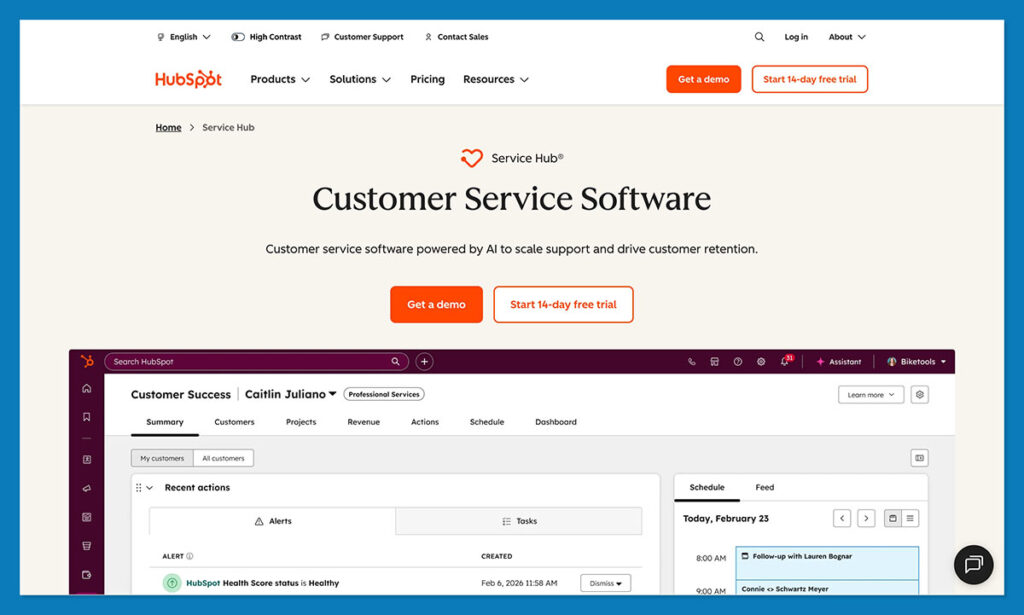
The integration of AI is a defining characteristic of modern customer service platforms. HubSpot’s Breeze AI is a holistic system that permeates its entire platform. The Breeze Assistant aids in information retrieval and response generation, while HubSpot Agents, like the customer agent, are designed for end-to-end automation, potentially handling a significant percentage of customer interactions without human intervention. Breeze Intelligence focuses on data quality, form optimization, and generating deep insights.
Zendesk’s AI is more narrowly focused on enhancing traditional support operations. Its strengths lie in features that directly impact agent productivity and queue management, such as intelligent response suggestions, automated ticket categorization, call transcript analysis, and tools for quality control and workforce planning. This focus is particularly beneficial for organizations prioritizing speed and efficiency in handling a high volume of support requests.
The fundamental divergence in AI strategy is evident: Zendesk hyper-focuses on optimizing the support queue, while HubSpot aims to connect AI capabilities across sales, marketing, and customer support, treating the customer journey as an interconnected whole.
Omnichannel Support and Ticket Management
HubSpot’s unified inbox consolidates interactions from email, chat, WhatsApp, Messenger, and form submissions directly within the CRM. This ensures agents have immediate access to the full customer context, enabling them to seamlessly transition between different types of inquiries. Ticket pipelines are designed for easy management, allowing teams to segment issues such as returns, complaints, and general inquiries.
Zendesk boasts a broader array of supported channels, including SMS and a wider range of social media platforms. For businesses managing support across numerous fronts, Zendesk’s workspace can feel more comprehensive. However, a key distinction is that Zendesk’s CRM integration requires explicit setup, meaning full customer history might not be immediately available within the support workspace without additional configuration.
CRM Strength and Product Extras
The core difference in CRM integration is a significant differentiator. HubSpot’s CRM is the central nervous system of its platform. Every interaction, from a support ticket to a sales note, is logged within a single, comprehensive customer timeline. This provides support agents with an immediate and complete understanding of a customer’s purchase history, engagement patterns, and past service interactions.
Zendesk Sell, while functional, operates more as a standalone CRM. Its acquisition history means it can feel less integrated into the day-to-day workflow of support agents, potentially leading to context switching.
In terms of additional features, HubSpot offers tools that foster a connected business approach, such as a customer success workspace, health scoring, Net Promoter Score (NPS) tracking, and playbooks that equip smaller teams with mature customer success capabilities. Zendesk’s extras are geared towards operational efficiency, with features designed for contact center managers focused on metrics like reply times, service level agreements (SLAs), and quality assurance.
Reporting and Analytics
HubSpot’s reporting capabilities are distinguished by their interconnectedness. Support metrics are intrinsically linked to sales data, marketing campaign performance, and order histories. This holistic view allows businesses to analyze how customer service impacts revenue, retention, and customer lifetime value (LTV). The customer success workspace, health scoring, and NPS tracking provide advanced analytics typically found in dedicated customer success platforms, accessible within the HubSpot ecosystem.
Zendesk’s reporting suite is more aligned with traditional support analytics. Its Explore feature provides in-depth ticket metrics, queue performance, QA scores, and staffing insights, which are invaluable for contact center managers. However, without additional integrations, Zendesk’s reporting does not inherently connect support activities to broader customer lifecycle data.
Pricing and Scalability: A Strategic Consideration
When evaluating pricing and scalability, it’s crucial to consider the long-term value proposition.
HubSpot offers a free CRM that includes essential ticketing functionalities for up to two users, alongside free service-focused tools like a knowledge base and feedback surveys. Paid tiers for Service Hub begin at $15 per seat per month for the Starter plan, with costs escalating for Professional and Enterprise editions. While there’s a significant jump between tiers, the integrated nature of HubSpot can lead to cost savings by consolidating multiple software subscriptions.
Zendesk does not offer a free tier, with paid plans starting at $19 per agent per month for their basic Suite offerings. The price difference between tiers is generally smaller, but the core functionalities and advanced features can be locked behind higher-priced plans. Furthermore, Zendesk Sell is an additional cost, and the need for integrations to achieve a unified view can lead to a cumulative cost that rivals enterprise-level solutions for mid-sized businesses.
Scalability

HubSpot scales effectively when a business prioritizes a unified customer record across all departments. Adding users, workflows, and data is straightforward, with the CRM designed for expansion. The primary cost consideration arises at higher tiers, especially when multiple HubSpot hubs are implemented.
Zendesk excels in handling high ticket volumes, maintaining performance even under extreme pressure. However, as a business grows and requires more than just core support functionalities, its "service-first" architecture can present limitations. While scaling the support team is seamless, the reliance on disparate tools for other business functions can lead to fragmentation.
Integrations and App Ecosystems
For e-commerce businesses, robust integrations are non-negotiable. HubSpot’s app marketplace, coupled with its Data Hub sync engine, offers extensive connectors for popular e-commerce platforms like Shopify, WooCommerce, and BigCommerce. The seamless two-way data synchronization ensures that updates made in one system are reflected in others, maintaining data integrity across the entire customer lifecycle. Crucially, integrations within HubSpot automatically benefit sales, marketing, and support simultaneously due to the unified CRM.
Zendesk’s marketplace is also extensive, allowing for broad connectivity. However, the quality and depth of integration can vary. While many apps integrate well with the support workspace, fewer seamlessly connect with Zendesk Sell. This can lead to a fragmented integration landscape, where achieving a truly unified view requires significant effort and potentially custom solutions. Many e-commerce businesses using Zendesk operate with a combination of separate CRMs, marketing stacks, and custom scripts, which can become fragile during peak operational periods.
The Verdict: A Choice Driven by Business Needs
The decision between HubSpot Service Hub and Zendesk hinges on an e-commerce business’s specific priorities and operational model. Both platforms are formidable in their respective strengths.
Zendesk remains the superior choice for support-heavy organizations that operate primarily within ticket queues and rely heavily on voice support and operational metrics. Its stability and efficiency in managing high volumes are unparalleled.
However, for e-commerce businesses that prioritize a holistic customer experience, where support is deeply intertwined with marketing and sales efforts, HubSpot Service Hub emerges as the more natural and effective solution. Its integrated CRM, AI capabilities, and seamless data flow across departments offer a more connected and efficient operational framework. The ability to see the complete customer journey, from initial engagement to resolution, empowers teams to build stronger customer relationships and drive long-term loyalty.
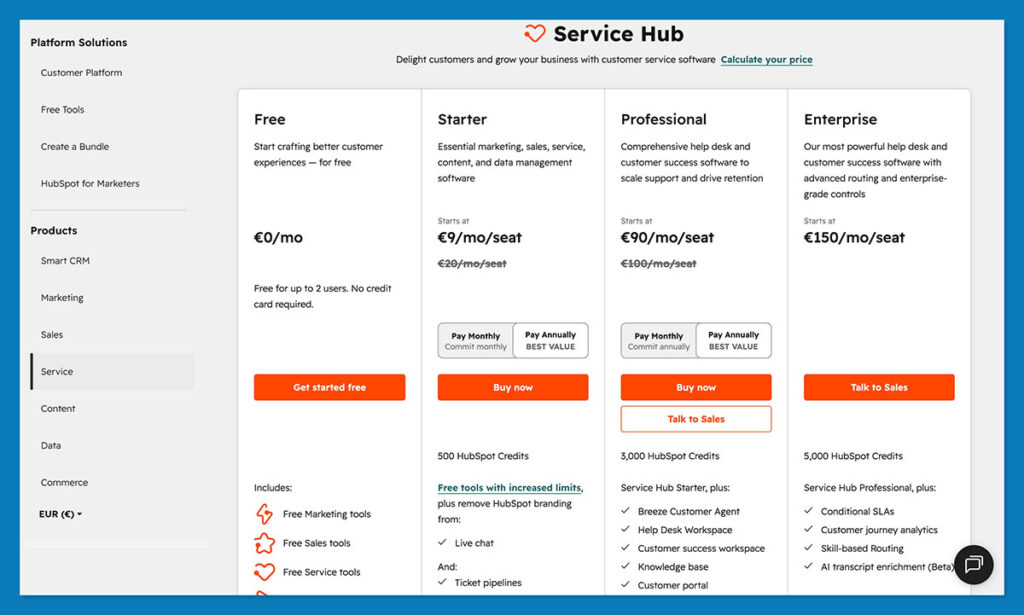
For e-commerce teams looking to consolidate their customer management and elevate their support strategy, experimenting with HubSpot’s free CRM is a logical first step. This allows for a direct assessment of how its unified approach aligns with their operational requirements and future growth objectives.
Frequently Asked Questions
-
How does HubSpot compare to Zendesk?
HubSpot integrates support with the entire customer journey, while Zendesk focuses on ticket flow. For businesses prioritizing context and a unified view, HubSpot is often the preferred choice. For those whose world revolves around high ticket volumes, SLAs, and extensive phone support, Zendesk’s specialized capabilities may be more advantageous. -
When should an e-commerce business use HubSpot for support?
HubSpot is ideal for e-commerce stores that depend on repeat customers and require clear visibility across all customer touchpoints. Its unified CRM ensures that support, marketing, and sales teams operate with the same customer data, fostering better retention and increased customer lifetime value. -
Is HubSpot affordable for small businesses?
Yes, HubSpot is accessible to small businesses. The free HubSpot CRM provides foundational contact management and basic ticketing for up to two users. Service Hub Starter plans begin at $15 per seat per month, with more advanced features available at higher tiers.









