rifanmuazin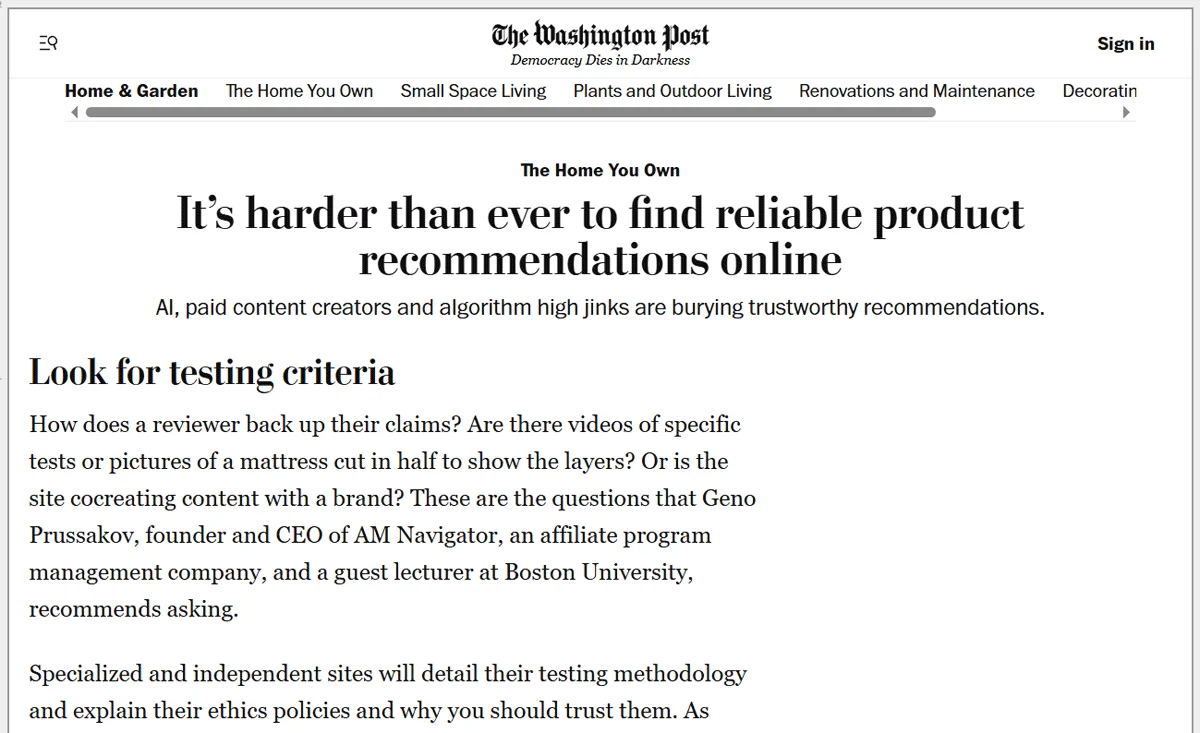
The landscape of digital journalism has undergone a profound transformation over the last decade, shifting from a primary reliance on display advertising to a sophisticated model of commerce-driven content. As traditional revenue streams like print subscriptions and banner ads have dwindled, major media organizations have increasingly leveraged their editorial authority to generate revenue through affiliate marketing and sponsored product roundups. This shift was highlighted in a recent feature by The Washington Post, published on January 13, 2025, which examined the reliability of online shopping guides and the influence of financial incentives on editorial choices.
The intersection of journalism and commerce has created a complex environment for consumers. When high-authority outlets such as The New York Times, CNN, or Forbes publish “Best of” lists, these articles often dominate search engine results pages (SERPs) due to the immense domain authority these institutions possess. However, the commercial mechanisms behind these recommendations—including affiliate commissions, placement fees, and Earnings Per Click (EPC) guarantees—raise critical questions regarding the objectivity of the advice provided to the public.
The Rise of Commerce Content: A Chronological Overview
The transition from purely informational reporting to “service journalism” that prioritizes product recommendations did not happen overnight. It is the result of a multi-decade evolution in the media business model.
In the early 2000s, digital media relied heavily on high-traffic volume and “impression-based” advertising. As programmatic advertising and ad-blocking technology evolved, the value of standard banner ads plummeted. By the mid-2010s, media houses began looking for more sustainable revenue sources. A pivotal moment occurred in 2016 when The New York Times Company acquired The Wirecutter, a product review site, for approximately $30 million. This acquisition signaled to the industry that high-quality, recommendation-based content was a viable and lucrative business strategy.
By 2020, the global pandemic accelerated this trend. With a massive surge in e-commerce activity, nearly every major media outlet established a “commerce” or “shopping” desk. These departments are tasked with creating content that guides readers toward purchases while ensuring the publisher receives a percentage of the resulting sales. Today, this practice is a cornerstone of the digital economy, with affiliate marketing spending in the United States alone estimated to exceed $15 billion annually.
The Mechanics of Media Monetization
Media organizations monetize their authority through several sophisticated channels. While the most common method is the affiliate link—where a publisher earns a commission if a reader clicks a link and makes a purchase—the arrangements are often more layered.
- Affiliate Commissions: This is the baseline of commerce content. Publishers partner with networks to receive a percentage (ranging from 1% to 20% or more) of a sale.
- Placement Fees: Some brands pay a flat fee to be included in a roundup or to secure a “top” position on a list, regardless of whether a sale occurs.
- EPC Guarantees: Large publishers often negotiate “Earnings Per Click” guarantees with merchants. If the traffic sent by the publisher does not convert at a rate that meets a specific dollar amount per click, the merchant agrees to make up the difference.
- Whitelisting and Licensing: Brands often pay for the right to use a publisher’s logo (e.g., “Rated Best by [Publication Name]”) in their own marketing materials.
These financial arrangements are largely invisible to the average reader, creating a potential conflict of interest. If “Product A” offers a 15% commission while “Product B” (the superior product) offers no commission, the editorial pressure to highlight “Product A” can become significant.
Industry Rigor and Editorial Standards
Despite the financial incentives, many leading media organizations maintain that their editorial and commercial teams operate independently—a concept often referred to as the “Church and State” divide. Industry experts, including those at affiliate management agencies like AM Navigator, observe that the most reputable publishers take several steps to protect their brand’s integrity.
First, many outlets employ dedicated testing teams that spend weeks or months evaluating products. These reviewers often use standardized testing protocols and laboratory environments to ensure objective data collection. Second, the editorial teams frequently make their selections before the commerce teams identify which products have affiliate programs, thereby insulating the initial choice from financial bias.
Third, transparency has become a regulatory and ethical requirement. The Federal Trade Commission (FTC) in the United States requires clear and conspicuous disclosures when a link provides a financial benefit to the publisher. Finally, many outlets have implemented “long-term monitoring” of their recommendations, updating lists as products are discontinued or as newer, better versions hit the market. This ongoing maintenance is essential for preserving the “search engine authority” that keeps these articles at the top of Google results.

Supporting Data: The Impact of Authority on Consumer Behavior
The influence of big media on consumer spending is supported by significant data. According to industry reports, nearly 81% of consumers conduct online research before making a major purchase. Furthermore, articles published by high-authority domains are 50% more likely to be perceived as “trustworthy” by consumers compared to unknown blogs or social media advertisements.
The financial impact for brands is equally substantial. Being featured as the “Best Overall” in a major publication can lead to a 300% to 500% increase in sales for a specific product within the first 48 hours of publication. This “halo effect” of media endorsement is why brands are willing to pay high commission rates and placement fees to secure a spot on these coveted lists.
Strategies for the Informed Consumer
As the line between journalism and advertising continues to blur, consumers must adopt a more analytical approach to online shopping. Industry analysts suggest four primary strategies for evaluating product recommendations:
1. Verification of Disclosure Statements
The first step for any reader should be to locate the affiliate disclosure. Reliable outlets place this at the very top of the page. A lack of transparency regarding financial relationships is a significant red flag. Consumers should look for language that explicitly states the publication may earn a commission from purchases made through their links.
2. Cross-Referencing Multiple High-Authority Sources
A consumer should never rely on a single list. If three different major publications all recommend the same vacuum cleaner as the “Best of 2025,” the likelihood of it being a quality product is high. Conversely, if only one site recommends a specific niche brand, it may be the result of a unique financial arrangement or a exclusive partnership.
3. Analyzing the Depth of the Review
Readers should look for “hands-on” evidence. Does the article include original photography of the product being used? Does it list specific pros and cons? A review that only uses manufacturer-provided stock photos and rehashes technical specifications is often a “content farm” piece designed solely for SEO, rather than a genuine editorial recommendation.
4. Checking the “Last Updated” Date and Historical Consistency
The digital landscape moves quickly. A recommendation from 2023 may no longer be relevant in 2025. Consumers should check when the article was last updated and whether the publication has a history of reviewing that specific category. Consistency over time is a hallmark of a publication that takes its recommendation engine seriously.
The Broader Implications for Digital Journalism
The shift toward commerce content has broader implications for the future of the free press. On one hand, affiliate revenue has saved many newsrooms from bankruptcy, allowing them to continue funding investigative journalism and local reporting. On the other hand, the “SEO-fication” of the internet has led to a homogenization of content. When every major outlet is competing for the same keywords (e.g., “Best Credit Cards” or “Best Mattress”), the diversity of voices in the digital space can diminish.
Furthermore, there is the risk of “authority erosion.” If consumers repeatedly purchase recommended products that fail to meet expectations, the long-term value of the media brand’s endorsement will decline. This creates a high-stakes environment where publishers must balance short-term quarterly revenue goals against the long-term necessity of maintaining reader trust.
As search engines like Google continue to update their algorithms to prioritize “Helpful Content” and “Experience, Expertise, Authoritativeness, and Trustworthiness” (E-E-A-T), the pressure on media houses to provide genuine value will only increase. The future of digital media likely lies in a hybrid model where financial transparency and rigorous editorial testing are not just ethical choices, but essential components of a sustainable business strategy.
In conclusion, while the monetization of media authority is a permanent fixture of the modern economy, it requires a “buyer beware” mindset. By understanding the mechanics of how these lists are created and the financial incentives involved, consumers can better navigate the digital marketplace and make informed decisions that are not solely dictated by a publisher’s bottom line.