rifanmuazin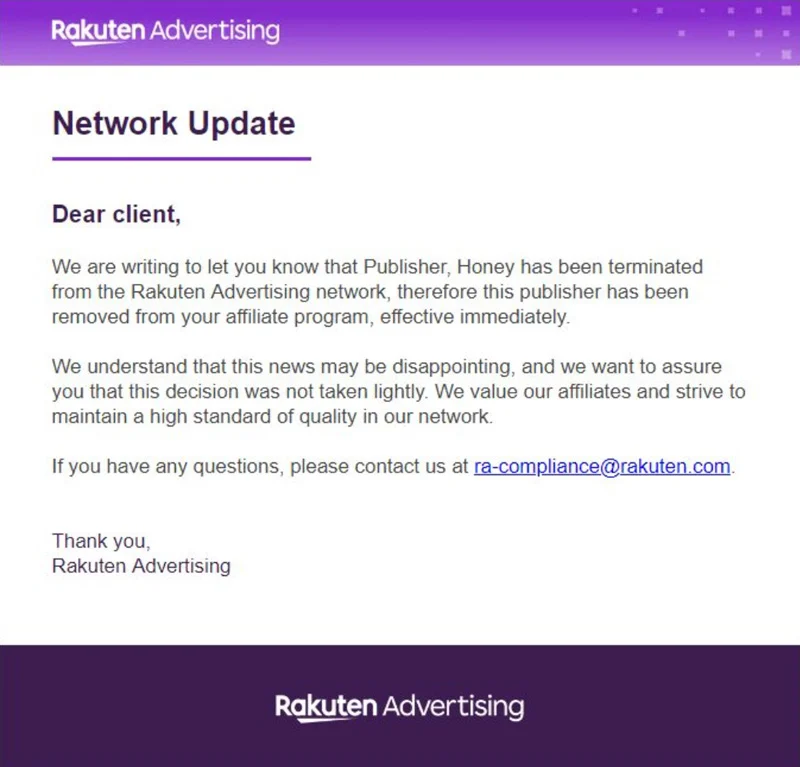
The affiliate marketing industry experienced a significant shift in its power dynamics and compliance standards this month as PayPal Honey, one of the world’s most prominent coupon and rewards platforms, was removed from two of the largest affiliate networks in the United States. Following a series of technical investigations and public exposés, Rakuten Advertising and Impact.com took decisive action against the browser extension, citing violations of network policies and “attribution manipulation.” The move, which occurred during the week of the Affiliate Summit West conference in Las Vegas, signals a renewed focus on transparency and ethical conduct within the multibillion-dollar partnership economy.
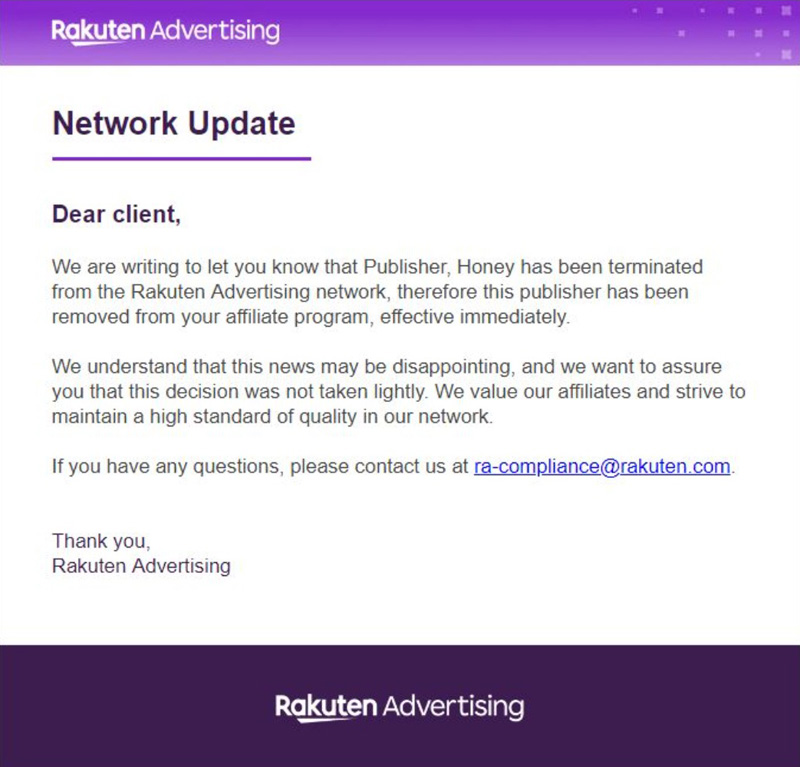
The fallout began on Monday, January 12, 2026, when Rakuten Advertising announced the immediate termination of Honey from its network. In a formal communication, Rakuten characterized the removal as a necessary step to maintain the “high standard of quality” required for its ecosystem. Only four days later, on Friday, January 16, Impact.com followed suit, revealing that Honey had been found “out of compliance” with its platform policies. While Impact.com categorized its action as a removal from its “Discovery Marketplace,” the network’s leadership explicitly linked the decision to behaviors that undermine trust, specifically highlighting the manipulation of conversion attribution.
The Rise of PayPal Honey and the $4 Billion Acquisition
To understand the gravity of these removals, one must look back at the trajectory of Honey Science Corp. Founded in 2012, Honey became a household name by offering a browser extension that automatically discovers and applies coupon codes at checkout for thousands of online retailers. Its success was meteoric, driven by a user-friendly interface and a value proposition that appealed to price-conscious consumers globally.
In late 2019, PayPal announced it would acquire Honey for approximately $4 billion in cash, marking the largest acquisition in PayPal’s history. At the time, the deal was seen as a strategic move to embed PayPal earlier in the customer’s shopping journey, moving beyond the payment button to the discovery and deal-seeking phase. For years, Honey was considered the “gold standard” of affiliate publishers, driving massive volume for major brands and becoming a staple in almost every significant affiliate program in North America.
The Catalyst: Investigations into Technical Non-Compliance
The recent collapse of Honey’s standing within major networks did not occur in a vacuum. It was precipitated by detailed investigations from independent researchers and digital forensic experts. Most notably, a video report by the investigative creator MegaLag and a technical deep-dive by Ben Edelman, a well-known researcher specializing in online fraud and affiliate marketing ethics, brought long-standing industry suspicions to the forefront.
The core of the allegations centers on “attribution manipulation” and the violation of “stand-down” rules. In affiliate marketing, the “last-click” model is the standard: the last affiliate to refer a customer before a purchase receives the commission. To prevent browser extensions from unfairly “snatching” commissions from other affiliates—such as content creators, bloggers, or influencers who did the initial work of recommending a product—networks implement stand-down rules. These rules require an extension to remain inactive if another affiliate’s cookie is already present in the user’s browser.
Edelman’s investigation alleged that Honey utilized sophisticated methods to bypass these rules. The reports suggested that Honey’s software was designed to detect when it was being monitored by “testers” or compliance software. When it believed it was being watched, it would follow the rules; when it detected a normal user, it would allegedly fire its own tracking links, overwriting the cookies of previous affiliates and claiming the commission for itself. This practice, often referred to as “cookie stuffing” or “attribution hijacking,” effectively siphons revenue away from honest partners and increases costs for merchants who pay commissions for sales that were already likely to occur.

A Chronology of the Removal
The timeline of the removals suggests a coordinated effort by networks to address these concerns during one of the industry’s most influential weeks.
- Late 2025 – Early 2026: Investigative reports from MegaLag and Ben Edelman gain traction within the affiliate management community, providing documented evidence of Honey’s alleged stand-down violations.
- January 12, 2026: On the opening day of Affiliate Summit West, Rakuten Advertising officially terminates Honey. The timing ensured the news would be the primary topic of discussion among the thousands of industry professionals gathered in Las Vegas.
- January 14-15, 2026: Industry discussions intensify as brands and affiliate managers begin auditing their own programs for similar discrepancies.
- January 16, 2026: Impact.com announces the suspension of Honey from its Discovery Marketplace. Impact.com CEO David A. Yovanno publicly addressed the issue, emphasizing that the partnership economy relies on trust and that attribution manipulation cannot be tolerated.
Official Responses and Industry Reactions
While PayPal has not released an extensive formal rebuttal to the specific technical allegations at the time of this report, the actions taken by the networks speak to the severity of the findings. Rakuten Advertising’s statement was concise, focusing on “quality standards,” a phrase often used as a professional euphemism for compliance failures.
Impact.com was more transparent regarding the cause. By labeling the behavior as “attribution manipulation,” the platform sent a clear message to other “Downloadable Software Publishers” (DSPs). The distinction made by Impact.com—categorizing it as a suspension rather than a permanent total ban—suggests a potential path for remediation, though industry analysts remain skeptical about how quickly a $4 billion entity can pivot its core tracking technology to satisfy these new enforcement rigors.
The reaction from the broader affiliate community has been a mixture of vindication and concern. Many “top-of-funnel” publishers, such as editorial sites and influencers, have long complained that their commissions were being “stolen” by browser extensions that fire at the very last second of a transaction. For these creators, the removal of Honey is seen as a victory for the “content-first” model of marketing.
Technical Analysis: The Impact of Stand-Down Violations
The “stand-down” rule is a vital piece of the affiliate ecosystem’s infrastructure. When a user clicks a link from a review site, a tracking cookie is placed. If that user then goes to the checkout page and a browser extension like Honey pops up, the extension is supposed to check for existing affiliate cookies. If one is found, the extension should offer its service (like finding coupons) without dropping its own tracking link.
The investigations alleged that Honey used “concealment” tactics to hide the fact that it was dropping links regardless of whether another affiliate was already present. This behavior is particularly damaging to the “Partnership Economy” because it devalues the contribution of content creators. If a blogger spends hours writing a product review that leads to a sale, but a browser extension takes the commission in the final three seconds of the checkout process, the blogger loses the incentive to promote the brand. This leads to a degradation of the entire marketing channel.
Broader Implications for Affiliate Program Management
The removal of such a massive player as PayPal Honey serves as a cautionary tale for affiliate managers and brand owners. Experts suggest that this event will lead to five major shifts in how affiliate programs are managed in 2026 and beyond:
1. The End of “Set It and Forget It” Compliance
For years, many brands relied on affiliate networks to handle all policing. The Honey case demonstrates that even major networks can “look the other way” for years when a publisher is driving massive volume. Moving forward, brands are expected to invest in independent auditing tools and dedicated compliance officers to monitor affiliate behavior directly.
2. Scrutiny of Downloadable Software Publishers (DSPs)
Browser extensions, toolbars, and other downloadable software will face unprecedented scrutiny. The Affiliate & Partner Marketing Association (APMA) recently conducted an independent audit of attribution rules, highlighting the complexity of “soft clicks” versus “hard clicks.” Brands are likely to demand more transparency into the code and behavior of these tools before allowing them into their programs.
3. Diversification of Affiliate Bases
The Honey suspension has highlighted the danger of “all eggs in one basket.” Programs that relied on Honey for 30% or 40% of their affiliate revenue are now seeing a massive vacuum. This is expected to drive a surge in recruitment across diverse affiliate types, including content producers, podcasters, social media influencers, and “closed user group” (CUG) solutions.
4. Redefining the “Last-Click” Model
While last-click remains the standard, this scandal may accelerate the industry’s move toward multi-touch attribution or fractional commissions. By rewarding every affiliate who touched the customer journey, brands can diminish the incentive for “cookie-snatching” at the final stage of the funnel.
5. Increased Legal and Contractual Rigor
Affiliate Program Agreements (Terms and Conditions) are being rewritten to include specific clauses regarding browser extension behavior, with heavy penalties for “intentional concealment” of tracking methods.
Conclusion: A Turning Point for the Industry
The removal of PayPal Honey from Rakuten and Impact.com is more than just a dispute between a publisher and its networks; it is a defining moment for the maturity of digital marketing. As the affiliate industry continues to grow, the demand for transparency and “fair play” is overriding the influence of even the largest corporate entities.
For PayPal, the challenge will be to re-engineer Honey’s integration methods to regain the trust of the networks and the thousands of merchants that once welcomed the extension. For the rest of the industry, the message is clear: volume is no longer a shield against non-compliance. In the evolving landscape of 2026, integrity in attribution is the new currency of the partnership economy.