rifanmuazin
Crafting truly compelling and successful public relations campaigns presents a significant challenge for professionals in today’s dynamic media landscape. The pressure to innovate, capture attention, and deliver measurable results is immense, often compounded by tight deadlines and the inherent risk of investing resources in unproven concepts. However, the elusive nature of a "breakthrough idea" can be demystified and significantly enhanced through a systematic, research-backed approach. This article delves into a proven two-step process that leverages robust data analysis and strategic creative development to drastically increase the probability of PR campaign success, moving beyond gut feelings to embrace evidence-based strategy.
The Evolving Landscape of PR Campaigns: Why Research is Paramount
In an era saturated with information, merely generating content is insufficient. For a PR campaign to truly resonate, it must cut through the noise, secure valuable media coverage and backlinks, and foster genuine social engagement. This demands a profound understanding of what captivates audiences and compels journalists to cover a story. Earned media, often considered the most credible form of advertising, relies heavily on relevance and newsworthiness. Without a data-driven foundation, campaign ideas risk falling flat, failing to connect with target audiences or pique the interest of key media gatekeepers. The increasing sophistication of analytical tools, such as BuzzSumo’s Content Analysis Report, provides PR professionals with an unprecedented ability to dissect content performance, uncover trending topics, and identify emotional triggers that drive audience interaction. This strategic shift from intuitive brainstorming to informed ideation is critical for navigating a competitive and constantly evolving media environment.
Pillar One: Unearthing Themes and Emotions Through Data Analytics
The initial phase of developing a successful PR campaign revolves around rigorous research into content themes and the underlying emotions they evoke. Before a concrete campaign idea even begins to form, strategists must establish a clear understanding of what topics consistently attract attention and engagement within their client’s industry or related spheres.
Identifying High-Impact Content Themes
The primary objective here is to pinpoint themes that are not only frequently discussed but also consistently shared and linked across various platforms. Success, in this context, is defined by securing high-quality media coverage and valuable backlinks – crucial for search engine optimization (SEO) and brand authority – with social engagement serving as a vital secondary Key Performance Indicator (KPI). This analytical process does not require immediate ideation; rather, it’s about building a foundational understanding of the content landscape.
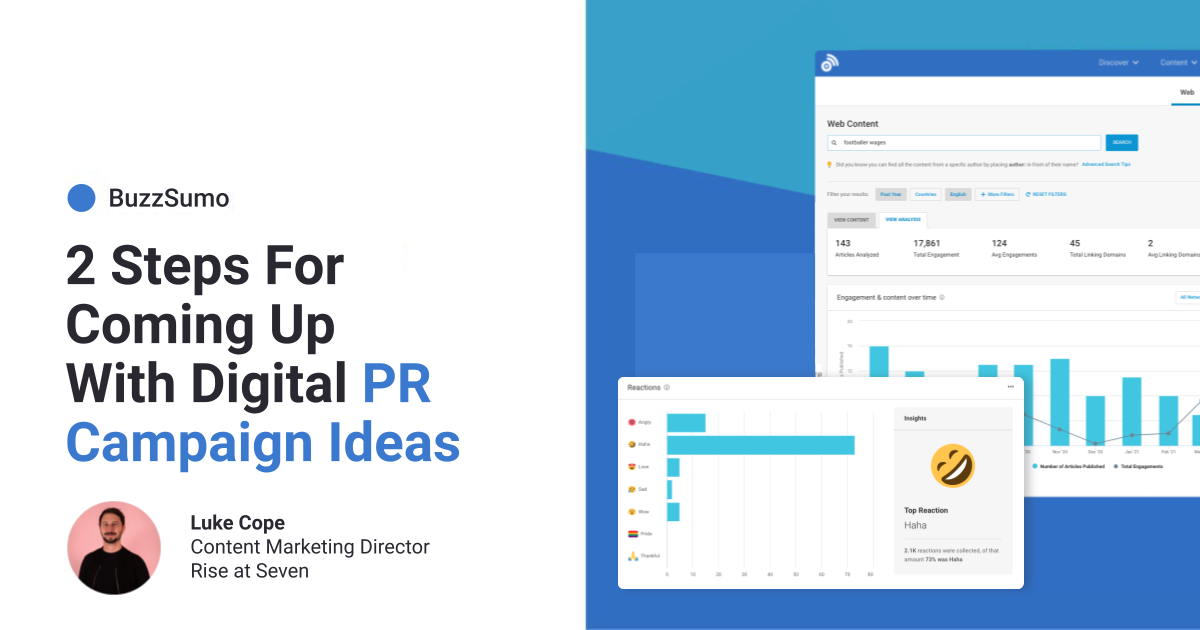
The journey begins by utilizing sophisticated content analysis tools. Taking BuzzSumo’s Content Analysis Report as an example, the process involves exploring a wide array of keywords. If a client specializes in honeymoon packages, the initial search might focus on "Honeymoons." This primary keyword often reveals a baseline of content volume and engagement. From there, the research systematically branches out to related, yet broader, terms such as "Engagement rings," "Weddings," "Destination weddings," or even "Proposal ideas." The goal is to progressively expand the thematic scope until the topics become too far removed from the core offering, ensuring relevance while casting a wide net for potential opportunities.
This iterative exploration allows PR teams to observe trends in article publication over time, identifying consistent interest or burgeoning topics. For instance, an analysis might reveal that while "honeymoons" consistently garners attention, "engagement rings" experiences seasonal spikes or sustained high levels of discussion, indicating a robust and active content ecosystem. The visual data provided by such reports—showcasing engagement trends and emotional sentiment—becomes invaluable for spotting patterns and untapped niches.
The Psychology of Engagement: Tapping into Emotions
Beyond mere topic frequency, understanding the emotional resonance of content is paramount. Different emotions drive different types of engagement and sharing behavior. Content that evokes strong emotions—whether positive like joy, awe, and inspiration, or negative like anger, sadness, or surprise—tends to perform exceptionally well. Tools that analyze sentiment in content can reveal which emotions are most prevalent in discussions around particular themes. For instance, articles about environmental issues might frequently elicit concern or sadness, while content on luxury travel could be associated with aspiration or joy.
By identifying these emotional undercurrents, PR professionals can strategically craft their campaign narratives to align with existing audience sentiments, thereby increasing the likelihood of widespread engagement. This deeper dive into emotional data provides critical insights for framing the campaign’s message and tailoring it for maximum impact.
Real-World Application: Campaigns Driven by Emotional Resonance and Timeliness
The theoretical framework of theme and emotion research truly comes alive when applied to actual campaigns. The following examples illustrate how this data-driven approach translates into highly successful PR initiatives.
Case Study: "A World Without Light Pollution" – Leveraging Environmental Concern and Awe
Consider a campaign developed for a brand selling star maps. The initial product theme, "star maps," while relevant, might not possess sufficient breadth for a large-scale PR push. Expanding the research, secondary themes like "Supermoons" and "Night sky" reveal significant social engagement, indicating public fascination with celestial phenomena. However, it’s the theme of "Light pollution" that emerges as a particularly potent area.
During the research phase, it became evident that "light pollution" was not only consistently discussed but was experiencing a significant surge in public interest. This timing was critical: SpaceX’s Starlink satellite launches were generating headlines due to concerns about their contribution to light pollution, and the global COVID-19 pandemic had brought general pollution levels into sharp focus. This confluence of current events created a timely and highly relevant window for a campaign.
Further analysis of reader reactions to articles on light pollution revealed two dominant emotions: sadness regarding the loss of natural night skies and a profound "wow" factor associated with imagery of pristine stargazing. This dual emotional response provided clear guidance for the campaign’s execution. The team realized the campaign needed to be intensely visual to evoke the "wow" factor and compel people to contemplate a world free from artificial light. The resulting campaign, showcasing how the most light-polluted cities would appear without light pollution, powerfully tapped into both environmental concerns and a sense of awe, securing widespread media attention and links. The strategic timing, coupled with an understanding of prevailing emotions, transformed a niche product into a globally relevant discussion.
Case Study: The "Footballer Cars" Calculator – Igniting Competition and Comparison
Another compelling example involves a campaign for private number plates. The core product theme offered some humorous content but lacked the gravitas for a major campaign. The strategy then shifted to exploring aspirational lifestyle themes. Research into "Celebrity cars" showed a high volume of articles, but it was the deeper dive into "Footballers’ cars" that unveiled a goldmine of engagement.
Analyzing the comments sections of these articles proved revelatory: readers were not merely observing; they were reacting with strong emotions, particularly anger, competitiveness, and a tendency for self-comparison. The public’s fascination with celebrity wealth, particularly among highly paid athletes, often elicits strong opinions and a desire to benchmark one’s own financial standing against theirs. This insight sparked a powerful idea: what if this inherent comparison could be made literal and interactive?
The solution was an online calculator that allowed users to compare their own earnings and purchasing power against the exorbitant cost of footballers’ luxury vehicles. By tapping into the potent emotions of envy, aspiration, and even indignation, the campaign provided a direct, personalized, and highly shareable experience. This approach resonated deeply with media outlets and the public, demonstrating that understanding negative emotions can be as powerful, if not more so, than focusing solely on positive ones, leading to significant media pickup and public discussion.
Pillar Two: Crafting Impactful Formats and Adding Strategic Depth
Once a compelling theme and emotional angle have been identified, the second crucial step involves selecting the absolute best format for the campaign and enriching it with strategic depth and multiple angles. A brilliant idea can be severely undermined by an inappropriate presentation.
The Imperative of Format Selection
The choice of format is intrinsically linked to the campaign’s core message and desired emotional impact. For instance, the "light pollution" campaign, aimed at evoking a "wow" factor, would have been significantly less effective as a simple blog post. Its visual nature demanded an interactive experience. The use of a simple slider code, allowing users to compare "before" and "after" images of city skylines, transformed static visuals into an engaging, participatory experience that amplified the intended emotional response.
Various formats serve different purposes:
- Interactive Tools/Calculators: Excellent for personalization, comparison, and generating unique user data (e.g., footballer cars).
- Data Visualizations/Infographics: Ideal for conveying complex information clearly and appealing to visual learners (e.g., space junk, light pollution).
- Long-form Reports/Studies: Best for establishing authority, deep dives, and providing comprehensive data.
- Video Content: Highly engaging for storytelling and emotional connection.
- Experiential PR: Creates memorable, shareable experiences, though often more complex to execute.
Matching the idea to the optimal format ensures the message is delivered with maximum impact and journalistic appeal. Journalists often seek ready-to-use assets that simplify their storytelling, making visually rich or interactive formats particularly attractive.
Maximizing Reach Through Multi-Dimensional Angles
Depth is what transforms a good idea into a great one. It involves layering additional data, perspectives, and narrative threads to create multiple "hooks" for media outreach. In the light pollution campaign, for example, a strong initial angle was the statistic that 85% of Americans had never seen the Milky Way. This immediately highlighted the campaign’s relevance.
However, the team didn’t stop there. They integrated data from the Bortle scale – a measure of night sky brightness – to show the most light-polluted cities (Bortle 10) in stark contrast to how they would appear at Bortle 1. Furthermore, recognizing light pollution as a global issue, they expanded the scope beyond the USA, creating a piece with international appeal. This multi-layered approach provided numerous angles for journalists, allowing them to tailor their coverage to local, national, or international audiences, or to focus on environmental, scientific, or lifestyle aspects.
Case Study: The "Touch the Germs" Campaign – Interactive Engagement for Public Awareness
Another powerful illustration of format and depth comes from a hypothetical campaign focused on hygiene and germs. While a simple graphic or data list of germ hotspots could be informative, a team took it much further by developing an interactive piece featuring a "microscope function." This allowed users to visually explore the unseen world of microbes on everyday surfaces, turning abstract data into a tangible, engaging experience.
The campaign’s depth and innovative format paid dividends, generating a high volume of backlinks. Critically, it also attracted commentary from high-profile figures, including the Mayor of London, who publicly addressed the issue. This level of media pickup and official recognition underscores how a well-executed, interactive format can elevate a campaign from informative to impactful, driving public discourse and even policy attention.
Case Study: "Who Owns All the Space Junk?" – The Potential of Enhanced Data Visualization
While effective, some campaigns can highlight missed opportunities for greater depth. A piece on "space junk" from Aira, for example, successfully visualized the problem of orbital debris. However, despite its compelling theme and visualization, there was significant potential for further development. An idea as vast as space junk, broken down by country, could have been enriched with additional layers:
- Types of Space Junk: What specific objects constitute the debris?
- Historical Timeline: How has space junk accumulated since the 1960s?
- Future Projections: What will the orbital environment look like in 10, 50, or 100 years?
- Interactive Features: 3D models, animated simulations of potential collisions, or a "clean-up" game could have made it even more immersive.
Adding these layers would have provided more angles for journalists (e.g., historical analysis, scientific projections, national responsibility) and made the campaign even more compelling, especially given the growing global concern over orbital sustainability and the increasing number of satellite launches.
Case Study: "iPods Visualized as Vinyl" – Simplicity as a Powerful Storytelling Device
Not all impactful formats need to be technologically complex. Mark Johnstone’s idea of "iPods visualized as vinyl" exemplifies the power of elegant simplicity. This campaign juxtaposed two iconic eras of music consumption, creating a visually striking and nostalgic concept. Its genius lay in its ability to evoke a sense of cultural evolution and personal connection with minimal design effort. Such a simple, yet clever, visual concept is inherently shareable and resonates widely, demonstrating that profound impact can often be achieved through innovative but straightforward visual storytelling. It taps into cultural touchstones and the human tendency to appreciate clever comparisons.
Beyond the Idea: Optimizing Outreach and Gaining Stakeholder Approval
The work doesn’t end with a brilliant campaign idea and its perfect format. Strategic implementation, particularly in media outreach and internal approvals, is equally vital.
Streamlining Media Outreach with Targeted Research
The initial research conducted to identify content themes and emotions serves a dual purpose. It not only informs campaign ideation but also provides a ready-made resource for building highly targeted media outreach lists. By exporting the most relevant articles and the journalists who wrote them from tools like BuzzSumo, PR professionals can create a curated list of contacts already predisposed to cover topics related to their campaign. This significantly increases the relevance of pitches and improves the likelihood of media pickup. Understanding a journalist’s past coverage ensures that pitches are tailored to their interests, maximizing the chances of securing valuable earned media.
Securing Buy-In with Data-Backed Proposals
One of the most persistent challenges in PR is gaining internal sign-off on campaign ideas, which often feel subjective. This two-step, research-driven process fundamentally changes that dynamic. By presenting a proposal backed by objective data on content themes, audience engagement, and emotional resonance, PR professionals can remove much of the subjectivity from the approval process.
Packaging the research from Pillar One—demonstrating consistent engagement around chosen themes and the specific emotions they evoke—provides an undeniable evidence base for the campaign’s potential. BuzzSumo’s Content Analysis Report, for instance, can quickly generate reports on engagement and emotional analysis across multiple themes and publishers, offering a clear, quantifiable justification for the proposed strategy. This data-backed approach instills confidence in clients and stakeholders, ensuring that resources are allocated to campaigns with the highest probability of success.
Conclusion: The Synthesis of Research, Emotion, and Format for PR Success
In conclusion, the pursuit of successful PR campaigns in today’s hyper-connected world demands more than just creative flair; it requires a disciplined, data-informed methodology. By meticulously exploring engagement trends and emotional drivers around relevant content themes, PR professionals can identify fertile ground for campaign development. This foundational research, when coupled with the strategic selection of the optimal format and the diligent addition of multi-dimensional depth and compelling angles, forms a robust framework for consistent success. The ability to marry data-driven insights with creative execution not only elevates campaign performance but also streamlines outreach efforts and secures vital stakeholder buy-in, transforming the often-challenging task of idea generation into a predictable pathway to high-impact earned media. This synthesis of research, emotion, and format is the new gold standard for navigating the complexities of modern public relations.
To embark on your journey of validating PR campaign ideas with robust data, a free 30-day trial of BuzzSumo’s Content Analysis Report is available, offering a powerful entry point into this research-driven approach.