

Email senders are currently navigating a significant shift in engagement metrics, with widespread reports of substantial drops in Gmail open rates over the past several months. Industry data from Validity confirms this trend, with some customers experiencing quarter-over-quarter declines of 30 percent or more. Validity’s own engagement data further corroborates this, showing that Gmail image loading activity, including critical tracking pixels, plummeted by roughly one-third in late November 2025. This downturn is widely attributed by industry experts to a probable reduction in the frequency of image prefetching by Gmail, a process that has historically routed through their proxy servers since 2013. Fewer prefetched pixels inherently lead to fewer recorded opens, even if actual email readership remains stable. While this technical adjustment is a primary suspect, it represents merely one facet of a broader, more profound transformation occurring within the Gmail ecosystem. This article delves into Gmail’s recent developments, dissects the multifaceted causes behind the open rate decline, and outlines actionable strategies for senders to adapt and thrive in this evolving digital landscape.
A Historical Precedent: The Evolution of Mailbox Provider Policies
The current scenario at Gmail is not an isolated incident but rather a recurring theme in the dynamic world of email marketing. Over recent years, major mailbox providers have consistently introduced new functionalities and stricter enforcement mechanisms, fundamentally reshaping how email engagement is measured and managed. Validity previously investigated similar engagement declines observed at Apple and Yahoo, offering valuable context for the present situation.

At Apple, a significant dip in engagement was linked to the introduction of advanced inbox features, including categories, digest views, groupings, and AI-powered summaries. These innovations, while enhancing user experience, altered traditional open rate dynamics by providing information without requiring a full email interaction. Similarly, Yahoo’s implementation of stricter enforcement for its bulk sender requirements led to measurable impacts on deliverability and engagement metrics for many marketers. These changes collectively highlighted a growing industry trend: a move towards prioritizing user experience, privacy, and genuine engagement over raw volume.
A critical development preceding Gmail’s current shifts was Apple Mail Privacy Protection (MPP), introduced in 2021. MPP significantly impacted email tracking by pre-loading email content, including tracking pixels, via proxy servers, regardless of whether a user actually opened the email. This mechanism led to an artificial inflation of open rates, creating what many in the industry termed "false opens." Given that a substantial number of Gmail users access their accounts through Apple Mail applications, these false opens were also impacting Gmail-related metrics. The success of an email, in this context, was measured purely by successful delivery, not by active user engagement. This historical context suggests that Gmail’s recent actions might be a strategic move to correct these inflated metrics and foster a more accurate representation of subscriber interaction.
Gmail’s Strategic Overhaul: A Timeline of Key Changes (Late 2025 – Early 2026)
Gmail has been on a trajectory of continuous innovation, introducing a series of significant inbox changes over the past two years designed to enhance user experience, bolster privacy, and combat spam. These developments have progressively pushed senders to concentrate their efforts on nurturing active and engaged subscribers. The timeline of these changes is crucial for understanding the cumulative impact on open rates:

- Mid-2025: Subscriptions Manager Launch: Gmail rolled out its Subscriptions Manager, a centralized dashboard allowing users to view and unsubscribe from all marketing senders with a single click, without ever opening an email.
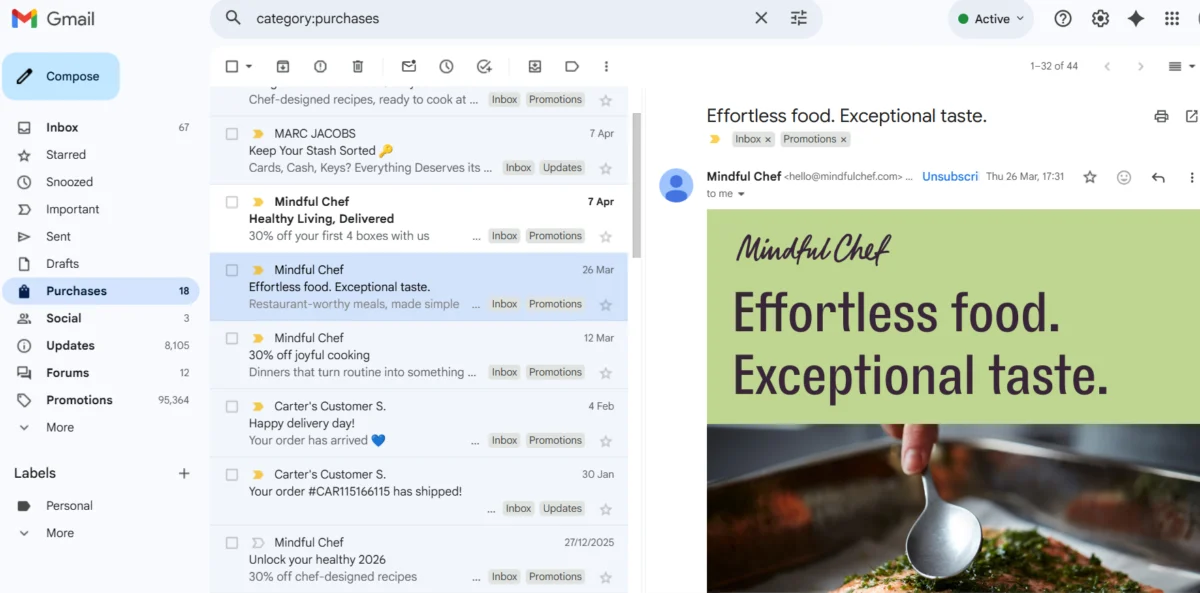
- Late 2025: Purchases Tab Introduction: A dedicated Purchases tab was introduced, designed to consolidate order confirmations, shipping updates, and delivery notifications.
- Late 2025: Increased Enforcement of Bulk Sender Requirements: Stricter enforcement of Gmail’s bulk sender requirements became effective in November 2025, moving from soft warnings to active rejection of non-compliant email traffic. Concurrently, in late November 2025, Validity observed a significant drop in Gmail image loading activity, coinciding with the speculated reduction in image prefetching.
- January 2026: AI-Generated Email Summaries Rollout: Gmail began rolling out AI-generated summaries for emails, displaying 1-2 sentences capturing the core message upon opening.
- January 2026: Gemini Integration for Inbox Search and Management: The integration of Gemini introduced conversational, natural-language search capabilities across the Gmail inbox, allowing users to query email history without opening individual messages.
These developments, occurring in rapid succession, collectively contribute to the observed decline in traditional open rates. They signify a deliberate strategy by Gmail to empower users with greater control over their inboxes, reduce unwanted clutter, and provide information more efficiently, even if it means altering long-standing email marketing metrics.
Deciphering the Decline: Why Gmail Open Rates Are Shifting
The observed drops in Gmail open rates are not merely a statistical anomaly but a direct consequence of these strategic changes. The primary technical factor, as industry experts speculate, is Gmail’s reduced frequency of image prefetching. Since 2013, Gmail has utilized proxy servers to pre-load images (including tracking pixels) in emails, ostensibly for security and privacy reasons. A reduction in this prefetching activity directly translates to fewer instances where the tracking pixel is loaded, thus depressing recorded open rates even if the email is technically delivered and potentially seen by the user in a preview pane or summary. This creates a disconnect between perceived engagement and the reported metric.
Furthermore, this shift can be viewed as "good news" for the long-term health of email marketing. Marketers are generally not reporting similar declines in click-through rates (CTR) or revenue, suggesting that the actual value-generating interactions are largely unaffected. This implies that the previous open rates might have been inflated by "false opens" – either through prefetching mechanisms like Apple MPP or by users merely skimming previews without full engagement. By reducing these artificial opens, Gmail is effectively cleaning up the data, forcing senders to focus on genuine, active engagement. Open rates, while no longer a perfect indicator of initial view, remain directionally useful as a health signal, flagging deeper underlying problems if a sudden, unexplained drop occurs. Marketers should, therefore, avoid suppressing Gmail addresses based solely on open inactivity without considering other engagement metrics.
Key Drivers and Marketer Responses
The following detailed breakdown explores each of Gmail’s recent developments, their specific impact on open rates, and the strategic adjustments marketers must implement.
1. Enhanced Bulk Sender Enforcement: A Mandate for Compliance
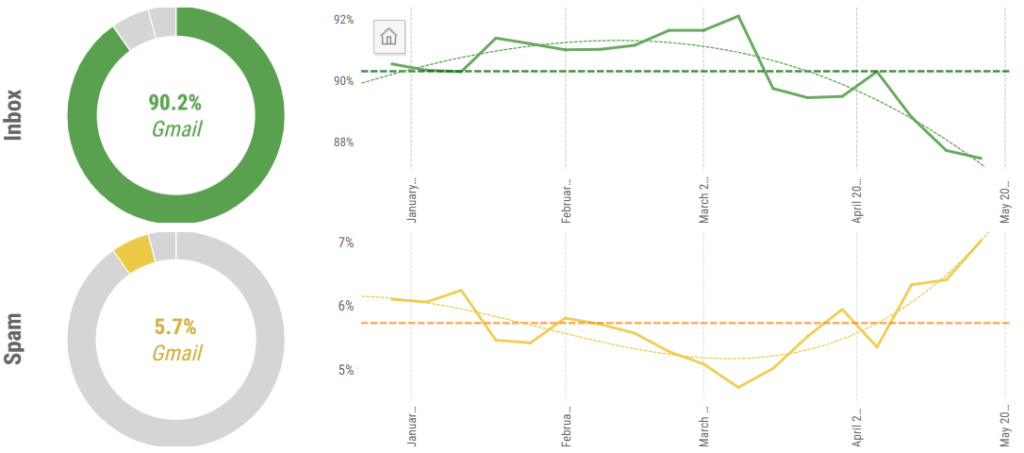
- Impact: While Gmail’s inbox placement rates generally remain high, the Validity Intelligence Network reported an approximate three percent drop over the past few months. This decline is largely attributed to Gmail’s transition in late 2025 from soft enforcement to active rejection of non-compliant bulk email traffic. This has resulted in an increase in hard SMTP-level rejection codes. Simply put, rejected emails generate zero opens, directly impacting overall open rates.
- Implications: The era of relaxed compliance is over. Marketers must now treat Gmail’s guidelines as strict mandates, not suggestions. Failure to comply will result in emails not even reaching the inbox, rendering all other engagement strategies moot.
- How to Respond: Senders must thoroughly review and ensure their full compliance with Gmail’s bulk sender guidelines, extending beyond just DMARC, List-Unsubscribe, and complaint rates. Utilize Google Postmaster Tools V2 to continuously monitor critical compliance indicators. Scrutinize bounce logs for specific Gmail error codes that explicitly point to non-compliance issues, allowing for targeted remediation. Proactive adherence to authentication standards (SPF, DKIM, DMARC), maintaining low spam complaint rates, and providing clear unsubscribe options are paramount.
2. The Algorithmic Promotions Tab: Prioritizing Relevance
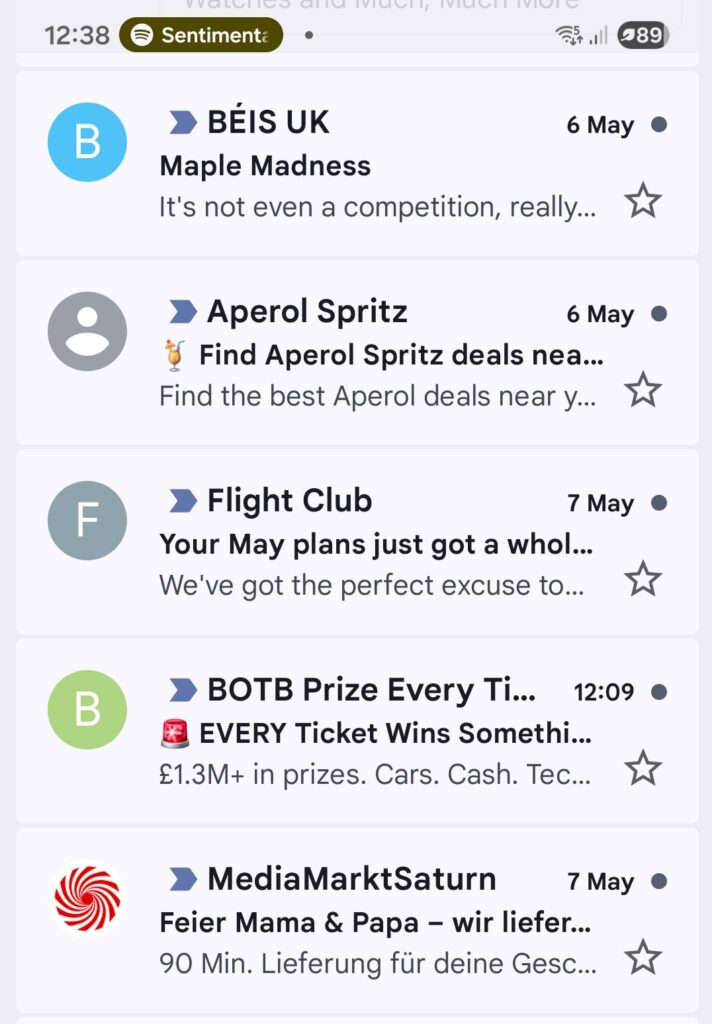
- Impact: Gmail now sorts the Promotions tab by engagement rather than chronological recency. Senders with lower engagement signals are relegated further down the tab, significantly decreasing their visibility and the likelihood of their emails being opened. This creates a self-reinforcing cycle: low engagement leads to lower placement, which in turn leads to even lower engagement.
- Implications: This change transforms the Promotions tab from a simple chronological feed into an algorithmic discovery platform. Personalization and content relevance are no longer just best practices but direct drivers of deliverability and visibility within this crucial tab. Generic, broadcast campaigns will struggle to gain traction, while highly targeted and engaging content will be rewarded.
- How to Respond: The most direct response is to implement aggressive suppression strategies for low-engagement Gmail segments. Instead of sending to inactive subscribers who will negatively impact relevance scores, segment Gmail recipients by their engagement recency and define stricter thresholds for suppression. Focus on sending highly personalized and relevant content that resonates with specific audience segments, thereby generating positive engagement signals that Gmail’s algorithm will favor. A/B test subject lines and preview text to maximize initial appeal.
3. Auto-Annotations: Previews Redefining the Open
- Impact: Gmail regularly extracts deal details, images, and discount codes from promotional emails to display as rich previews in the Promotions tab, even if senders haven’t manually implemented Annotations markup schemas. This means subscribers can access headline offers and promotional codes without needing to open the email, effectively removing the incentive to click.
- Implications: For offers with a straightforward value proposition, the email’s primary goal might be achieved at the preview stage, leading to a natural decline in recorded opens. Marketers must reconsider the role of the "open" in their conversion funnel.
- How to Respond: Rather than relying on automatic extraction, senders should proactively implement Annotations markup. This grants full control over the exact content surfaced in previews, allowing for strategic communication. Gmail provides comprehensive documentation for deploying annotations, single image previews, product carousels, and deal cards. Consider designing offers that necessitate an actual click to redeem, rather than simply displaying a discount code in the preview. This shifts the engagement metric focus from opens to clicks.
4. Subscriptions Manager: Empowering User Control
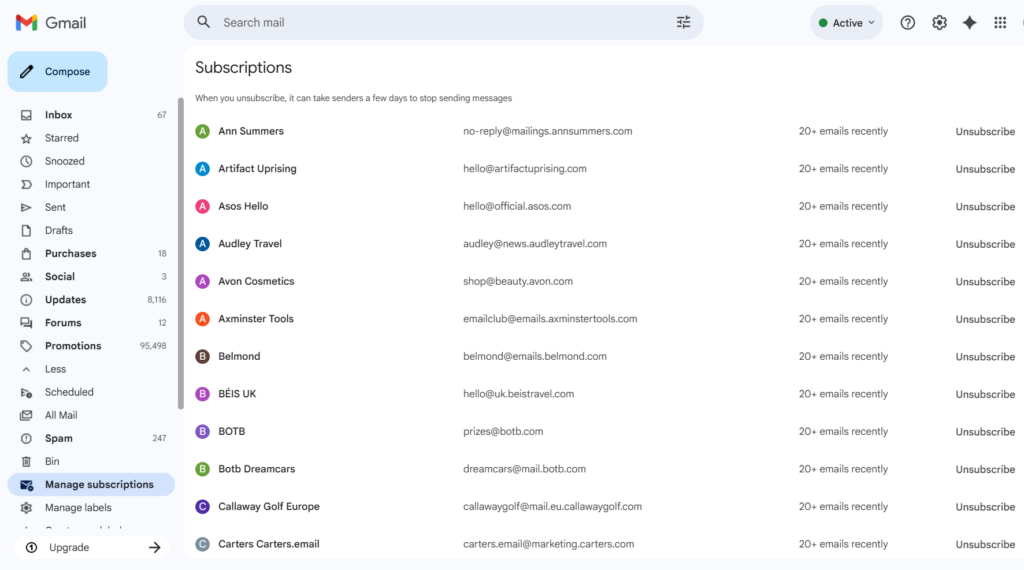
- Impact: Launched in mid-2025 and fully rolled out to personal Gmail accounts, the Subscriptions Manager lists all marketing senders, ranked by sending frequency. Users can unsubscribe from any sender’s individual mail stream with a single click, without opening an email. This directly impacts open rates through list shrinkage.
- Implications: While list shrinkage might seem negative, it typically results in a smaller but more highly engaged subscriber base. This feature empowers users to curate their inboxes more effectively, reducing unwanted emails and potentially improving overall inbox quality for remaining subscribers.
- How to Respond: Brands with high sending frequency (daily or near-daily) should evaluate whether reducing their cadence could mitigate visibility in the Subscriptions Manager without negatively affecting revenue. Additionally, brands utilizing multiple "From" addresses for distinct content streams should ensure each address has a unique List-Unsubscribe header. This allows subscribers to opt down from specific content streams rather than triggering a blanket removal from all communications. Transparency and clear value proposition are key to avoiding mass unsubscribes.
5. AI-Generated Summaries: The Essence Before the Open
- Impact: Starting in January 2026, Gmail began rolling out AI-generated summaries. These snippets display automatically when users open emails, surfacing 1-2 sentences that capture the key message. The concern is twofold: whether these summaries inflate open rates by auto-opening emails for summarization (intelligence remains contradictory), and more significantly, that subscribers obtaining sufficient information from the summary may have less reason to open the full email.
- Implications: AI summaries represent a paradigm shift in how users consume email content. The "hook" of an email now needs to function effectively at the summary level, providing value while still compelling a full open or click for deeper engagement.
- How to Respond: Senders must adapt their content strategy by keeping their most important information and calls-to-action in the opening lines of the email body. Since summaries pull from the earliest readable text, front-loading value and clearly spelling out a next step (e.g., "Click here to discover all deals!") is crucial. The goal is to make the summary a gateway to engagement, not a replacement for it.
6. Gemini Integration: Conversational Search and Content Accessibility

- Impact: The January 2026 Gemini integration introduced conversational, natural-language search across the Gmail inbox. Subscribers can now query their email history (e.g., "What discount codes do I have for sportswear?") and receive compiled answers from multiple emails without opening any of them. This represents another significant change in how inbox behavior impacts opens.
- Implications: Gemini enhances the retrievability of information within the inbox, potentially reducing the need to open older promotional emails to find specific details. This could disproportionately affect low-engagement senders, as their content might be surfaced in a summary without a direct "open" being recorded.
- How to Respond: Senders whose emails contain time-sensitive content (e.g., limited-time offers, event details) should structure that content to be easily legible and extractable by AI. This involves using specific deadlines, named actions, structured data markup (e.g., Schema.org), and clean HTML. Marketers should also closely monitor changes in the ratio of opens between highly engaged and lapsed segments, as this feature is expected to further reduce human interaction for the latter, potentially creating a "circle of disengagement."
7. Message Clipping: Technical Nuances and Hidden Impacts
- Impact: While not a new development, message clipping remains a critical factor. Gmail typically clips messages with HTML file sizes exceeding 1,024 bytes. Content beyond this threshold is not displayed unless the reader explicitly requests to "view entire message." Many senders place their open tracking pixel at the very end of the email file, meaning it fails to trigger if Gmail clips the content.
- Implications: Beyond unrecorded opens, message clipping has other significant consequences. Unsubscribe links are often located in email footers, and if clipped, they become invisible to the recipient, leading to frustration and an increased likelihood of spam complaints, which negatively impacts sender reputation.
- How to Respond: Senders must rigorously review all email messages as part of their pre-send QA processes to ensure they do not exceed Gmail’s 1KB clipping threshold. This may require streamlining HTML code, optimizing images, and minimizing unnecessary elements. Crucially, the link to the open tracking pixel should be placed as early as possible within the HTML file to maximize the chances of it being loaded before any clipping occurs. Important calls-to-action and unsubscribe links should also be placed higher up in the email where they are guaranteed to be visible.
8. Gmail’s Address Change Feature: Adapting to Subscriber Mobility
- Impact: Gmail’s address change capability allows users to modify their primary email address. When this occurs, marketing emails sent to the previous address will no longer be delivered to an active, human-readable inbox, leading to a reduction in opens from those specific addresses.
- Implications: Marketers should not expect replacement opens from the new address. Subscribers often change addresses precisely to reduce unwanted mail, and there’s no guarantee they will opt-in or engage with previous senders at their new address. This feature highlights the fluid nature of email identities.
- How to Respond: Senders should diligently monitor hard bounces and sustained non-engagement from previously active Gmail addresses, as these can indicate an address change. Engagement-based suppression thresholds will help identify and remove these newly inactive addresses from active mailing lists. Furthermore, marketers need to develop strategies for relationship building that extend beyond the email address itself, such as loyalty programs, robust first-party identity resolution systems, and progressive profiling to gather alternative contact points and preferences.
9. The Purchases Tab: Ensuring Correct Message Routing
- Impact: Gmail introduced a dedicated Purchases view in late 2025 to consolidate transactional emails like order confirmations and shipping updates. However, some marketing emails have inadvertently landed in this tab, particularly those containing detailed content about delivery policies or post-purchase upsells. This misplacement can depress open rates from subscribers who are not accustomed to finding promotional messages there and may erode trust if recipients haven’t recently purchased from that brand.
- Implications: The distinction between transactional and promotional email streams is becoming increasingly critical. Misclassification can lead to missed opportunities for engagement and damage sender reputation.
- How to Respond: Senders must audit their email programs to determine if any promotional emails are being inadvertently classified as purchase-related and routed to this tab. To prevent this, keep transactional and promotional streams clearly separated. This involves using distinct "From" addresses, sub-domains, subject line conventions, and content structures for each type of email. Avoid embedding promotional content within transactional emails to maintain correct routing and uphold subscriber trust, which also aligns with legal compliance requirements (e.g., CAN-SPAM, GDPR).
10. Inactive Account Deletion: The Ultimate List Hygiene Rule
- Impact: Google reserves the right to delete accounts that have been inactive for two years or more. Per Google’s Inactive Account policy, "activity" includes reading or sending emails, using Google Drive, watching YouTube videos, sharing photos, downloading apps, using Google search, and using Google to sign in to a third-party app or service.
- Implications: While this policy has a broader scope than just email, it fundamentally means that addresses belonging to genuinely inactive users will eventually cease to exist. It reinforces the paramount importance of maintaining a clean, engaged email list.
- How to Respond: Marketers should ideally suppress inactive addresses long before they reach Google’s 24-month inactivity threshold. Proactive list hygiene, implemented through consistent engagement monitoring and re-engagement campaigns, will identify and remove these addresses much earlier, preventing bounces and preserving sender reputation. This is less a new challenge and more a reinforcement of a fundamental best practice.
Beyond the Open Rate: A New Paradigm for Email Success
The collective impact of these Gmail changes signals a definitive shift away from prioritizing vanity metrics like raw open rates. The modern email landscape demands a more holistic and nuanced approach to evaluating email program success. Marketers must now focus on deeper, more meaningful engagement metrics that directly correlate with business objectives.
- Holistic Metrics: Instead of solely fixating on open rates, marketers should prioritize metrics such as click-through rates (CTR), conversion rates, revenue per email, customer lifetime value (CLTV), and unsubscribe rates. These metrics provide a more accurate picture of actual subscriber interest and the email program’s contribution to the bottom line.
- First-Party Data: The increasing emphasis on relevance and personalization underscores the importance of collecting and leveraging first-party data. Understanding subscriber preferences, purchase history, and behavioral patterns allows for the creation of highly targeted and engaging content that cuts through the noise.
- Customer Journey Mapping: Email campaigns should be viewed as integral components of a larger customer journey. Marketers need to map out touchpoints and design emails that guide subscribers seamlessly through the funnel, delivering value at each stage.
- Permission and Trust: Explicit consent and transparent communication regarding data usage and email frequency are non-negotiable. Building trust with subscribers is paramount, as empowered users are quick to unsubscribe from senders who violate that trust.
Strategic Imperatives for the Modern Email Marketer
To thrive in this evolving environment, email marketers must adopt a forward-thinking and adaptable strategy:

- Prioritize Engagement Quality: Shift focus from maximizing send volume to maximizing engagement from a smaller, more active subscriber base. Quality over quantity is the new mantra.
- Ensure Flawless Compliance: Treat all bulk sender requirements as non-negotiable. Invest in robust authentication, monitor deliverability metrics meticulously, and promptly address any compliance issues.
- Master Personalization and Segmentation: Leverage data to deliver highly relevant content to segmented audiences. Generic broadcasts will increasingly fail to secure prime inbox placement.
- Optimize for Action, Not Just Opens: Design emails and their previews to drive clicks, conversions, or other measurable actions, understanding that an "open" might no longer be the primary indicator of initial engagement.
- Embrace AI-Friendly Content: Structure email content with AI summarization and search in mind. Front-load key information, use clear calls-to-action, and consider structured data.
- Proactive List Hygiene: Implement aggressive re-engagement and suppression strategies to maintain a clean, active list, anticipating mailbox provider policies on inactive accounts.
- Test and Adapt Continuously: The email landscape is dynamic. Regular A/B testing of subject lines, content, timing, and segmentation is crucial for continuous optimization.
Conclusion: Navigating the Evolving Inbox Landscape
The current state of Gmail email engagement is not indicative of a broken system but rather an evolving one. Gmail’s initiatives, while challenging traditional metrics, ultimately aim to create a more relevant, secure, and user-friendly inbox experience. For email senders, this represents a pivotal moment – an opportunity to sharpen their strategies, prioritize genuine subscriber relationships, and move beyond superficial vanity metrics. Those who embrace these changes as a signal to innovate and refine their approach, focusing on engagement quality, meticulous compliance, and customer-centric content, will undoubtedly emerge stronger and more effective in the long run. The future of email marketing lies in adaptability, strategic insight, and a commitment to delivering true value to the recipient.








