rifanmuazin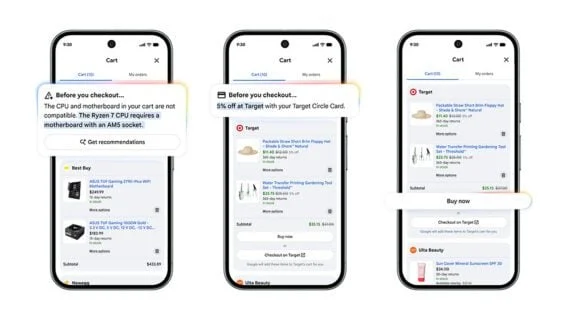
Google announced a groundbreaking development poised to redefine the online shopping experience with the introduction of its Universal Cart, a comprehensive shopping cart system that aims to integrate seamlessly across the search giant’s extensive app ecosystem. This forthcoming innovation, detailed in announcements made on May 19th, signifies a potential paradigm shift in how consumers approach online purchasing, moving beyond the traditional, site-specific shopping cart model.
Historically, the expectation for both merchants and consumers has been a direct, one-to-one relationship between a digital shopping cart and a specific e-commerce website. When a shopper adds items to their cart, it is typically understood to be within the confines of that particular retailer’s online storefront. Amazon’s marketplace model, while allowing for the aggregation of products from numerous third-party sellers, still maintains a single cart intrinsically linked to the Amazon e-commerce platform. Google’s Universal Cart, however, challenges this established norm by proposing a more fluid and interconnected approach to online transactions.
Google I/O: A Nexus for Commerce Innovation
The pivotal announcement of the Universal Cart emerged from Google I/O, the company’s premier annual developer conference. This year’s event, held virtually and with select in-person components, showcased a suite of innovations, three of which are particularly relevant to the evolution of commerce. These introductions collectively represent the foundational elements of what Google terms “agentic commerce.” In this model, products from a multitude of disparate merchants are managed within an agent-driven layer that operates above or independently of individual seller websites. This represents a significant departure from the current landscape, where the shopping cart is almost universally tethered to a single merchant’s digital domain.
The implications of this shift are profound. Instead of a consumer navigating to various websites to collect desired items, the Universal Cart, powered by AI, promises to consolidate these selections across Google’s vast digital properties. This could include searching on Google, engaging with conversational AI like Gemini, and potentially even interacting with content on platforms such as YouTube and Gmail in the future. The aim is to create a unified and intelligent shopping repository that simplifies the purchasing process.
Redefining Cart Usage and Consumer Behavior
Within Google’s envisioned Universal Cart ecosystem, merchants will continue to retain ownership of the transaction and fulfill orders. However, the locus of purchase intent and the initial stages of product discovery may shift significantly. This presents both potential advantages and novel challenges for retailers.
On one hand, Google’s ability to remind shoppers about items lingering in their carts could lead to a substantial increase in conversion rates. Data from e-commerce analytics firms consistently shows that abandoned carts represent a significant missed revenue opportunity. Google’s proactive engagement could effectively mitigate this by serving as a persistent digital assistant. For instance, a shopper might add a product to their cart after a Google search, then receive a timely reminder or a notification about a price drop while browsing other Google services.
However, this new model could fundamentally alter how shoppers interact with merchants. Traditionally, many consumers treat shopping carts as extensions of their personal wishlists or planning tools. They might add items to compare options, await payday, or even share the cart with a partner for joint decision-making, with the intention of returning directly to the retailer’s site to complete the purchase. Retailers have invested heavily in understanding and optimizing for this behavior, encouraging repeat visits and brand loyalty through seamless checkout experiences and personalized offers within their own digital environments.
If consumers begin to view agent-managed carts, like Google’s Universal Cart, in a similar vein, the origin point of purchase intent could migrate away from individual retail sites. While retailers would still be responsible for fulfillment and payment processing, they might no longer be the primary drivers of the initial customer engagement or discovery process. This scenario aligns with the broader promise of agentic commerce, where shopping activities are increasingly managed by intelligent systems rather than solely through direct user interaction with individual websites. Google’s recent announcements signal that this future is rapidly approaching.

The Mechanics of Universal Cart
The functionality of Google’s Universal Cart is designed to be both intuitive and powerful. Once a shopper adds a product, the cart becomes a dynamic entity, leveraging artificial intelligence to continuously monitor price fluctuations, available offers, and inventory levels. This AI-driven oversight aims to provide consumers with the most advantageous purchasing conditions, thereby guiding their buying decisions.
Crucially, merchants remain the “merchant of record,” meaning they are legally and operationally responsible for the sale. Yet, the Universal Cart’s architecture is designed to expose shoppers to a wider array of competing products and offers, potentially from different retailers, all within a single consolidated view.
Consider a scenario where a shopper is redecorating their kitchen. They might begin by searching for a KitchenAid mixer on Google and add it to their Universal Cart. Later, while watching cooking tutorials on YouTube, they discover and save a Le Creuset Dutch oven from a different retailer. Subsequently, an email with an affiliate link leads them to add a Japanese santoku knife from yet another source. Throughout this period, the Universal Cart continues its work. In the evening, as the shopper relaxes, the cart might proactively suggest an alternative knife set that boasts superior customer reviews and offers faster delivery options. When the shopper is finally ready to make their purchases, the Universal Cart will have meticulously remembered, compared, recommended, and coordinated their selections from various sources, streamlining the final checkout.
The Underlying Infrastructure: UCP, AP2, and Spark
While the Universal Cart is the consumer-facing manifestation of Google’s agentic shopping strategy, the underlying infrastructure is built upon several key components. The Universal Commerce Protocol (UCP) serves as the foundational layer that enables Google to interact with merchants. Merchant Center feeds provide Google with essential product information, and UCP dictates how Google should engage with these merchants to support shopping, checkout, and fulfillment processes.
Complementing UCP is the Agents Payments Protocol (AP2), which is slated for integration into Google products in the coming months, starting with Gemini Spark. Gemini Spark is envisioned as a new, persistent AI agent designed to automate and monitor shopping tasks on behalf of consumers. In this framework, Spark actively manages a shopper’s Universal Cart by continuously comparing products, prices, and inventory.
Once a shopper has established their preferences, such as a spending limit, preferred retailers, or explicit approval thresholds, AP2 then authorizes and completes the purchase. In essence, the Universal Cart serves as the memory, UCP facilitates the connection, Spark provides the intelligence for decision-making, and AP2 handles the payment execution. This interconnected system aims to create a highly automated and personalized shopping journey.
A Glimpse into the Future of Retail
The concept of agentic commerce, while still in its nascent stages, is experiencing rapid development. Google’s announcements at I/O are not just about a new shopping cart; they represent a significant step towards a future where AI actively manages large portions of our purchasing decisions. This promises a profoundly different shopping experience for consumers and introduces a new dynamic for merchants seeking to capture sales in an increasingly automated marketplace.
The timeline for the full rollout of Universal Cart in the United States is projected for the summer of 2026, indicating a deliberate and phased approach to implementation. This extended timeline suggests Google is focused on robust testing and integration to ensure a smooth transition for both consumers and businesses. The integration of AP2, starting with Gemini Spark, will also provide early insights into the practical application of these agentic capabilities.
The potential impact on the retail landscape is substantial. Merchants will need to adapt to a model where their role in the initial customer journey may be diminished, emphasizing the importance of seamless integration with Google’s commerce protocols and the ability to provide compelling product offerings that stand out within an AI-curated environment. Furthermore, the data generated by these agentic systems could offer unprecedented insights into consumer behavior, albeit raising new questions about data privacy and algorithmic transparency. As agentic commerce matures, it is poised to become a dominant force, reshaping how goods and services are discovered, selected, and purchased.