
 rifanmuazin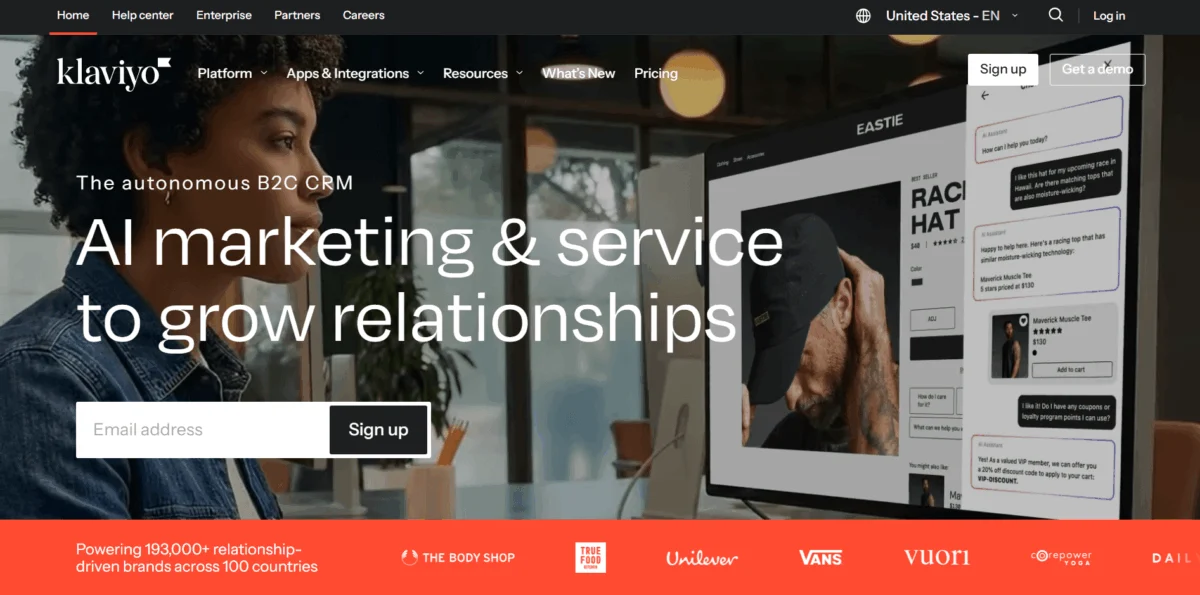
The landscape of e-commerce marketing platforms is undergoing significant shifts, with many businesses actively re-evaluating their current tools, particularly Sendlane, following its recent acquisition by Privy. Founded in 2013, Sendlane carved out a niche as a prominent email and SMS marketing platform specifically tailored for e-commerce, distinguishing itself through strong deliverability, Shopify-first automation, and a direct-to-consumer (DTC) friendly approach. For years, it has remained a popular choice for growing e-commerce brands and Shopify merchants seeking robust marketing automation. However, the acquisition, coupled with prevailing user frustrations regarding pricing structure and interface complexity, has prompted a widespread search for viable alternatives that offer better value, scalability, and ease of use. This article delves into the core reasons behind this re-evaluation, explores the top alternative platforms, and analyzes the broader implications for the e-commerce marketing technology sector.
The Context of Change: Sendlane’s Evolution and Acquisition by Privy
Sendlane’s journey began with a clear focus on the burgeoning e-commerce market, aiming to provide specialized tools that generic email marketing platforms often lacked. Its emphasis on seamless integration with platforms like Shopify and its promise of high deliverability rates resonated well with online retailers looking to optimize their customer engagement and conversion funnels. Over the past decade, the platform built a substantial user base, particularly among mid-sized e-commerce businesses that needed more than basic email capabilities but perhaps weren’t ready for enterprise-level solutions.
The recent acquisition by Privy, a well-known e-commerce marketing platform primarily focused on conversion tools like pop-ups, banners, and email capture, marks a pivotal moment. While the exact timeline and financial details of the acquisition have not been widely publicized, its announcement has injected a degree of uncertainty into Sendlane’s user base. Acquisitions in the technology sector often lead to questions about product roadmaps, integration strategies, pricing model harmonization, and potential shifts in customer support. For businesses heavily reliant on their marketing infrastructure, such transitions necessitate a careful review to ensure continued alignment with their strategic goals and operational needs. The integration of Sendlane’s email and SMS capabilities with Privy’s conversion suite could theoretically create a powerful all-in-one solution, but the practical implications for existing Sendlane users are yet to fully unfold, prompting proactive exploration of other market offerings.
Mounting User Frustrations Driving the Search for Alternatives
Despite its established position, Sendlane users have consistently voiced several key frustrations across major review platforms such as G2, Capterra, and Reddit. These concerns are a primary catalyst for the current wave of platform re-evaluations:
- High Entry Pricing and Lack of a Free Plan: A significant barrier for many emerging e-commerce businesses is Sendlane’s relatively high entry pricing. Unlike many competitors, Sendlane does not offer a free tier, making it less accessible for startups or those with smaller marketing budgets who wish to test the platform before committing financially. This absence of a free option forces businesses to make a monetary commitment upfront, which can be prohibitive in a market saturated with more flexible pricing models.
- Unpredictable Volume-Based Charges: Sendlane’s pricing structure, which is often volume-based, has been cited as a source of unpredictable and escalating costs. As businesses grow their contact lists and increase sending frequency, the charges can quickly accumulate, leading to unexpected expenses that strain marketing budgets. This lack of cost predictability makes long-term financial planning challenging for businesses operating on tight margins.
- User Interface Complexity at Scale: While functional, Sendlane’s user interface can become increasingly complex as businesses scale their operations and demand more sophisticated automation workflows. Managing advanced multi-channel campaigns, intricate segmentation, and personalized customer journeys can be cumbersome, leading to potential delays, errors, and a steeper learning curve for marketing teams. This complexity can hinder agility and efficiency, particularly for businesses that require rapid deployment of sophisticated marketing strategies.
- Limited Advanced Analytics and Reporting: Some users have expressed a desire for more granular and sophisticated analytics capabilities than Sendlane currently offers. In an era where data-driven decision-making is paramount, a lack of deep insights into campaign performance, customer behavior, and attribution models can limit a brand’s ability to optimize its marketing spend and strategy effectively.
These points highlight a demand for platforms that not only offer robust features but also provide transparent, scalable pricing and an intuitive user experience that can adapt to evolving business needs without compromising efficiency or budget.
Leading Sendlane Alternatives: A Comparative Analysis
In response to these challenges and the uncertainty surrounding the Privy acquisition, e-commerce businesses are actively exploring a diverse range of marketing platforms. Our in-depth analysis, based on hands-on testing, direct pricing verification, and extensive review of user sentiment across G2, Capterra, and Trustpilot, identifies eight leading alternatives. This comparison focuses on features, pricing, G2 ratings, and specific use cases as of April 2026.
-
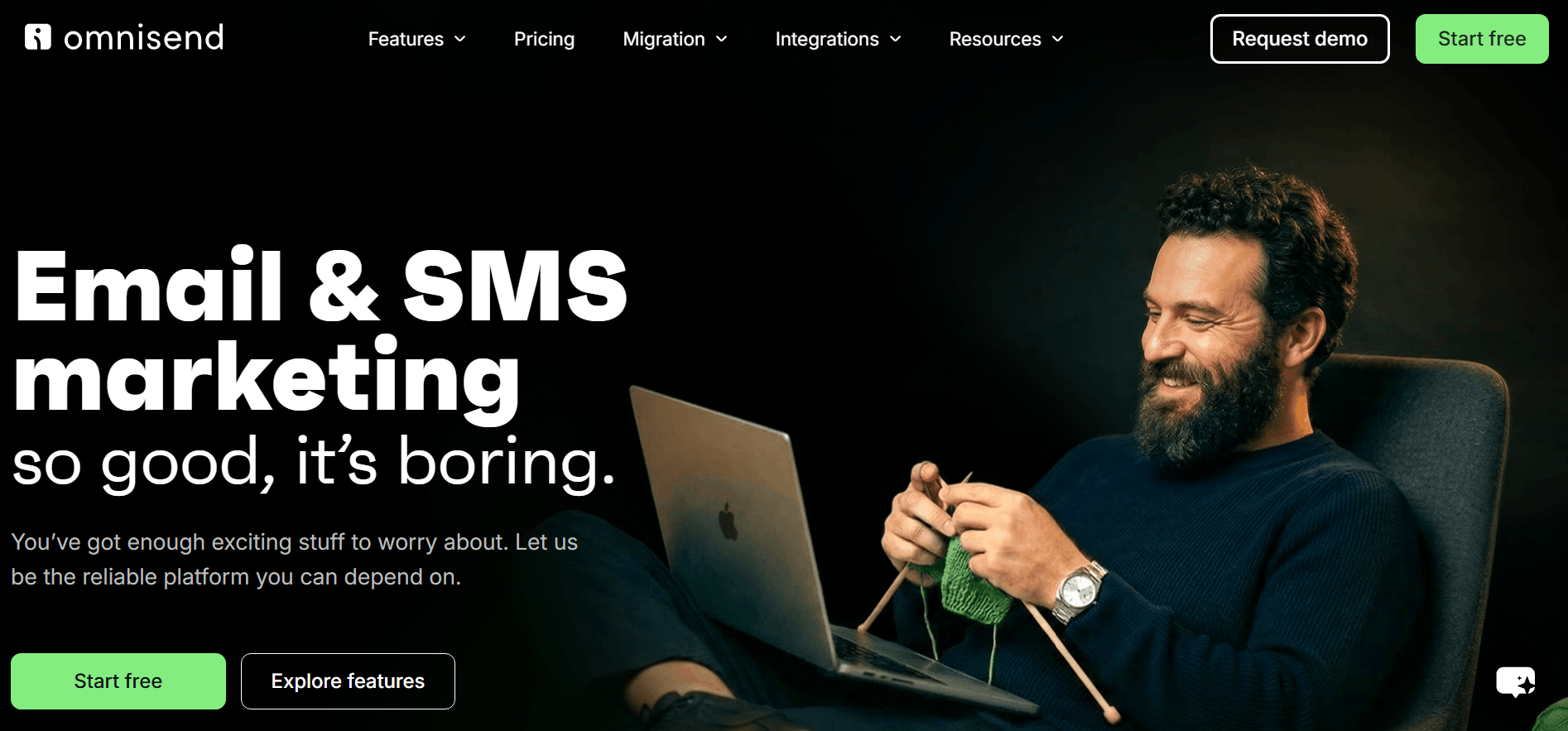
Omnisend: The E-commerce Powerhouse
- Best for: Comprehensive e-commerce marketing and automation.
- Pricing: Starts at $16/month, offers a free plan.
- G2 Rating: 4.6
- Analysis: Omnisend directly addresses Sendlane’s high entry costs by providing a robust free plan and competitive starting prices for paid tiers. Its core strength lies in its deep, one-click integration with e-commerce platforms like Shopify, offering pre-built workflows for rapid campaign setup and advanced segmentation for hyper-personalized messaging. Crucially, Omnisend boasts a track record of zero downtime during peak sales periods like Black Friday and Cyber Monday, a testament to its reliability. Users frequently report an impressive return on investment, with an average of $79 back for every $1 spent, making it a compelling value proposition. Its intuitive drag-and-drop builder allows for complex workflows without a steep learning curve, a direct counterpoint to Sendlane’s potential UI complexities at scale.
-
Klaviyo: For Data-Driven Enterprises
- Best for: Advanced predictive analytics and granular segmentation.
- Pricing: Starts at $20/month, offers a free plan.
- G2 Rating: 4.6
- Analysis: Klaviyo is a go-to for data-driven e-commerce businesses that demand sophisticated analytics and granular attribution models. It offers unparalleled depth in segmentation and predictive insights, allowing for hyper-targeted campaigns. While it does provide a free plan to get started, Klaviyo quickly becomes one of the more expensive options at scale, often double the cost of platforms like Omnisend for similar features. Its power comes with a steep learning curve, making it better suited for larger enterprise teams with dedicated data analysts rather than most modern e-commerce businesses seeking a more balanced approach to cost and complexity.
-
Moosend: The Budget-Friendly Contender
- Best for: Affordable, unlimited email marketing.
- Pricing: Starts at $9/month, no free plan.
- G2 Rating: 4.7
- Analysis: Moosend presents an attractive alternative for small businesses and startups seeking core email marketing automation without a hefty price tag. Its user-friendly drag-and-drop editor simplifies campaign creation, making it highly accessible. While it lacks the deep, native e-commerce integrations and advanced features found in platforms like Omnisend or Klaviyo, Moosend excels in providing unlimited email sending at a fraction of the cost, directly addressing Sendlane’s high entry barriers. It’s an excellent choice for brands primarily focused on cost-effective email communication.
-
ActiveCampaign: CRM and Sales Automation Powerhouse
- Best for: Complex sales and CRM automation, B2B focus.
- Pricing: Starts at $15/month, no free plan.
- G2 Rating: 4.4
- Analysis: ActiveCampaign stands out for its robust blend of email marketing and an integrated sales CRM, making it ideal for businesses with longer sales cycles or those requiring comprehensive pipeline management. Its visual automation builder is exceptionally powerful for multi-step, cross-channel workflows, addressing Sendlane’s UI complexity issues at scale. However, users should be mindful of potential hidden add-on costs for features like SMS and custom reporting, which can increase the overall bill beyond advertised prices. While powerful, it also comes with a learning curve due to its extensive feature set.
-
Drip: Behavior-Driven E-commerce Journeys
- Best for: Advanced behavior-driven automations, personalized e-commerce journeys.
- Pricing: Starts at $39/month, no free plan.
- G2 Rating: 4.4
- Analysis: Drip specializes in highly personalized e-commerce journeys and targeted drip sequences, making it particularly effective for post-purchase and cart abandonment flows. Its clear, revenue-focused analytics offer a significant upgrade for users who found Sendlane’s reporting confusing. The visual flow builder is also highly intuitive and manageable at scale. A notable limitation, however, is the absence of native SMS marketing, which might make it less suitable for brands aiming for an omnichannel approach that includes SMS.
-
Brevo (formerly Sendinblue): Affordable All-in-One
- Best for: Affordable all-in-one marketing platform with strong transactional email.
- Pricing: Starts at $9/month, offers a free plan.
- G2 Rating: 4.5
- Analysis: Brevo (formerly Sendinblue) offers a comprehensive multichannel marketing platform known for reliable email deliverability and strong transactional email capabilities. Its pricing model, similar to Sendlane’s in offering unlimited contacts but limited sends, provides a lower entry point, with plans starting at 5,000 sends per month compared to Sendlane’s 50,000. This flexibility allows businesses to control their budget based on sending frequency. Its native SMS integration is also straightforward, providing a solid, cost-effective omnichannel solution.
-
Mailchimp: General Small Business Marketing
- Best for: General small business marketing, extensive template library.
- Pricing: Starts at $13/month, offers a free plan.
- G2 Rating: 4.3
- Analysis: Mailchimp remains one of the most recognized marketing platforms, popular for its user-friendly interface and vast template library, which significantly surpasses Sendlane’s more limited options. It’s an excellent entry point for general small businesses seeking an all-in-one marketing solution. However, at scale, Mailchimp’s pricing can quickly accumulate, and it notably charges for inactive contacts, which can be a financial drain. Its e-commerce automations, while present, are generally not as advanced or specialized as those found in dedicated e-commerce platforms like Omnisend.
-
GetResponse: Webinars and Conversion Funnels
- Best for: Integrated webinar and landing page creation, inbound marketing.
- Pricing: Starts at $19/month, offers a free plan.
- G2 Rating: 4.3
- Analysis: GetResponse distinguishes itself by bundling email marketing with robust webinar functionality and conversion funnels, making it a powerful inbound marketing platform. This broader toolkit is ideal for digital product creators or service-based e-commerce businesses that rely heavily on lead generation through content and events. For physical product brands, however, an e-commerce-first platform like Omnisend or Klaviyo might offer a more direct return on investment by focusing solely on sales-driven marketing.
Broader Implications for E-commerce Marketing Technology
The ongoing re-evaluation of Sendlane and the vibrant competition among its alternatives underscore several critical trends in the e-commerce marketing technology sector:
- Demand for Value and Transparency: Businesses are increasingly scrutinizing pricing models, favoring platforms that offer clear, predictable costs and a strong return on investment. The days of hidden fees or sudden price hikes are becoming less tolerable.
- The Omnichannel Imperative: The need for integrated email and SMS marketing, often alongside other channels like push notifications and social media, is paramount. Brands seek platforms that natively support an omnichannel strategy to create cohesive customer experiences.
- Ease of Use and Scalability: As e-commerce operations grow in complexity, the demand for intuitive user interfaces that can manage sophisticated workflows without excessive technical overhead is rising. Platforms must be easy to adopt for small teams yet powerful enough to scale with larger enterprises.
- Data-Driven Personalization: The ability to leverage customer data for hyper-personalization, advanced segmentation, and predictive analytics is no longer a luxury but a necessity for competitive advantage.
- Reliability and Uptime: Especially during critical sales periods, the reliability of marketing platforms is non-negotiable. Downtime can lead to significant revenue loss and damage to brand reputation.
The acquisition of Sendlane by Privy is a testament to the ongoing consolidation and innovation within the marketing tech space. While such mergers can lead to enhanced offerings, they invariably introduce a period of uncertainty, prompting businesses to assess their options. This environment fosters healthy competition, driving platforms to continually refine their features, improve user experience, and offer more compelling value propositions.
Choosing the Right Platform for the Future
For businesses currently using Sendlane or exploring new marketing automation tools, the decision hinges on specific needs and priorities. If the primary concern is a budget-friendly option for unlimited email sending, Moosend or Brevo might be ideal. For those requiring deep predictive analytics and are prepared for a higher investment and learning curve, Klaviyo stands out. ActiveCampaign serves businesses needing strong CRM integration and complex sales automation.
However, for the majority of growing e-commerce brands and Shopify merchants seeking an intuitive, cost-effective, and highly reliable omnichannel marketing platform that offers exceptional value, Omnisend consistently emerges as a top contender. Its AI-powered features, such as churn prediction and smart segmentation, allow brands to proactively engage with customer behavior. By natively combining email and SMS marketing with a user-friendly interface, Omnisend empowers businesses to nurture relationships and drive sales with unparalleled efficiency. The reported average return of $79 for every dollar spent by Omnisend customers further solidifies its position as a compelling alternative, ensuring that marketing efforts translate directly into measurable business growth.
As the e-commerce landscape continues to evolve, selecting the right marketing technology partner remains a critical strategic decision that directly impacts a brand’s ability to connect with customers, optimize conversions, and sustain growth in an increasingly competitive digital marketplace.









