rifanmuazin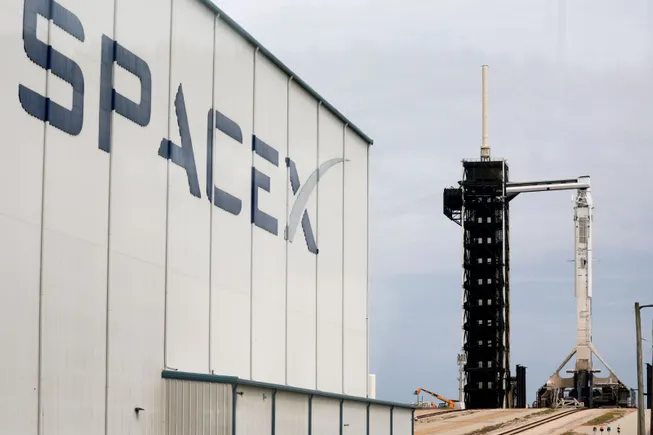
SpaceX, the ambitious aerospace enterprise led by Elon Musk, officially filed its S-1 document with the U.S. Securities and Exchange Commission (SEC) on Wednesday, marking a pivotal step toward its anticipated initial public offering (IPO). This comprehensive filing provides the clearest public glimpse yet into the intricate valuation and expansive strategic vision of the newly consolidated entity, which now encompasses virtually all of Musk’s non-Tesla business interests, including the AI venture xAI and the social media platform X (formerly Twitter). The document outlines a bold future centered on advanced space infrastructure, artificial intelligence development, and a multifaceted digital ecosystem, signaling a dramatic reorientation of Musk’s diverse portfolio.
The Unveiling of a Tech Titan: SpaceX’s S-1 Document
The S-1 document is a mandatory filing for companies planning to go public in the United States, offering potential investors an exhaustive overview of the company’s business model, financial performance, risk factors, and future strategies. For SpaceX, this filing is particularly complex, given the recent corporate restructuring that has brought xAI and X under its corporate umbrella. The combined entity presents a unique proposition to the market, blending deep-space exploration and satellite internet with cutting-edge artificial intelligence and a global social media platform. This convergence reflects Elon Musk’s overarching ambition to create interconnected technological ecosystems that span Earth and space.
The filing details not only the core aerospace operations of SpaceX, including its Starship development and Starlink satellite internet service, but also provides more specific insights into the performance and strategic objectives of X and xAI. This integration means that X, after its acquisition by Musk in 2022 and subsequent privatization, is poised to become a public company once again. This move is expected to usher in a new era of transparency, potentially requiring the release of specific performance metrics, such as active user counts, advertising revenue, and subscription figures, which have been largely obscured since its privatization. However, the S-1 also suggests that some of these figures might be presented within broader, aggregated notes from the parent SpaceX entity, leaving some ambiguity about the level of granular detail that will be made public.
A Chronology of Consolidation: Elon Musk’s Empire Restructures
The S-1 document elucidates a rapid and significant corporate restructuring engineered by Elon Musk over the past year. This consolidation began in earnest with the integration of X, the platform formerly known as Twitter, into xAI in March 2025. This move was strategic, designed to tightly link the vast real-time data streams of X with xAI’s artificial intelligence development efforts, particularly its flagship conversational AI, Grok. The rationale was clear: to provide Grok with an unparalleled, continuously updated data source, giving it a perceived competitive edge in the fast-evolving AI landscape.
Following this initial consolidation, xAI itself was subsequently acquired by SpaceX in February 2026, as part of an even broader corporate reorganization. This final merger positioned SpaceX as the overarching parent company for nearly all of Musk’s ventures outside of Tesla, creating a vertically integrated conglomerate focused on space, AI, and digital communication. The timeline of these mergers highlights a deliberate strategy to synergize these diverse operations, aiming to leverage SpaceX’s formidable engineering and infrastructure capabilities to accelerate AI development, while X provides the data and user base for AI training and deployment.
Key dates in this transformative period include:
- October 2022: Elon Musk completes the acquisition of Twitter, subsequently rebranding it as X and initiating a series of dramatic changes.
- July 2023: xAI is formally launched by Elon Musk, with a stated mission to “understand the true nature of the universe.”
- November 2023: Grok, xAI’s generative AI chatbot, is introduced, initially available to X Premium+ subscribers.
- March 2025: X (formerly Twitter) is formally rolled into xAI, cementing the data pipeline between the social platform and the AI development arm.
- November 2025: X Money, the payments feature, launches in beta, indicating progress despite regulatory challenges.
- February 2026: xAI is acquired by SpaceX, completing the corporate restructuring that brings X, xAI, and SpaceX under a unified corporate banner ahead of the S-1 filing.
- April 2026: SpaceX files its S-1 document with the SEC, formally announcing its IPO intentions and detailing the integrated structure.
This aggressive timeline underscores Musk’s vision for a tightly coupled ecosystem, where each component feeds into and strengthens the others, from the data generated on X to the AI models developed by xAI, and ultimately, to the orbital infrastructure provided by SpaceX.
X’s Return to Public Scrutiny: Performance and Projections
With X now under the SpaceX umbrella and destined for public markets, renewed scrutiny will fall upon its performance metrics. The S-1 filing, while not explicitly detailing every figure in the summary available, alludes to significant data points that will be crucial for investors. Based on internal projections and market observations, the document is understood to indicate that X has approximately 320 million daily active users (DAU) and around 580 million monthly active users (MAU). While these figures represent a stabilization after initial volatility post-acquisition, they still reflect a platform striving to regain its prior growth trajectory. The number of X Premium subscribers is cited at roughly 5.5 million, demonstrating progress in converting users to paid tiers but highlighting the vast potential for further growth within its large user base.
The S-1 articulates a clear strategy for X’s revitalization and growth: “We intend to drive X revenue growth by increasing engagement across our users, increasing X Premium subscriber conversion, growing advertising revenue per user, and diversifying our advertising base.” This multi-pronged approach aims to reverse the significant decline in advertising revenue experienced since Elon Musk’s takeover in 2022. While the filing acknowledges a current annualized ad revenue of approximately $2.8 billion, this figure remains notably below its historical peaks, underscoring the ongoing challenge of rebuilding advertiser trust and market share.
A cornerstone of X’s future strategy, as outlined in the filing, is its evolution into an “everything app.” This ambitious vision entails integrating real-time information, communications, media, payments, banking, and more “within one consumer app experience.” The document confirms that X Money, the payments feature, launched in beta in November 2025. However, it also implicitly acknowledges the “regulatory hurdles” that have delayed a broader rollout of in-stream payments and full banking functionalities, indicating that this aspect of the “everything app” vision faces considerable external challenges. The company states, “We also expect to grow advertising revenue per user and to diversify our advertiser base over time because of X’s compelling advertiser value proposition – large-scale user engagement, real-time content, and advanced AI-driven performance marketing tools.” This statement reflects X’s determination to leverage its unique strengths to attract and retain advertisers, emphasizing its real-time data, massive reach, and AI-powered targeting capabilities. Further initiatives include improving performance advertising capabilities, embedding AI to optimize ad campaigns, and launching richer ad formats to increase advertiser return on investment.
Grok and the AI Frontier: Leveraging X’s Data Ecosystem
The S-1 document provides a detailed look into xAI’s strategic positioning and the role of its conversational AI, Grok. The filing positions Grok as a “differentiated approach to AI, grounded in a core objective of truth seeking and powered by continuous, proprietary access to real-time data inflows through its integration with X.” With approximately “350 million daily posts,” X is presented as providing “freshness, relevance, and contextual awareness for Grok that we believe is a competitive differentiator.” This emphasis on real-time data from X is central to xAI’s pitch, arguing that it enables Grok to offer more current and contextually aware responses than competitors reliant on less dynamic datasets. The filing indicates early traction for Grok, with an estimated 1.2 million subscribers and a robust 15 billion monthly API calls, suggesting significant interest from both consumers and developers.
However, industry observers have raised questions about the quality and reliability of X’s content, citing concerns about the prevalence of bots, misinformation, and political influence operations. This skepticism could challenge xAI’s claim of a “truth-seeking” AI, given its primary data source. The company, however, is keenly aware of these perceptions, as evidenced by its ongoing efforts to “clean up its feed and remove spam and junk posts,” a strategy that the S-1 explicitly links to enhancing Grok’s data quality and X’s overall value proposition for AI projects.
Crucially, the filing also leaves the door open for future monetization of Grok through advertising. While stating, “Currently, Grok API access is not included in our advertising rates to advertisers,” and “We do not currently sell or offer advertisers the ability to place ads on the Grok API,” the repeated use of “currently” strongly suggests that this is a potential revenue stream under consideration. This would represent a significant expansion of xAI’s business model, potentially integrating advertising directly into AI interactions.
The Trillion-Dollar Ambition: Orbital Data Centers
Beyond X and Grok, the most audacious and forward-looking aspect of the SpaceX S-1 filing revolves around its vision for “orbital data centers” and its ambition to provide infrastructure for the next generation of AI projects. This strategy leverages SpaceX’s core competency in rocket manufacturing and satellite deployment to create a new, potentially massive market. The document highlights a recently signed, high-value deal between xAI and Anthropic, an AI safety and research company. According to the filing, Anthropic has agreed to pay an astonishing $15 billion per year for access to xAI’s Colossus data facilities. While Colossus is currently terrestrial, this deal serves as a precursor and validation of the demand for high-capacity, AI-optimized computing infrastructure.
The true innovation, however, lies in SpaceX’s plans to extend this infrastructure into space. “We believe our next trillion-dollar market is AI compute, and we expect to leverage our rockets and satellites for massive orbital deployments of AI infrastructure,” the company boldly states. The rationale behind this extraterrestrial computing power is twofold: it aims to overcome the finite sources of power and cooling limitations on Earth, and to provide unparalleled scalability and resilience for AI model training and deployment. “We believe this AI compute infrastructure will help us develop and monetize the Grok model faster than other AI companies that are dependent on finite sources of power on Earth. No other company has built the capabilities to create value across all these end markets at scale.”
This vision of space-based data centers, illustrated with numerous depictions of spaceships and rockets in the S-1 document, positions SpaceX not merely as a launch provider or satellite internet provider, but as a foundational infrastructure provider for the global AI industry. While the primary stated benefit is to accelerate Grok’s development, analysts suggest that SpaceX could ultimately become a dominant infrastructure player, potentially serving a wide array of AI companies, irrespective of Grok’s individual market success. The implications for energy consumption, data security, and geopolitical dynamics in space are profound and largely untested.
Financial Implications and Market Reactions
The S-1 filing, by combining such disparate and high-valuation entities, presents a complex financial picture. The market’s reaction to this audacious strategy will be closely watched. Integrating a struggling social media platform (X) and a nascent AI company (xAI) into a capital-intensive space exploration company (SpaceX) creates a highly diversified, yet also high-risk, portfolio. Financial analysts are grappling with how to appropriately value this conglomerate. While SpaceX’s core business of launch services and Starlink has demonstrated strong growth and significant market potential, the profitability and stability of X remain a concern, and xAI’s long-term success is speculative given the highly competitive AI landscape.
The reported $15 billion annual deal with Anthropic for Colossus data facilities, if confirmed and sustained, would be a massive revenue generator, significantly bolstering the financial outlook for the combined entity. However, the success of the orbital data center initiative hinges on unprecedented technological advancements and massive capital investment, presenting substantial execution risk. Investors will need to weigh the enormous potential rewards against the significant challenges and the unproven nature of some of these core strategies.
Regulatory bodies will also be scrutinizing the filing, particularly regarding the “everything app” ambitions of X and the potential for market dominance across multiple sectors. The regulatory hurdles faced by X Money serve as a precursor to the complex legal and compliance environment the combined entity will navigate.
Regulatory Landscape and Future Outlook
The S-1 filing, while optimistic, acknowledges the complex regulatory environment that could impact several of its key initiatives. The “everything app” vision for X, particularly its integration of payments and banking services, is subject to stringent financial regulations globally. The delays already encountered by X Money highlight the substantial compliance burden. Similarly, the deployment of orbital data centers could raise new questions regarding space law, spectrum allocation, environmental impact, and international cooperation, potentially leading to novel regulatory frameworks.
The future outlook for this consolidated entity is one of immense ambition and equally immense challenge. The S-1 presents an optimistic overview, largely hinging on non-tested, space-based developments to solidify the company’s prospects. While X, the social media platform, is a smaller player within this grand vision, its role as the data backbone for Grok and a potential revenue driver for the “everything app” is critical. The coming years will reveal whether the social platform remains a key focus in the organization’s new push, or if it gets relegated in favor of the larger, potentially “trillion-dollar” goals of orbital AI compute and deep-space infrastructure. The IPO of SpaceX will not just be a financial event; it will be a major test of market confidence in Elon Musk’s singular vision for an interconnected, multi-planetary technological future.