As artificial intelligence chatbots increasingly become the primary conduit for information retrieval, fundamentally altering the landscape of digital search, LinkedIn has taken a proactive stance by releasing a comprehensive playbook designed to guide B2B marketers in optimizing their content for AI chatbot citations. This strategic move underscores the professional networking platform’s ambition to solidify its position as a critical source of credible information within the burgeoning AI ecosystem, offering businesses a tangible pathway to enhance their visibility and authority in an environment increasingly dominated by conversational AI.
The playbook, titled "How B2B Marketers Can Dominate AI Search on LinkedIn 2026," is a timely response to a seismic shift in user behavior, where individuals are increasingly turning to AI-powered assistants for quick, synthesized answers rather than navigating traditional search engine results pages. This transition presents both challenges and immense opportunities for brands seeking to maintain relevance and trust. LinkedIn’s guide specifically addresses how to leverage the platform’s inherent credibility signals and robust professional network to ensure that brand content is not only discovered but also cited authoritatively by AI models.
The Rise of AI in Information Retrieval and LinkedIn’s Strategic Edge
The proliferation of AI chatbots like OpenAI’s ChatGPT, Google’s Gemini, and Microsoft’s Copilot has democratized access to advanced natural language processing, making AI-driven information more accessible than ever before. These tools are capable of processing vast amounts of data, synthesizing complex information, and presenting it in conversational formats, often with source attribution. For businesses, appearing as a cited source within these AI responses is the new frontier of digital marketing and thought leadership.
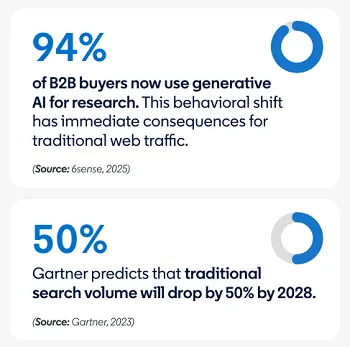
LinkedIn’s foresight in this area is not new; the platform has been steadily investing in highlighting its unique value proposition as a repository of professional, vetted content. This strategy is paying dividends, as evidenced by third-party research indicating that LinkedIn is already one of the most frequently cited references by AI chatbots. This established trust and authority make LinkedIn a fertile ground for brands aiming to influence AI-driven discovery. The platform’s ecosystem, comprising millions of professionals, companies, and thought leaders, generates a continuous stream of expert-validated content, which naturally aligns with AI models’ preference for reliable sources. Data from various industry reports suggest that AI search queries are growing at an exponential rate, with some projections indicating that conversational AI could handle over 50% of all search queries within the next few years. This underscores the urgency for marketers to adapt their strategies now.

Unpacking "The Credibility Stack": LinkedIn’s New Optimization Framework
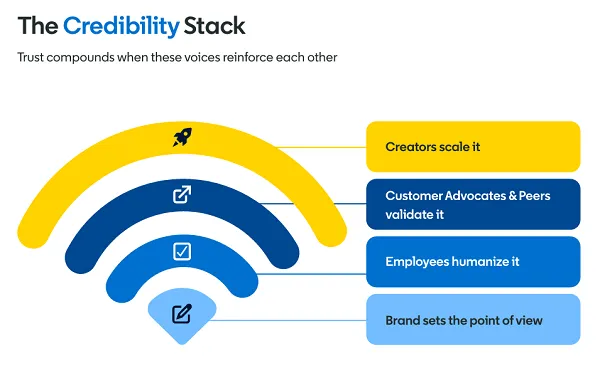
At the core of LinkedIn’s new playbook is a proprietary framework dubbed "The Credibility Stack." This model provides a structured approach for brands to enhance their trustworthiness and authority on the platform, thereby increasing their likelihood of being cited by AI. The framework is built upon LinkedIn’s established algorithmic signals and user behaviors, aiming to scale relevant messages across its network.
The Credibility Stack emphasizes a multi-faceted approach, integrating various elements of the LinkedIn app to construct a comprehensive and trusted brand presence. This includes:
- Foundational Presence: Establishing a robust company page with complete information, consistent branding, and regular updates. This serves as the anchor for all subsequent credibility-building efforts.
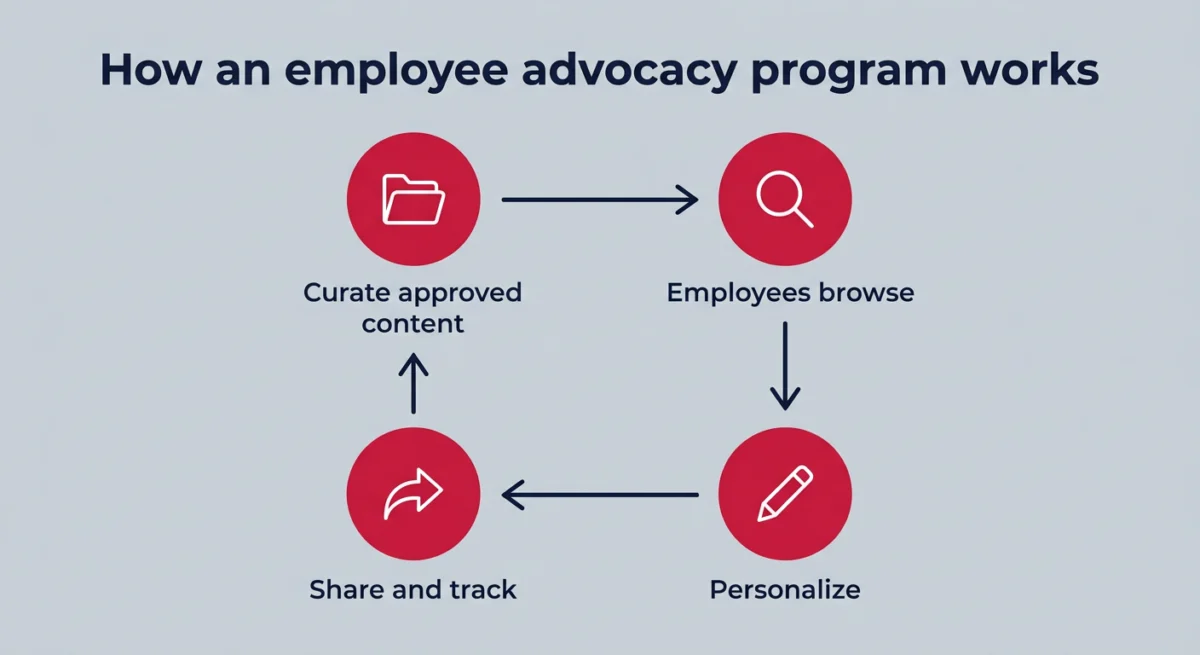
- Employee Advocacy: Encouraging and empowering employees to share, engage with, and create content relevant to the brand’s expertise. Individual professional profiles, when optimized and active, amplify the brand’s reach and humanize its voice.
- Thought Leadership: Consistently publishing high-quality, insightful content from key leaders and subject matter experts within the organization. This positions the brand as a go-to authority in its industry.
- Community Engagement: Actively participating in relevant LinkedIn Groups, commenting on industry posts, and fostering discussions. This demonstrates engagement and a commitment to contributing to the professional discourse.
By meticulously building each layer of this "stack," brands can create a powerful ecosystem of credibility that AI models are designed to identify and prioritize.
Key Pillars for AI Optimization on LinkedIn
The playbook delves into specific actionable steps that B2B marketers can take to optimize their content for AI citations. It moves beyond generic content marketing advice, focusing on the nuances of how AI models process and attribute information.
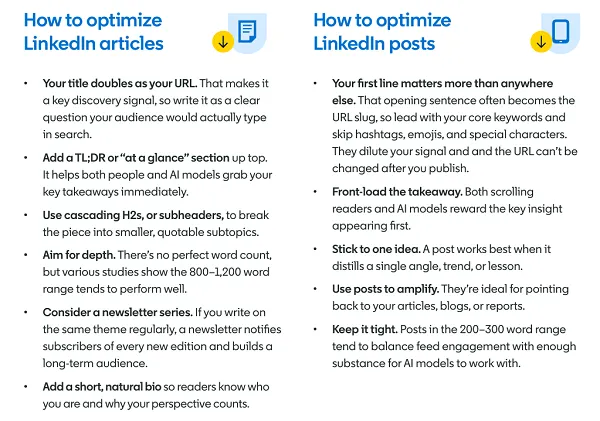
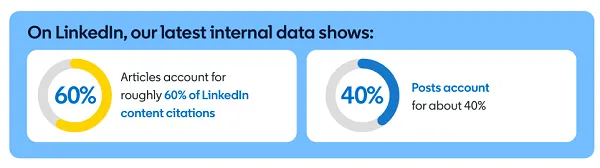
- Long-Form Articles Over Short Posts: LinkedIn’s analysis indicates a clear preference among AI models for long-form articles published directly on the platform, compared to shorter feed posts. This is a crucial insight for content strategists. Long-form articles (often referred to as LinkedIn Articles or newsletters) allow for deeper dives into topics, comprehensive analysis, and the inclusion of detailed data and expert opinions, all of which signal higher quality and authority to AI algorithms. Marketers are encouraged to invest in well-researched, substantive pieces that offer genuine value.
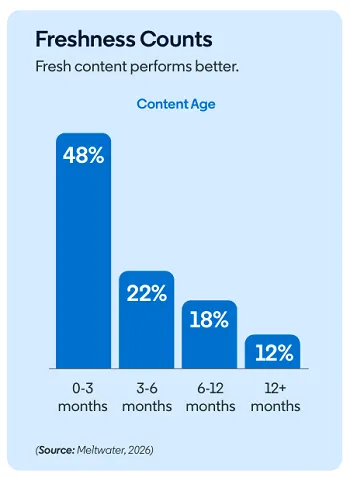
- Content Freshness and Regular Updates: The playbook also highlights "content freshness" as a significant factor in AI citation. Stale or outdated information is less likely to be prioritized by AI models striving to provide the most current and relevant answers. Brands are advised to regularly update existing articles, publish new insights, and ensure their content reflects the latest industry trends and developments. This doesn’t necessarily mean churning out content daily, but rather maintaining a consistent cadence of high-quality, relevant updates.
- Structured Content and Keywords: While not explicitly detailed in the provided snippet, industry best practices for AI optimization suggest that structuring content clearly with headings, subheadings, bullet points, and relevant keywords significantly aids AI models in understanding and extracting information. LinkedIn’s platform supports rich text formatting, which can be leveraged to improve content readability for both human users and AI.
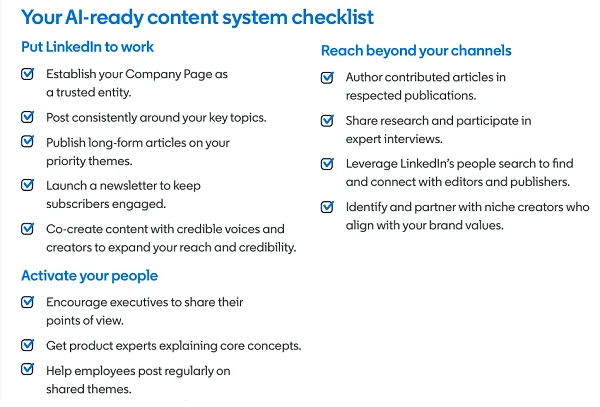
- Leveraging Employee Profiles: The playbook implicitly encourages the activation of employee profiles. When employees share company content, publish their own insights, and engage authentically, it creates a web of interconnected credibility. Each employee acts as a node, extending the brand’s reach and validating its expertise from multiple angles, which AI models can interpret as a stronger signal of collective authority.
The B2B Marketing Imperative: Adapting to AI Search
For B2B marketers, the implications of this shift are profound. Traditionally, SEO has focused on ranking high on search engine results pages (SERPs). With AI chatbots, the goal shifts from "ranking" to "citation." Instead of driving traffic to a website through a click, the objective becomes having an AI bot directly reference your brand or content as part of its answer. This requires a different mindset:
- Focus on Answer-Oriented Content: Content must be crafted to directly answer common industry questions and provide definitive, authoritative information.
- Emphasis on Thought Leadership: Brands must genuinely invest in becoming recognized thought leaders in their respective niches, as AI models prioritize sources with established expertise.
- Holistic LinkedIn Strategy: A piecemeal approach to LinkedIn will no longer suffice. Brands need a cohesive strategy that integrates company pages, employee advocacy, long-form content, and community engagement.
Broader Implications for Digital Strategy
LinkedIn’s strategic emphasis on AI citations carries broader implications for the digital marketing landscape. It signals a move towards a more qualitative assessment of information by AI models, where signals of trust, authority, and expertise (often encapsulated in Google’s E-E-A-T framework: Experience, Expertise, Authoritativeness, Trustworthiness) are paramount. Platforms that can consistently provide such signals will likely become preferred data sources for AI.
For LinkedIn itself, this initiative is a shrewd business move. By positioning itself as the premier platform for AI-cited B2B content, it aims to boost user engagement, drive more businesses to invest in its premium features and advertising, and solidify its status as an indispensable tool for professional development and business growth. This could lead to increased time spent on the platform, more content creation, and ultimately, a stronger network effect.
The Balancing Act: Leveraging LinkedIn vs. Owned Channels
While LinkedIn’s playbook offers compelling reasons to invest in on-platform optimization, it also subtly introduces a common dilemma in digital marketing: the balance between "rented" platforms and "owned" properties. The article astutely points out that "For brands, building reliance on any platform in this way is a risk, as AI tools could de-prioritize LinkedIn or LinkedIn could change the rules."
This highlights a critical strategic consideration. While LinkedIn provides immediate access to a vast, professional audience and established credibility signals that are hard to replicate from scratch, brands should ideally use these insights to bolster their entire digital presence, not just their LinkedIn profile. The guide notes provided by LinkedIn, focusing on content quality, freshness, and authority, are universally applicable.
A more resilient strategy would involve:
- Using LinkedIn as a Referral Tool: Leverage LinkedIn to build initial credibility and drive traffic back to a brand’s owned website, where long-form articles, whitepapers, and detailed resources can reside. This diversifies the risk and ensures that a brand’s core intellectual property is housed on its own domain.
- Replicating Best Practices: Apply the principles of "The Credibility Stack" – such as fostering internal expertise, creating high-quality long-form content, and maintaining content freshness – directly on a brand’s official website or blog. While building direct AI citation on an owned property might be harder without LinkedIn’s inherent trust signals, a well-executed strategy can still yield significant results.
- Cross-Promotion: Ensure seamless cross-promotion between LinkedIn content and owned website content. For example, a LinkedIn article could serve as a summary or teaser for a more in-depth piece on the company blog, or vice-versa.
Looking Ahead: The Evolving Landscape of AI-Driven Discovery
The release of LinkedIn’s AI playbook marks a pivotal moment in the evolution of digital marketing. It signifies a future where search is less about clicking links and more about conversational interactions and authoritative citations. Brands that proactively adapt to this paradigm shift by prioritizing credibility, expertise, and high-quality content on trusted platforms like LinkedIn, while simultaneously fortifying their owned digital properties, will be best positioned to thrive. The emphasis on human-validated expertise within a professional network will likely remain a crucial differentiator as AI continues to shape how we discover and consume information. The continuous evolution of AI models and their data sources will require marketers to stay agile, constantly re-evaluating their strategies to remain visible and impactful in this dynamic new era of intelligent search.