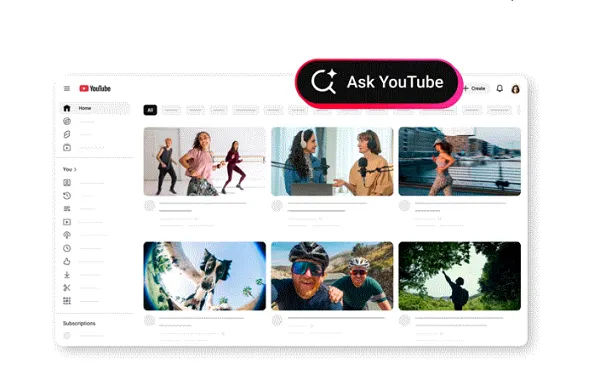
YouTube, the world’s largest video-sharing platform, has announced a significant expansion of its artificial intelligence-powered "Ask YouTube" functionality, making it accessible to all users across the United States. This move marks a pivotal moment in the platform’s evolution, integrating advanced conversational AI capabilities directly into the user experience on mobile, desktop, and TV devices. The feature, initially rolled out to Premium subscribers in April, now extends its reach to all signed-in viewers aged 13 and older, aiming to transform how users discover and interact with the vast ocean of content available on the platform.
The Evolution of Search on YouTube: From Keywords to Conversations
For years, YouTube’s search functionality primarily relied on keyword matching, a system that, while effective, often required users to sift through numerous videos to find specific answers or structured information. The introduction of "Ask YouTube" signifies a strategic shift towards a more intuitive, natural language processing (NLP)-driven search paradigm. This AI-powered tool allows users to pose complex, conversational queries, much like interacting with a human assistant, and receive expanded, contextually rich responses rather than just a list of video links.
The initial launch of "Ask YouTube" was a carefully phased approach, beginning with YouTube Premium subscribers on mobile devices. This controlled rollout allowed the platform to gather crucial user feedback, refine the AI’s understanding, and optimize its performance before a broader deployment. Premium subscribers, often early adopters and frequent users, provided a valuable testbed for the nascent technology. Their engagement helped YouTube engineers fine-tune the AI’s ability to interpret nuanced requests and deliver accurate, relevant information drawn from its immense video library.
Deep Dive into Ask YouTube’s Functionality and User Experience
At its core, "Ask YouTube" leverages sophisticated large language models (LLMs) to understand the intent behind a user’s query. Unlike traditional search that looks for exact keyword matches, this AI comprehends the semantic meaning of sentences, allowing for a more human-like interaction. As demonstrated by YouTube, a user could inquire, "Help me plan a 3-day road trip from San Francisco to Santa Barbara," and instead of a fragmented list of travel vlogs, the AI would generate a structured, step-by-step itinerary, potentially referencing specific videos for each segment of the journey, such as scenic routes, dining recommendations, or points of interest.
A key differentiator of "Ask YouTube" is its capacity for follow-up questions. The AI is designed to maintain context throughout a conversation, enabling users to delve deeper into initial responses. If the itinerary suggests a particular restaurant, a user could then ask, "What are the reviews like for that restaurant?" or "Show me a video of someone visiting that spot." This iterative questioning creates a dynamic and personalized discovery path, mimicking a natural dialogue and providing a far more efficient way to gather comprehensive information. This capability moves beyond simple Q&A to a more sophisticated, guided exploration of topics, potentially unlocking information that might have been buried deep within videos or spread across multiple clips.
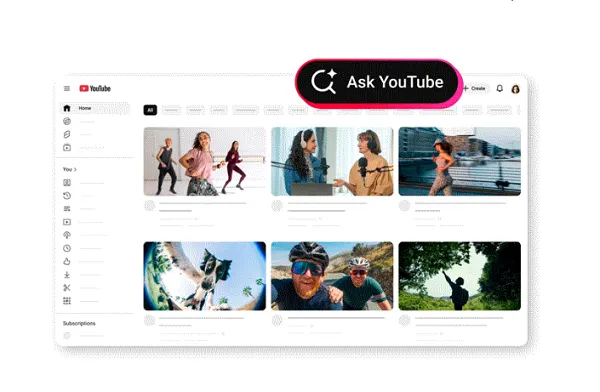
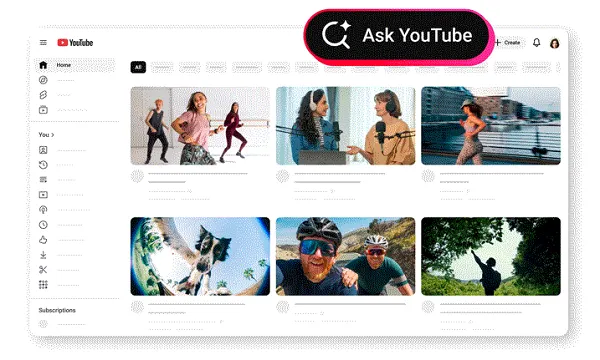
The user interface for "Ask YouTube" is designed to be seamless. When watching a video or browsing the platform, users can access the "Ask" feature to inquire about the content they are viewing or related topics. This integration ensures that the AI assistant is always readily available, enhancing the immediacy and relevance of its responses. The visual display of the AI’s answers often incorporates text summaries, bullet points, and direct links to specific timestamps within videos, offering a multi-modal approach to information delivery.
A Broader Context: Google’s AI Ambitions and the Competitive Landscape
This expansion of "Ask YouTube" is not an isolated development but rather a significant component of Google’s overarching strategy to embed artificial intelligence across its entire ecosystem. Google has been at the forefront of AI research for decades, with landmark innovations like the Transformer architecture that underpins modern LLMs. The company’s recent intensified focus on generative AI, particularly with the rollout of its Gemini models and the conversational AI Bard (now integrated into Gemini), underscores a concerted effort to redefine user interaction with its products.
"Ask YouTube" benefits directly from Google’s extensive research and development in AI. The ability to process vast amounts of unstructured video data, understand spoken language, and generate coherent text responses is a testament to the sophistication of Google’s AI infrastructure. This initiative positions YouTube as a direct competitor not only to traditional search engines but also to emerging AI assistants and other platforms that are increasingly incorporating AI for content discovery, such as TikTok’s nascent AI search features.
The integration of AI into YouTube also addresses a growing trend in user behavior. As information overload becomes more prevalent, users are increasingly seeking curated, summarized, and personalized content experiences. Generative AI tools like "Ask YouTube" promise to cut through the noise, delivering precise answers and relevant content without requiring extensive manual searching. This aligns with Google’s broader mission to organize the world’s information and make it universally accessible and useful, now with an added layer of intelligent curation.
Impact on User Experience: Enhanced Discovery and Engagement
For the average YouTube user, the expansion of "Ask YouTube" promises a dramatically improved experience. The platform, which hosts billions of videos, can often feel overwhelming. Finding specific pieces of information within lengthy tutorials, documentaries, or reviews can be time-consuming. "Ask YouTube" streamlines this process by offering direct answers and curated pathways to relevant content. This could lead to:
- Reduced Friction in Information Retrieval: Users no longer need to formulate perfect keyword queries or scrub through videos. They can simply ask questions in natural language.
- Deeper Engagement with Content: By providing contextual answers and suggesting related videos or sections, the AI can encourage users to explore topics more thoroughly, potentially increasing watch time and interaction with diverse content.
- Personalized Learning and Research: The ability to ask follow-up questions and receive tailored responses makes YouTube an even more powerful tool for self-education, hobby exploration, and product research. Users can delve into complex subjects with greater ease, breaking down intricate topics into manageable, understandable segments.
- Accessibility Improvements: While not explicitly stated, conversational AI can often benefit users with certain disabilities by providing an alternative, more intuitive way to navigate and extract information from video content.
The move is also expected to significantly enhance YouTube’s utility as a resource for product and service research. Consumers often turn to YouTube for reviews, demonstrations, and comparisons before making purchasing decisions. "Ask YouTube" can synthesize information from multiple reviews, highlight key features, and even compare products side-by-side, making the platform an even more indispensable pre-purchase research tool. This could potentially elevate YouTube’s role in the consumer journey, influencing buying habits and strengthening its position against e-commerce giants and dedicated review sites.
Implications for Content Creators: Navigating the AI-Powered Landscape
While beneficial for users, the advent of "Ask YouTube" presents both opportunities and challenges for the platform’s vast community of content creators.
Opportunities:
- Enhanced Discoverability: Videos that provide clear, concise, and accurate information on specific topics are more likely to be surfaced by the AI in response to user queries. This could offer a new avenue for discoverability beyond traditional search engine optimization (SEO) and recommendation algorithms.
- Incentive for High-Quality, Informative Content: Creators might be encouraged to produce more structured, fact-based, and educational content that directly answers common questions, knowing that such content is more likely to be leveraged by the AI.
- New Content Formats: Creators might experiment with new video structures designed to be easily digestible by AI, perhaps incorporating dedicated Q&A segments or clearly demarcated sections addressing specific sub-topics.
- Audience Expansion: By making complex topics more accessible, creators might attract new audiences who previously found it challenging to navigate dense information.
Challenges:
- Shift in SEO Paradigms: Traditional YouTube SEO often focuses on keywords in titles, descriptions, and tags. With "Ask YouTube," the AI’s ability to understand spoken content and context becomes paramount. Creators might need to optimize their content for natural language queries, ensuring their videos genuinely answer common questions.
- Summarization vs. Full Viewership: If the AI provides concise answers directly, there’s a potential risk that users might not click through to watch the full video, impacting watch time and ad revenue. Creators will need to ensure their content offers value beyond what the AI can summarize, encouraging deeper engagement.
- Attribution and Monetization: Ensuring proper attribution to creators when their content is used to generate AI answers, and how that translates into monetization, will be a critical area for YouTube to address.
- Bias and Misinformation: The AI’s responses are only as good as the data it’s trained on. Creators who produce misinformation or biased content could inadvertently have their views amplified, or conversely, legitimate content could be overlooked if the AI’s algorithms have inherent biases. YouTube will need robust moderation and fact-checking mechanisms for its AI.
Creators will need to adapt their strategies, potentially focusing on creating highly informative, well-structured videos that provide definitive answers, ensuring their content is easily parsable by AI algorithms. The emphasis may shift from simply getting clicks to providing demonstrable value that the AI can confidently reference.
Economic Considerations: Advertising and Monetization Opportunities
The expansion of "Ask YouTube" also carries significant economic implications for the platform and its advertisers.
- More Targeted Advertising: With a deeper understanding of user intent gleaned from conversational queries, YouTube can offer advertisers more precise targeting capabilities. If a user is asking detailed questions about specific car models, advertisers for those models can deliver highly relevant ads.
- New Ad Formats: The conversational interface could open doors for new, interactive ad formats. Imagine an ad that appears as part of an AI-generated answer, allowing users to ask follow-up questions about a product or service directly within the AI dialogue.
- Increased Value for Brands: Brands that create high-quality, informative content (e.g., product tutorials, how-to guides) are likely to see increased visibility as the AI surfaces their videos in response to user queries. This could enhance brand authority and influence purchasing decisions.
- Data Insights: The aggregate data from "Ask YouTube" queries will provide YouTube with unprecedented insights into user interests, information gaps, and emerging trends, which can be monetized through improved ad products and market intelligence.
However, challenges remain. As mentioned, if users get their answers directly from the AI without clicking through to videos, traditional ad impressions might decrease. YouTube will need to innovate its monetization models to ensure creators and the platform continue to benefit from this new mode of interaction. This could involve revenue sharing from AI-generated answers or new ad placements directly within the AI interface.
Technical Underpinnings and Ethical Considerations
The successful implementation and scaling of "Ask YouTube" rely on several advanced technical components:
- Large Language Models (LLMs): These are the brains of the operation, trained on massive datasets of text and code to understand and generate human-like language. Google’s proprietary LLMs, likely variations of Gemini, are central to the feature.
- Video Understanding: Beyond just text, the AI must be able to "understand" the content of videos themselves – transcribing spoken words, identifying objects, recognizing actions, and comprehending the overall narrative. This involves multimodal AI capabilities.
- Retrieval-Augmented Generation (RAG): When a query is made, the LLM doesn’t just generate an answer from its pre-trained knowledge. It actively "retrieves" relevant information from YouTube’s vast video index (e.g., specific videos, transcripts, comments) and then uses that retrieved information to "generate" an accurate and contextual response. This helps ensure factual accuracy and keeps the information current.
- Context Management: The ability to remember previous questions and answers in a conversation is crucial for providing coherent and relevant follow-up responses.
Alongside the technical prowess, ethical considerations are paramount. Google and YouTube face ongoing scrutiny regarding:
- Accuracy and Hallucination: LLMs can sometimes "hallucinate" or generate plausible-sounding but factually incorrect information. Ensuring the AI provides accurate answers, especially when dealing with sensitive topics, is critical.
- Bias: If the training data for the AI reflects societal biases, the AI’s responses could inadvertently perpetuate them. YouTube must continuously monitor and mitigate algorithmic bias.
- Data Privacy: How user queries are stored, analyzed, and used to improve the AI, while protecting user privacy, is a constant concern. Google’s commitment to anonymizing data and transparent privacy policies will be vital.
- Content Moderation: The AI’s responses must adhere to YouTube’s community guidelines, avoiding hate speech, misinformation, or harmful content.
The Road Ahead: Global Expansion and Future Developments
Following its successful rollout in the U.S., YouTube has explicitly stated its intention to bring "Ask YouTube" to more regions around the world and support additional languages. This global expansion will unlock the feature’s potential for billions of users, fostering enhanced discovery and knowledge sharing on a truly international scale. The localization process will be complex, requiring the AI to understand and respond accurately in diverse linguistic and cultural contexts.
Looking further ahead, the integration of AI could lead to even more transformative features:
- Proactive Information Delivery: The AI might anticipate user needs based on viewing history and suggest relevant information or videos before a query is even made.
- Interactive Content Creation: AI tools could assist creators in generating video outlines, scripts, or even editing suggestions based on audience demand identified through "Ask YouTube" queries.
- Deeper Personalization: The AI could become a highly personalized learning assistant, curating entire learning paths based on individual user interests and progress.
- Real-time Translations and Summaries: AI could provide on-the-fly summaries or translations of live streams or videos, making global content more accessible.
The expansion of "Ask YouTube" is more than just a new search feature; it represents a fundamental shift in how users will interact with one of the world’s most influential digital platforms. By harnessing the power of conversational AI, YouTube is not just indexing videos but actively curating knowledge, fostering deeper engagement, and potentially redefining the future of online video consumption and information retrieval. This move firmly establishes YouTube at the forefront of AI innovation within the media landscape, setting a new standard for intelligent content discovery.