Dwi Wanna
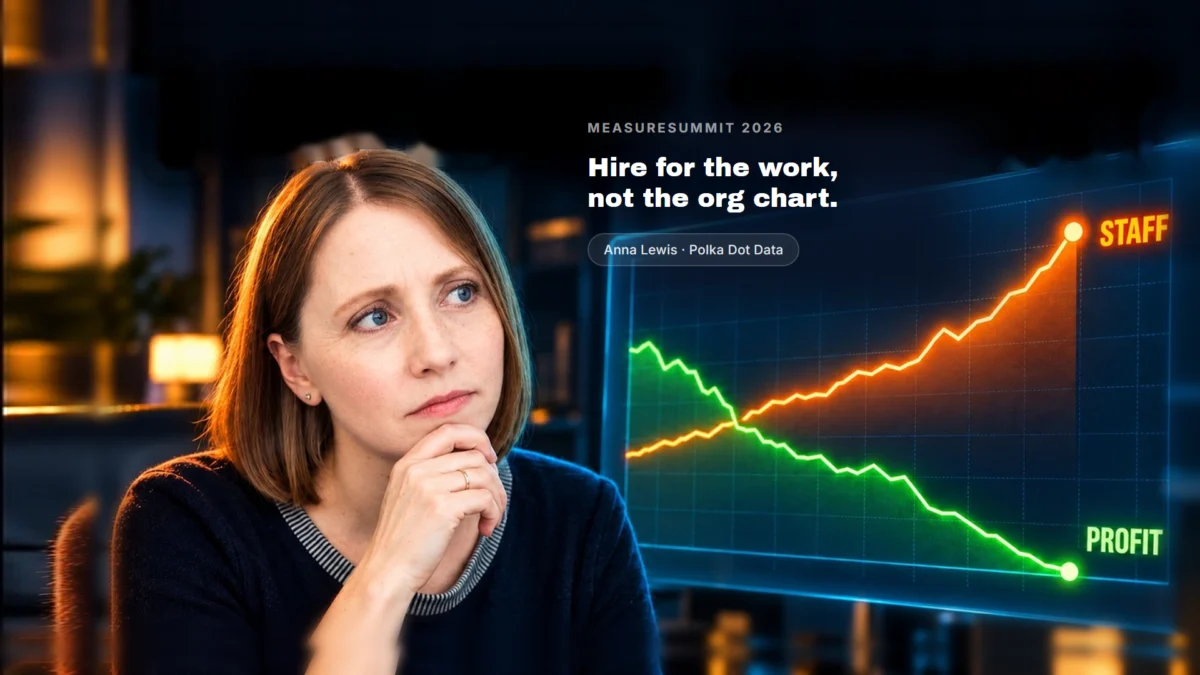
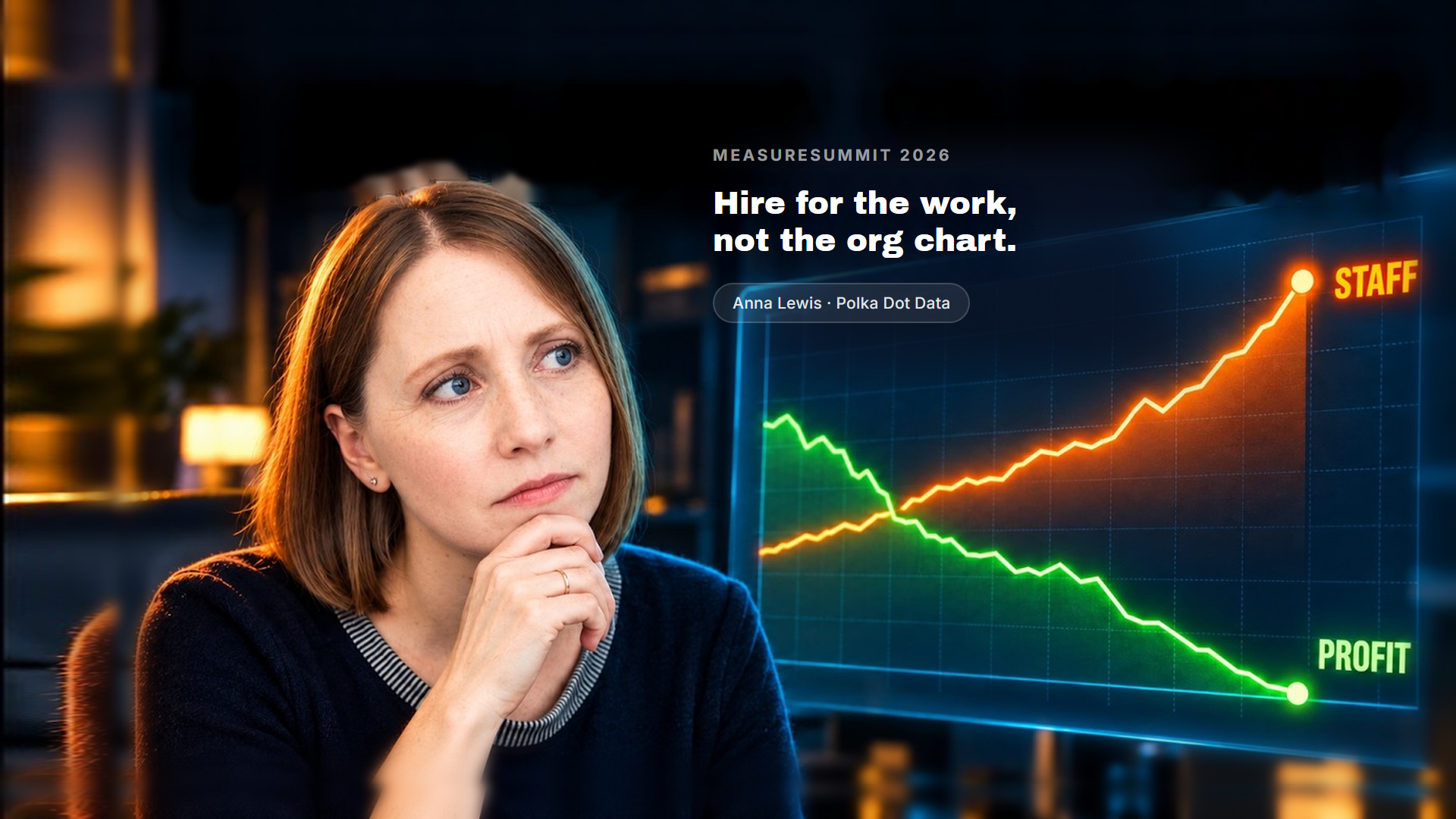
Addressing a global audience of data professionals at the MeasureSummit in October 2026, Anna Lewis, founder of Polka Dot Data, delivered a comprehensive post-mortem on the systemic hiring failures that frequently undermine the financial health of analytics consultancies. Drawing from a decade of leadership at her firm, Lewis provided a data-driven autopsy of her own growth trajectory, specifically highlighting a period where her headcount reached eight employees despite fluctuating revenue, a misalignment that nearly eliminated the firm’s profit margins. Her presentation, which has since sparked widespread discussion among agency owners and in-house data leaders, serves as a blueprint for navigating the volatile intersection of human capital and fiscal sustainability in the high-demand analytics sector.
The central thesis of the session focused on the "headcount trap," a phenomenon where agencies scale their workforce in anticipation of growth rather than in response to sustained, profitable demand. Lewis presented a ten-year performance chart of Polka Dot Data that illustrated a common industry struggle: while revenue grew, the cost of a steady headcount often moved in such close proximity to gross income that net profit became negligible. To combat this, Lewis outlined six specific hiring mistakes that compromise margins and provided a framework for maintaining a leaner, more resilient organizational structure.
The Chronology of Scaling Failures: A Decade of Lessons
The evolution of Polka Dot Data reflects the broader shifts in the analytics industry over the last ten years. Founded in the mid-2010s, the agency navigated the transition from basic web tracking to the complex, privacy-centric environment of the mid-2020s. Lewis noted that her most significant errors occurred during periods of optimism when the firm over-hired to meet short-term surges in project work.
By the early 2020s, the firm had reached a peak headcount of eight. However, Lewis revealed that the lack of a rigorous hiring framework led to a "pinball effect" in profitability. When client contracts ended or project scopes shifted, the fixed cost of salaries remained, creating immense pressure on the remaining margins. This experience prompted a total re-evaluation of the firm’s operational model, moving away from "ego-driven" hierarchy building toward a demand-responsive structure.
Mistake 1: Prioritizing Credentials Over Environmental Fit
One of the most pervasive issues identified was the tendency to hire based on a Curriculum Vitae (CV) rather than the specific demands of the work environment. Lewis utilized a botanical analogy, comparing a high-credentialed candidate to a "gorgeous rose." While the candidate may possess elite academic qualifications or prestigious past employers, they may fail to thrive if the "soil"—the agency’s specific culture and pace—is not suited to them.

Lewis argued that in the analytics field, resilience often outweighs academic pedigree. Real-world data environments are frequently chaotic, involving broken API connections, inconsistent client communication, and shifting technical requirements. A candidate with a perfect CV but low resilience may struggle when projects do not follow a linear path. The analysis suggested that recruiters should instead look for evidence of problem-solving under pressure and the ability to navigate ambiguity, qualities that are rarely captured in a standard list of technical certifications.
Mistake 2: The Sunflower Field Problem and Cognitive Homogeneity
The second major error involves "cloning," where leaders unconsciously hire individuals who mirror their own personality types and cognitive approaches. Lewis referred to this as the "Sunflower Field Problem," where a team of identical thinkers approaches challenges with the same biases and blind spots.
To mitigate this, Lewis recommended the implementation of DISC personality profiling—which categorizes individuals into Dominance (D), Influence (I), Steadiness (S), and Conscientiousness (C). Her internal audit revealed that her own "Dominant" profile required a counterbalance of "Conscientious" profiles—individuals who excel at systemization, detailed analytics development, and project completion.

Industry data suggests that cognitively diverse teams are 20% more likely to identify technical errors before they reach the client. By mapping a team’s DISC distribution, an agency can identify "quadrant gaps." For example, a team heavy on "Influencers" may excel at client acquisition but struggle with the "Steadiness" required for long-term data governance.
Mistake 3: Disregarding the Contextual Divide
A significant portion of the MeasureSummit session was dedicated to the distinct requirements of agency versus in-house roles. Lewis noted that many hiring failures stem from assuming that a talented analyst in one environment will naturally succeed in the other.
Agency roles demand high "context-switching" capabilities, as analysts must often manage four to five different client accounts simultaneously, each with unique tech stacks and business goals. Conversely, in-house roles require "deep-dive" expertise and the ability to navigate internal corporate politics over long periods.

Agency Requirements:
- Rapid adaptation to diverse industries.
- Strong consultative and communication skills.
- Tolerance for high-variety, short-duration tasks.
In-House Requirements:
- Long-term strategic alignment with a single product.
- Deep institutional knowledge.
- Ability to manage slow-moving internal stakeholders.
Hiring an analyst who craves deep, singular focus for a fast-paced agency role often leads to rapid burnout and high turnover costs, which Lewis estimated can reach 1.5 to 2 times an employee’s annual salary when factoring in recruitment and lost productivity.

Mistake 4: Structural Over-Engineering and the Ego Trap
Lewis highlighted the danger of building a "dream hierarchy" before the revenue justifies it. Many founders fall into the "ego trap" of appointing Heads of Analytics, BI Developers, and Client Success Managers for a team that only requires a few versatile generalists.
She proposed a size-based framework for sustainable team growth:
- Small Teams (1–3 people): Focus on versatile generalists who can handle the full stack, from data collection to client reporting.
- Mid-Sized Teams (4–10 people): Introduction of specialized roles, such as dedicated developers or account managers, but with a continued emphasis on billable efficiency.
- Large Teams (11+ people): Formalized management layers and specialized departments.
The analysis suggested that premature specialization creates "internal friction" and overhead that erodes the margins necessary for reinvestment.

Mistake 5: The Stagnant Job Specification
In the rapidly evolving landscape of 2026, a job description written 18 months ago is likely obsolete. Lewis argued that treating the job spec as a static document is a primary driver of role misalignment. She advocated for job specs to be integrated into monthly one-on-one reviews.
Triggers for a job spec review include:
- The introduction of new AI-driven analytics tools.
- Changes in the agency’s core service offerings.
- A team member reaching the two-year mark in their current role.
Lewis recommended a "Customer Journey Mapping" exercise for staffing. By listing every task required from initial lead generation to final reporting, agencies can identify where they are over-staffed and where critical gaps exist. This data-driven approach to role definition ensures that new hires are brought in to solve specific operational bottlenecks rather than to fulfill a generic organizational chart.

Mistake 6: Fiscal Blindness and the Failure to Track Profitability
The most critical mistake, according to Lewis, is the failure to monitor individual and team-wide profitability metrics. Many agencies focus on top-line revenue while ignoring the granular cost of delivery. Lewis, influenced by industry veteran Fred Pike, now utilizes a "Monthly Stats Pack" to track four key indicators:
- Staff-Profit Ratio: This is calculated as (Total Revenue per Person / Salary). A healthy agency typically looks for a ratio of 2.5 to 3.0. A ratio approaching 1.0 indicates that an employee is barely covering their own cost, leaving no margin for overhead or profit.
- Salary Percentage of Turnover: Lewis noted that her firm’s staff costs have fluctuated between 20% and 70% of total revenue. Keeping this figure within a target range (typically 40–55% for agencies) is essential for survival.
- Revenue Per Person: A simple but effective metric to ensure that headcount growth is driving proportional revenue growth.
- Morale and "Dementor" Tracking: While qualitative, Lewis emphasized the need to identify "dementors"—individuals who negatively impact the productivity and happiness of the team. In a small agency, one toxic hire can decrease the output of the entire team by an estimated 30-40%.
Broader Implications for the Analytics Industry
The insights shared at MeasureSummit 2026 reflect a broader shift toward "fractional" and "efficiency-first" models in the professional services sector. As AI continues to automate routine data cleaning and basic reporting tasks, the value of human capital is shifting toward high-level strategy and complex problem-solving.
Lewis concluded with a difficult but necessary industry maxim: "Hire slowly, fire quickly." The cost of retaining a "bad fit" hire extends beyond their salary; it includes the potential loss of high-performing team members who must compensate for the underperformer’s mistakes.

The primary takeaway for agency founders is that headcount is not a metric of success—profitability and sustainability are. By applying the same rigorous data analysis to their hiring processes that they apply to client data, analytics leaders can build resilient firms capable of weathering economic shifts. For the industry at large, the move toward DISC-informed, metrics-based hiring represents a professionalization of the "agency life" model, promising a future where firm growth and employee satisfaction are no longer mutually exclusive.

 Ali Ikhwan
 Nila Kartika Wati