 Ali Ikhwan
The architectural landscape of deep learning underwent a significant shift when researchers began moving away from the Rectified Linear Unit (ReLU) toward more sophisticated activation functions like the Gaussian Error Linear Unit (GELU). While ReLU has been the industry standard since approximately 2012, the rise of Large Language Models (LLMs) and Transformer-based architectures has prioritized the nuances of information flow, leading to the widespread adoption of GELU. This transition represents a move from "hard" thresholding to a "soft," probabilistic gating mechanism that allows for more complex gradient flows during the training of massive neural networks.
The Evolution of Activation Functions: From Sigmoid to ReLU
To understand the impact of GELU, one must examine the chronology of activation functions in neural network design. In the early days of deep learning, Sigmoid and Tanh functions were the primary choices. However, these functions suffered from the "vanishing gradient problem," where gradients became infinitesimally small for large positive or negative inputs, effectively halting the learning process.
The introduction of the Rectified Linear Unit (ReLU) by Vinod Nair and Geoffrey Hinton, and its subsequent popularization in the 2012 AlexNet paper, revolutionized the field. ReLU’s mathematical simplicity—returning the input if it is positive and zero if it is negative—allowed for much faster training and helped mitigate the vanishing gradient problem. Despite its success, ReLU introduced the "Dying ReLU" problem. If a neuron’s input is consistently negative, it outputs zero and its gradient becomes zero, meaning the neuron effectively "dies" and ceases to contribute to the learning process.
By 2016, researchers Dan Hendrycks and Kevin Gimpel sought to address these limitations. They introduced the Gaussian Error Linear Unit (GELU), which aimed to combine the benefits of ReLU’s linearity with a smoother, non-monotonic curve that prevents neurons from becoming completely inactive.
The Mathematical Foundation of GELU
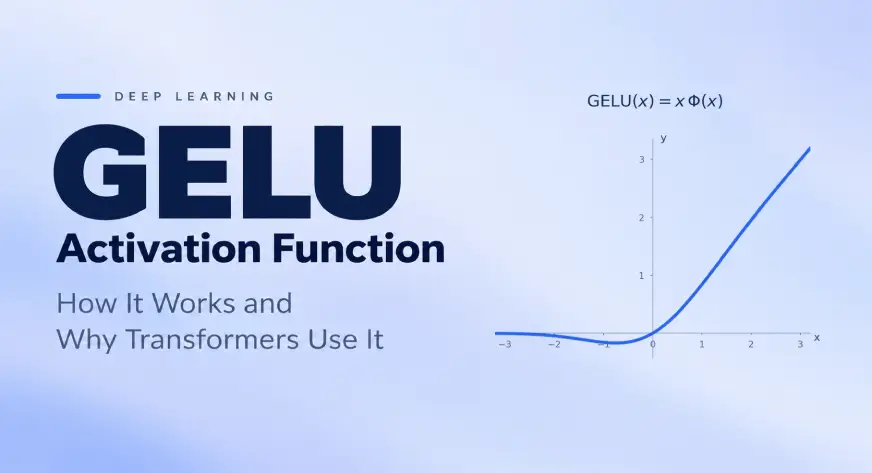
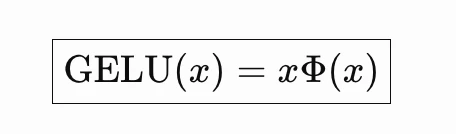
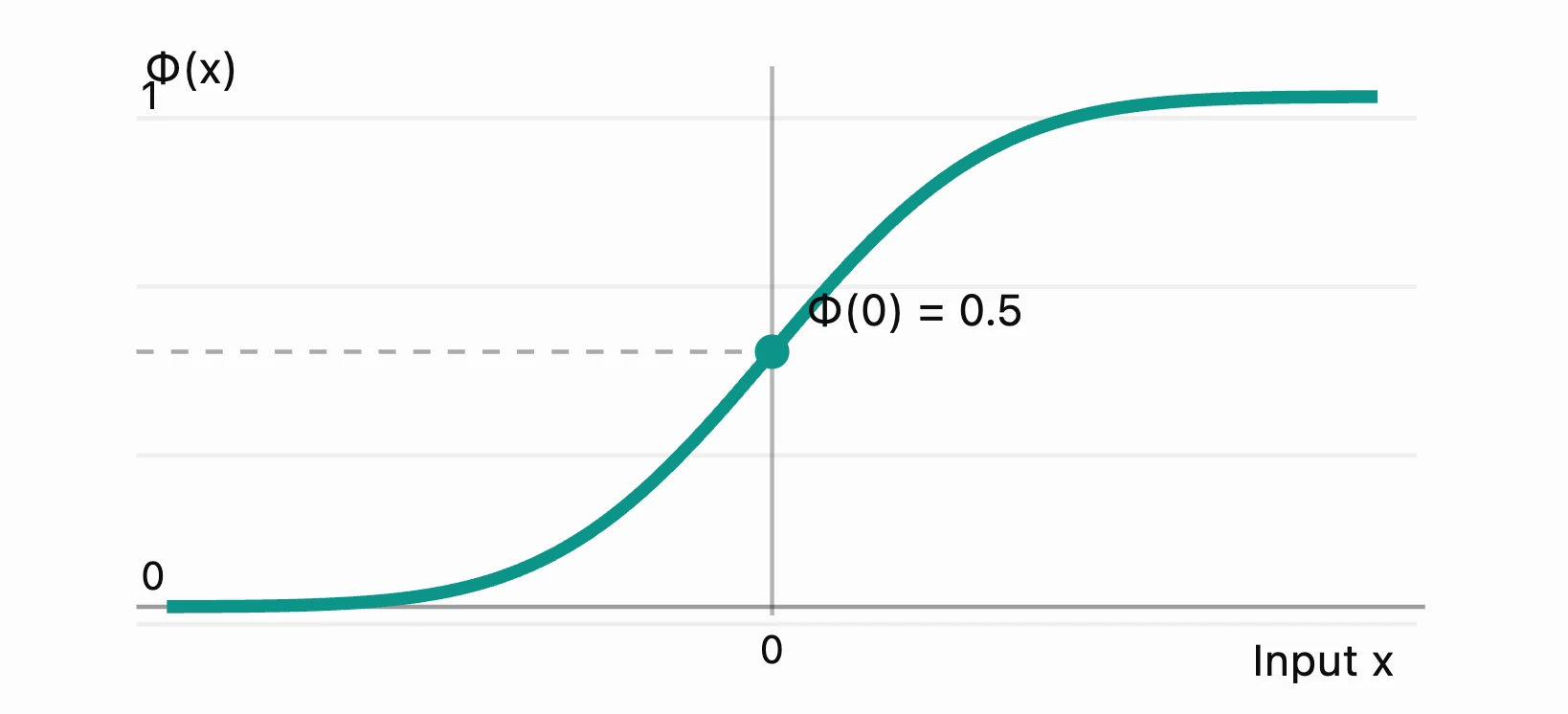
The GELU activation function is fundamentally different from its predecessors because it incorporates properties of the Gaussian distribution. Mathematically, it is defined as the product of the input $x$ and the cumulative distribution function (CDF) of the standard normal distribution.
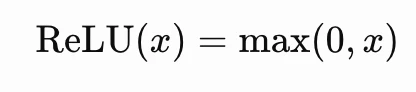
The formula is expressed as:
$GELU(x) = x cdot P(X le x) = xPhi(x)$
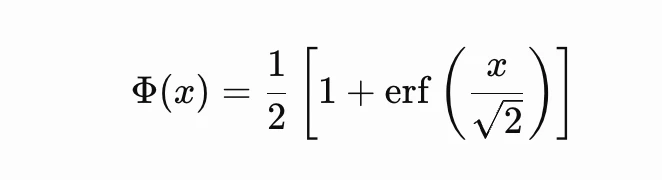
Where $Phi(x)$ is the standard normal cumulative distribution function. In practical terms, this means that the input is scaled by how likely it is to be "dropped" based on a normal distribution. Unlike ReLU, which is a deterministic "on/off" switch, GELU can be thought of as a stochastic regulator. It weights inputs by their magnitude while allowing a small amount of negative information to pass through, particularly when the input is near zero.
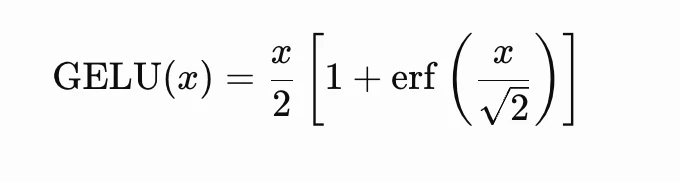
Because the standard normal CDF involves an integral that is computationally expensive, developers often use a high-precision approximation in software libraries like PyTorch and TensorFlow. The most common approximation uses the hyperbolic tangent function:
$GELU(x) approx 0.5x(1 + tanh(sqrt2/pi(x + 0.044715x^3)))$
This approximation allows the model to retain the performance benefits of GELU without the heavy computational overhead of calculating a true Gaussian integral during every forward pass.
Comparative Analysis: GELU vs. ReLU
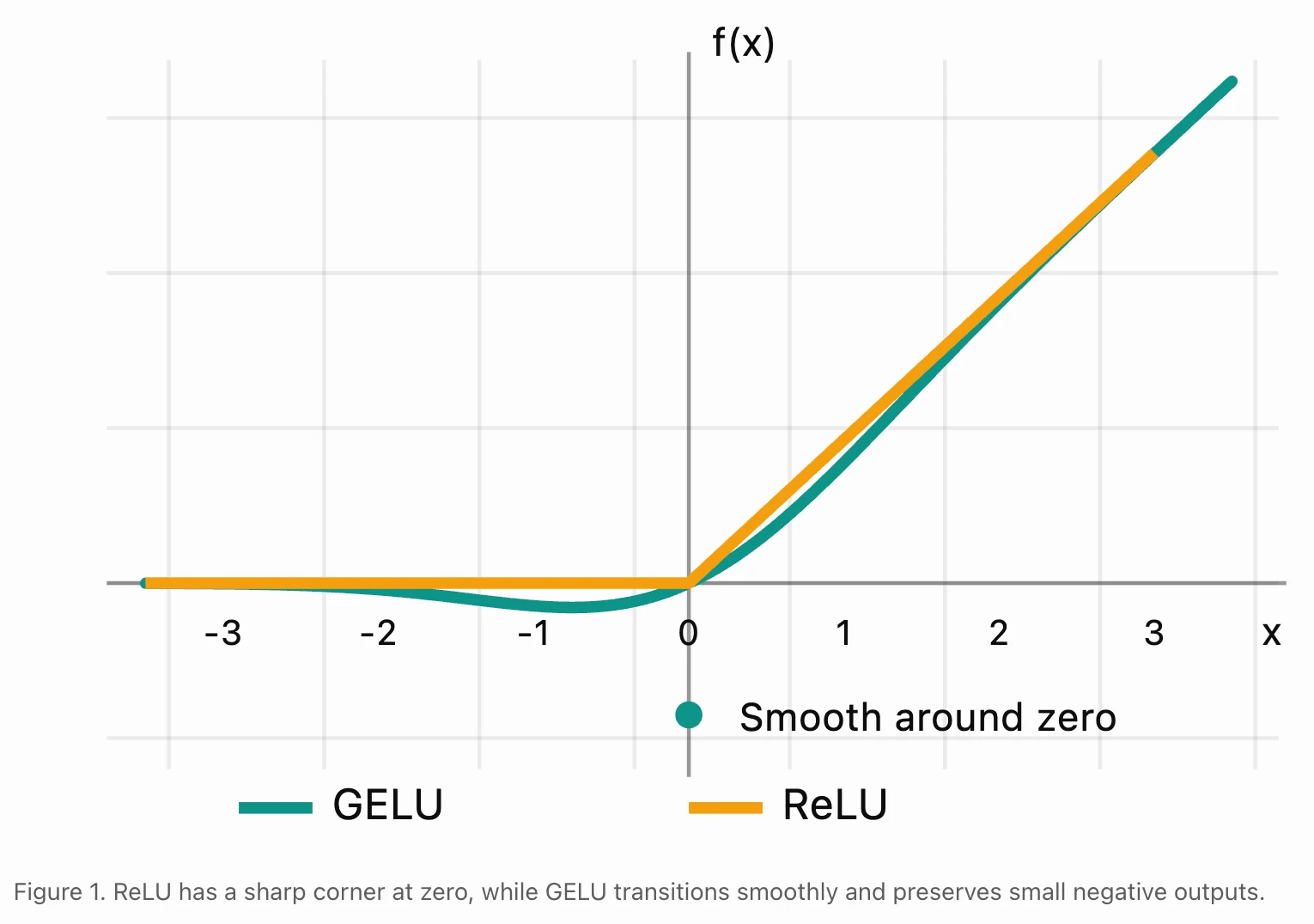
The primary distinction between GELU and ReLU lies in the treatment of negative inputs and the smoothness of the function at the origin.
- Information Retention: ReLU discards all negative values. In contrast, GELU is non-monotonic in its negative domain. It features a small "dip" where inputs between approximately -1 and 0 produce small negative outputs before eventually trending toward zero for highly negative values. This allows the network to maintain a more nuanced representation of the data.
- Differentiability: ReLU has a "kink" at zero, meaning it is not differentiable at that exact point. While this rarely impacts training in practice, GELU is smooth and differentiable everywhere. This smoothness is often cited as a reason for more stable optimization in very deep architectures.
- Probabilistic Gating: GELU effectively scales the input by its percentile. If an input is in the 70th percentile of a normal distribution, it is scaled by 0.7. This alignment with the Gaussian distribution is particularly effective because many natural datasets and weight initializations in deep learning follow a Gaussian pattern.
| Feature | ReLU | GELU |
|---|---|---|
| Mathematical Form | $max(0, x)$ | $x Phi(x)$ |
| Negative Input Handling | Hard zero | Smoothly suppressed |
| Monotonicity | Monotonic | Non-monotonic |
| Differentiability | Not differentiable at $x=0$ | Differentiable everywhere |
| Main Use Case | CNNs, Computer Vision | Transformers, LLMs (BERT, GPT) |
The Transformer Connection: Why BERT and GPT Prefer GELU
The dominance of GELU in modern AI is inextricably linked to the success of the Transformer architecture. When Google researchers released BERT (Bidirectional Encoder Representations from Transformers) in 2018, they chose GELU as the activation function for the hidden layers. This decision was a departure from the ReLU-based architectures common at the time.
The Transformer’s feed-forward networks (FFN) typically consist of two linear transformations with an activation function in between. Because Transformers rely heavily on self-attention mechanisms to weigh the importance of different tokens, the activation function must be able to handle a wide range of values without losing information.
Supporting data from the original GELU paper indicated that across several benchmarks—including the GLUE (General Language Understanding Evaluation) benchmark and MNIST classification—GELU consistently outperformed ReLU and ELU (Exponential Linear Unit). In the context of BERT, GELU helped the model achieve state-of-the-art results on multiple NLP tasks by allowing for more fluid gradient updates across its 110 million (Base) to 340 million (Large) parameters.

Following BERT’s success, OpenAI adopted GELU for its GPT (Generative Pre-trained Transformer) series, including GPT-2 and GPT-3. This cemented GELU’s status as the default activation function for the generative AI revolution.
Industry Implementation: Python and PyTorch Workflows
For data scientists and machine learning engineers, implementing GELU is straightforward due to its integration into major frameworks. In PyTorch, the function is available via torch.nn.GELU().

To visualize the difference between these functions, one can use a simple Python script utilizing Matplotlib and Torch:
import torch
import torch.nn.functional as F
import matplotlib.pyplot as plt

x = torch.linspace(-5, 5, 100)
relu = F.relu(x)
gelu = F.gelu(x)

plt.plot(x.numpy(), relu.numpy(), label='ReLU')
plt.plot(x.numpy(), gelu.numpy(), label='GELU', linestyle='--')
plt.title('Activation Function Comparison')
plt.legend()
plt.show()
In industrial settings, the choice between the "exact" version and the "tanh" approximation is often dictated by hardware. While modern GPUs handle the exact calculation efficiently, edge devices or specialized AI accelerators may prefer the approximation to save clock cycles.
Broader Impact and Future Implications
The shift to GELU has had a profound impact on the scalability of neural networks. By providing a more complex, smoother landscape for gradient descent, GELU has enabled the training of models with billions of parameters that might have otherwise suffered from instability or dead neurons.
However, the field continues to evolve. While GELU remains the standard for many, newer variants such as SwiGLU (a gated linear unit variant of the Swish/SiLU function) are gaining traction. Models like Meta’s Llama and Google’s PaLM have moved toward SwiGLU, which combines the benefits of GELU with a gating mechanism that further improves performance on massive datasets.

The transition from ReLU to GELU serves as a case study in how small mathematical refinements can lead to massive leaps in technological capability. As researchers continue to probe the limits of deep learning, the focus remains on finding the perfect balance between mathematical complexity and computational efficiency.
Summary of Key Findings
The adoption of the Gaussian Error Linear Unit marks a pivotal moment in the history of deep learning. By moving away from the rigid, piecewise linear nature of ReLU, GELU introduced a probabilistic framework that aligns more closely with the statistical nature of data. Its integration into BERT and GPT has proven its efficacy in the most demanding computational tasks in human history. While it requires more processing power than simpler functions, the trade-off in accuracy, training stability, and model depth has made it an indispensable tool in the modern AI toolkit. As the industry moves toward even more complex gated units, the lessons learned from GELU’s success will continue to inform the design of the next generation of intelligent systems.


 Nila Kartika Wati

 Pevita Pearce