rifanmuazin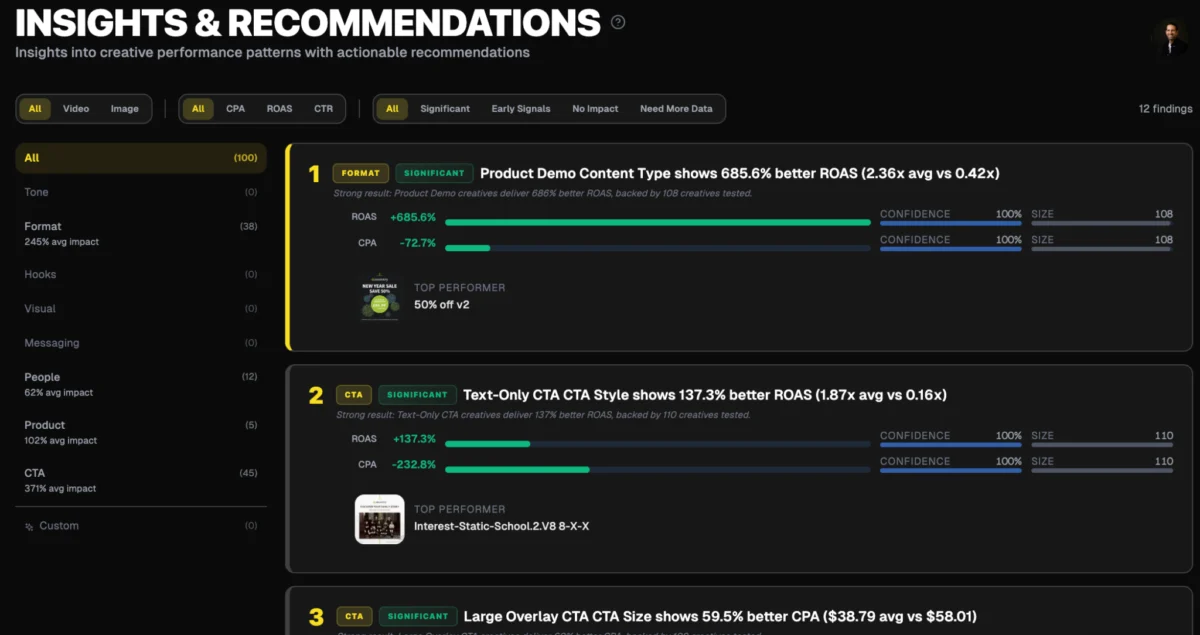
The advertising industry has long grappled with a critical paradox: while ad creative is undeniably the most significant determinant of paid media success, its performance has remained notoriously difficult to quantify with precision. This persistent challenge, a bottleneck for sophisticated advertisers seeking to optimize their campaigns, is now being addressed by a groundbreaking solution known as Creative Intelligence. Developed by a dedicated engineering team and deployed by creative strategists, this innovative platform promises to transform how advertisers understand and leverage their creative assets, pulling disparate data points into a unified, actionable ecosystem.
The impetus for Creative Intelligence stems from a fundamental shift in digital advertising. The proliferation of AI-powered tools and platform-specific best practices has driven an unprecedented surge in creative output. Advertisers are now producing a vast array of ad variants, meticulously testing diverse formats, compelling hooks, nuanced messaging angles, and varied visual styles across their campaigns. While this experimentation is beneficial for identifying optimal engagement strategies, it has created a complex measurement problem. Unlike the simpler A/B testing scenarios of the past, managing and analyzing hundreds, or even thousands, of active creatives simultaneously makes it exponentially more challenging to isolate the specific elements that truly drive performance.
Meta, a leading digital advertising platform, already employs sophisticated algorithms that analyze thousands of signals to dynamically serve the most relevant ad to each individual user at any given moment. Creative Intelligence is designed to effectively reverse-engineer this process, providing advertisers with a granular understanding of their creative performance that mirrors the platform’s own internal analytics. By isolating specific creative variables that correlate with measurable outcomes across an advertiser’s entire portfolio, the platform offers an unprecedented level of insight into what makes creative work.
Deconstructing Creative: The Core of Creative Intelligence
At its heart, Creative Intelligence functions by ingesting creatives, initially from Meta with plans to expand to all major platforms by late Q2. Once uploaded, the system employs artificial intelligence to meticulously identify and categorize every discernible element within each ad asset. These categorized elements are then cross-referenced with actual campaign performance metrics, such as click-through rates, conversion rates, return on ad spend (ROAS), and engagement levels. The platform’s objective extends beyond merely identifying high-performing ads; it aims to pinpoint the precise creative components that contributed to that success and provide actionable recommendations for future creative development.
The analytical framework of Creative Intelligence operates across four key dimensions: style and format, people and product representation, content and messaging strategies, and call-to-action (CTA) and offer effectiveness. For video content, this analysis is particularly granular. Each individual hook is dissected by timestamp, capturing intricate details such as visual elements on screen, on-screen text, audio components, the emotional triggers employed, and the precise moment the product is first visible. All this detailed information is then integrated into a familiar dashboard interface, augmented by AI-generated tags and presented as specific, statistically validated recommendations. The ultimate outcome is a unified environment where creative decision-making and performance outcomes are seamlessly integrated.
Unveiling Hidden Performance Drivers with AI
The power of Creative Intelligence lies in its ability to surface insights that were previously obscured by the sheer volume and complexity of modern advertising campaigns.
Hook Intelligence: Capturing Attention from the First Second
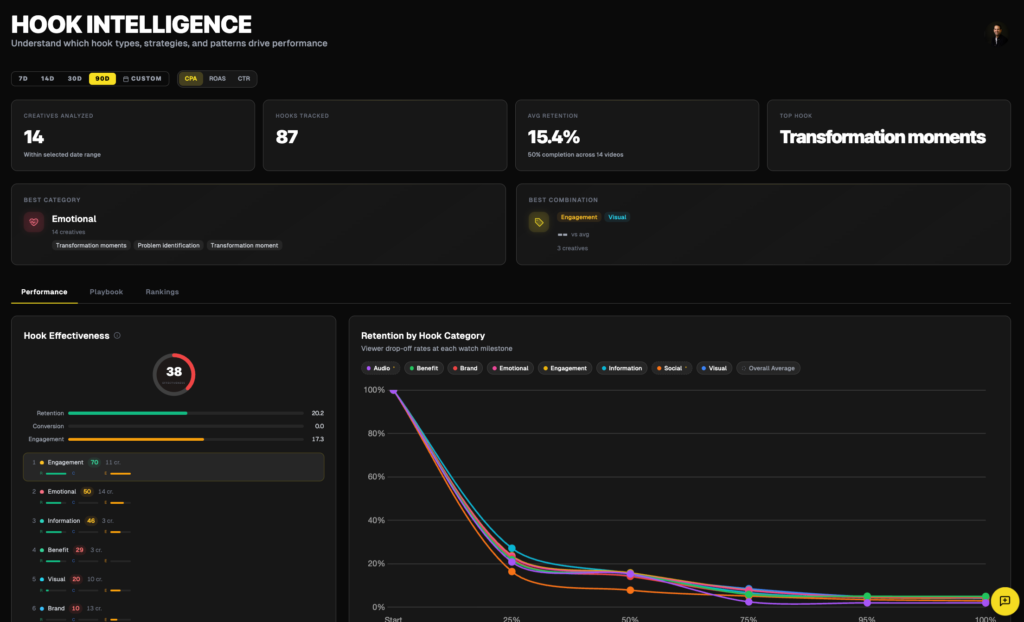
The initial moments of a video advertisement are critically important, often determining whether a viewer continues to engage or scrolls past. Creative Intelligence addresses this by breaking down videos by timestamp, revealing precisely what is happening at each critical juncture. This includes analyzing the type of hook employed, the visual details presented, the emotional resonance intended, the timing of product introduction, and mapping all these factors to the exact second they occur.
Across an advertiser’s entire creative portfolio, the platform can identify which hook categories are most effective at driving viewer retention, which are best for eliciting conversions, and which foster engagement. More importantly, it highlights the specific combinations of these elements that yield the strongest results. For instance, instead of a general understanding that emotional hooks are effective, advertisers can gain specific knowledge, such as "transformation moments are our top hook type," or "combinations of engaging visuals and immediate product visibility outperform all other hook strategies," with concrete examples from their own campaigns validating these findings.
AI-Driven Insights and Recommendations: From Data to Direction
This is where Creative Intelligence transitions from passive analysis to active strategic guidance. By conducting comprehensive statistical analysis across an advertiser’s entire creative portfolio, the platform identifies recurring patterns with sufficient statistical significance to be reliable. These patterns are then translated into clear, actionable insights that inform the next creative brief.
The findings are presented with a clear ranking based on their impact, accompanied by a confidence score and sample size. This ensures that advertisers are not acting on anecdotal evidence from a handful of creatives but rather on robust data. For example, a recommendation might state: "Product demonstration content delivers 685% better ROAS, supported by data from 108 tested creatives with 100% confidence." Similarly, "A text-only CTA style drives 137% better ROAS across 110 creatives." The AI not only highlights what is working but quantifies its impact, expresses the certainty of the finding, and identifies the top-performing creative within that specific category.
Portfolio-Level Pattern Recognition: Uncovering Broad Trends
Creative Intelligence automatically tags every uploaded creative asset upon onboarding. This tagging process covers a wide spectrum of attributes, including tone, visual style, emotional sentiment, pacing, and messaging approach. Advertisers also have the flexibility to add their own custom tags, tailoring the analysis to their specific brand needs. These tags are then aligned with performance metrics across the entire creative portfolio, enabling advertisers to answer complex questions such as: "Does a minimalist visual tone outperform high-energy creative across our awareness campaigns?" "What is the optimal moment to introduce a benefit claim within our video ads?" and "Which content types are consistently driving the strongest return on investment?"
AI-Generated Creative Briefs: Evidence-Based Strategy
The creative briefing capability represents one of the most tangible benefits of Creative Intelligence for creative teams. The platform directly generates creative strategy reports derived from portfolio data. This involves analyzing what has performed well, identifying hypotheses that warrant further testing, and producing briefs that are firmly grounded in the advertiser’s own historical performance data, rather than relying solely on industry conventions or generalized platform best practices. To provide broader context, the system also incorporates industry benchmarks, allowing briefs to be set against both internal successes and the competitive landscape within their specific category.
Custom Analysis for Brand-Specific Questions: Tailored Intelligence
Recognizing that not all valuable insights fit neatly into standard taxonomies, Creative Intelligence offers a custom analysis feature. This allows users to define their own unique variables. For instance, an advertiser could identify which specific product lines appear in which creatives, score assets against brand-defined criteria, or extract information pertinent to their particular industry or portfolio structure. Where manual tagging of thousands of assets could previously consume weeks of effort, the AI can now accomplish this task in mere minutes, dramatically accelerating the insight generation process.
The Practical Transformation of Creative Strategy
Traditionally, creative briefs have been formulated based on a blend of platform best practices, prevailing industry trends, and the perceived success of previous campaigns. While this approach has provided a functional starting point, it often means that creative strategy is developed from a foundation of received wisdom rather than directly from empirical data.
The implementation of Creative Intelligence across an advertiser’s portfolio fundamentally alters this paradigm. The creative brief transforms from an initial input into a direct output of rigorous data analysis. Armed with insights from Creative Intelligence, advertisers possess concrete knowledge about which hook types resonate most effectively with their target audience, which content formats deliver the strongest ROAS, and whether high-energy creative is genuinely driving conversions or merely generating inexpensive clicks. Consequently, creative teams receive direction that is not only specific and evidence-backed but also directly linked to the metrics that truly matter, all derived from the actual voice of the data, rather than from memory or assumption.
The Bottom Line: Bringing Analytical Rigor to Creative
For years, ad creative has been a significant generator of data, but these crucial signals have often remained invisible at scale, lost in the disconnect between creative production suites and performance dashboards. Creative Intelligence effectively bridges this gap. It does not aim to replace creative intuition but rather to empower those with that instinct by providing a clear understanding of which specific components are driving performance and what actionable steps can be taken next.
If ad creative is indeed the paramount driver of paid media performance, it logically deserves the same level of analytical scrutiny applied to all other aspects of a marketing campaign. Creative Intelligence now provides that essential analytical rigor.
For organizations seeking to unlock the hidden potential within their own creative assets, a direct engagement with Creative Intelligence offers a pathway to data-driven creative optimization. The ability to gain a precise read on creative effectiveness, understand the nuances of audience engagement, and continuously refine strategies based on real-time performance data represents a significant leap forward in the pursuit of marketing excellence.