The landscape of artificial intelligence in software engineering has shifted from a race for the most capable model to a battle over the most flexible architecture. While early 2025 was dominated by proprietary ecosystems like Claude Code and GitHub Copilot, the mid-2026 release of OpenCode has signaled a maturation of the "agentic" layer of the development stack. OpenCode, an MIT-licensed coding agent, has gained significant traction not merely because it is open-source, but because it treats model choice as "table stakes"—a commodity feature rather than a core identity. By decoupling the interface, file-system tools, and session management from the underlying large language model (LLM), OpenCode offers a blueprint for how developers might navigate an increasingly fragmented AI provider market.
The Decoupling of Agent and Model
To understand the impact of OpenCode, one must first distinguish between the agentic framework and the intelligence it consumes. OpenCode is not a model; it is a sophisticated middleware that connects a user-selected LLM to a local environment, including the terminal, file system, and external documentation. This distinction is critical for enterprise environments where data residency and cost-optimization are paramount. When a developer asks OpenCode to debug a complex race condition, the agent does not simply generate text. It orchestrates a multi-step workflow: locating relevant source files, drafting a modification plan, executing shell commands to run test suites, and iteratively reacting to terminal output.
The strategic advantage of this architecture lies in its resilience to provider volatility. As seen in early 2026, when Anthropic revised its access terms for consumer-grade subscriptions, developers using integrated tools found themselves locked into specific billing cycles or losing access entirely. OpenCode users, by contrast, could swap an Anthropic API key for an OpenAI or local Ollama endpoint within seconds, maintaining their session history and custom toolsets without interruption.
Architectural Innovations: The Client-Server Model
Unlike many of its predecessors that operate as monolithic CLI tools, OpenCode is built on a client-server architecture. The core logic resides in a local server that communicates via HTTP, allowing for a diverse range of front-end clients. This design choice enables three distinct modes of operation that are rarely found in proprietary alternatives:
- Headless Execution (
opencode serve): This allows the agent to run on remote servers or within Continuous Integration (CI) pipelines. A developer can SSH into a production-like environment and trigger the agent to perform diagnostics without a graphical user interface. - Session Portability (
opencode attach): By exposing a URL, a session started on a high-powered office desktop can be "attached" to from a laptop, allowing for seamless transition between environments while maintaining the same agentic state and history. - Unified API Access: The server ships with an OpenAPI 3.1 specification, which powers the official
@opencode-ai/sdk. This enables developers to script the agent directly. Instead of "puppeting" a terminal by faking keystrokes—a notoriously fragile method—developers can programmatically create sessions and send messages, integrating the agent into larger automated workflows.
The Economics of "Free" Software in the AI Era
While OpenCode is distributed under the MIT license, the industry has had to reconcile the term "free" with the reality of token-based billing. The financial burden of AI development has shifted from software licensing to compute consumption. OpenCode offers several pathways for managing these costs, each with specific trade-offs:
- Bring Your Own Key (BYOK): This remains the most flexible option, where users pay providers like Anthropic or OpenAI directly per token. It requires the most management but offers the lowest overhead.
- OpenCode Zen and Go: These represent the project’s attempt to simplify the billing experience. "Zen" acts as a curated gateway for those who want to avoid managing multiple API keys, while "Go" offers a subscription-based model (reported at $10 monthly following an introductory period) specifically for open-weight models.
- Local Inference via Ollama: For organizations with strict privacy requirements, running models locally is the only path that eliminates marginal token costs. However, this "free" path carries a hidden cost in hardware. Effective agentic behavior requires significant VRAM to handle large context windows—the files, terminal output, and session history that must be sent to the model with every turn.
Industry data from mid-2026 suggests that while local models are improving, they still experience a 15-20% higher rate of "invalid tool calls" compared to hosted frontier models. This performance gap remains the primary hurdle for developers seeking a completely air-gapped development environment.
Workflow Management: Build vs. Plan
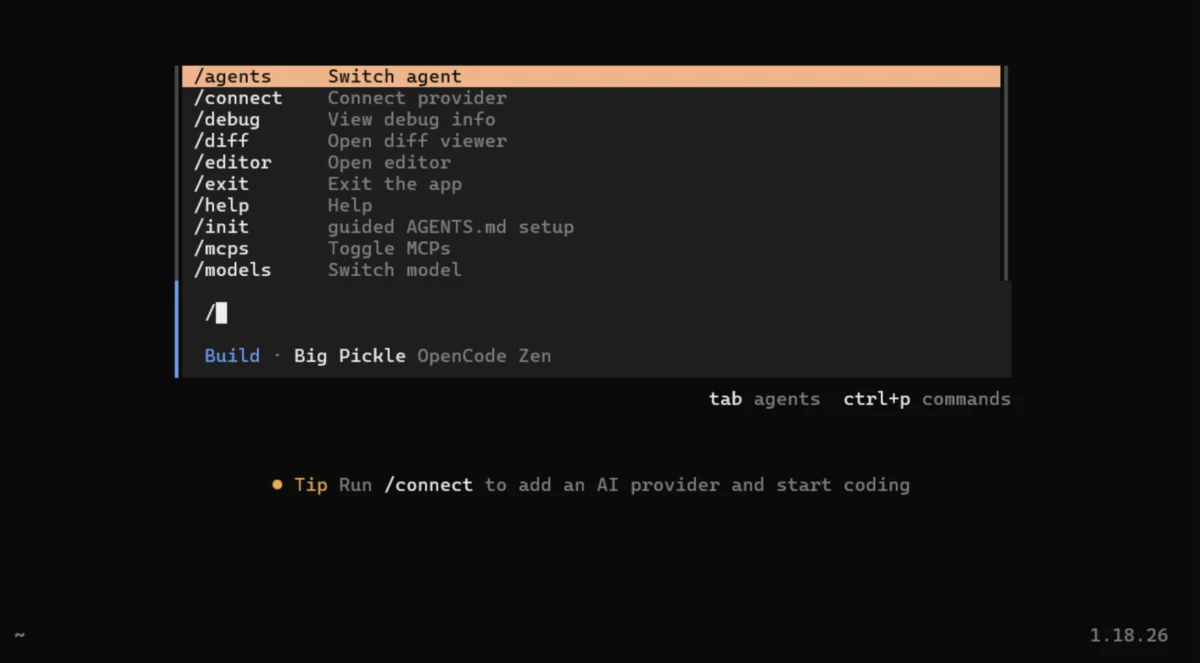
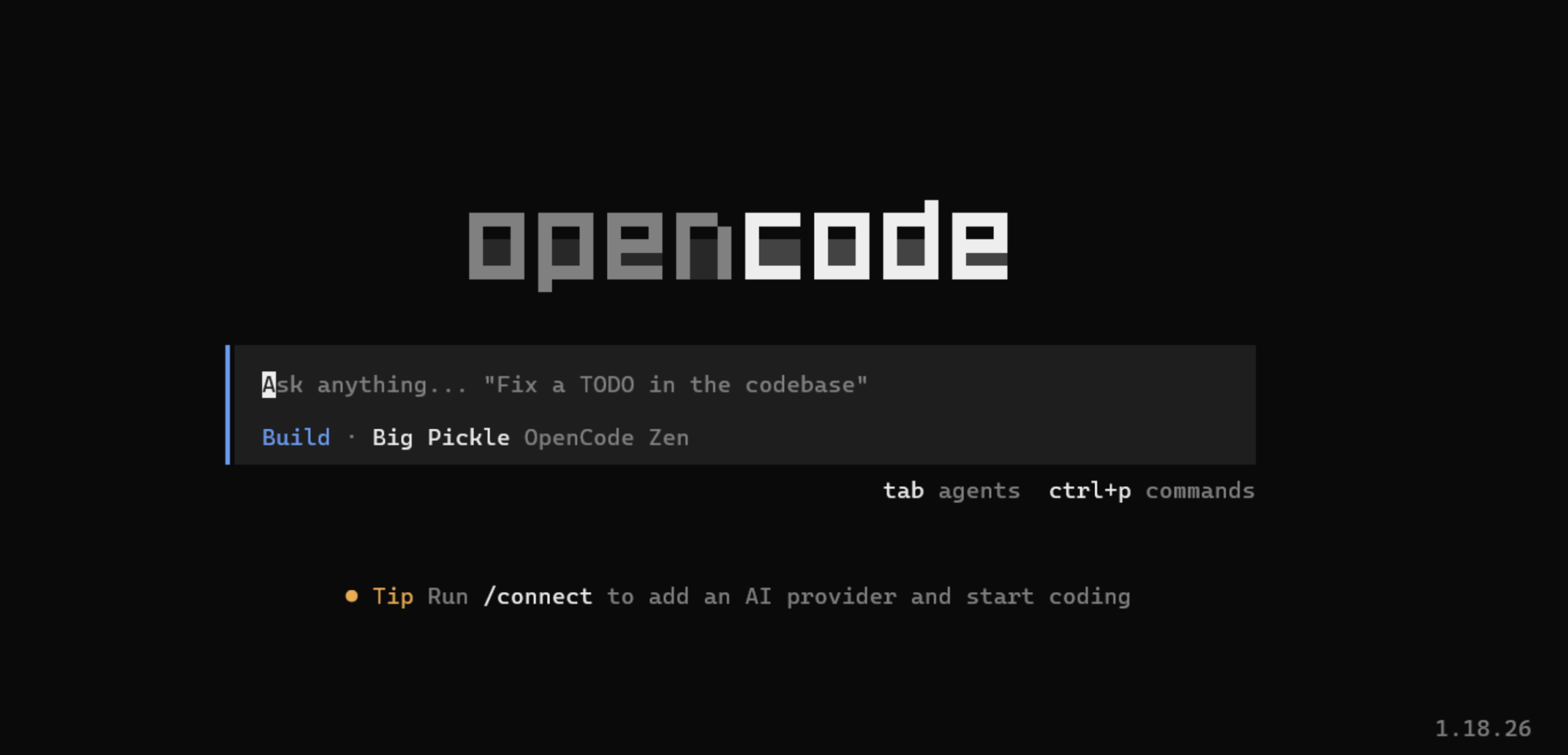
OpenCode introduces a simplified permission model that addresses the "autonomy anxiety" many developers feel when granting an AI agent write access to their codebase. The system operates in two primary modes: "Build" and "Plan." In Build mode, the agent functions with high autonomy, reading and writing files and executing commands as needed. In Plan mode—which users can toggle with a single keystroke—the agent must present its intended actions for approval before modifying the file system or touching the shell.
This is supported by a robust undo system. Because OpenCode utilizes Git-based snapshots, the /undo command allows developers to roll back an entire multi-file refactor instantly. This safety net encourages a "fail-fast" approach to AI-assisted coding, where risky architectural changes can be attempted with the knowledge that the previous known-good state is only a command away.
Chronology of Development and Community Adoption
The rise of OpenCode has been characterized by an aggressive release cycle, with over 800 versions shipped within its first year of operation. This velocity is a double-edged sword; while it ensures rapid integration of new models and bug fixes, it has occasionally led to stability concerns in the server-client communication layer.
- Late 2025: OpenCode surpasses 100,000 GitHub stars, driven by a community backlash against proprietary "walled garden" IDEs.
- January 2026: A major pivot occurs when Anthropic blocks third-party tools from utilizing consumer-grade Claude Pro subscriptions. OpenCode’s usage spikes as developers migrate to API-based workflows to maintain their existing agentic habits.
- Mid-2026: The project reports approximately 195,000 stars and nearly 1,000 active contributors. The release of the official desktop app (Beta) expands the user base beyond terminal-centric power users to general application developers.
Project Context and the AGENTS.md Standard
A significant contribution of the OpenCode ecosystem is the formalization of project-level instructions through AGENTS.md. Similar to the CLAUDE.md files popularized by Anthropic, these documents serve as the "instruction manual" for the AI. When a user runs /init, OpenCode scans the repository to generate a summary of the project’s structure, testing conventions, and naming rules.
The efficacy of an agent is often determined by the quality of this context. Expert analysis suggests that as codebases grow in complexity, the ability of an agent to "self-contextualize" through these markdown files becomes more important than the raw reasoning power of the underlying model. By committing AGENTS.md to version control, teams ensure that every member—and every agent—operates under the same set of architectural constraints.
Security and Ethical Implications
The shift toward local-first agents has sparked renewed debate over security. OpenCode’s documentation explicitly states that its permission system is a "workflow safeguard," not a "security sandbox." This is a crucial distinction for enterprise security teams. An agent running with shell access can, in theory, execute malicious code if the underlying model is compromised or if it encounters a prompt injection attack.
Furthermore, the /share command, which allows developers to upload session logs to a public URL for debugging or collaboration, has been identified as a potential vector for accidental data leakage. While useful for the open-source community, the feature requires strict governance within corporate environments to ensure that proprietary logic or API keys are not inadvertently exposed to the public web.
Broader Impact on the Software Development Lifecycle
The emergence of OpenCode represents a broader trend toward the "agentification" of software engineering. We are moving away from simple autocomplete and toward autonomous units of work. The implications for the industry are profound:
- Skill Shift: The role of the developer is evolving from a writer of code to an editor of agentic plans. Mastery of "context management"—knowing which files and instructions to provide the agent—is becoming as valuable as syntax knowledge.
- Infrastructure Requirements: The demand for high-VRAM local workstations is likely to increase as developers seek to bring the "Ollama path" of OpenCode up to parity with hosted models.
- Standardization: The industry is likely to see a convergence around protocols like the Model Context Protocol (MCP), which OpenCode fully supports. This will allow a single tool to interact with a vast ecosystem of third-party data sources, from Google Drive to Jira, through a unified interface.
Final Analysis
OpenCode is not a replacement for the ingenuity of a human programmer, nor is it a "magic bullet" that renders proprietary tools obsolete. It is, however, a sophisticated instrument for those who prioritize control, transparency, and long-term flexibility. Its client-server architecture and model-agnostic philosophy provide a necessary hedge against the unpredictability of the AI market. For the individual developer, the decision to adopt OpenCode usually comes down to a choice between the convenience of a managed subscription and the power of a customizable, local-first agent. As the project continues to evolve toward its 1,000th version, it stands as a testament to the enduring value of open-source principles in the age of artificial intelligence.