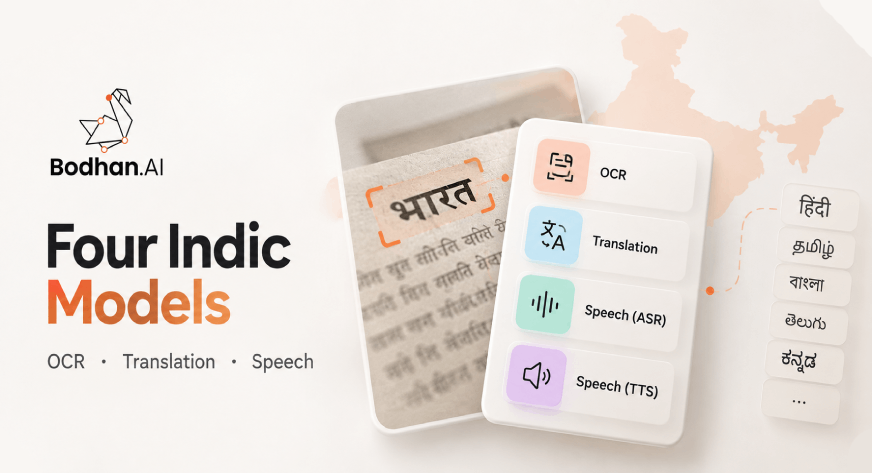
The landscape of artificial intelligence in the Indian subcontinent has undergone a significant transformation with the release of a comprehensive suite of models designed to bridge the linguistic digital divide. In September 2026, Bodhan AI, in collaboration with the research lab AI4Bharat, announced the deployment of four frontier models: IndicOCR, Indic-Translate, Indic-Transcribe, and Indic-Speak. This release represents a coordinated effort to address the complexities of Indian languages, which often involve mixed-language usage (code-switching), diverse scripts, and varying levels of resource availability. By targeting document parsing, translation, speech recognition, and speech generation, the partnership aims to provide a full-stack solution for developers and institutions working within the 22 scheduled languages of India.
The initiative comes at a critical juncture for the Indian AI ecosystem. While global models have made strides in English and major European languages, Indic languages have historically faced a "data poverty" gap. The new suite of models seeks to rectify this by offering high-performance, localized alternatives that understand the nuances of regional dialects and the common practice of mixing English terms into native sentences—a phenomenon known as Hinglish, Benglish, or Tanglish, depending on the region.
The Evolution of Indic Language AI
The journey toward this release can be traced back to November 2025, with the launch of the Indic-LM Arena. That platform served as a benchmarking blueprint, allowing researchers to evaluate the performance of various Large Language Models (LLMs) on Indian languages. Since then, the momentum has shifted from benchmarking to active development. In early 2026, the integration of the Qwen3.5 architecture and the development of the Sarvam tokenizer provided the technical foundation necessary for the current breakthrough.
The September 2026 release by Bodhan AI and AI4Bharat is not merely an incremental update but a structural overhaul of how Indic language data is processed. The models are designed to work in tandem, creating a workflow where a physical document can be scanned, translated, and then read aloud in a natural-sounding regional voice, all while maintaining the integrity of technical formatting such as LaTeX equations and Markdown tables.
IndicOCR: Bridging Physical and Digital Archives
One of the most significant hurdles in digitizing Indian knowledge is the vast amount of printed and handwritten material that exists only in physical form. IndicOCR addresses this by offering a two-stage pipeline for document understanding. The first stage utilizes IndicDocLayout, a 33-million parameter model based on the PP-DocLayoutV3 architecture, to detect page blocks and determine the correct reading order. This is crucial for complex layouts found in textbooks and government gazettes where columns and sidebars often confuse standard OCR systems.
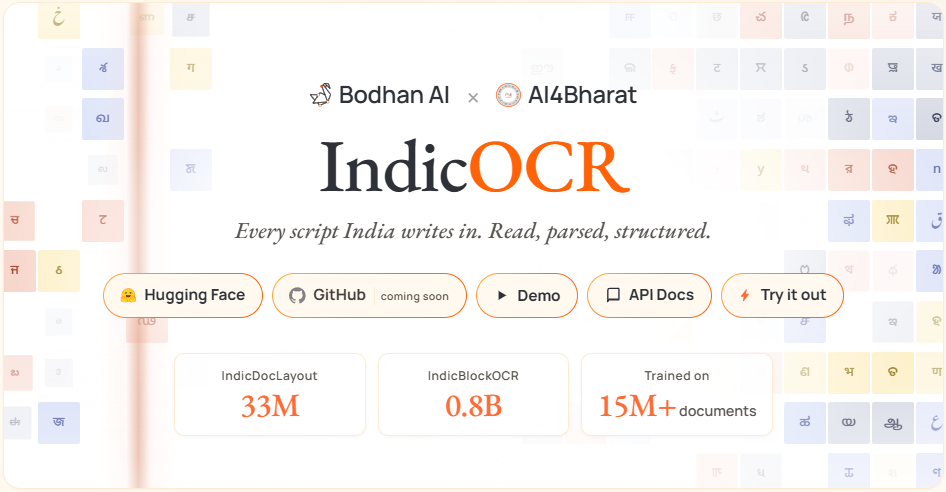
The second stage, IndicBlockOCR, is an 800-million parameter model built on the Qwen3.5-0.8B backbone. It transcribes the identified blocks into structured text. Notably, IndicOCR supports all 22 scheduled Indian languages across 13 distinct scripts for printed text. For handwriting, the model currently supports English and 12 Indian languages, including Hindi, Bengali, Tamil, Telugu, and Urdu.
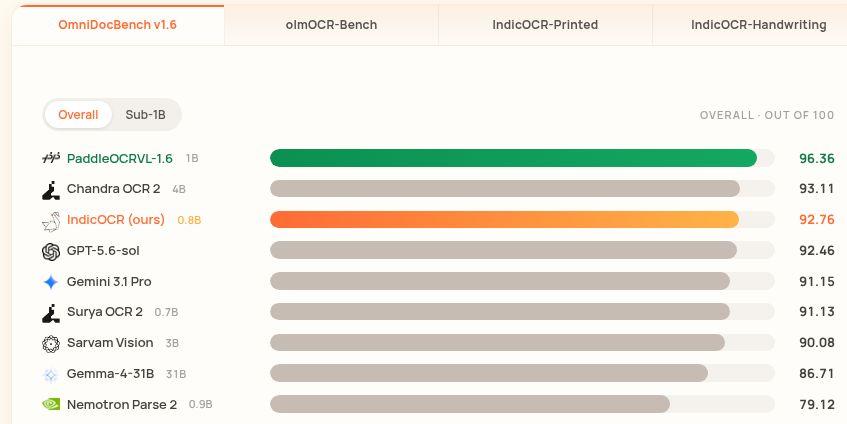
In performance benchmarks, IndicOCR reported a score of 92.76 on OmniDocBench v1.6 (evaluated on an English subset) and 86.2% word-level accuracy across its internal IndicOCR-Printed benchmark. These figures suggest that the model is highly capable of handling the "low-resource" scripts that often fail in generic OCR applications. Developers are already looking at IndicOCR for digitizing regional archives and preparing scanned pages for Retrieval-Augmented Generation (RAG) systems, which allow AI to answer questions based on specific private documents.
Indic-Translate: Document-Level Contextual Accuracy
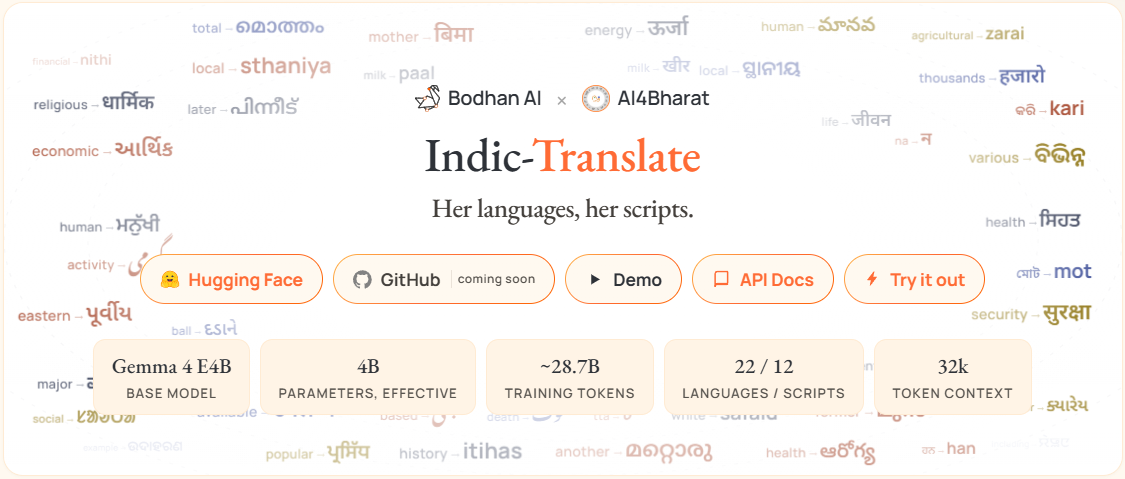
Translation in the Indian context is rarely about a single language; it is about the preservation of structure and the handling of code-mixed inputs. Indic-Translate is a fine-tuned version of Gemma 4 E4B IT, boasting 4 billion effective parameters and a 32,000-token context window. Unlike traditional translators that process text sentence by sentence, Indic-Translate is designed for document-level tasks.
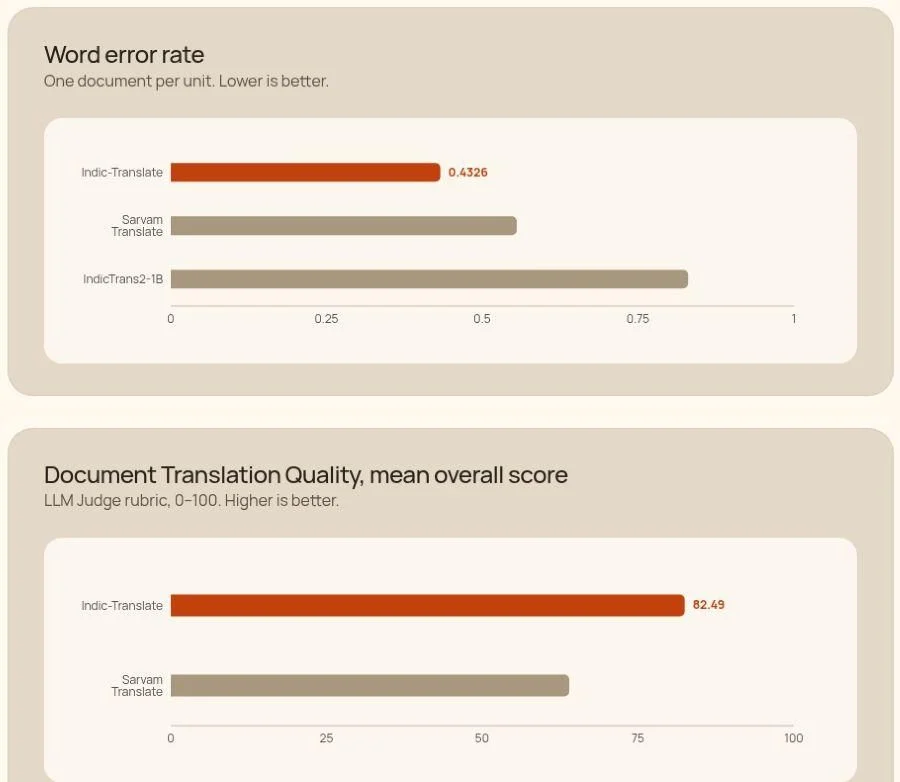
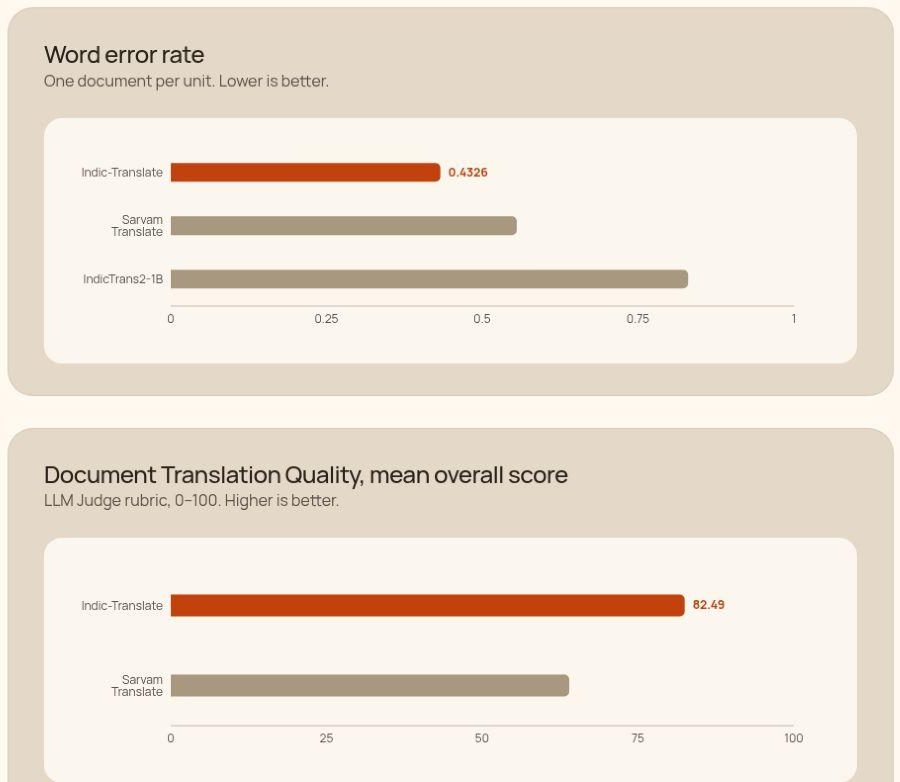
The model is specifically trained to preserve Markdown, LaTeX, and code snippets while translating the surrounding prose. This makes it an ideal tool for localizing technical manuals or educational materials. During internal testing, Indic-Translate achieved a dBLEU score of 58.97, significantly outperforming Sarvam Translate (47.44) and IndicTrans2-1B (31.93). The model’s lower Word Error Rate (WER) of 0.4326 further underscores its precision.
However, the developers note that the current version primarily translates between English and Indic languages. Direct translation between two Indian languages (e.g., Marathi to Kannada) is currently routed through English as an intermediary, a process the team aims to optimize in future iterations to reduce "translational loss."
Indic-Transcribe: Capturing the Nuances of Speech
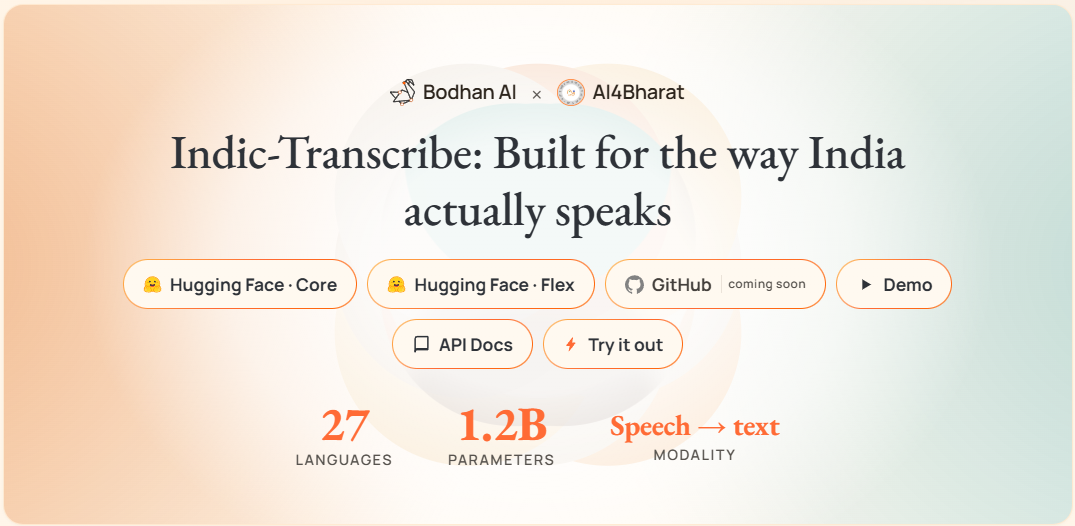
Speech recognition in India is complicated by a wide variety of accents and the frequent use of English loanwords. Indic-Transcribe addresses this through a family of 1.2-billion parameter Automatic Speech Recognition (ASR) models. The suite offers two distinct versions: Core and Flex.
The "Core" model is optimized for native-script accuracy, making it the preferred choice for formal transcriptions and official records. The "Flex" model, conversely, provides output in native, Romanized, or mixed-script formats. This flexibility is essential for modern messaging and social media contexts where users may prefer to read a Hindi transcript in Latin characters.
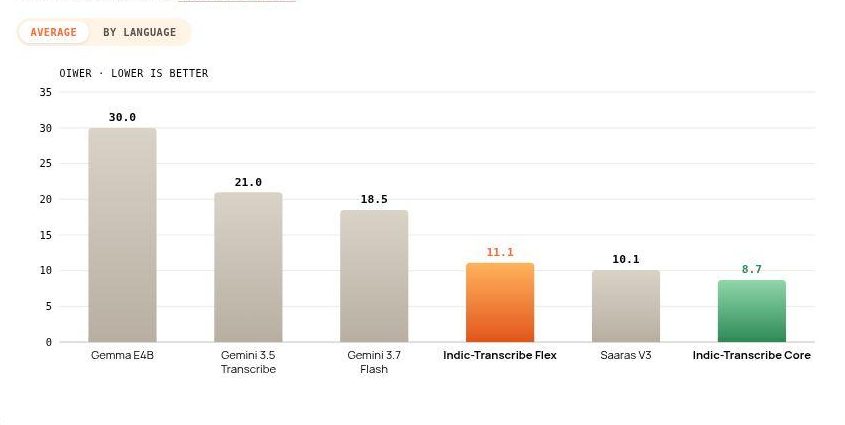
Both models are built on a Canary-derived FastConformer encoder paired with a 24-layer Transformer decoder. The training regimen was immense, involving 1.3 million hours of audio data that combined human-labeled speech with synthetic data and weak supervision. On the Voice of India benchmark, the Core model achieved an OIWER (Orthographic-Invariant Word Error Rate) of 8.7, a metric that accounts for valid spelling variations in Indian scripts. This high level of tolerance for linguistic variance makes the model uniquely suited for the "real-world" speech found across the subcontinent.
Indic-Speak: Natural Narration Across 45 Voices
The final piece of the suite is Indic-Speak, a text-to-speech (TTS) model that generates audio across 22 languages and 12 scripts. Utilizing a 3.36-billion parameter stack with a Llama-3.2-3B backbone, Indic-Speak is designed to handle mixed-language text without requiring explicit language tags for every word.
The model includes a sophisticated normalizer that converts dates, currencies, and mathematical notation into their spoken forms before the audio is generated. With a library of 45 distinct voices, Indic-Speak offers a range of tonal qualities, though the developers admit that the quality can vary between voices. In a fidelity assessment of 30,000 readings, 93% of the generated audio was found to perfectly preserve the original content.
One of the most impressive features of Indic-Speak is its ability to maintain a consistent accent across languages. If a voice is natively "Tamil-accented," it will carry that phonetic character even when reading English terms within a sentence, providing a more authentic listening experience for regional users.
Strategic Implications and Economic Impact
The release of these models by Bodhan AI and AI4Bharat is expected to have far-reaching implications for several sectors in India. In the realm of education (EdTech), the ability to automatically translate and narrate textbooks into local dialects could significantly improve literacy and learning outcomes in rural areas. Similarly, government services can use these tools to make digital portals more accessible to citizens who do not speak English or Hindi fluently.
From a technical standpoint, the decision to release model weights on Hugging Face while offering a hosted API via the Bodhan console reflects a hybrid strategy. It allows large enterprises to maintain data sovereignty by hosting models locally, while giving independent developers an affordable way to integrate AI into their apps via the cloud. The pricing structure—ranging from ₹0.10 per audio minute for transcription to ₹6 per 10,000 characters for speech generation—is positioned to be competitive with global hyperscalers like Google Cloud and AWS.
Future Outlook and Challenges
While the September 2026 release is a landmark achievement, the road ahead involves refining these systems for real-time applications. Current limitations, such as the 30-second window for audio processing and the need for better speaker diarization (identifying who is speaking), are already on the roadmap for 2027. Furthermore, expanding handwriting support to all 22 languages remains a priority for the IndicOCR team.
The collaboration between Bodhan AI and AI4Bharat serves as a model for how public research institutions and private AI labs can cooperate to solve region-specific challenges. As these models are integrated into the "India Stack" of digital infrastructure, they are likely to catalyze a new wave of innovation, ensuring that the benefits of the AI revolution are not limited by the language a person speaks or the script they write.
Developers interested in exploring the models can access the weights on Hugging Face or sign up for the Bodhan API console, which offers a starting credit of ₹10 for testing. As the community begins to build upon this foundation, the goal of a truly multilingual digital India moves closer to reality.