rifanmuazin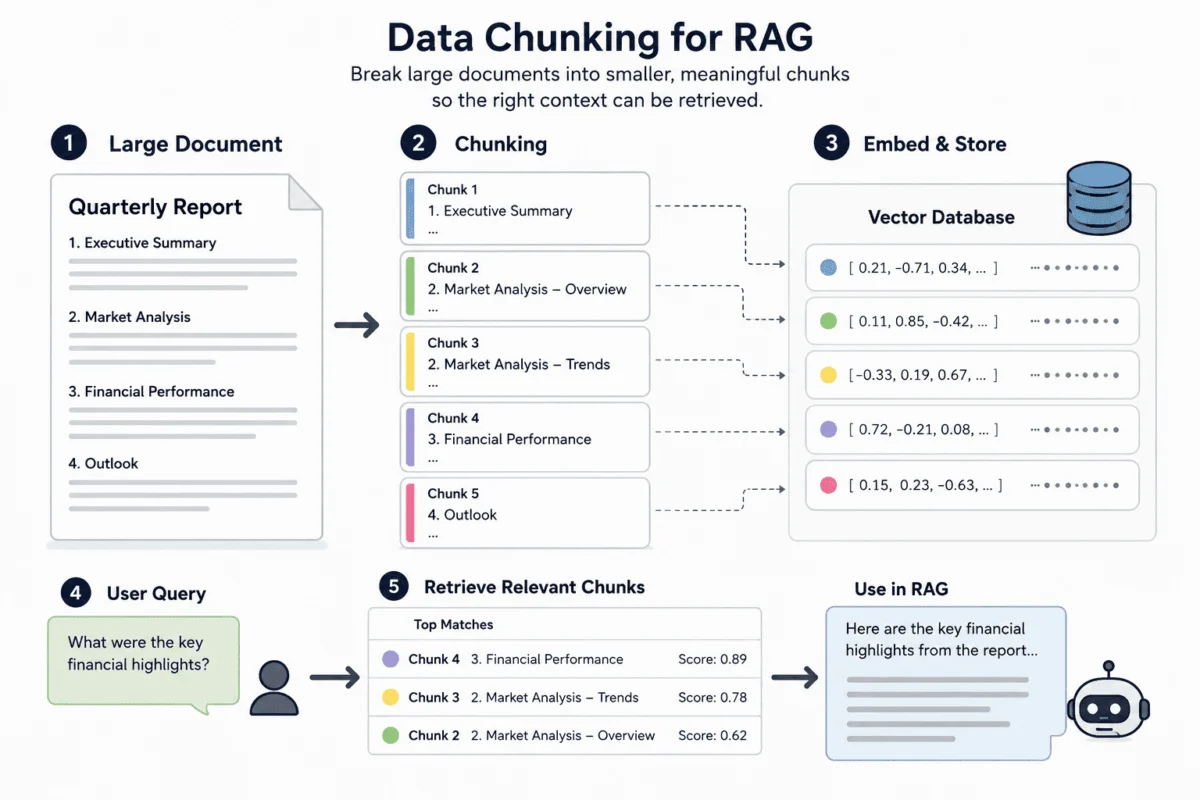
By Tom Swanson, Senior Engagement Manager at Heinz Marketing
The integration of Artificial Intelligence (AI) into Business-to-Business (B2B) marketing is no longer a theoretical discussion; it is a rapidly evolving landscape where new solutions for long-standing challenges emerge daily. While abundant resources exist detailing AI’s potential and technical implementation, practical, on-the-ground experience offers invaluable insights. This article delves into real-world use cases of AI in B2B marketing, examining how organizations are leveraging these technologies for data enrichment, knowledge base optimization, and a strategic shift from quantity to quality in their marketing efforts. These observations are drawn from a diverse array of implementations, many of which Tom Swanson, Senior Engagement Manager at Heinz Marketing, has been directly involved in or closely observed.
Addressing Niche Data Gaps with Custom AI Solutions
A significant area where AI is proving its mettle is in developing custom tooling for niche market segments, particularly for companies targeting local or small-to-medium-sized businesses (SMBs). Traditional B2B data platforms, while robust for enterprise-level targeting, often exhibit diminishing returns when applied to smaller, localized operations. Access to accurate and actionable contact information remains a paramount challenge for any sales and marketing team, and this becomes particularly acute when dealing with businesses that may not maintain a significant online presence or detailed corporate profiles.
One compelling example of AI addressing this challenge involves a company that developed a custom script utilizing Claude Code. This AI-driven solution was designed to circumvent the limitations of broad-stroke data providers like ZoomInfo when focusing on local businesses. The script operates on a weekly schedule, automatically scanning public records for businesses that meet specific criteria. Upon identification, it then initiates a web search to gather available information about these businesses, effectively filling in the blanks within a pre-defined template. This automated process, hosted on a cloud server, significantly enhances data acquisition efficiency. Reports from the company indicate that this AI-powered workflow yielded double the amount of usable data compared to previous methods relying solely on ZoomInfo for this specific segment. This demonstrates a strategic application of AI, where a powerful, general-purpose tool like ZoomInfo remains valuable for broader company objectives, while a more specialized, AI-driven solution proves superior for hyper-targeted, niche requirements.
The broader implication of this approach is the democratization of sophisticated data acquisition for companies that may not have the resources to invest in prohibitively expensive enterprise-level data solutions for every market segment. By building custom AI workflows, businesses can tailor their data strategies to specific needs, ensuring that no market segment is left underserved due to data limitations.
Streamlining Demand Generation with AI-Powered Intake
The efficiency and effectiveness of marketing operations are frequently hampered by inconsistent and incomplete request processes. This was a central issue identified within a demand generation team serving multiple business units, a scenario rife with potential for delays and miscommunication. The core problem stemmed from the varied formats and missing essential information in incoming requests, which prevented timely and accurate execution.
To address this, the team implemented an AI solution not to burden requestors with extensive briefing documents, but to intelligently process and structure incoming information. AI’s inherent capability to transform unstructured data into a standardized format proved highly effective. By employing AI with a carefully managed context window, the likelihood of errors was minimized. Requests could be submitted in any format, and the AI would then standardize the data, facilitating confirmation with both the requestor and the actioning team.

This AI-driven intake process had several significant benefits. Firstly, it streamlined the initial stage of the workflow, enabling projects to be accurately queued with a clear understanding of the required time and effort, leading to more precise timeline estimations. Secondly, by eliminating “garbage in, garbage out” issues at the outset, the team gained a clearer view of other potential bottlenecks within their operational workflow. This allowed them to focus on addressing genuine process inefficiencies rather than being derailed by data quality problems.
The impact of such an AI implementation extends to improved team morale and productivity. When demand generation teams are not bogged down by administrative tasks related to request processing, they can dedicate more time to strategic planning and campaign execution, ultimately leading to more impactful marketing outcomes. This also reduces the burden on stakeholders who previously had to navigate complex request forms.
Understanding and Implementing Knowledge Base Chunking for RAG
The concept of Retrieval Augmented Generation (RAG) has become a cornerstone in enhancing the capabilities of Large Language Models (LLMs). RAG involves providing LLMs with a knowledge base, thereby improving their ability to generate relevant and contextually accurate responses beyond their general training data. This approach is crucial for moving away from generic AI outputs and grounding responses in specific, authoritative sources.
However, a common pitfall in implementing RAG is the management of large knowledge bases. When knowledge bases become extensive, they can significantly slow down processing times and increase token usage, especially when relying on API-driven LLMs. This translates to both increased operational costs and diminished efficiency.
A practical learning experience highlighted the critical importance of “chunking” knowledge bases. Chunking involves breaking down extensive documentation into smaller, manageable segments. These segments are then assigned classifications through a process called vectoring, which essentially categorizes them based on their characteristics. This allows the AI to retrieve only the most relevant chunks for a given query, rather than processing the entire knowledge base.
For instance, a project that initially built a comprehensive knowledge base without effective chunking encountered unexpectedly high execution times and token consumption. The realization that efficient chunking is paramount led to a re-architecture of the knowledge base. This involved segmenting documents into logical units, vectorizing these chunks to enable semantic search, and implementing a system that retrieves only the pertinent information for each query.
Key recommendations for building robust RAG tools, informed by this experience, include:
- Strategic Chunk Size: Determining the optimal size for content chunks is crucial. Too small, and context may be lost; too large, and efficiency gains are reduced.
- Metadata Enrichment: Assigning relevant metadata to each chunk can further refine retrieval accuracy.
- Vector Database Optimization: Utilizing efficient vector databases and indexing strategies is vital for fast and scalable retrieval.
- Iterative Testing: Continuously testing and refining the chunking and retrieval mechanisms is essential to ensure optimal performance.
The successful implementation of chunking not only reduces costs and improves speed but also leads to more precise and relevant AI-generated outputs, directly enhancing the value proposition of RAG-based solutions.
Prioritizing Quality Over Quantity in AI-Driven Campaigns
While AI offers immense potential for accelerating campaign ideation and execution, a critical consideration for B2B marketers is the balance between speed and quality. The initial impulse for many organizations has been to leverage AI for sheer volume, aiming to generate more campaigns faster. However, in the B2B space, where customer acquisition costs (CAC) are often substantial and deal cycles are longer, a pure volume play can be less effective.
The B2B market is already saturated with advertising and content, a situation exacerbated by the proliferation of AI-generated material. In this environment, generic, high-volume campaigns may fail to resonate with a discerning audience. While AI can efficiently standardize briefs, shorten service-level agreements (SLAs), and ensure output consistency, it does not automatically guarantee improved campaign performance. AI excels at producing content that is technically sound, but if it lacks human creativity, strategic nuance, and a deep understanding of brand identity, it can become indistinguishable and fail to capture buyer attention or build trust.
A notable case study involved a client who successfully used AI to drastically reduce the time from campaign ideation to execution. They achieved significant gains in efficiency through standardized briefs and streamlined processes. However, campaign performance metrics did not see a corresponding improvement. The realization was that while AI could automate the creation of marketing materials, the human element was essential for injecting strategic creativity, understanding market sentiment, and making calculated risks—elements crucial for differentiating in a crowded B2B landscape.
The revised approach involved retaining the AI tooling for its efficiency benefits while integrating human oversight at critical junctures where strategic creativity and nuanced understanding were paramount. This hybrid model acknowledges that AI is a powerful co-pilot, but human marketers remain indispensable for strategic direction and creative innovation. The objective is to leverage AI for its strengths in data processing and automation, while human marketers provide the strategic vision, emotional intelligence, and risk assessment necessary for truly impactful campaigns.
This evolving understanding suggests that effective AI workflows in B2B marketing must be integrated systems that harness the best attributes of people, tools, and processes. The goal is not to replace human marketers but to augment their capabilities, allowing them to focus on higher-level strategic thinking and creative endeavors, while AI handles the more repetitive and data-intensive tasks.
Conclusion
The AI-driven transformation of B2B marketing is a dynamic and ongoing process. While the capabilities of AI are advancing rapidly, particularly in areas like content generation, the current landscape necessitates a strategic and nuanced approach. Real-world applications demonstrate that AI is most effective when it addresses specific challenges, streamlines inefficient processes, and augments human expertise rather than attempting to replace it entirely.
From custom data enrichment solutions for niche markets to optimizing knowledge bases for RAG applications and strategically balancing speed with quality in campaign execution, B2B marketers are learning to harness AI’s power. The experiences shared underscore that a deep understanding of AI’s strengths and limitations, coupled with a willingness to adapt and integrate human intelligence, is key to unlocking its full potential. As the technology continues to evolve, the most successful marketing organizations will be those that embrace this symbiotic relationship between human strategy and artificial intelligence.
For those seeking to delve deeper into these AI implementations or discuss specific strategies for their organization, further engagement is welcomed. The insights shared are a product of continuous learning within the evolving AI-enhanced marketing ecosystem.