

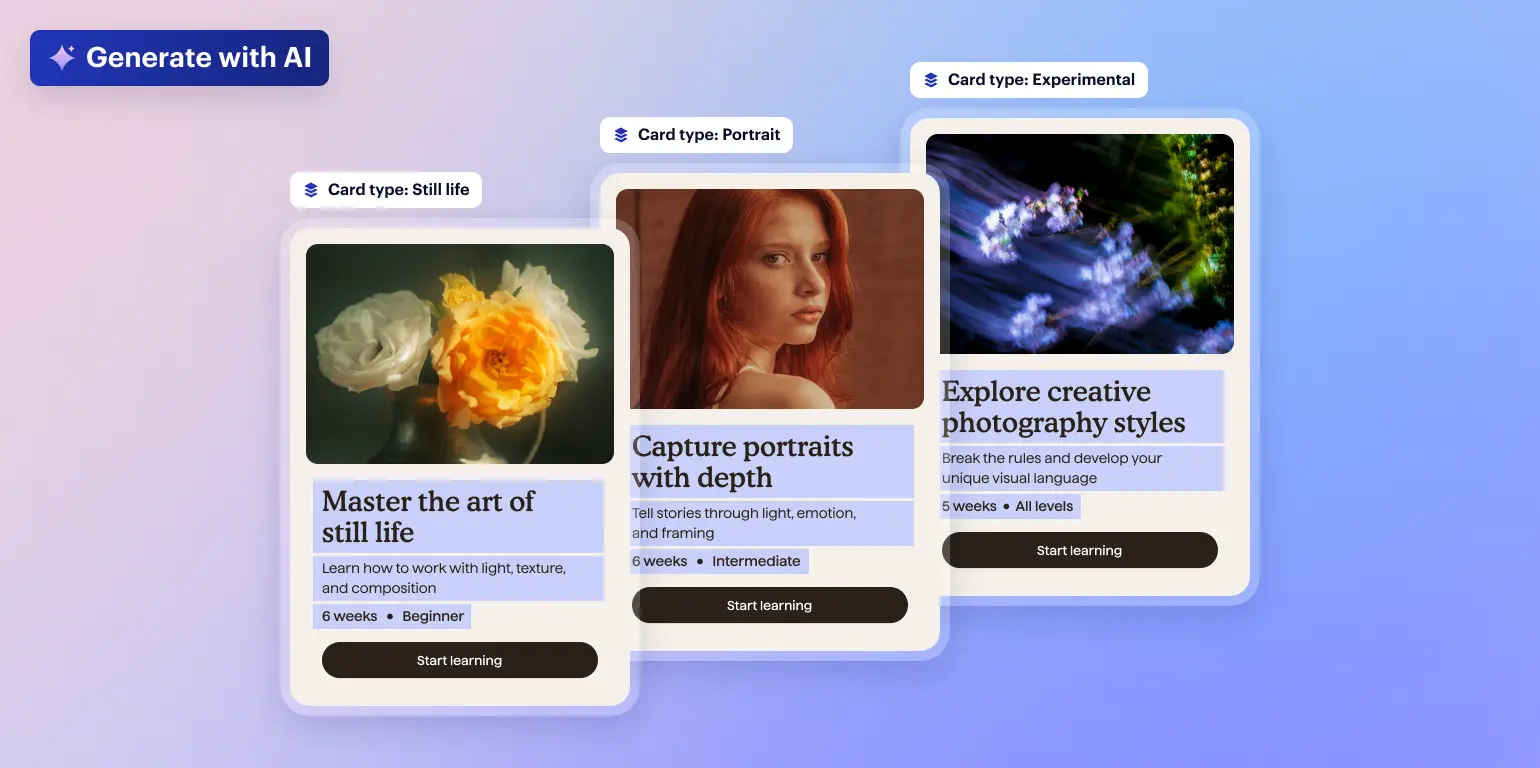
The digital marketing landscape has reached a critical juncture where the demand for hyper-personalization has outpaced the human capacity to execute it. Instapage, a leading platform in post-click automation, has addressed this fundamental bottleneck with the release of AI Collections, a sophisticated toolset designed to automate the creation and management of personalized landing pages at an unprecedented scale. By integrating generative artificial intelligence directly into the page-building workflow, the company claims that marketing teams can now deploy tailored digital experiences up to three times faster than traditional manual methods.
The central challenge in modern digital advertising is not the recognition of personalization’s value, but rather the logistical nightmare of its implementation. Historically, creating a unique landing page for every audience segment, geographic location, or search keyword required manual duplication, repetitive copy editing, and the management of massive spreadsheets. These labor-intensive processes often resulted in “maintenance debt,” where campaigns were eventually reverted to generic, low-converting pages simply because the team lacked the bandwidth to keep dozens or hundreds of variations updated. AI Collections seeks to eliminate this friction by transforming the landing page from a static document into a dynamic, AI-driven template.
The Mechanics of AI-Driven Page Architecture
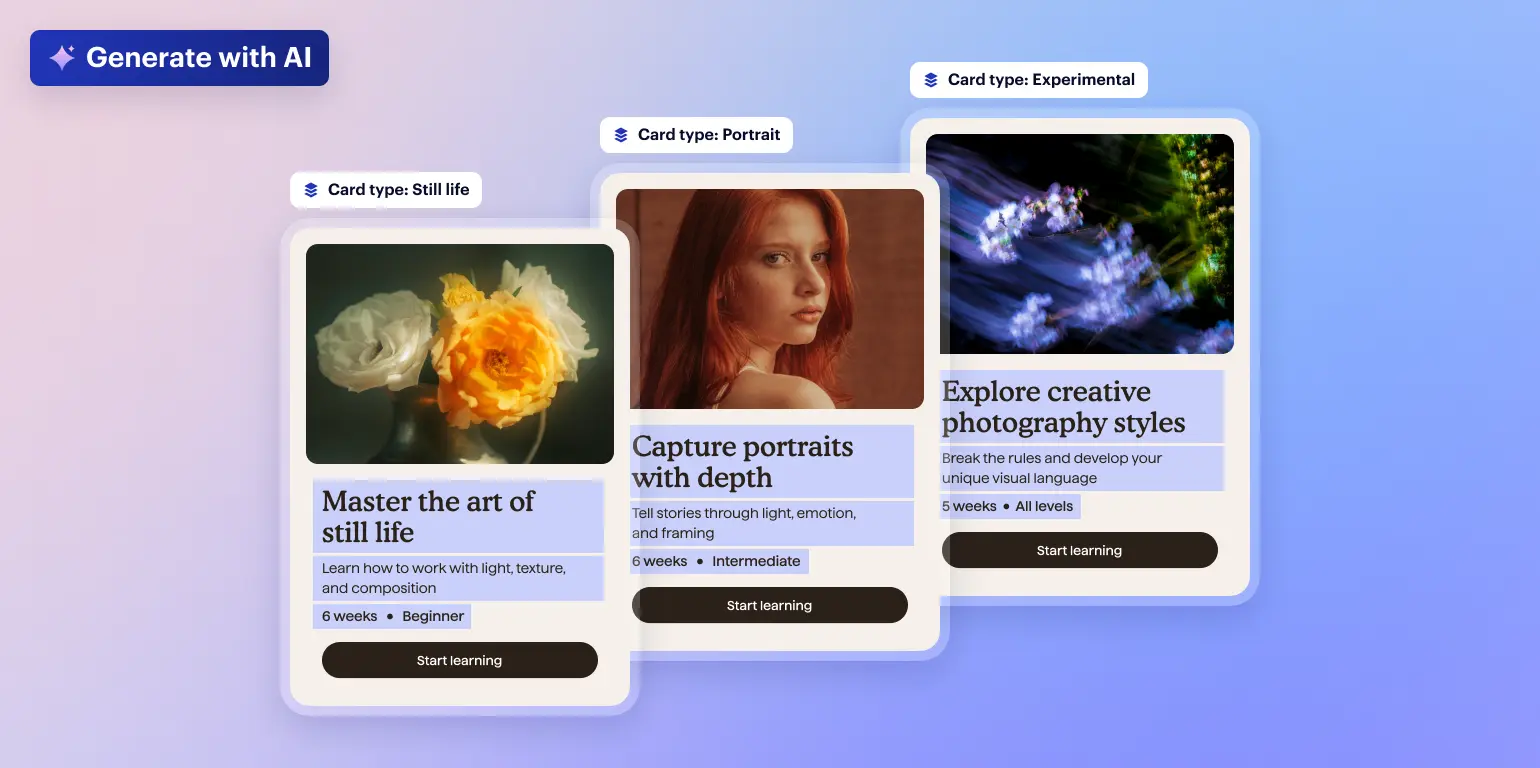
At the core of the AI Collections feature is a structural shift in how landing pages are conceptualized. Rather than treating each page as a standalone file, Instapage introduces a centralized content table that functions as the brain of a campaign. Each row in this table represents a specific page within a “Collection,” while each column corresponds to a dynamic element on that page—such as headlines, body copy, call-to-action buttons, or imagery.
The workflow begins with the identification of “AI Placeholders.” In traditional web design, developers or marketers would have to manually tag every section of a page that requires dynamic content. Instapage’s AI now automates this step by analyzing the page layout and design architecture to suggest optimal placement for dynamic text and visual elements. This automated analysis ensures that the layout remains aesthetically consistent and conversion-optimized, regardless of how many variations are generated.
Once the placeholders are established, the system moves into the content generation phase. Marketers provide the AI with specific prompts regarding the target audience, the unique selling proposition for a particular segment, and the overall campaign goal. The AI then populates the content table, generating “publish-ready” copy for dozens or even hundreds of pages in a matter of seconds. This capability allows a single marketer to perform the work that previously required an entire team of copywriters and web designers.
Evolution of Landing Page Technology: A Chronology of Personalization
The launch of AI Collections marks a significant milestone in the evolution of post-click optimization. To understand the impact of this technology, it is necessary to examine the trajectory of landing page development over the last two decades.
In the early 2000s, landing pages were static HTML files that required manual coding for every change. This era was characterized by high costs and slow deployment cycles. By 2010, the rise of “No-Code” builders allowed marketers to create pages using drag-and-drop interfaces, which democratized the process but still relied on manual duplication for personalization.
The mid-2010s saw the introduction of Dynamic Text Replacement (DTR), which allowed marketers to swap out specific words based on URL parameters. While effective for simple keyword matching, DTR was limited in its ability to change the broader context or layout of a page. The 2020s ushered in the era of Generative AI, but initial applications were often disconnected from the actual publishing platforms, requiring marketers to copy and paste AI-generated text from one tool to another.
The introduction of AI Collections in 2024-2025 represents the current frontier: a fully integrated ecosystem where AI not only writes the content but also understands the design structure and manages the deployment of hundreds of pages from a single source of truth.
Data-Driven Insights: The Economic Case for Scaled Personalization
The move toward automated personalization is backed by significant industry data highlighting the gap between consumer expectations and current marketing capabilities. According to a 2023 McKinsey report, companies that excel at personalization generate 40% more revenue from those activities than average players. Furthermore, 71% of consumers expect companies to deliver personalized interactions, and 76% get frustrated when this does not happen.
Despite these statistics, many marketing departments remain trapped in “generic” campaign cycles. Internal data from Instapage suggests that the average marketing team spends over 60% of their time on manual execution tasks rather than strategy. By increasing the speed of page creation by 300%, AI Collections allows these teams to reallocate their resources toward high-level campaign optimization and creative strategy.
In the context of Pay-Per-Click (PPC) advertising, the implications are even more profound. Search engines like Google utilize “Quality Score” to determine ad rankings and costs. A primary component of this score is “Landing Page Relevance.” By using AI Collections to ensure that every ad keyword has a perfectly matched landing page, companies can theoretically lower their Cost-Per-Click (CPC) and improve their return on ad spend (ROAS) by significant margins.
Technical Synergy and Fluid Grid Integration
A critical component of the AI Collections rollout is its integration with Instapage’s “Fluid Grid Blocks.” One of the historical risks of automated content generation is “layout breakage”—where a headline that is longer than expected pushes other elements out of place, ruining the mobile experience or visual hierarchy.
The Fluid Grid technology acts as a safeguard. As AI generates content of varying lengths for different pages in a collection, the layout automatically adjusts its proportions to maintain design integrity. This means that a marketing team does not need to manually review every single one of the 500 pages they might generate; the system ensures that the “Hero” section, the lead capture form, and the footer remain perfectly aligned regardless of the text volume.
Industry Implications and Market Reaction
Industry analysts view the release of AI Collections as a direct response to the “content explosion” necessitated by social media and fragmented search intent. Marketing technology consultant Sarah Jenkins notes, “The bottleneck in digital marketing has shifted from ‘what do we say’ to ‘how do we build enough versions to say it to everyone.’ Tools like AI Collections are turning landing pages into a commodity that can be manufactured at scale, rather than a boutique asset that takes days to build.”
While Instapage has not released specific names of early adopters, the platform is widely used by enterprise-level performance marketing agencies and internal growth teams at SaaS companies. Inferred reactions from the professional community suggest a strong interest in the “maintenance” aspect of the tool. For many, the ability to update a single “Master Template” and have those changes propagate across 200 live pages is a more significant value proposition than the initial AI content generation.
Analysis of the “Post-Click” Future
The launch of AI Collections signifies a broader shift toward “Post-Click Automation” (PCA). For years, the industry focused heavily on the “Pre-Click” experience—using AI to optimize ad targeting and creative. However, if the landing page that follows the click is generic, the investment in pre-click optimization is often wasted.
The implications of this technology extend beyond simple efficiency. As AI continues to evolve, we can expect the following trends to emerge:
- Hyper-Localization: Brands will be able to create hyper-local pages for every zip code or neighborhood they serve without increasing their headcount.
- Predictive Personalization: Future iterations of AI Collections may integrate with Customer Data Platforms (CDPs) to generate pages based on a user’s past purchase history or browsing behavior before they even land on the site.
- The Death of the “Generic” Campaign: As the cost of personalization drops to near zero, the justification for running generic, “one-size-fits-all” campaigns will vanish, leading to a more relevant and less intrusive internet for consumers.
Conclusion
Instapage’s AI Collections represents a paradigm shift in how digital marketing assets are produced. By solving the execution problem that has long plagued personalization initiatives, the tool allows brands to finally meet the high expectations of the modern consumer. As the marketing technology sector continues to consolidate AI capabilities, the focus will likely remain on reducing the “time-to-market” for complex, data-driven campaigns. For now, Instapage has positioned itself at the forefront of this movement, offering a glimpse into a future where every click leads to a perfectly tailored destination.







