
 rifanmuazin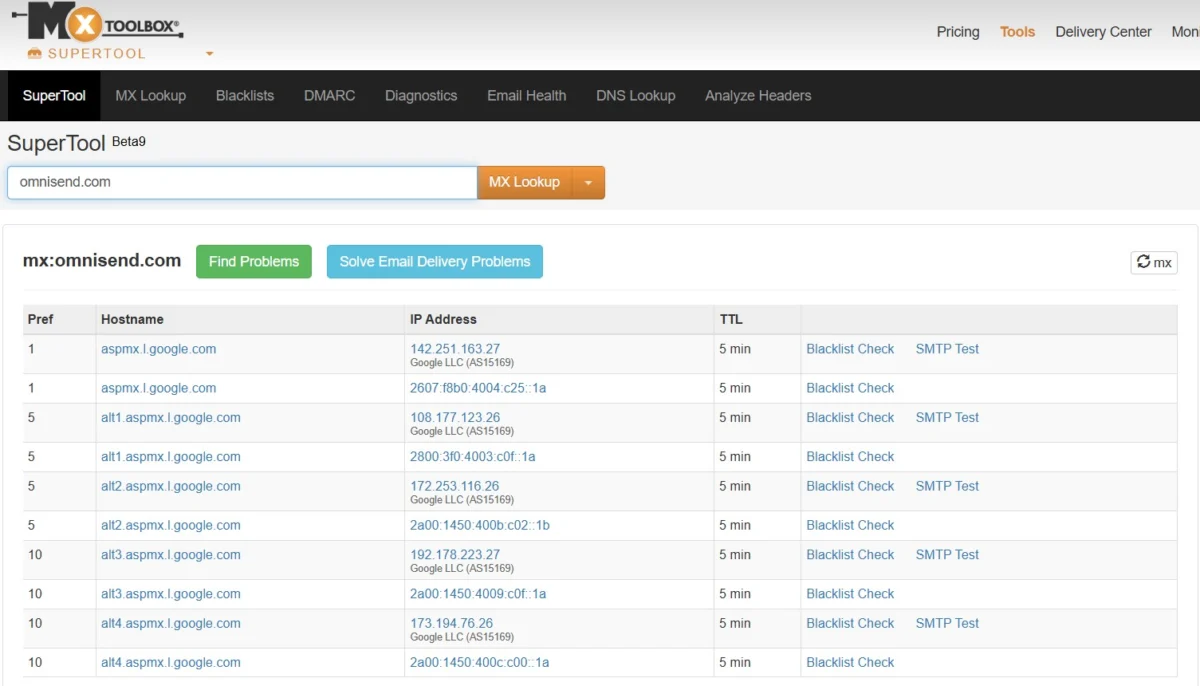
The realm of email deliverability has undergone a profound transformation, making the choice between an array of sophisticated tools and dedicated services more critical and complex than ever before. Optimal inbox placement, once a relatively straightforward endeavor, now hinges on a nuanced understanding of evolving sender requirements and the specific vulnerabilities within an organization’s email infrastructure. The seismic shifts introduced by major mailbox providers in 2024 and 2025 have fundamentally reshaped how businesses must approach their email sending strategies.
The New Era of Email Security and Compliance
A pivotal turning point arrived in February 2024 when industry giants Google and Yahoo unilaterally implemented stringent new sender requirements. These mandates, aimed at curbing the proliferation of spam, phishing attempts, and other malicious email activities, demanded greater accountability from high-volume senders. Not long after, Microsoft followed suit, enforcing its own set of rules for large-scale senders beginning May 5, 2025. These collective actions signal a clear industry-wide push towards enhanced email authentication, improved user experience, and a zero-tolerance policy for poor sending practices.
At the core of these new regulations are three critical pillars:
- Mandatory DMARC Authentication: Senders are now largely required to implement DMARC (Domain-based Message Authentication, Reporting, and Conformance) to verify email authenticity and provide instructions to receiving servers on how to handle unauthenticated mail. This builds upon existing SPF (Sender Policy Framework) and DKIM (DomainKeys Identified Mail) protocols, creating a more robust defense against spoofing.
- One-Click Unsubscribe: To combat unwanted emails and improve user experience, senders must provide a visible, one-click unsubscribe mechanism, typically in the email header, making it easier for recipients to opt out.
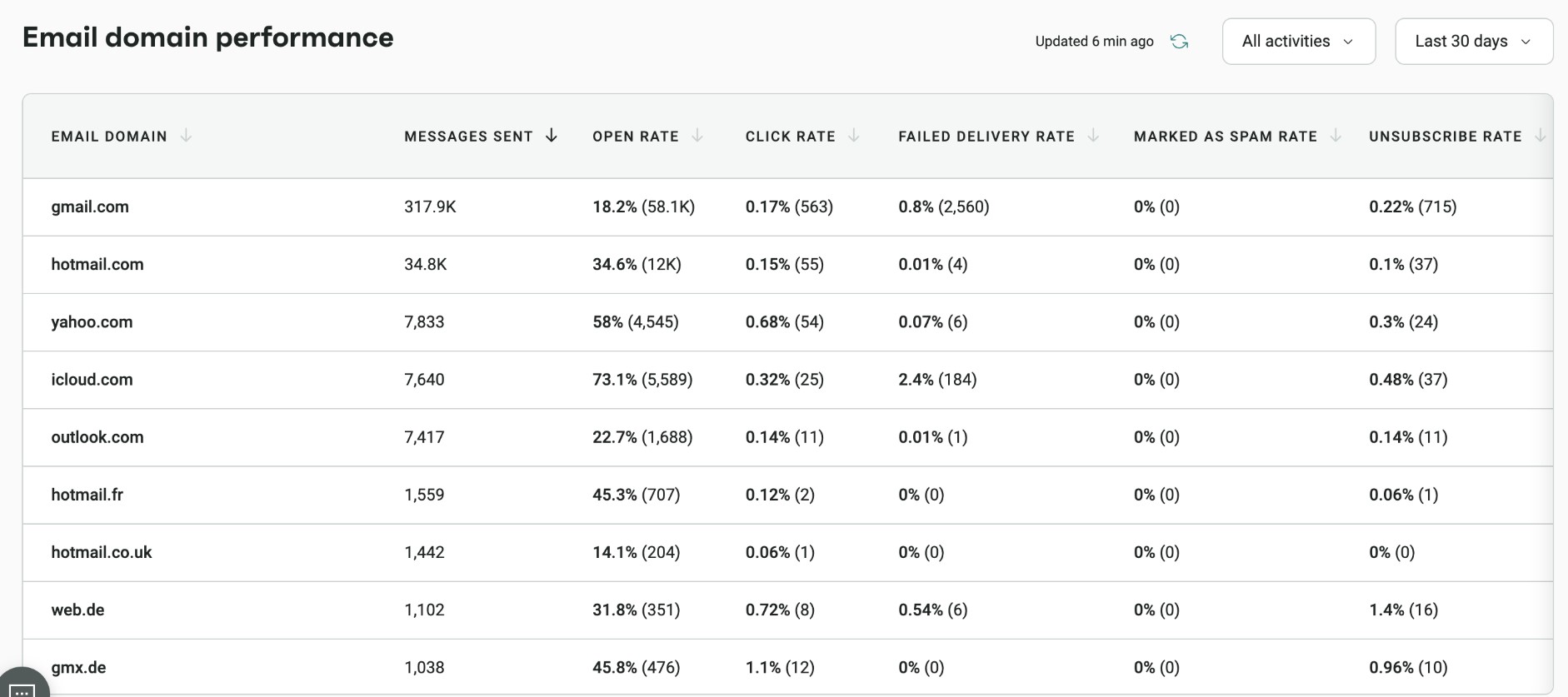
- Low Spam Complaint Rates: Mailbox providers are enforcing stricter thresholds for spam complaints, generally requiring senders to maintain a complaint rate below 0.3%. Exceeding this benchmark can swiftly lead to emails being directed to spam folders or even outright blocking.
These changes are not merely technical adjustments; they represent a fundamental paradigm shift. Email deliverability is no longer solely about avoiding technical errors; it’s about actively demonstrating trustworthiness and adherence to best practices. Failure to comply can result in significant financial repercussions through lost engagement, diminished marketing ROI, and damaged brand reputation.
Understanding the Landscape of Deliverability Solutions
The term “email deliverability service” is an umbrella concept, encompassing a diverse ecosystem of managed agencies, self-serve software tools, and integrated features within Email Service Providers (ESPs). Each category addresses different needs and caters to varying levels of internal expertise and sending volume. Identifying the right solution necessitates an honest assessment of one’s current email infrastructure, sending reputation, and operational capacity.
1. Managed Deliverability Agencies and Consultancies: Expert Intervention for Critical Cases
For organizations grappling with severe reputation damage, persistent blocklisting, or simply managing exceptionally high sending volumes, managed deliverability agencies offer an indispensable lifeline. These specialized consultancies bring to bear years of expertise, providing hands-on intervention and strategic guidance.
- Core Services: Agencies typically conduct comprehensive audits of an organization’s entire email setup, from DNS records and authentication protocols to content quality and sending patterns. They manage complex IP warm-up processes, navigate the intricate pathways of email blacklist remediation, and develop long-term inbox placement strategies.
- When to Engage: These services are particularly suited for high-volume senders (e.g., 500,000+ emails per month) or brands recovering from a significant deliverability crisis. The “do-it-for-you” approach makes them the most hands-off option, albeit the most expensive, often involving monthly retainers or fixed project fees.
- Key Players:
- MailSoar: As a pure-play email deliverability agency, MailSoar specializes in reputation rehabilitation. Their engagements cover everything from authentication setup and IP warm-up to email blacklist remediation and inbox placement strategy. They are ideal for brands recovering from severe blocklist events or major sender-reputation crashes. Pricing is custom-quoted, reflecting the bespoke nature of their services.
- Mailgun Optimize: While Mailgun is an ESP, their Optimize suite offers a paid add-on that functions as a managed service. It includes inbox placement testing, blocklist monitoring, and reputation tracking. Crucially, their “Contract” plan provides a dedicated Technical Account Manager (TAM) team with extensive industry experience. This expert oversight is invaluable for enterprise-level senders (1M+ emails/month) who require continuous monitoring, strategic guidance, and proactive issue remediation. Paid plans start at $49/month, with TAM-led tiers on custom enterprise pricing.
2. Self-Serve Deliverability Software: Empowering In-House Teams
This category comprises a suite of tools designed for in-house marketing or email operations teams to proactively test, monitor, and manage their email deliverability. These platforms provide critical data and diagnostics, empowering teams to identify and address issues themselves.
- Core Functionality: These tools offer features such as inbox placement testing (against seed lists), DMARC reporting, blocklist monitoring, and list hygiene verification. They are typically priced by mailbox or test volume, offering flexibility for growing businesses.
- The DIY Advantage: Self-serve software is a good fit for marketers with the technical acumen to interpret data and implement solutions. However, it’s crucial to remember that these tools primarily surface problems; they do not automatically fix them.
- Key Players:
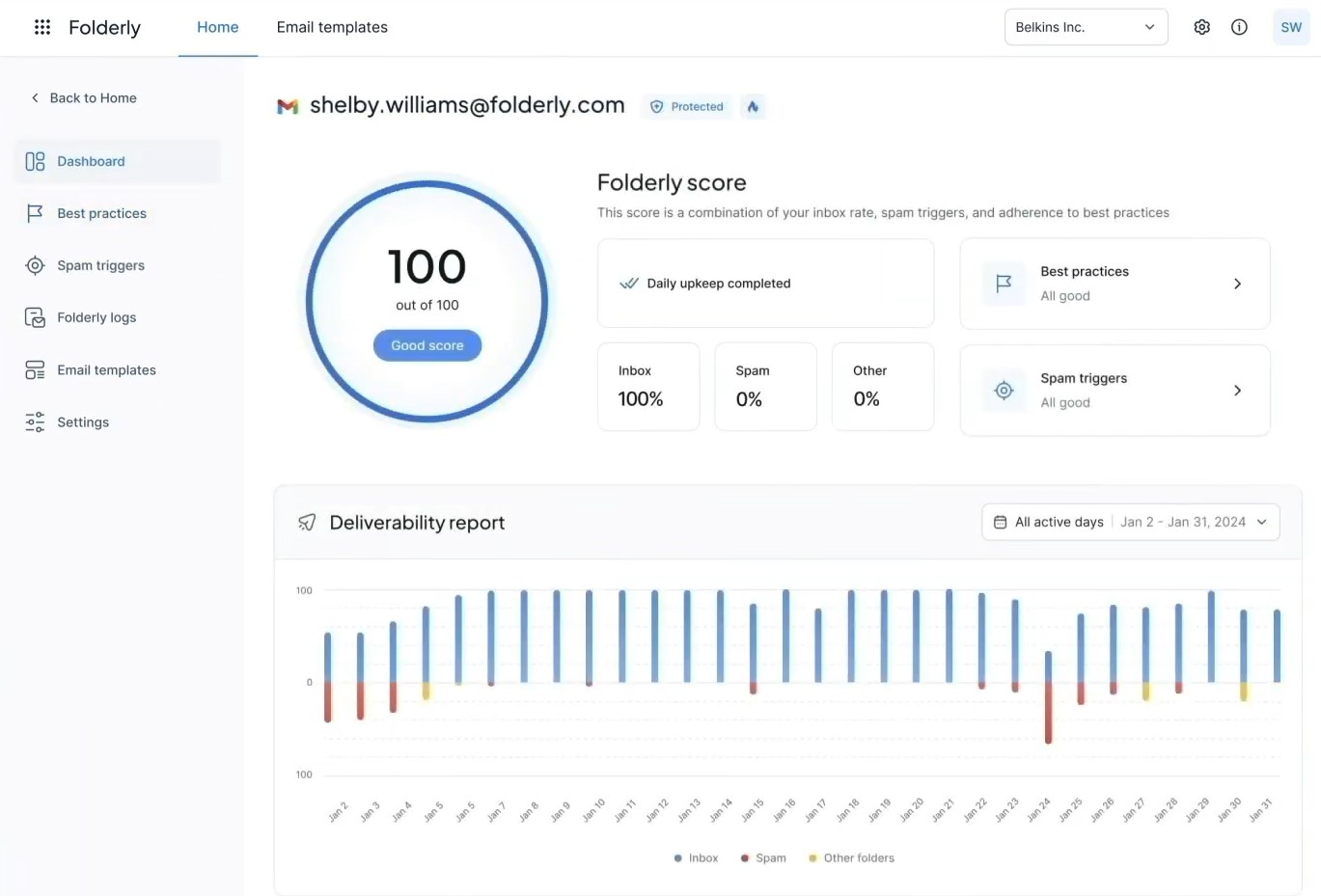
- Folderly: This managed platform blends automated inbox placement tests with real-time spam alerts and human consulting, offering a hybrid approach. It works with most major ESPs and supports both marketing and cold email senders. Folderly provides ongoing monitoring without the full agency retainer, starting at $96/mailbox/month, scaling down for larger teams. It’s an excellent choice for marketing teams needing continuous oversight without hiring a full agency.
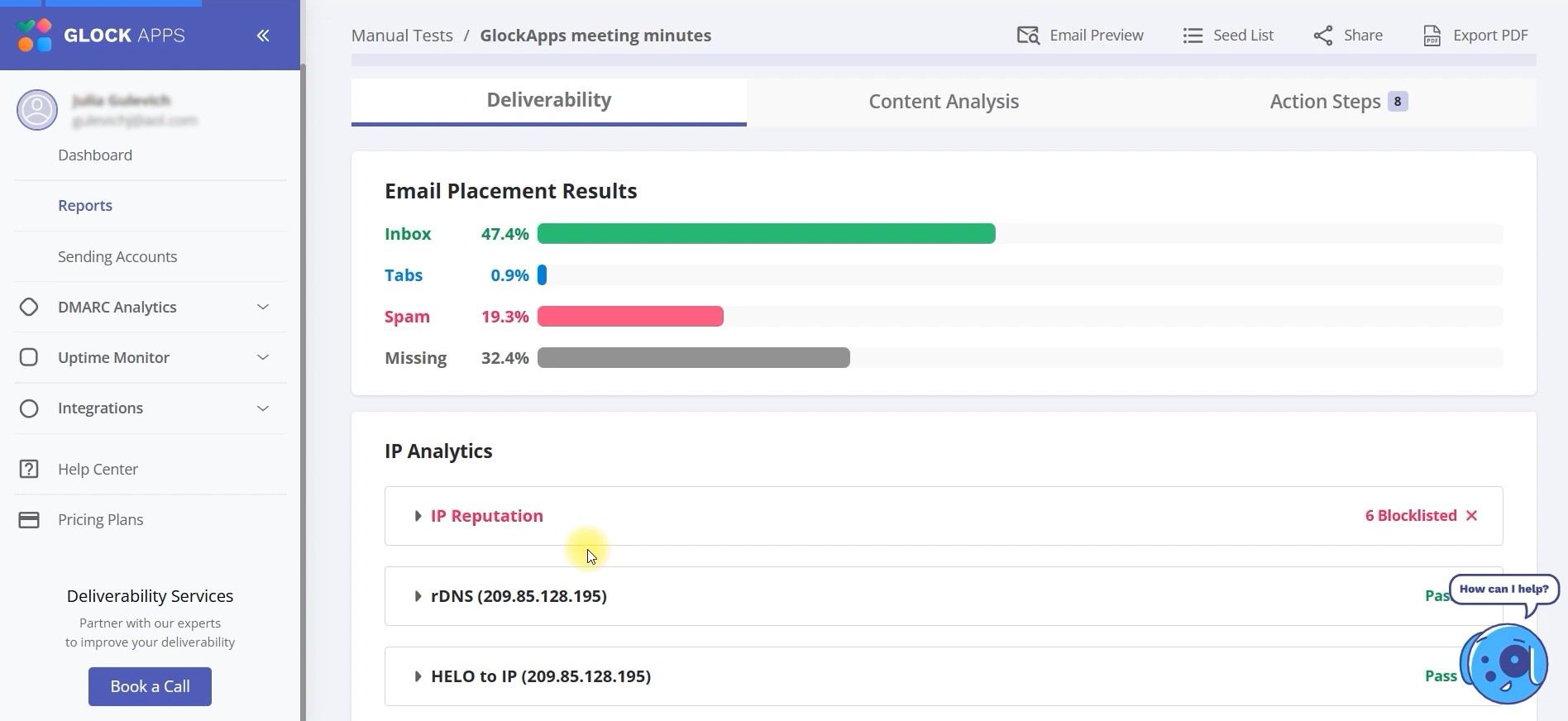
- GlockApps: Specializing in DIY inbox placement testing at scale, GlockApps runs tests across over 100 seed addresses, including major providers like Gmail, Outlook, and Yahoo. It delivers detailed reports on email landing positions, identifies spam-trigger words, and integrates DMARC analytics and blacklist monitoring. Starting at $85/month, it caters to technical marketers and email ops teams comfortable acting on raw deliverability data.
3. Built-in Deliverability Inside Your ESP: The Foundation for Most Businesses
For the majority of e-commerce brands and small to medium-sized businesses, the deliverability features bundled within their Email Service Provider (ESP) are often sufficient. Modern ESPs recognize the critical importance of deliverability and integrate robust functionalities to support their users.
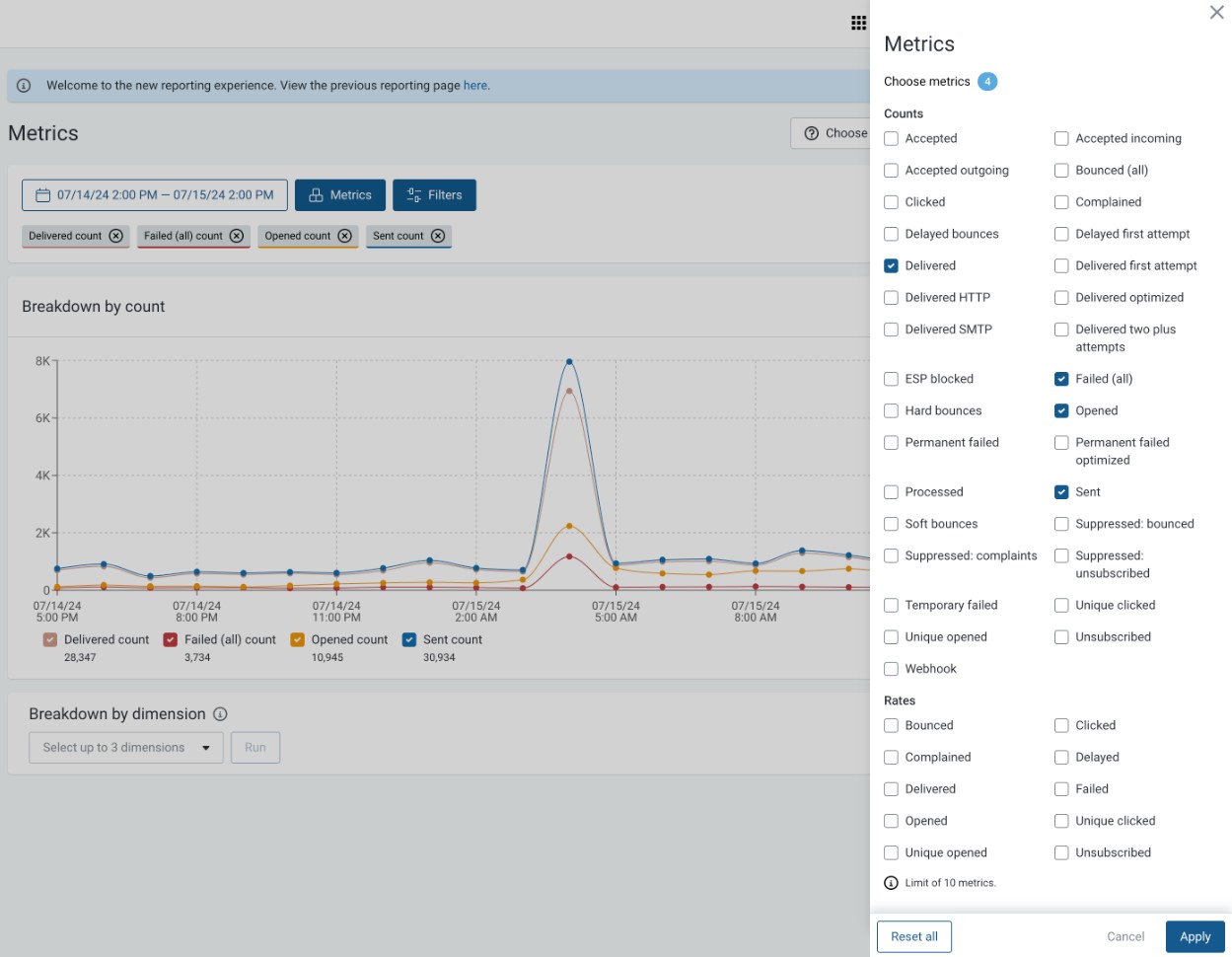
- Integrated Solutions: Quality ESPs like Omnisend offer managed sending infrastructure, utilize reputation-based shared IP pools, provide IP warm-up guidance, and include authentication tools (SPF, DKIM, DMARC setup helpers). They also offer essential list cleaning features and comprehensive deliverability monitoring and reporting directly within the platform.
- When It’s Enough: If an organization’s authentication is correctly configured, its email list remains clean and engaged, and the ESP provides transparent bounce and spam complaint data, additional third-party tools may not be immediately necessary. This is typically the case for e-commerce senders under 50,000 subscribers.
- Limitations: While effective for most, ESPs generally cannot provide the deep-dive diagnostics or hands-on remediation offered by specialized agencies for severe issues. True inbox placement rates, visible only to mailbox providers, also cannot be directly measured by ESPs or third-party tools, which rely on seed lists.
Specialized Tools for Critical Deliverability Components
Beyond the broad categories, specific tools address distinct aspects of email deliverability, each crucial for maintaining a healthy sending reputation.
Email Authentication and DMARC Management:
The 2024/2025 mandates have made robust email authentication, particularly DMARC, non-negotiable for high-volume senders. DMARC management tools simplify the complex process of reporting, alignment monitoring, and policy enforcement.
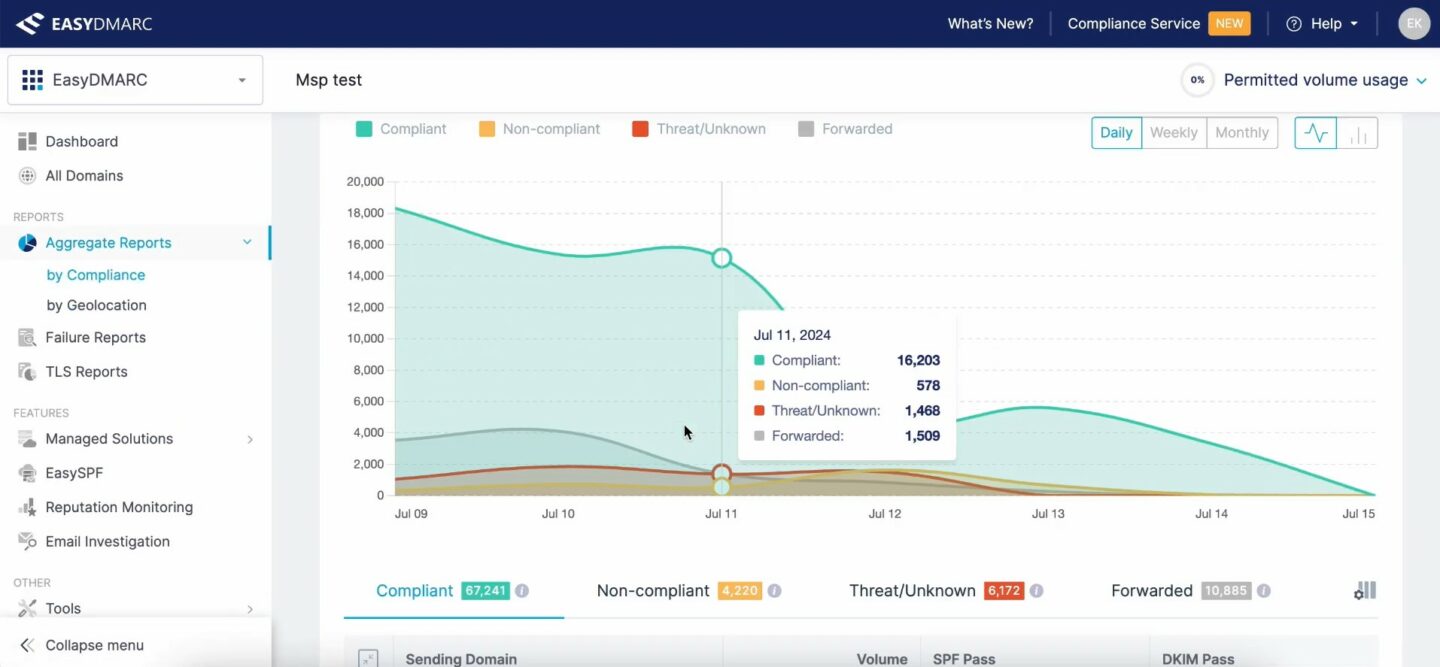
- EasyDMARC: Tailored for non-technical marketers, EasyDMARC manages DMARC, SPF, and DKIM across multiple domains from a user-friendly dashboard. It guides users through policy progression (from p=none to p=quarantine and p=reject) without requiring deep technical knowledge. Plans start at $44.99/month, making it ideal for e-commerce brands transitioning to stricter DMARC policies.
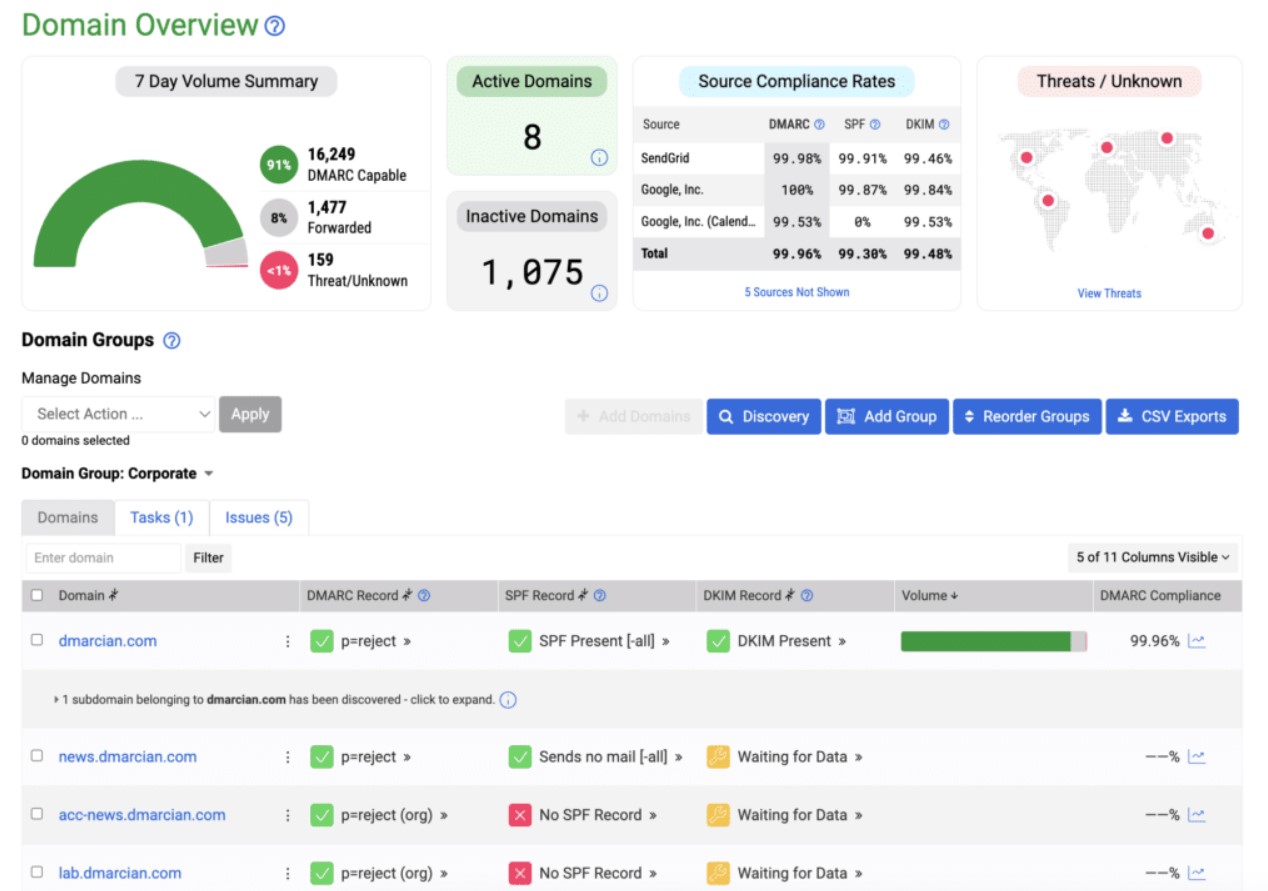
- dmarcian: Co-founded by an original author of the DMARC protocol, dmarcian offers technical depth for complex setups. With regional data centers and real-time authentication failure notifications, it provides comprehensive DMARC aggregate report analysis. A free tier is available, with paid plans starting at $24/month. It’s best suited for enterprise senders and teams with in-house deliverability engineers who prioritize technical granularity and data sovereignty.
Email List Hygiene and Verification Tools:
A clean email list is foundational to good deliverability. Hard bounces erode sender reputation, while spam traps can lead to immediate blocklisting. Proactive list hygiene costs significantly less than reactive reputation repair.
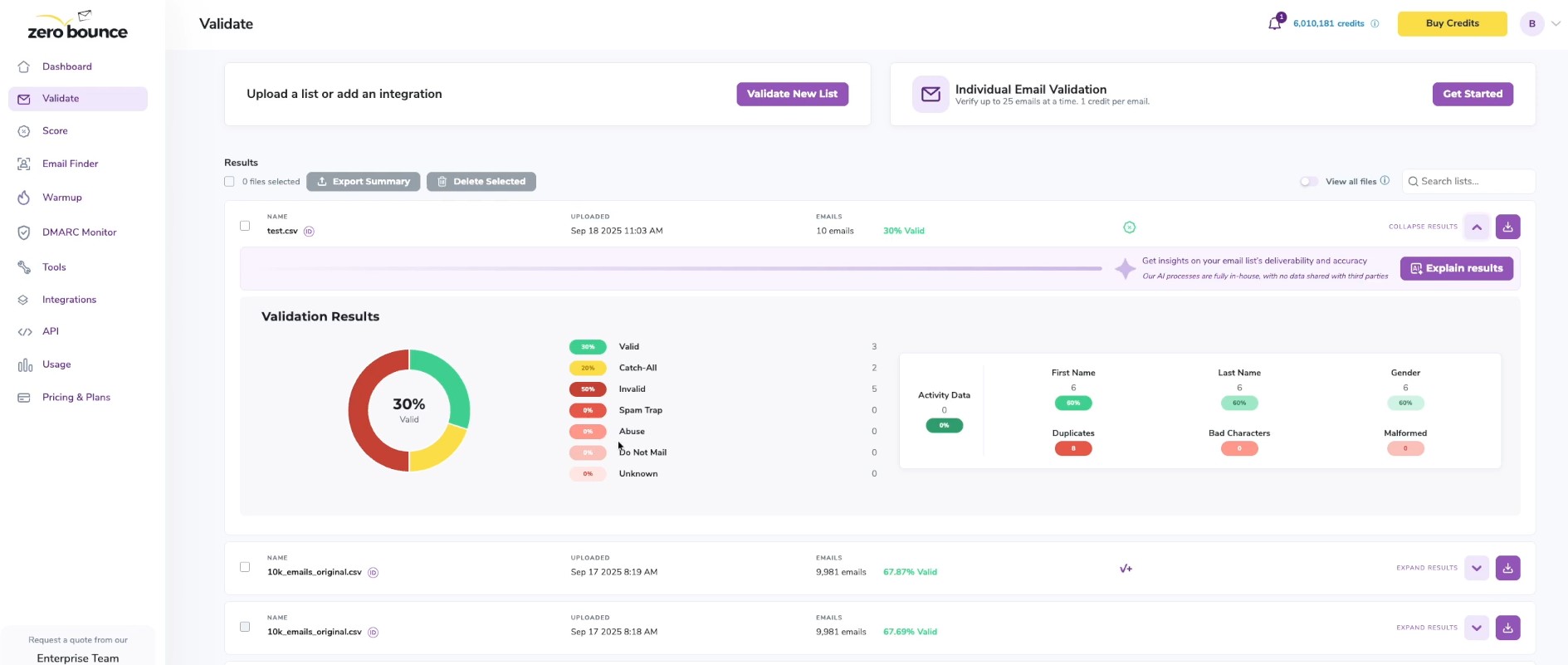
- ZeroBounce: Combining server analysis, deliverability consulting, domain warm-up tools, and email verification, ZeroBounce boasts 99.6% verification accuracy. Beyond technical verification, it offers human guidance to diagnose broader issues. The ONE plan starts at $99/month, with a pay-as-you-go option, making it suitable for e-commerce brands dealing with both dirty list data and broader deliverability challenges.
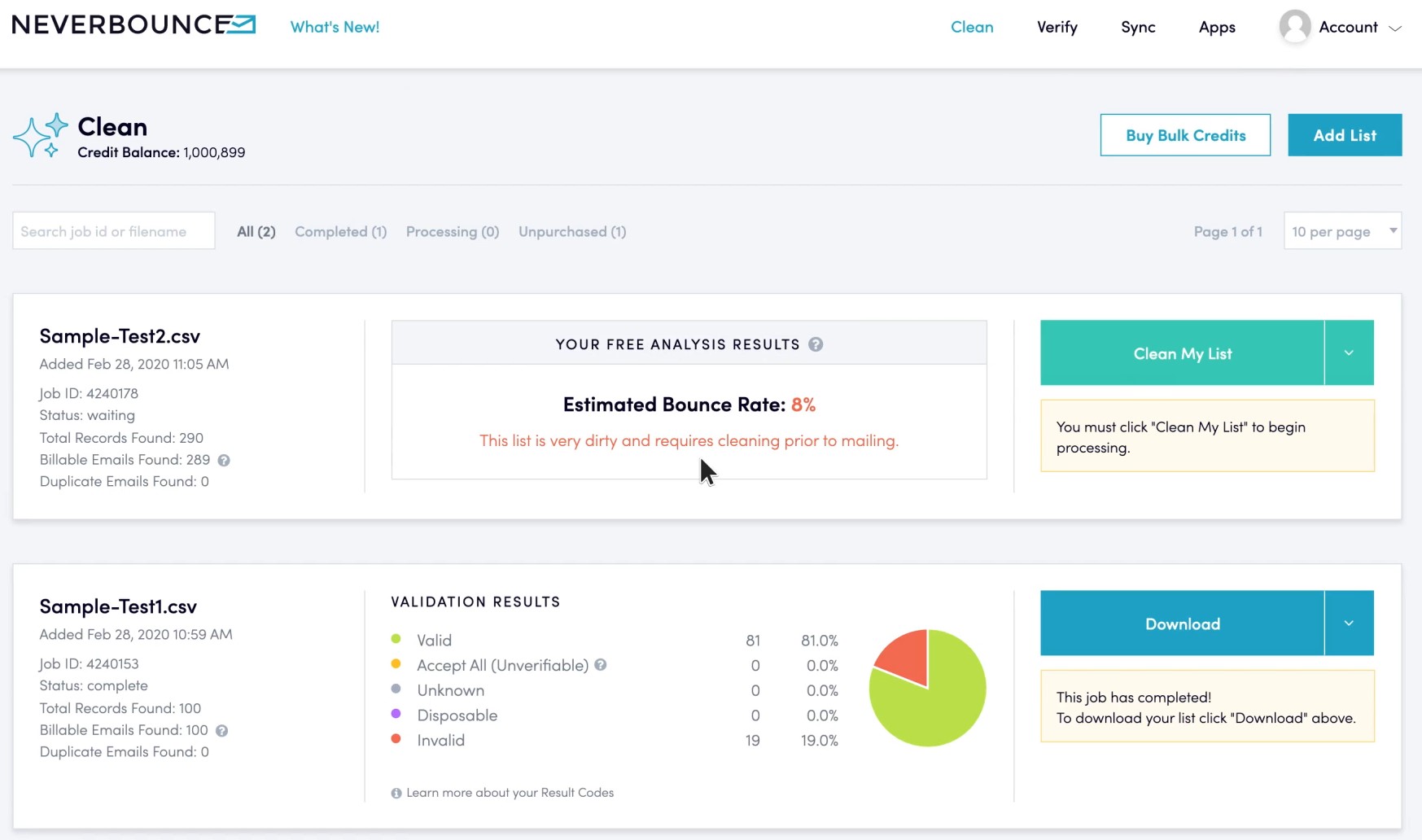
- NeverBounce: Owned by ZoomInfo, NeverBounce excels in B2B contexts, integrating with over 80 platforms like HubSpot and Salesforce. It’s designed for B2B teams needing to clean CRM exports efficiently. Pay-as-you-go pricing starts at $0.008/email, with paid plans from $49/month. Ideal for B2B SaaS or services brands cleaning sales and marketing list data.
Free Quick-Check and Diagnostic Tools:
Before investing in paid solutions, several free tools offer essential diagnostics, providing a baseline understanding of your email health.
- MXToolbox: The SuperTool provides instant DNS checks, SPF/DKIM/DMARC validation, and blacklist lookups without an account. It’s the fastest way to audit authentication during troubleshooting or before vendor calls. While the free tier covers basic checks, paid Delivery Center plans start at $129/month for continuous monitoring. It identifies problems but doesn’t fix them or test inbox placement.
- Google Postmaster Tools: A free dashboard from Google, essential for high-volume senders post-February 2024. It provides Gmail-specific data on spam rate, authentication results, compliance status, and feedback loop data. While Postmaster Tools V2 no longer shows direct domain/IP reputation scores, its compliance and spam rate metrics remain vital. It’s indispensable for B2C senders with a majority of Gmail subscribers, though Microsoft SNDS and Yahoo Sender Hub are needed for full coverage across providers.
The Role of Email Warm-up and Reputation Repair
The concept of “email warm-up” often surfaces in deliverability discussions. While gradual volume increases on new domains or IPs are critical, relying solely on automated warm-up tools can be misleading. Mailbox providers are increasingly adept at detecting synthetic warm-up networks, and warm-up efforts alone cannot resolve underlying authentication or content issues. If a list is active and sending history is established, the domain is likely already warmed up. The focus should always be on foundational good practices: proper domain authentication, rigorous list hygiene, sending to engaged subscribers, and natural, gradual volume scaling.
Strategic Framework for Tool Selection
Choosing the right email deliverability tools and services is a strategic decision that should align with an organization’s growth stage and specific needs. A “one-size-fits-all” approach is ineffective.
-
Foundation Stage (Under 50k Subscribers):
- Recommended Stack: Leverage built-in ESP features (e.g., Omnisend’s managed infrastructure, authentication helpers, basic reporting) supplemented by free diagnostics like Google Postmaster Tools and MXToolbox.
- Monthly Budget Estimate: $0.
- Rationale: At this stage, a quality ESP provides sufficient protection and insights for healthy sending. Free tools offer essential checks without added cost.
-
Scaling Stage (50k–500k Subscribers):
- Recommended Stack: Build upon the Foundation stack by adding self-serve inbox placement testing (e.g., GlockApps or Folderly) and a dedicated DMARC management tool (EasyDMARC or dmarcian).
- Monthly Budget Estimate: $130–$200.
- Rationale: As volume increases, proactive monitoring and robust authentication become more critical. These tools provide deeper insights and control over deliverability.
-
Enterprise Stage (500k+ Subscribers):
- Recommended Stack: Incorporate the Scaling stack, then add comprehensive list hygiene and verification (ZeroBounce or NeverBounce) and consider managed deliverability agencies (MailSoar or Mailgun Optimize) for complex issues or dedicated expert oversight.
- Monthly Budget Estimate: $228–$278+.
- Rationale: At this scale, reputation damage can be catastrophic. Investing in premium list hygiene and expert-managed services is a strategic imperative to protect revenue and brand integrity.
Most e-commerce brands can comfortably operate within the Foundation stage for longer than anticipated, thanks to the continuous improvement of built-in deliverability services offered by leading ESPs. The key is consistent monitoring and a proactive approach to maintain sender health.
Broader Implications and the Future of Email
The tightening of inbox placement standards by Google, Yahoo, and Microsoft reflects a broader industry movement towards a more secure and user-centric email ecosystem. For businesses, this means:
- Increased Vigilance: Email deliverability is no longer a one-time setup but an ongoing operational priority requiring continuous monitoring and adaptation.
- Investment in Expertise: Organizations must either cultivate in-house deliverability expertise or invest in external services to navigate the complexities.
- Focus on Engagement: The emphasis on low spam complaint rates reinforces the need for highly targeted, valuable, and permission-based email marketing.
- Enhanced Security: The DMARC mandates significantly bolster email security, making it harder for malicious actors to spoof legitimate domains.
Looking ahead, the role of Artificial Intelligence (AI) in filtering is expected to become even more sophisticated, further blurring the lines between legitimate mail and spam. Senders will need to remain agile, continuously adapting their strategies to maintain trust with mailbox providers and, ultimately, with their subscribers. The landscape will continue to evolve, making a well-informed approach to email deliverability tools and services not just an option, but a strategic necessity for business success.









