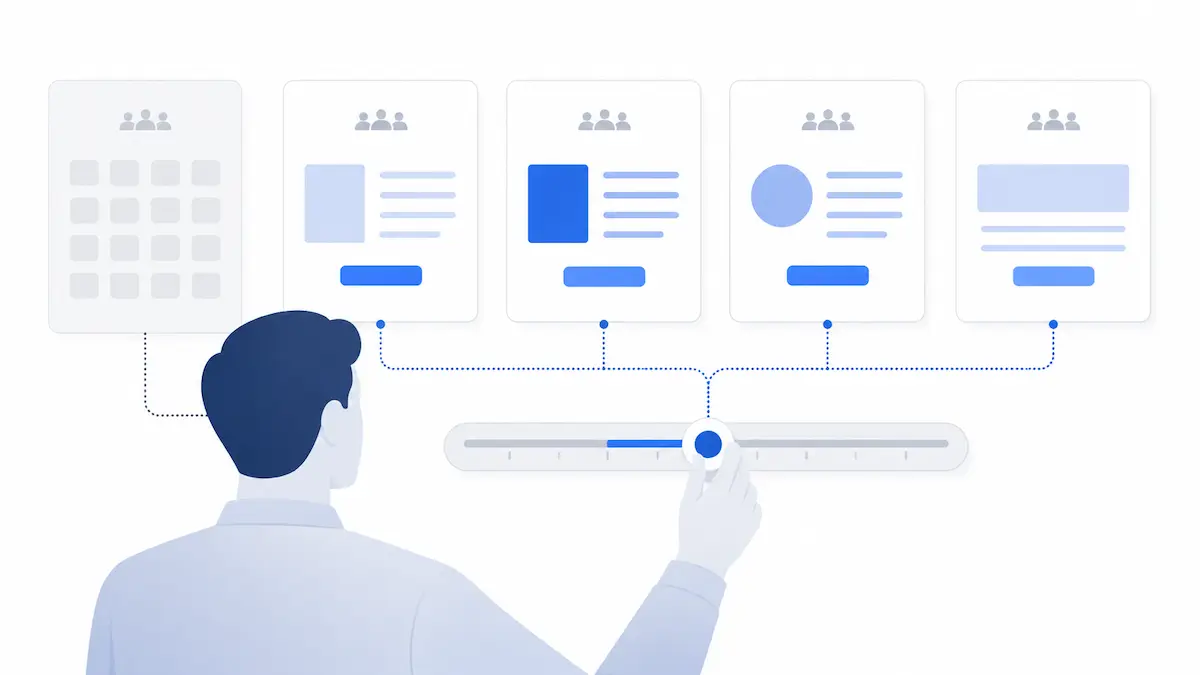
Digital marketing technology provider Instapage has announced the release of AI Collections, a sophisticated automation suite designed to eliminate the logistical bottlenecks associated with large-scale landing page personalization. This new development addresses a long-standing industry paradox: while 90% of leading marketers acknowledge that personalization significantly boosts profitability, the majority of organizations struggle to implement it beyond basic email segmentation due to the sheer volume of manual labor required to manage individual web assets. AI Collections seeks to bridge this gap by utilizing generative artificial intelligence and structured data tables to accelerate the creation of personalized pages by up to 300% compared to traditional manual workflows.
The Personalization Crisis in Modern Advertising
For over a decade, the digital advertising landscape has moved toward hyper-segmentation. Platforms like Google Ads and Meta allow advertisers to target incredibly niche audiences based on intent, geography, and behavior. However, the destination for these ads—the landing page—has remained a significant point of friction. Traditionally, creating a unique landing page for every ad group or keyword required a "duplicate and edit" workflow. For a campaign targeting 50 different keywords, a marketing team would have to manually clone a base page 50 times, update the copy on each, manage 50 different URLs, and ensure that brand consistency remained intact across the entire set.
This manual overhead often leads to "campaign fatigue," where teams revert to generic landing pages to save time. Industry data suggests that generic landing pages can result in conversion rates as much as 50% lower than those that are highly relevant to the user’s search query. Instapage’s AI Collections is positioned as a direct solution to this "manual wall," moving the industry away from individual page management toward a template-driven, database-centric model.
Technical Overview: How AI Collections Automates the Workflow
The core innovation of AI Collections lies in its integration of three distinct technologies: a centralized content table, AI-driven layout analysis, and generative text models. By combining these elements, the platform transforms the landing page from a static document into a dynamic asset capable of near-instantaneous variation.
The Centralized Content Table
Rather than treating each page as a separate file, AI Collections utilizes a structure where each row in a content table represents a specific page in a collection, and each column represents a dynamic variable—such as a headline, a call-to-action (CTA), or a hero image description. This architectural shift allows a single marketing manager to oversee hundreds of pages from a single spreadsheet-like interface. When a change is made in the table, it propagates across the designated pages automatically, ensuring that global updates do not require individual page edits.
AI Placeholder Identification
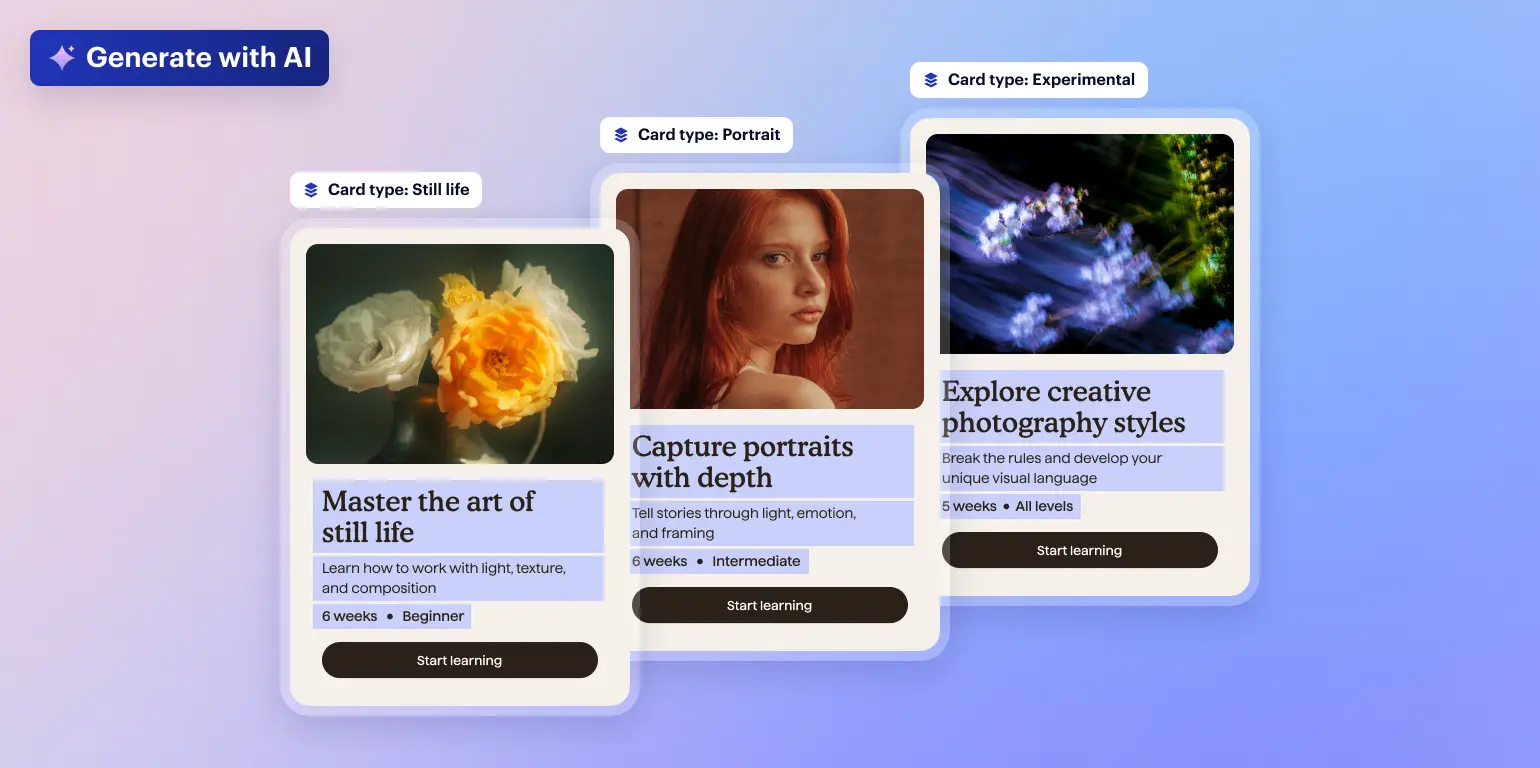
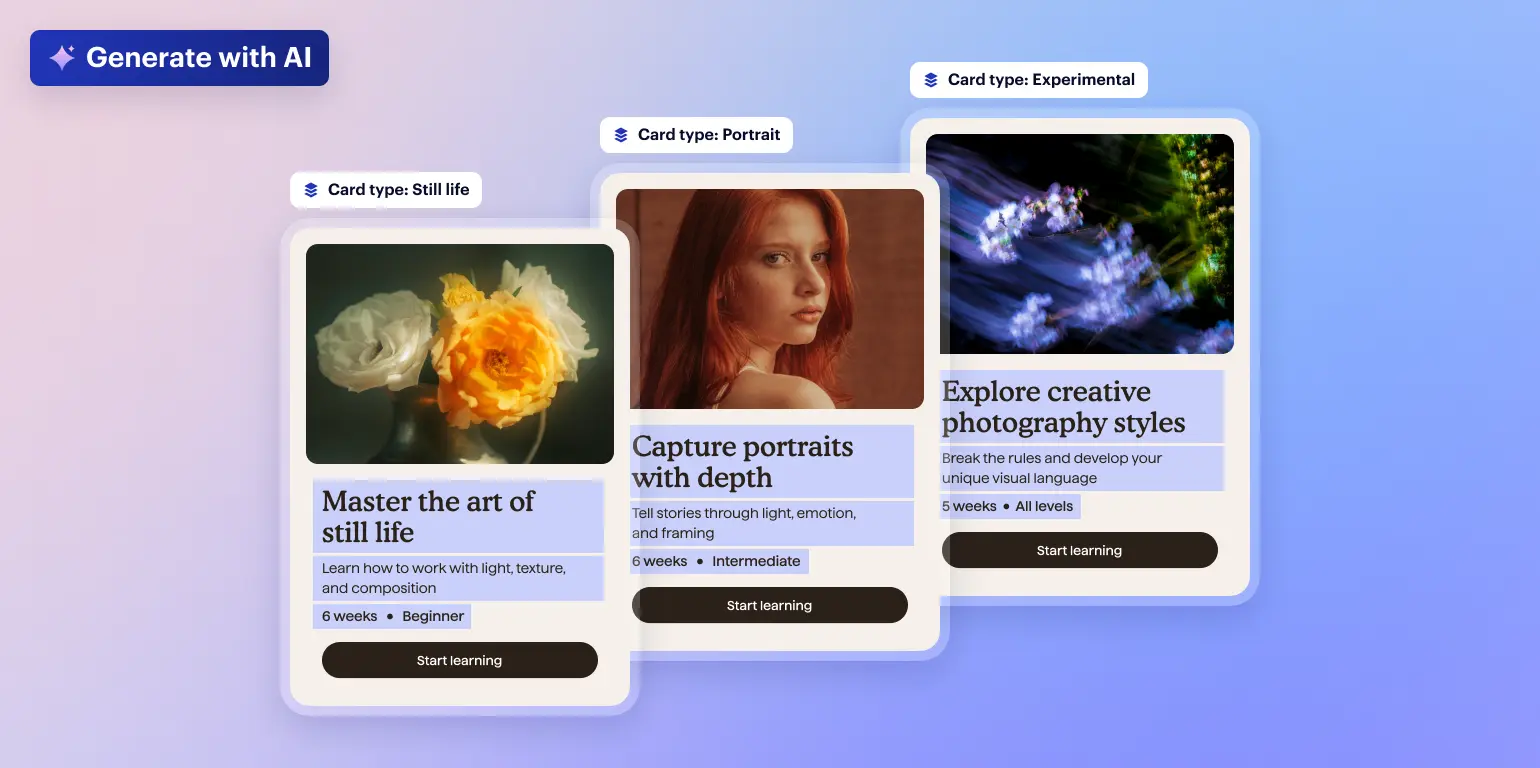
One of the primary challenges in template design is determining where dynamic content should be placed to maintain visual hierarchy. AI Collections utilizes an AI-driven analysis tool that scans a page’s design and automatically identifies optimal locations for dynamic text. This "AI Placeholder" feature removes the guesswork for designers, as the system recognizes headlines, sub-headers, and body copy blocks that are most likely to require personalization based on the target audience’s intent.
Generative Content and Fluid Grids
Once the placeholders are established, the platform’s generative AI engine populates the content table based on specific prompts provided by the user. For instance, a marketer can prompt the system to "write a headline for a software developer interested in cybersecurity" for Row A, and "write a headline for a C-suite executive focused on cost reduction" for Row B.
Crucially, the system is integrated with Instapage’s "fluid grid blocks." One of the historical risks of automated text generation is "copy overflow," where AI-generated text is longer than the original design intended, leading to broken layouts and overlapping elements. Fluid grid blocks use responsive design logic to automatically adjust the surrounding container and layout elements to accommodate varying text lengths, ensuring that the page remains visually professional regardless of the content generated.
Chronology of AI Integration in Post-Click Automation
The launch of AI Collections marks a significant milestone in the evolution of Instapage and the broader landing page industry. To understand the impact of this release, it is necessary to look at the timeline of automation in the post-click experience:
- 2010–2015: The Template Era. Landing page builders focused on "What You See Is What You Get" (WYSIWYG) editors, allowing non-developers to build pages. Personalization was limited to simple "Dynamic Text Replacement" (DTR) via URL parameters.
- 2016–2019: The Optimization Era. Platforms introduced A/B testing and heatmaps as standard features. Instapage introduced "Personalization," allowing for the creation of multiple experiences on a single URL, but the process remained largely manual.
- 2020–2022: The Data Integration Era. Tools began focusing on connecting landing pages to CRMs and ad platforms more deeply, allowing for better tracking of the lead lifecycle.
- 2023–Present: The Generative AI Era. With the explosion of Large Language Models (LLMs), the focus shifted to content creation. Instapage’s AI Content Generator was an early step, but AI Collections represents the first time these tools have been synthesized into a scalable, multi-page management system.
Market Data and Economic Implications
The shift toward AI-driven personalization is supported by compelling economic data. According to a report by McKinsey & Company, companies that excel at personalization generate 40% more revenue from those activities than average players. Furthermore, Boston Consulting Group (BCG) found that personalized online experiences can lead to a 20% increase in customer satisfaction rates and a 10-15% boost in sales conversion rates.
In the context of paid search (SEM), the "Quality Score" assigned by platforms like Google Ads is heavily influenced by landing page relevance. By using AI Collections to ensure that every keyword has a perfectly matched landing page, advertisers can improve their Quality Scores, which directly leads to lower Costs-Per-Click (CPC) and better ad positioning. For high-spend advertisers, even a 5% improvement in conversion rate or a 10% reduction in CPC can translate into millions of dollars in saved ad spend or additional revenue.
Industry Responses and Expert Analysis
Marketing technology analysts view the move as a necessary evolution in the "MarTech" stack. "The bottleneck in digital marketing has shifted from ‘who to target’ to ‘what to show them,’" says Elena Rodriguez, a senior analyst at a leading digital strategy firm. "We have the data to know exactly what a customer wants, but we haven’t had the production capacity to build the thousands of unique experiences required to meet that demand. AI Collections is a significant step toward solving the production problem."
While the response has been largely positive, some industry experts emphasize the need for human oversight. The "human-in-the-loop" model remains central to Instapage’s pitch; the AI generates the placeholders and the initial content, but the marketer retains the ability to review, edit, and refine the output before it goes live. This prevents the "hallucinations" or brand-safety issues sometimes associated with fully autonomous AI systems.
Broader Impact on the Marketing Profession
The introduction of tools like AI Collections is fundamentally altering the role of the modern marketer. The focus is shifting from "execution"—the manual task of building and editing pages—to "strategy and prompt engineering." Marketers are now required to be architects of systems rather than just creators of individual assets.
Furthermore, this technology democratizes high-level personalization. Previously, only enterprise-level companies with massive web development teams could afford to maintain hundreds of personalized landing pages. With AI Collections, small and mid-sized businesses can compete on the same level of relevance as global corporations, potentially disrupting industries where high-intent search traffic is the primary driver of customer acquisition.
Future Outlook
As Instapage continues to iterate on its AI capabilities, the industry expects further integrations, such as AI-driven image selection and automatic multi-variate testing (MVT) based on real-time performance data. The ultimate goal of the "post-click automation" space appears to be a fully autonomous optimization engine that not only builds the pages but also learns from user behavior to rewrite its own copy and redesign its own layouts in real-time.
For now, AI Collections represents a major leap forward in operational efficiency. By reducing the time-to-market for personalized campaigns and removing the technical barriers to entry, Instapage is positioning itself at the forefront of the AI-driven marketing revolution. The platform is currently offering a 14-day trial to allow marketing teams to test the efficacy of the AI Collections workflow within their own existing campaign structures.