rifanmuazin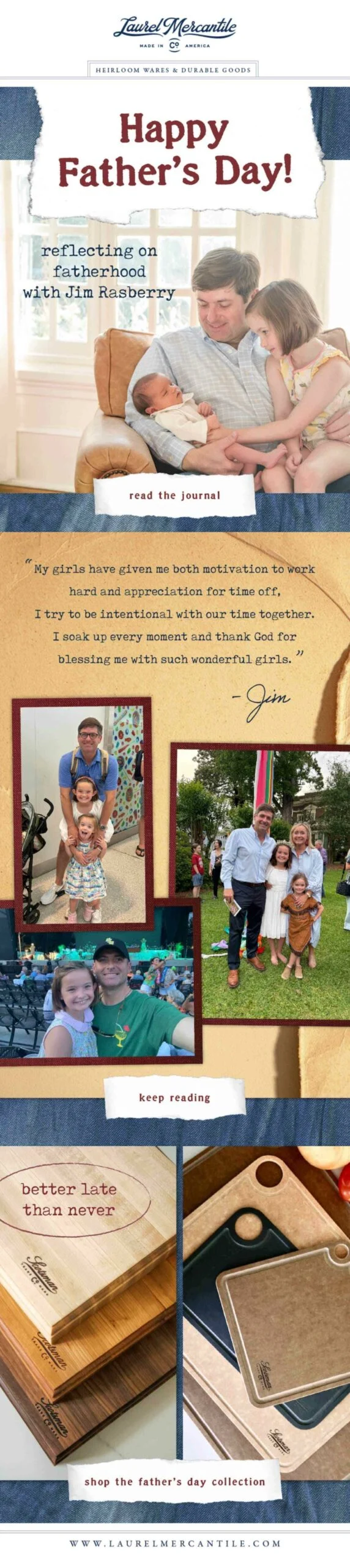
E-commerce brands are increasingly refining their digital strategies to capture consumer attention during key retail events, and Father’s Day stands as a significant milestone on the annual shopping calendar. Beyond mere transactional messages, effective Father’s Day email campaigns leverage diverse angles – from practical gift guides to deeply personal narratives – to resonate with customers and drive sales. This article delves into the nuances of successful email marketing for Father’s Day, examining various campaign approaches, optimal timing, the critical importance of customer experience, and the underlying data that shapes these strategies.
The Commercial Significance of Father’s Day in E-commerce
Father’s Day has evolved into a substantial retail opportunity, prompting consumers worldwide to seek out meaningful gifts for fathers, grandfathers, and father figures. In the United States, for instance, data from the National Retail Federation (NRF) consistently highlights robust spending patterns. In recent years, consumers have planned to spend an average of over $170 per person on Father’s Day gifts, cumulatively contributing billions to the economy. Popular gift categories range from clothing and accessories to special outings, electronics, and personal care items, reflecting a diverse consumer demand. For e-commerce businesses, email marketing remains a cornerstone for tapping into this demand, offering a direct, cost-effective, and highly measurable channel for reaching potential buyers. Its superior return on investment (ROI) compared to many other digital marketing avenues underscores its continued relevance, allowing brands to segment audiences, personalize messages, and track engagement with precision.
Strategic Campaign Timing: A Phased Approach to Engagement
Successful Father’s Day email campaigns are not one-off sends but rather a carefully orchestrated sequence designed to cater to different buying stages and consumer behaviors. A typical campaign timeline spans several weeks, ensuring maximum reach and conversion potential:
- Early Inspiration (3-4 weeks out): The initial phase focuses on generating excitement and offering broad gift inspiration. These emails often feature gift guides categorized by personality types (e.g., “For the Tech-Savvy Dad,” “For the Outdoorsman”) or price points. The goal is to plant ideas and encourage early browsing, appealing to proactive shoppers who prefer to plan ahead.
- Mid-Campaign Engagement (2 weeks out): As the holiday draws closer, campaigns shift to highlighting specific products, bundles, or special discounts. This is also an opportune time to introduce unique selling propositions, such as personalization options or exclusive collections. Brands may also send follow-up emails to those who clicked on early gift guides but haven’t purchased.
- Last-Minute Urgency (1 week to Father’s Day): This phase targets procrastinators and emphasizes shipping deadlines. Emails clearly communicate cut-off dates for standard and expedited shipping to ensure gifts arrive on time. Digital gift cards or instantly downloadable products become key recommendations here, providing viable options even for very late buyers.
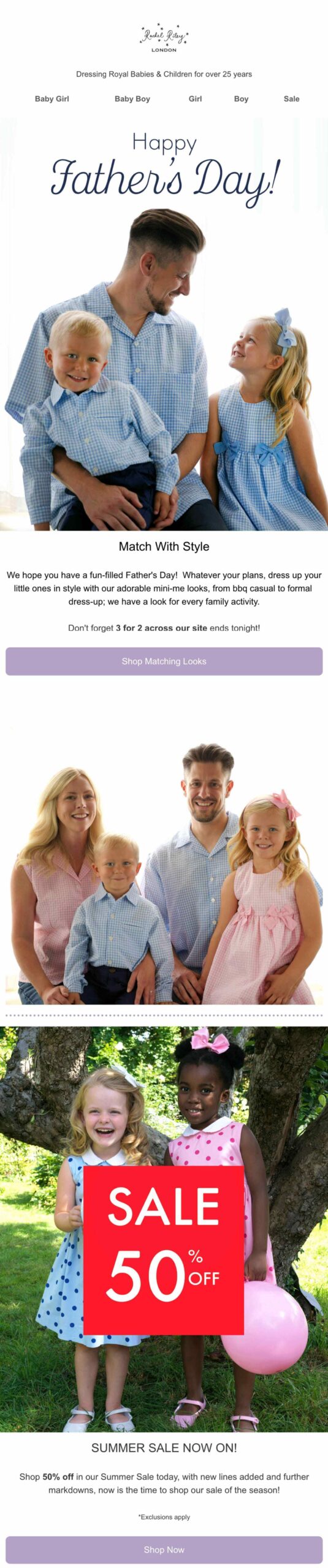
- Day-of Delivery (Father’s Day): While physical gifts might be out of reach, sending an email on Father’s Day itself can still be effective, especially for brands offering digital products, experiences, or a heartfelt message. These emails serve as a final touchpoint, reinforcing brand loyalty and capturing any truly last-minute purchases for digital items. For instance, brands like Rachel Riley have demonstrated success with day-of sends by crafting messages centered entirely around the occasion rather than just using it as a promotional trigger.
Dissecting Effective Campaign Angles: Lessons from Leading Brands
The diversity of consumer relationships with Father’s Day necessitates a varied approach to email content. E-commerce brands have successfully employed several distinct campaign angles, each tailored to evoke specific emotions and drive particular actions.
1. The Curated Gift Guide: Simplifying the Shopping Journey
Gift guide emails are indispensable for shoppers overwhelmed by choices. By presenting a curated selection of products, brands simplify the decision-making process, making it easier for customers to find the perfect gift.
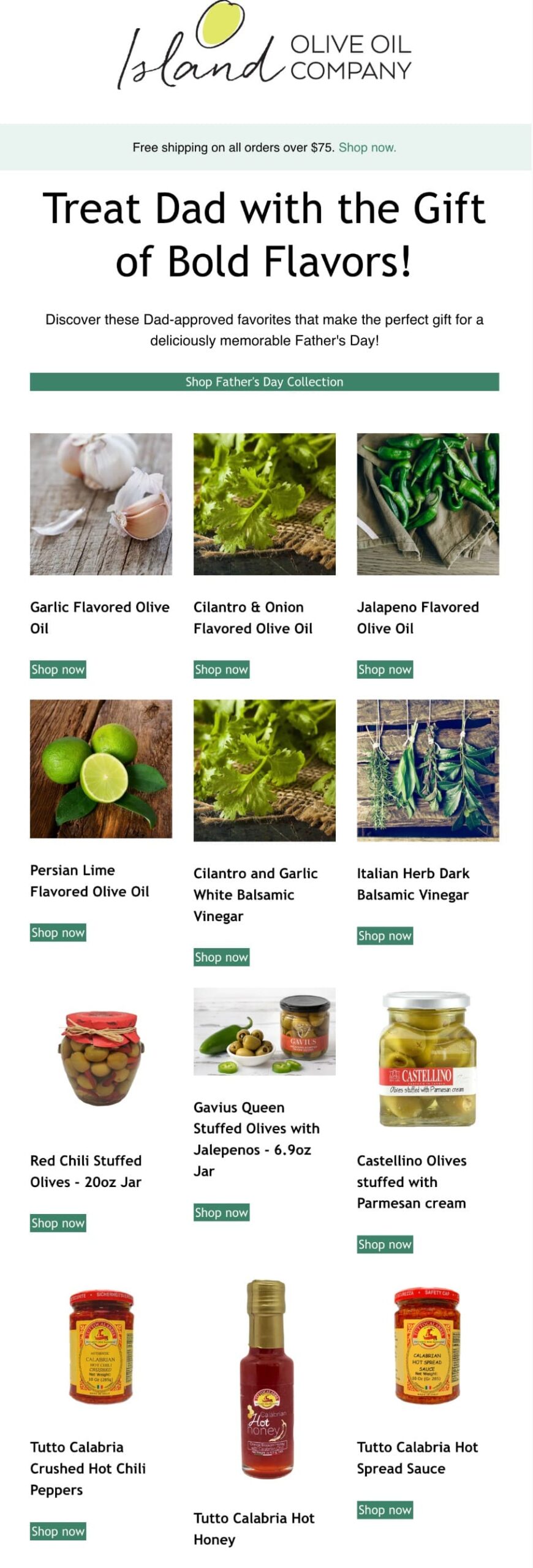
- Island Olive Oil Company: “Father’s Day Gift Ideas”
Island Olive Oil exemplifies simplicity and clarity. Their emails typically feature a clean product grid, highlighting various gourmet olive oils and related items, complemented by a clear shipping offer (e.g., “Free shipping over $75”). The minimal copy allows the products to speak for themselves, catering to a customer who knows their dad appreciates quality food items but might need specific suggestions. This approach minimizes cognitive load and funnels the customer directly to product pages. Supporting data from Omnisend case studies reveals that for brands like Island Olive Oil, marketing automations, though a small percentage of total sends, generate a disproportionately high percentage of email marketing revenue, indicating the power of targeted, timely communication. - OddBalls: “Only the best for Dad”
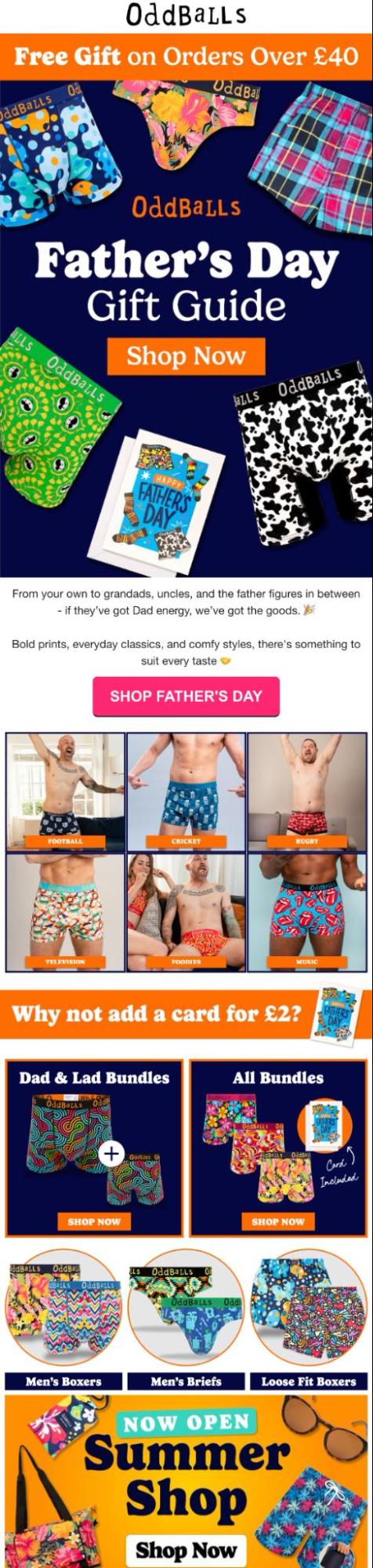
OddBalls effectively combines a value proposition with organized product display. Leading with a free gift offer for orders over a certain threshold, they immediately incentivize purchase. Subsequent sections categorize products by sport and interest, making navigation intuitive for buyers looking for something specific to their dad’s hobbies. This strategy addresses both the desire for a good deal and the need for relevant product suggestions, showcasing an understanding of diverse consumer preferences.
2. Last-Minute and Urgency-Driven Communications: Capturing the Procrastinators
Urgency emails are designed to spur action from late shoppers, yet the most effective ones avoid panic-driven rhetoric, instead focusing on helpful reminders and viable solutions.
- Rachel Riley: “Happy Father’s Day!”
Rachel Riley’s approach to a Father’s Day email sent on the day itself is notable. Instead of a last-ditch sales pitch, the entire email is framed as a celebration, featuring families dressed in coordinated, elegant attire. While subtly promoting their summer sale, the primary message is one of warmth and appreciation. This works particularly well for brands where the product (e.g., high-end children’s clothing) might be purchased for family photos or as a collective gift. The success of Rachel Riley’s broader email strategy is evidenced by their Black Friday Cyber Monday performance, where a significant portion of total store revenue was driven by email, with automations playing a crucial role. - B-Wear Sportswear: “Happy Father’s Day!”
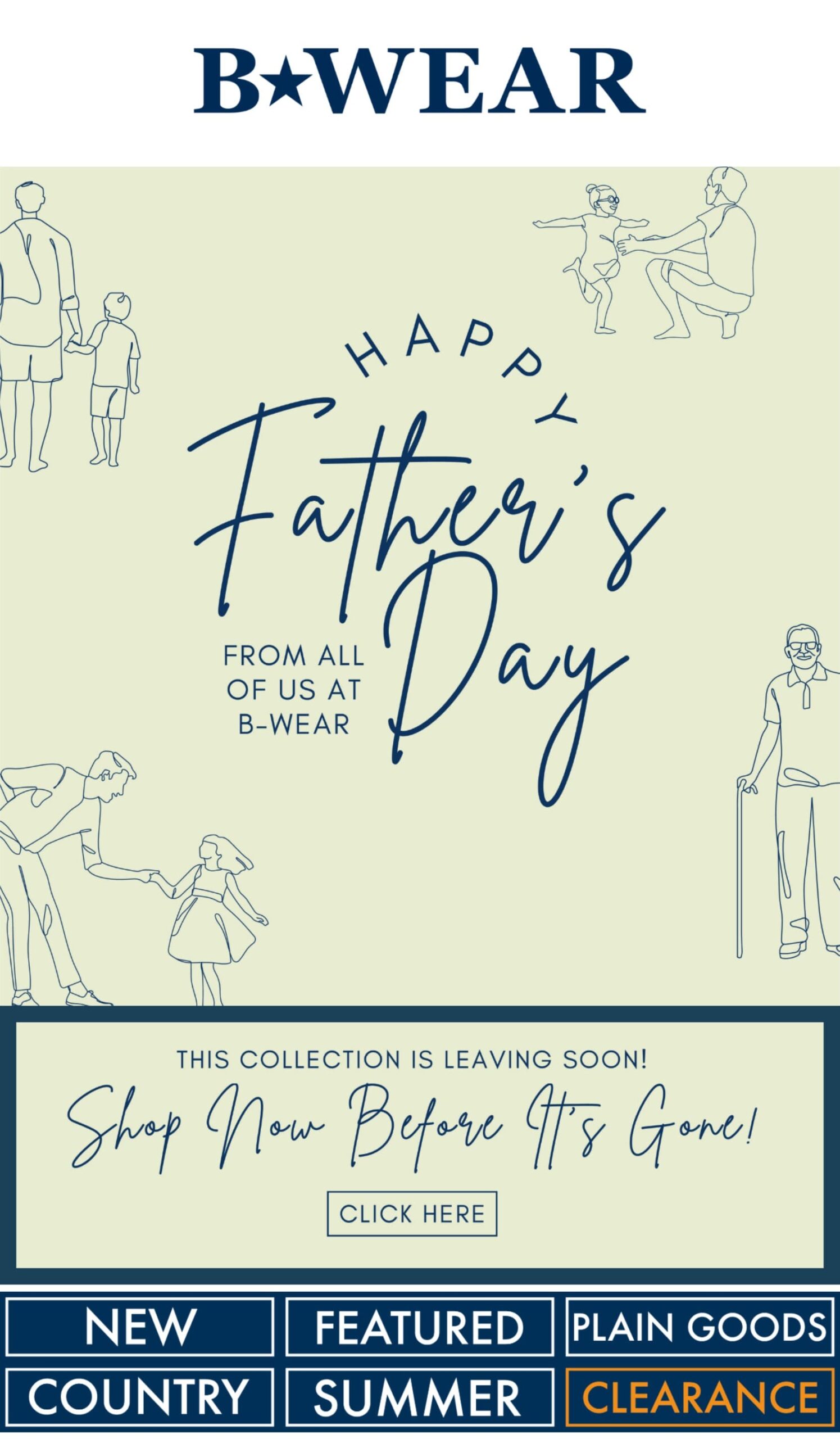
B-Wear Sportswear utilizes a distinct visual style, opting for charming illustrations over photography. Their day-of email pairs a heartfelt holiday greeting with practical incentives: a disappearing collection and flexible payment options. This blend of emotional connection and practical solutions resonates with buyers who might still be looking for a unique item or require payment flexibility. For B-Wear, email marketing is a powerhouse, driving a substantial percentage of their total sales, with their welcome series alone boasting impressive conversion rates, highlighting the power of a well-crafted email strategy across the customer lifecycle.
3. Humor and Personality-Led Emails: Building Connection Through Brand Voice
Injecting humor and personality into Father’s Day campaigns can cut through the noise, making emails more memorable and fostering a stronger brand-customer connection.
- Jackson Vaughn: “Celebrate Dad, even if he has the worst jokes!”
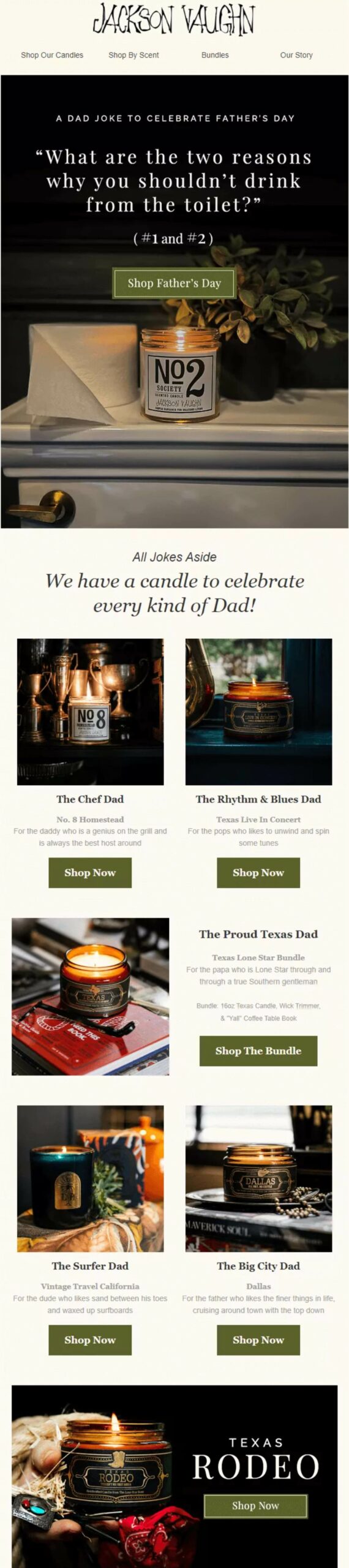
Jackson Vaughn masters the art of playful engagement by opening with a deliberately terrible “dad joke” in large, prominent typography. This immediate connection to a common experience of fatherhood creates a lighthearted tone before transitioning seamlessly into product promotion (themed candles). This demonstrates that even a seemingly niche product can be marketed effectively by tapping into universal holiday tropes with a unique brand voice. - Openroad 4WD: “Gear up for your Father’s Day trip”
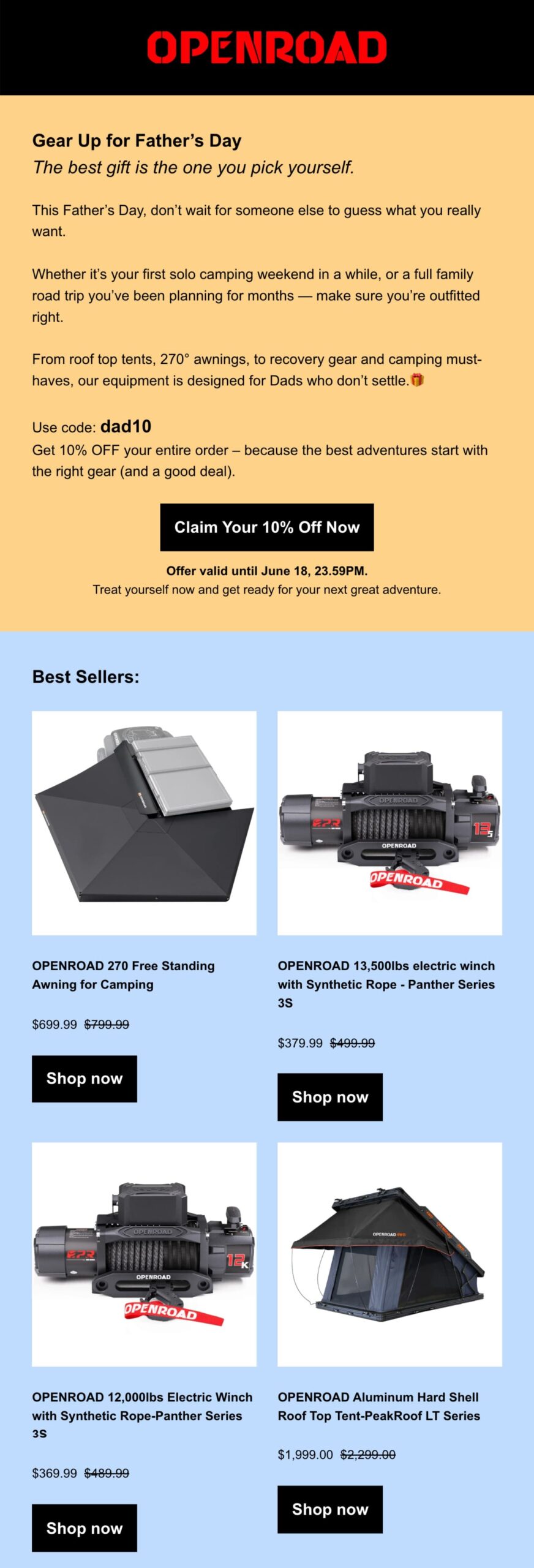
Openroad 4WD takes a unique angle by speaking directly to fathers, rather than gift buyers. The email frames Father’s Day as an occasion for dads to indulge themselves, encouraging them to “buy what he actually wants.” This resonates with an audience that appreciates practical, outdoor-oriented gear, making the holiday an excuse for a self-purchase. Offering a discount code further sweetens the deal, empowering the dad to “claim his 10% off.”
4. Heartfelt and Storytelling Emails: Forging Deeper Emotional Bonds
Moving beyond transactional interactions, storytelling emails create emotional resonance, making the commercial aspect feel earned and authentic.

- Aussie Gardener: “Happy Father’s Day”
The Aussie Gardener’s approach is deeply personal. The founder writes a heartfelt note about his own father and the shared joy of gardening before introducing any products. This narrative creates an authentic connection, positioning the brand as understanding the values of fatherhood and the simple pleasures it entails. The subsequent product recommendations for gardening tools and supplies feel like a natural extension of this sentiment, rather than a forced sales pitch. - Laurel Mercantile: “A story of fatherhood”
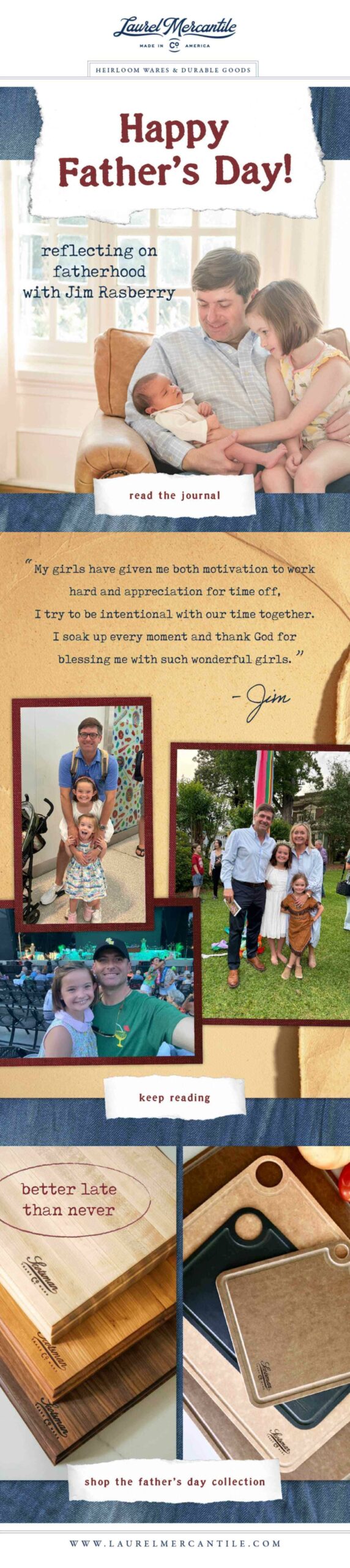
Laurel Mercantile crafts a compelling narrative around a real person, Jim Rasberry, featuring family photographs and direct quotes about fatherhood. This deeply personal approach, preceding any product display, allows the brand to tap into universal themes of family, legacy, and appreciation. The products then become conduits for expressing these sentiments, enhancing their perceived value beyond mere utility. - To’ak Chocolate: “An iconic pairing – Laphroaig + To’ak”
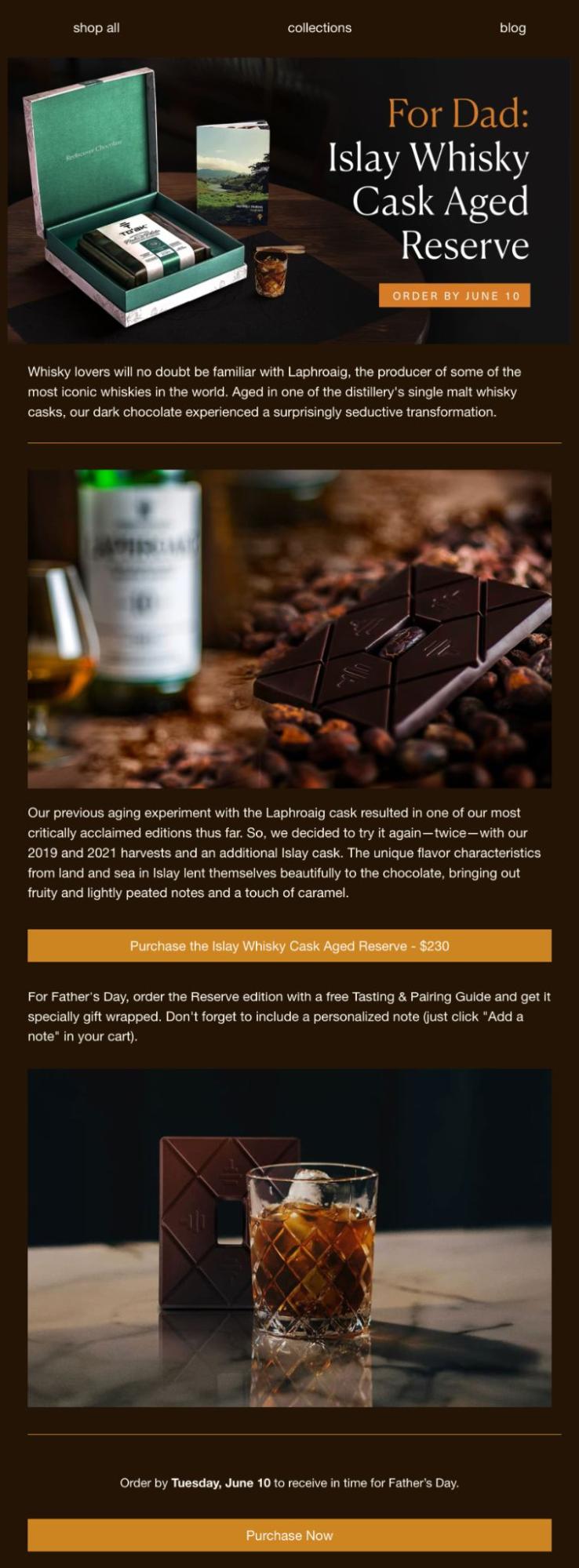
To’ak Chocolate frames its Father’s Day email around a unique product story: a collaboration involving whisky cask-aged chocolate. While Father’s Day is mentioned, the core of the email is the narrative of craftsmanship, unique ingredients, and the special “pairing” experience. This appeals to discerning customers looking for an exceptional, story-rich gift. For To’ak, email has transformed into a primary revenue channel, with their welcome series showing exceptionally high conversion rates, underscoring the power of compelling product storytelling in driving engagement and sales. - Ferro and Company Watches: “This Father’s Day – honor his time, his way”
Co-founders Ary and Bob open with a personal letter, sharing their philosophy and connection to time and fatherhood, before showcasing their watch collection. This lengthy yet justified narrative builds trust and conveys the passion behind the brand. By honoring “his time, his way,” the email elevates a watch from a simple accessory to a symbol of respect and individuality, resonating deeply with customers seeking a meaningful gift.
The Crucial Role of the Holiday Opt-Out Feature
Beyond optimizing conversion, a critical aspect of customer-centric email marketing for Father’s Day is offering subscribers the option to opt out of holiday-specific communications without fully unsubscribing from the brand’s list. For various personal reasons, including bereavement or difficult family situations, some subscribers may find holiday content distressing. Providing a clear, easy-to-use preference center where individuals can temporarily pause Father’s Day emails demonstrates empathy and strengthens brand loyalty. This proactive approach prevents list attrition and maintains a positive relationship with sensitive segments of the audience. E-commerce platforms like Omnisend facilitate the implementation of such holiday opt-out mechanisms, allowing brands to manage preferences efficiently and ethically.
Broader Implications for E-commerce Marketing Strategy
The insights gleaned from successful Father’s Day campaigns extend beyond this single holiday, offering valuable lessons for overall e-commerce email marketing.
- Focused Messaging: The principle of sticking to one clear campaign angle per email is paramount. A diluted message attempting to be a gift guide, a discount offer, and a heartfelt note simultaneously often fails to achieve any of these goals effectively.
- Audience-Centric Copywriting: Recognizing that the primary recipient of the email is usually the gift buyer, not the father, allows for more targeted and persuasive copy. Addressing the buyer’s needs, anxieties, and desires (e.g., “Find the perfect gift,” “Ensure it arrives on time”) enhances conversion.
- Design and Copy Synergy: The visual design of an email must align with and amplify its core message. A clean product grid suits a gift guide, while a heartfelt narrative demands more visual breathing room and evocative imagery.
- Leveraging Automation: While promotional campaigns are crucial, the foundational strength of e-commerce email marketing lies in automation. Welcome series, abandoned cart reminders, and post-purchase follow-ups contribute significantly to overall revenue, as demonstrated by the case studies. Integrating these automated flows with seasonal campaigns creates a robust and responsive customer journey.
- Continuous Optimization: Monitoring key performance indicators (KPIs) such as open rates, click-through rates, conversion rates, and revenue per email is essential for understanding what resonates with the audience and for refining future campaigns.
In conclusion, effective Father’s Day email campaigns are a microcosm of successful e-commerce marketing. They demand strategic foresight in timing, creative execution in messaging and design, a deep understanding of consumer psychology, and an unwavering commitment to customer experience, including ethical considerations like holiday opt-outs. By adopting a focused, empathetic, and data-driven approach, brands can transform Father’s Day from a mere sales event into an opportunity to build stronger, more meaningful connections with their audience, driving not just immediate sales but long-term brand loyalty.


 Ammar Sabilarrohman
 Asro
Asro